Tomb Raider: Underworld
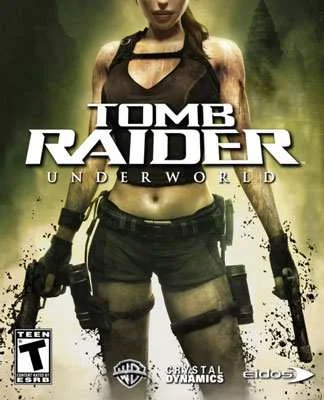
- Category:
- Release date:
- Game Genre:Action, TPP, 3D platformers, action adventure
- Developer:Crystal Dynamics Publisher: Square-Enix / Eidos
- Release:ElAmigos
- Platform:PC
- Languages (subtitles):English, French, Italian, German, Spanish, Dutch, Polish, Czech, Hungarian
- Dubbing/Audio:English, French, Italian, German, Spanish
- Crack:not necessary
- Game size:2.86GB
Game Description
Tomb Raider: Underworld is a third-person action-adventure game for PC built around acrobatics, environmental puzzles, exploration, and ranged combat. The current Steam and GOG storefronts still use the original name, with no verified remaster, definitive edition, or rebrand replacing the standard PC version. Developed by Crystal Dynamics, the game follows Lara Croft through dangerous ruins, underwater spaces, jungle environments, and mythic locations connected to her search for answers about her missing mother.
Its strongest appeal is not open-world freedom or character progression. Underworld is a focused single-player expedition in which each area functions as a large traversal puzzle. Players read the environment, find routes through vertical spaces, manipulate ancient mechanisms, fight creatures and mercenaries, and collect optional artifacts while moving toward the next major objective.
Exploration, platforming, and the core loop
Underworld places Lara in a third-person camera and gives her a broad movement set for climbing, jumping, balancing, swimming, rappelling, and traversing ledges. The game expects players to study the geometry of a room rather than follow a constant stream of waypoint prompts. A broken bridge, wall face, ledge, or pressure mechanism usually provides the clue for the next move.
The basic loop alternates between environmental traversal, combat, puzzle-solving, and discovery. Levels are structured as connected spaces with multiple stages, so solving one mechanism may open a route to another section rather than immediately ending the challenge. This gives the larger ruins a sense of physical continuity, even when the overall campaign remains directed.
Swimming and underwater navigation are important parts of several areas, while climbing sections test Lara's timing and positioning. The platforming is more flexible than a simple point-to-point obstacle course because the player can often approach a problem through nearby surfaces, grapple points, or movable objects. Players who prefer deliberate exploration over constant combat will find the game's best moments in these traversal sequences.
The PC version also benefits from the same adventure structure that defines the Crystal Dynamics era of Tomb Raider. For a nearby comparison, classic third-person platforming adventures such as Tomb Raider: Anniversary offer a similar emphasis on ruins, ledges, hidden routes, and puzzle-driven movement, although Underworld uses larger spaces and a more contemporary combat layer.
Signature tools and combat systems
Lara's equipment is integrated directly into exploration. The multi-purpose grapple can pull objects, assist with climbing, support rappelling, enable wall-running moves, and help Lara reach otherwise inaccessible surfaces. It is not merely a shortcut tool; many puzzles are designed around using the grapple in combination with the surrounding architecture.
The Active Sonar Map provides a three-dimensional view of nearby surroundings and can help reveal hidden objects, routes, and points of interest. It is particularly useful in large or visually dense environments where the next path is not immediately obvious. The map supports orientation, but it does not remove the need to understand how the space is constructed.
Combat adds a dual-target system that allows Lara to engage more than one enemy at a time. She can also fire while hanging from a ledge or suspended by the grapple, creating encounters that combine movement and shooting instead of treating combat as a separate arena activity. Players can choose whether to pacify or kill certain threats, while close-range attacks and environmental positioning help keep encounters mobile.
The all-terrain hybrid motorbike provides another change of pace. It can cross mud, snow, ice, and rough terrain, functioning as both transportation and a tool for reaching parts of the environment that are inaccessible on foot. Vehicle sections are not a separate racing mode; they are embedded into the exploration flow and connect larger areas.
Campaign structure and missing PC content
The main campaign is a single-player adventure with no online multiplayer, local co-op, split-screen, or competitive mode. Its progression comes from completing location-based objectives, opening routes, solving multi-stage puzzles, surviving combat encounters, and finding optional collectibles rather than building a persistent skill tree or gear loadout.
The story draws on Lara's investigation into her family history and uses Norse mythology, ancient relics, and undead guardians as major themes. The campaign visits varied environments, including the coast of Thailand, frozen areas of the Arctic Sea, and the jungles of Mexico. These settings are designed around different traversal problems, enemy encounters, and visual identities.
A major PC purchasing consideration is that the base game does not include the two later Underworld expansions, Beneath the Ashes and Lara's Shadow. Those additions were created for Xbox 360 and remain absent from the current PC versions on Steam and GOG. Lara's Shadow also shifts the perspective to Lara's Doppelganger, making the missing content more than a small cosmetic package.
That omission matters for players seeking the most complete version of the Legend-era trilogy. The PC edition contains the main Underworld campaign and its optional collectible hunt, but it does not provide the Xbox-exclusive story extensions. Current storefront preservation work improves compatibility and convenience, but it does not convert the PC version into a complete edition containing those expansions.
Who should play Tomb Raider: Underworld?
Underworld is a good fit for PC players who want exploration-led action adventure with a clear campaign structure. It suits players who enjoy climbing, swimming, environmental puzzles, artifact hunting, and cinematic ruins more than open-ended role-playing systems or large-scale sandbox activities.
The game is also a strong choice for fans of the Crystal Dynamics trilogy formed by Tomb Raider: Legend, Tomb Raider: Anniversary, and Underworld. Its movement is more elaborate than in a straightforward shooter, and the game frequently asks the player to combine observation with precise control. The result is closer to an interactive archaeological expedition than a combat-first action game.
Players who expect modern stealth systems, deep character builds, broad accessibility options, or a fully continuous open world may find the structure restrictive. The camera and movement can also feel distinctly old-fashioned by current standards, especially in narrow spaces and during complex platforming sequences. Those limitations are part of the PC version's identity and are worth knowing before purchase.
PC storefronts, controls, and preservation status
Steam lists Tomb Raider: Underworld as a paid action and adventure title with single-player support, Family Sharing, and a downloadable demo. Its listed interface languages are English, French, Italian, German, and Spanish. The Steam page also requires agreement to a third-party EULA.
GOG presents the same game under the unchanged title and offers a DRM-free version that can be installed and played without GOG Galaxy or a continuous internet connection. The storefront lists controller support, cloud saves, and optional overlay features. GOG also lists English, German, Spanish, French, Italian, and Dutch for the available language package, with exact audio and text availability depending on the storefront configuration.
The current GOG build is included in the platform's preservation program and is marked as verified for Windows 10 and Windows 11. Its maintenance work improves compatibility for modern systems, but the game remains a legacy PC adventure rather than a rebuilt modern edition. Players choosing between storefronts should therefore weigh DRM preferences, controller handling, cloud saves, and the practical convenience of an offline installer.
Comparable action-adventure games on PC
For players most interested in acrobatics and environmental puzzles, third-person platforming adventures such as Prince of Persia: Warrior Within provide a useful comparison. Warrior Within places greater emphasis on melee combat and time-based abilities, while Underworld gives more space to ranged encounters, climbing tools, underwater movement, and archaeological exploration.
These games share a design philosophy in which the environment is the main puzzle. Progress depends on reading surfaces, timing movement, finding alternate routes, and learning how a tool interacts with the surrounding architecture. Underworld remains the better fit for players who want Lara Croft's relic-hunting setting and a more direct connection to the Tomb Raider mythology.
Tomb Raider: Underworld FAQ
Is Tomb Raider: Underworld still the official PC name?
Yes. Steam and GOG currently list the PC game as Tomb Raider: Underworld. No verified storefront rebrand, remaster, or definitive-edition replacement has superseded that name.
Is Tomb Raider: Underworld multiplayer or co-op?
No. The PC version is a single-player-only campaign with no online multiplayer, local co-op, or split-screen mode.
What is included in the PC version?
The PC purchase includes the main Underworld campaign, its locations, combat systems, vehicle sections, exploration tools, and optional collectibles. It does not include the two Xbox 360 expansions, Beneath the Ashes and Lara's Shadow.
Does the PC version support controllers?
Yes. The current GOG listing explicitly includes controller support, and the game was designed around a console-style movement and combat layout. Players using modern input devices may still prefer to review or adjust their bindings.
Does Tomb Raider: Underworld have a skill tree or RPG progression?
No. Progression is primarily level-based and exploration-driven. Lara gains access to tools and routes as the campaign advances, but there is no modern skill-tree system, loot tier structure, or persistent character build.
Which version is better for offline PC play?
The GOG version is the clearest choice for offline play because it is DRM-free and does not require GOG Galaxy. Steam remains a valid option for players who prefer its library ecosystem, Family Sharing, and storefront integration.
System Requirements
Minimum: |
Processor: Core 2 Duo 2.2 GHz Graphics: 512 MB VRAM Memory: 2 GB RAM Disk space: 3 GB HDD Operating system: Wndows XP/Vista |
Screenshots

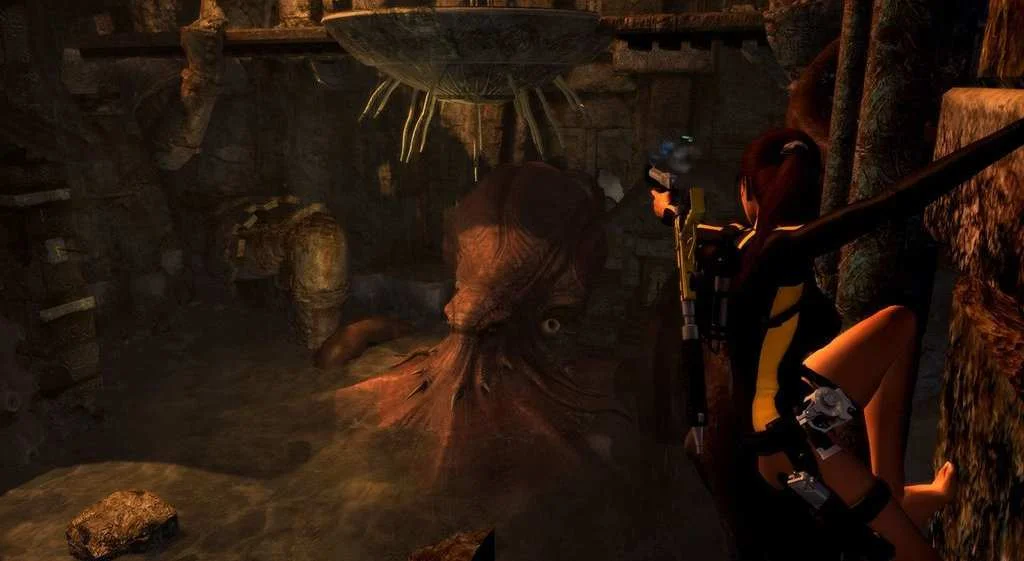


Trailer/Gameplay
Download
Tomb Raider: Underworld (2008), 2.86GB
ElAmigos release, unprotected game (serial or crack is not necessary).

Updated to version 1.1.

Installation time with 4 cores CPU and normal HDD - 10 minutes. Credits to Razor12911.

1. Extract files.
2. Burn or mount the image.
3. Install the game.
4. Play the game. If you like this game, BUY IT!
Tomb Raider: Underworld Download
 Download from TeraBox
Torrent Download
The best torrent download speeds are with qBittorrent!