The Binding of Isaac: Rebirth
Edit date: 16-09-2025, 14:23
Reason: Updated to version 1.9.7.14 (13.09.2025).
- Category:
- Release date:
- Game Genre:Arcade, roguelike, RPG elements, 2D, dungeon-crawler, for 2 people, indie games, co-op
- Developer:
- Release:ElAmigos
- Platform:PC
- Languages (subtitles):English
- Dubbing/Audio:English
- Crack:Codex/Rune
- Game size:1.82GB
Game Description
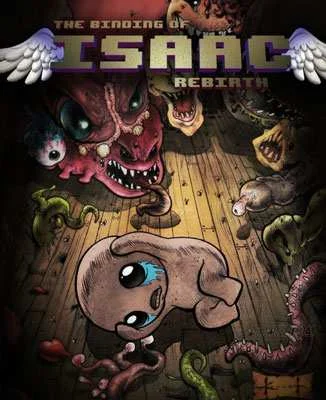
The Binding of Isaac: Rebirth on PC is a top-down action roguelike shooter with RPG systems, procedural room layouts, and a deliberately hostile learning curve. The storefront name remains The Binding of Isaac: Rebirth; it has not been replaced by a renamed base edition. Players looking for the expanded modern experience should understand how Rebirth connects to Afterbirth, Afterbirth+, Repentance, and the free Repentance+ update.
Developed by Edmund McMillen and Nicalis, Isaac combines fast room-by-room combat with unpredictable item combinations, secret routes, unlockable characters, and hundreds of completion goals. It is a game about improvisation rather than a fixed build order.
How The Core Run Works
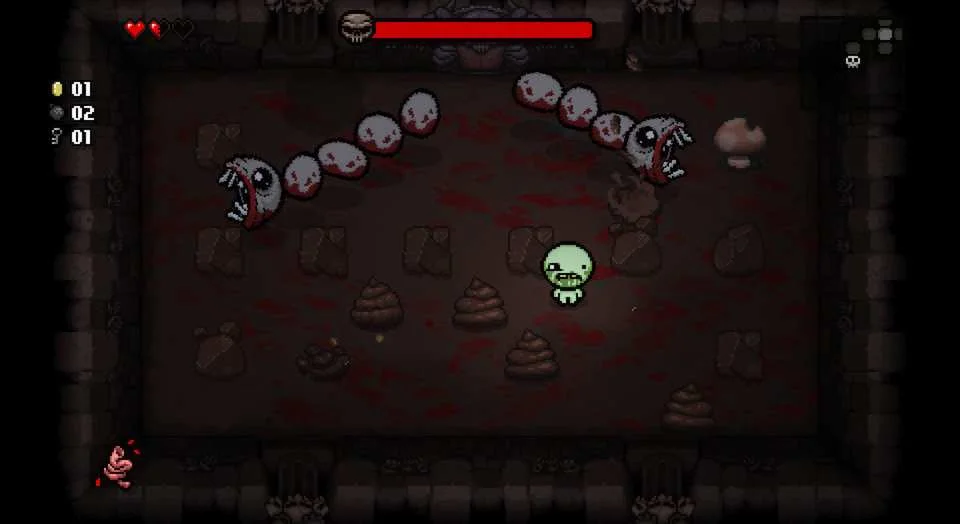
Each run begins with Isaac or another unlocked character entering a procedurally arranged series of rooms. You move through a top-down 2D dungeon, clear enemies, search for consumables, open treasure rooms, manage keys and bombs, and prepare for a boss encounter on each floor.
Isaac attacks primarily by firing tears, but the basic projectile system quickly becomes much stranger. Items can alter tear behavior, movement, damage, range, shot patterns, familiars, health, or the rules governing rooms themselves.
The most important skill is reading the run as it develops. A defensive item may be more valuable than a damage upgrade, while a seemingly weak pickup can become powerful when combined with a specific character, trinket, pill effect, or active item.
Death ends the current attempt, but failure is not wasted. You learn enemy patterns, recognize room layouts, discover item interactions, and unlock new content by completing objectives. The progression loop rewards knowledge as much as reflexes.
Items, Synergies, And Risk
Item synergies are the defining system. Isaac does not ask you to follow a conventional class or talent tree. Instead, each run creates a temporary build from passive collectibles, active items, familiars, cards, pills, trinkets, and stat changes.
Some combinations simply increase damage. Others transform the way you play by changing tears into bouncing shots, beams, explosives, homing projectiles, orbitals, or unusual status effects. A powerful combination can also create new risks, such as reduced control, fragile health, or effects that make rooms harder to read.
Resource management matters because doors, shops, secret rooms, curse rooms, locked chests, and special rooms all compete for limited keys, bombs, coins, and health. Choosing whether to spend resources now or preserve them for a later floor is often more important than winning the next room quickly.
The game also uses alternate paths, secret areas, challenge runs, daily runs, multiple endings, and character-specific objectives to push players beyond simply reaching a final boss. Completion is a long-term catalog of discoveries rather than a single campaign finish.
Characters And Mastery Loops
Isaac starts with a limited selection of playable characters, while additional characters and variants become available through progression. They are not cosmetic choices. Character health, starting items, movement, damage rules, and special mechanics can change the correct strategy from the first room.
Some characters encourage aggressive damage racing. Others require careful health management, familiar positioning, resource conversion, or deliberate use of unusual starting equipment. Learning one character does not automatically prepare you for the next.
Challenge runs provide controlled rule changes that test specific skills or force unusual item pools. Daily runs and seeded runs add another layer for players who want repeatable conditions, score comparison, or a way to practice a known route.
This structure is why Rebirth remains difficult to summarize through a conventional campaign length. Its real content is the repeated mastery loop: start a run, make imperfect decisions, survive long enough to uncover something new, and gradually complete more of the game.
Rebirth, Repentance, And The Current PC Package
The base PC product is still listed as The Binding of Isaac: Rebirth. It is the required foundation for the major expansions, rather than a retired edition that has been renamed or replaced.
Afterbirth and Afterbirth+ expand the Rebirth framework with additional items, characters, enemies, rooms, challenges, and progression systems. Repentance is the major definitive expansion that incorporates the earlier expansion content alongside substantial new gameplay, routes, characters, enemies, bosses, balance changes, and secrets.
Repentance+ is listed as free DLC for the Rebirth ecosystem and adds official online multiplayer features. It requires the relevant paid content to operate correctly, so it should be treated as an online-focused addition to the complete Rebirth package, not as a standalone game.
For a new PC player, the practical buying question is simple: Rebirth gives you the foundation, while the complete bundle with Afterbirth, Afterbirth+, and Repentance provides the broadest version of the game. Repentance+ extends that package with online play.
Who Should Play It
Rebirth suits players who enjoy procedural dungeon crawling, difficult action, hidden unlocks, build experimentation, and games that reveal their systems slowly. It is especially strong for players who like discussing item interactions or maintaining a completion checklist over a long period.
It is less suitable if you want a predictable story campaign, transparent item descriptions from the start, relaxed progression, or a consistently balanced power curve. Runs can be brilliant, awkward, unfair-looking, or hilariously broken, and that volatility is central to the design.
The tone is also intentionally uncomfortable. Religious imagery, body horror, gore, childish symbolism, and crude humor are part of the presentation. The mature-content warning should be taken seriously by players sensitive to those themes.
Players who enjoy a faster arena-survival interpretation of procedural combat may also find useful mechanical overlap in top-down roguelite shooters such as Achilles: Survivor, although Isaac places much more emphasis on room tactics, secrets, and item combinations.
PC Features And Multiplayer Reality
The Steam version supports keyboard and controller input, with integrated controller support and Xbox controller support documented on the storefront. Analog movement and speed control make a gamepad a natural option, while keyboard play remains practical for players who prefer precise directional inputs.
Steam features include Steam Cloud, achievements, trading cards, Remote Play on TV, Family Sharing, and Remote Play Together. Steam Deck compatibility is also listed as verified, giving handheld PC players an officially supported control path.
The base Rebirth experience supports single-player and local shared or split-screen play. Remote Play Together can extend local-style multiplayer through Steam, but that is different from a dedicated native online matchmaking system.
For official online co-op, the relevant addition is Repentance+. Its online modes support groups of up to four players, including friend matches, public matches, and quick matches. Online play is therefore a content-package question, not a feature that every Rebirth installation provides automatically.
Steam lists English for the interface, audio, and subtitles. No broader official localization should be assumed from the current storefront listing.
Similar PC Games
Isaac's closest comparisons are other action roguelikes built around repeated attempts, randomized rewards, and build decisions. It differs from many modern roguelites by making secrets, unlock conditions, room knowledge, and item interactions just as important as direct combat.
Players who want a more automated survival-shooter structure can compare it with solo procedural swarm games like Deep Rock Galactic: Survivor. That game emphasizes movement, mining, and automatic weapons, while Isaac demands more direct aiming and room-by-room positioning.
Fans of co-op roguelike action may also consider dark fantasy multiplayer roguelikes such as Ravenswatch. Ravenswatch focuses on real-time hero abilities and coordinated party combat; Isaac is more compact, secretive, and centered on stacking unpredictable effects.
The comparison is useful, but Isaac's identity comes from its particular combination of top-down shooting, hostile resource decisions, grotesque humor, hidden routes, and an item pool capable of reshaping an entire run.
The Binding Of Isaac: Rebirth FAQ
Is The Binding of Isaac: Rebirth still the current PC game name?
Yes. The base PC listing remains The Binding of Isaac: Rebirth. Repentance and Repentance+ are expansions or DLC connected to that base product, not replacement names for the core game.
Which version should a new PC player buy?
Start with Rebirth if you want the base experience. Choose the complete Rebirth bundle with Afterbirth, Afterbirth+, and Repentance if you want the expanded content set and the most complete progression structure. Repentance+ is the additional online-focused DLC.
Does Rebirth have co-op?
Yes. Rebirth supports local shared or split-screen multiplayer, and Steam Remote Play Together can provide a remote local-style session. Native online co-op for up to four players is associated with Repentance+.
Does the PC version support controllers?
Yes. The Steam listing documents integrated controller support and Xbox controller support, alongside keyboard input.
Does The Binding of Isaac: Rebirth support mods?
The expanded PC ecosystem, particularly Afterbirth+ and Repentance, is associated with community mod support. Mod compatibility can vary by expansion and game version, so players should check whether a mod targets Rebirth, Afterbirth+, Repentance, or Repentance+.
Is there a normal campaign to complete?
There is a narrative framework and a large set of endings, but the main structure is repeated randomized runs. Progress comes from defeating bosses, unlocking characters and items, completing challenges, discovering routes, and filling out the game's extensive achievement and collection systems.
System Requirements
Minimum: |
Processor: Core i3 2.4 GHz Graphics: 1 GB VRAM Memory: 8 GB RAM Disk space: 900 MB HDD Operating system: Windows XP/Vista(SP2)/7(SP1)/8 |
Screenshots


Trailer/Gameplay
Download
The Binding of Isaac: Rebirth (2014), 1.82GB
ElAmigos release, game is already cracked after installation (crack by Codex/Rune).

Updated to version 1.9.7.14 (13.09.2025).

1. Extract files.
2. Burn or mount the image.
3. Install the game.
4. ElAmigos release, game is already cracked after installation.
5. Play the game. If you like this game, BUY IT!
The Binding of Isaac: Rebirth Download
🔒 Premium access required
To see and use the download links, you must be logged in and have an active PREMIUM account.
* Unlock downloads via Torrent and TeraBox.
DLC: Repentance+, Repentance, Afterbirth, Afterbirth+, Soundtrack.
Torrent Download
The best torrent download speeds are with qBittorrent!