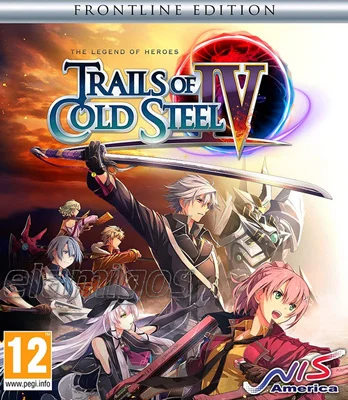
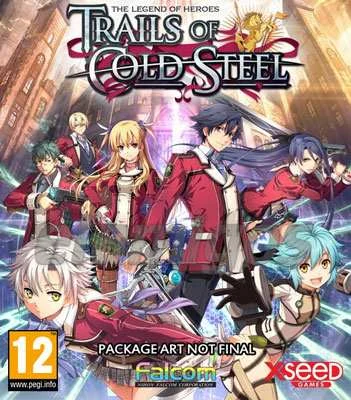
The Legend of Heroes: Trails of Cold Steel II

- Category:
- Release date:
- Game Genre:RPG, TPP, fantasy, science fiction, turn-based, jRPG
- Developer:Nihon Falcom Corp Publisher: NIS America
- Release:ElAmigos
- Platform:PC
- Languages (subtitles):English, Japanese
- Dubbing/Audio:English, Japanese
- Crack:Codex
- Game size:8.58GB
Game Description
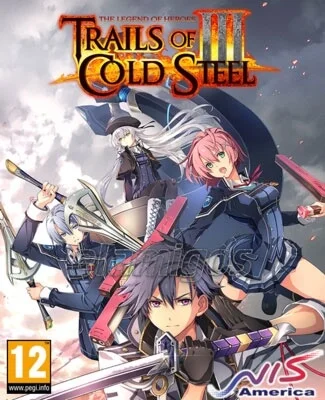
The Legend of Heroes: Trails of Cold Steel II is a PC story-driven turn-based JRPG from Nihon Falcom, published for Western PC players by XSEED Games, the publishing brand of Marvelous USA. The current Steam and GOG listings still use the same title; there is no verified storefront rebrand or replacement edition. It is a direct sequel to Trails of Cold Steel, and its narrative assumes you already know Rean Schwarzer, Class VII, and the political tensions of Erebonia.
That continuity matters. Cold Steel II begins after the first game’s decisive upheaval and follows Rean as he searches for his missing classmates while civil war spreads across the Erebonian Empire. Players looking for a self-contained entry can follow the broad conflict, but the character relationships, returning figures, and story reveals are substantially more effective when played after the original school-life turn-based JRPG Trails of Cold Steel.
Turn-Based Combat Across a Nation at War
Cold Steel II uses a third-person 3D perspective for exploration and a tactical, menu-driven battle system for encounters. Characters can move around the combat area before attacking, casting Arts, using Crafts, or spending CP on powerful S-Crafts. Positioning is not a separate strategy layer, but it affects area attacks, defensive spacing, and the value of character links.
The main combat loop is built around reading the turn order, exploiting enemy weaknesses, and building a party whose abilities cover one another. Arts provide elemental and utility options, while Crafts offer character-specific attacks, buffs, debuffs, healing, and disruption. Battles reward preparation rather than simply selecting the strongest attack every turn.
Tactical Links connect party members so they can trigger follow-up attacks and assist one another after an enemy is unbalanced. Link levels grow through combat and character interaction, turning the relationship system into a practical battle mechanic rather than a purely narrative feature. Choosing who fights together can therefore change how reliably the party converts an opening into extra damage.
Quartz, Overdrive, and Divine Knight Battles
Character customization centers on the Arcus combat orbment and its Quartz system. Equipping Quartz changes statistics, grants Arts, and adds passive effects, while Master Quartz provide broader build identities that can push a character toward damage, support, defense, or elemental specialization. The system is flexible enough to reward experimentation without requiring a single correct party setup.
Cold Steel II introduces Overdrive, a powerful state activated through compatible combat links. Once triggered, the linked pair receives several consecutive turns, Arts can be cast instantly, and physical attacks gain improved access to unbalance opportunities. Overdrive is strongest when saved for a boss phase, a dangerous enemy group, or a setup that lets the party chain buffs and high-impact attacks.
The sequel also expands the role of Valimar, Rean’s Divine Knight. These mech battles use a different one-on-one ruleset from normal party combat. Enemy stances reveal vulnerable locations, so the player must choose attacks that target the correct body part before committing to heavier damage. They are story-focused encounters, but the stance-reading mechanic gives them a distinct rhythm instead of treating Valimar as another ordinary party member.
Regular combat and Divine Knight encounters serve different purposes. Party battles are about formation, turn manipulation, Quartz, and link synergy; mech fights are about identifying openings and managing a smaller set of high-impact actions. That separation is one of the sequel’s clearest mechanical identities.
From Academy Routine to Open Conflict
The first game’s school-year structure gives way to a more mobile adventure. Rean travels through Erebonia, revisits familiar locations, explores new areas, accepts optional requests, and works to reunite the scattered members of Class VII. The pacing still alternates between story scenes, exploration, combat, and character-focused downtime, but the setting is shaped by the consequences of a national conflict.
Optional content remains important. Side quests, treasure chests, cooking, fishing, books, enemy information, and NPC conversations add context to the changing political situation. Towns are not just rest stops; their dialogue and available tasks reflect how ordinary people respond to the war. Players who enjoy completing every request will find a steady mastery loop beyond the main route.
Bonding events continue to develop Rean’s relationships with his classmates and allies. These scenes provide character context and can improve combat links, while the limited availability of bonding opportunities makes planning useful for completion-focused players. The game is not a dating simulator in isolation, but relationship management is an important part of its social-RPG structure.
Edition, DLC, and Content Model
The PC release is a paid single-player game rather than a free-to-play service. Its core campaign, exploration, combat systems, side activities, and story content are packaged as the main product. The storefront ecosystem also lists optional add-ons, primarily cosmetic items such as outfits, accessories, glasses, ride-alongs, and Arcus covers.
Those cosmetic add-ons are separate from the campaign’s essential progression. Players do not need them to access the central story, Quartz customization, Overdrive, Tactical Links, or Divine Knight battles. The practical buying decision is therefore straightforward: the base game provides the full RPG structure, while the additional packs are for players who want extra appearance options or collection completeness.
There is no verified multiplayer, online co-op, local co-op, or competitive mode. The game is designed around a solo campaign with a fixed protagonist, a large rotating cast, and story-controlled party changes. Steam features such as achievements, cloud saves, leaderboards, and instant resume do not turn it into a multiplayer title.
PC Features That Matter
The PC port was built with a broad set of configuration options rather than a bare console conversion. It supports keyboard and mouse rebinding, configurable gamepad controls, remappable button prompts, adjustable field of view, arbitrary resolution options, and extensive visual settings. The port also includes configurable Smart Turbo, which speeds up exploration and battles while handling input prompts more carefully than a simple global fast-forward.
Ultrawide support extends through normal gameplay, battles, cutscenes, and selected interface screens. The implementation is unusually useful for players with wider displays because it was designed around more than just stretching the central 3D view. The game also includes autosaving options and a fast-resume function that can return players to their latest save without navigating the full startup sequence.
Controller users receive integrated button remapping, while keyboard-and-mouse players can customize the control layout. The title is single-player and does not advertise an anti-cheat requirement. The PC versions were also designed as DRM-free releases, although Steam-specific conveniences such as cloud functionality and instant resume depend on the storefront environment.
Localization is focused rather than broad. The PC version provides English and Japanese text, with English and Japanese voice options. English audio includes additional voiced material compared with the earlier console versions, while the Japanese audio option gives returning series players another way to experience the cast.
Who Should Play It
Cold Steel II is a strong fit for players who want a long-form JRPG where battles, political storytelling, optional quests, and character relationships reinforce one another. Its best audience is comfortable with frequent dialogue, a large cast, recurring terminology, and a campaign that expects attention to the wider Trails setting.
It is less suitable for players seeking immediate action, a compact story, or a standalone adventure with minimal backstory. The combat is turn-based, the narrative takes its time, and many of the most meaningful payoffs depend on events from the first Cold Steel. Players who prefer fast real-time combat may find Nihon Falcom’s urban fantasy action RPG Tokyo Xanadu eX+ a better mechanical match, while Cold Steel II is the choice for deliberate party tactics and serialized world-building.
Similar PC JRPG Routes
The closest companion is Trails of Cold Steel, which should normally be played first because Cold Steel II continues its cast, systems, and unresolved conflicts directly. The wider Trails universe is also relevant: story-rich turn-based adventures like Trails in the Sky 1st Chapter share the series’ emphasis on NPC dialogue, political context, side quests, and gradual character development, even though its combat presentation differs.
Cold Steel II stands apart from many other PC JRPGs by combining a school-and-bonding framework with a national civil war, tactical turn order, customizable orbments, and dedicated mech encounters. It is best understood as the middle movement of a larger arc, not as an isolated anthology entry.
The Legend of Heroes: Trails of Cold Steel II FAQ
Is Trails of Cold Steel II a direct sequel?
Yes. It follows the events of Trails of Cold Steel closely and continues Rean Schwarzer’s story with Class VII. Playing the first game beforehand is strongly recommended for the character and political context.
Has the PC version been renamed or replaced?
No verified rebrand is active on the current Steam or GOG listings. The storefront title remains The Legend of Heroes: Trails of Cold Steel II. The Japanese name, Sen no Kiseki II, is an alternate regional title rather than a new Western edition.
What kind of combat does it use?
It uses turn-based tactical combat with movable characters, Arts, Crafts, S-Crafts, Quartz, Master Quartz, Tactical Links, turn-order bonuses, and the Overdrive system. Separate Divine Knight battles use stance targeting and one-on-one mech combat.
Does Trails of Cold Steel II support multiplayer?
No. The game is a single-player RPG with no verified online co-op, local co-op, split-screen, or competitive multiplayer mode.
Does the PC version support controllers and ultrawide displays?
Yes. It supports configurable gamepad controls, keyboard-and-mouse rebinding, remappable prompts, and ultrawide presentation across gameplay, battles, cutscenes, and selected interface areas.
Which languages are available on PC?
The PC version supports English and Japanese text, with English and Japanese voice options. English audio also includes additional voiced lines added for the PC release.
What is included in the base game?
The base product contains the full solo campaign, its exploration areas, party combat, bonding events, side quests, Overdrive, and Divine Knight encounters. Separate cosmetic add-ons are available for players who want extra outfits and accessories, but they are not required for the main story.
System Requirements
Minimum: | Recomended: |
| Processor: Intel Atom x7-Z8700 3.4 GHz Graphics: 1 GB GeForce 460 GTX/Radeon HD 5770 Memory: 4 GB RAM Disk space: 9 GB HDD Operating system: Windows 7 | Processor: Intel Core i3 3 GHz Graphics: 2 GB GeForce 770 GTX/Radeon R9 280X Memory: 4 GB RAM Disk space: 9 GB HDD Operating system: Windows 7 |
Screenshots


Trailer/Gameplay
Download
The Legend of Heroes: Trails of Cold Steel II (2018), 8.58GB
ElAmigos release, game is already cracked after installation (crack by Codex).

Updated to version 1.4 (05.11.2018); 13 DLCs are included.
+ update 1.4.1 (31.01.2019) & crack (by Codex), 3MB

1. Extract files.
2. Burn or mount the image.
3. Install the game.
4. ElAmigos release, game is already cracked after installation.
5. Play the game. If you like this game, BUY IT!
The Legend of Heroes: Trails of Cold Steel II Download
🔒 Premium access required
To see and use the download links, you must be logged in and have an active PREMIUM account.
* Unlock downloads via Torrent and TeraBox.
Torrent Download
The best torrent download speeds are with qBittorrent!