FAR: Lone Sails
Edit date: 6-01-2023, 16:48
Reason: Updated to version 1.30 (08.06.2022)
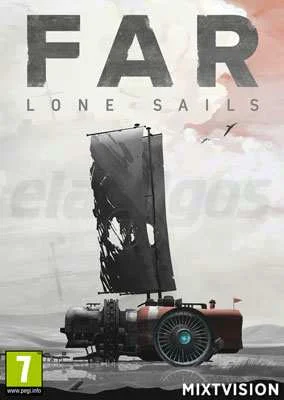
- Category:
- Release date:
- Game Genre:Adventure, science fiction, Post Apocalypse, survival, indie games, 2.5 D
- Developer:Okomotive Publisher: Mixtvision Mediengesellschaft GmbH
- Release:ElAmigos
- Platform:PC
- Languages (subtitles):English, French, Italian, German, Spanish, Russian, Polish, Portuguese-Brazil, Japanese, Korean, Simplified Chinese, Traditional Chinese, Arabic, Ukrainian
- Dubbing/Audio:English
- Crack:Codex
- Game size:0.85GB
Game Description
FAR: Lone Sails is a 2.5D vehicle adventure for PC built around crossing a dried-out seabed in a strange landship. Current Steam and GOG storefronts still use the original title, with no verified rebrand, renamed edition, or replacement PC version. Developed by Okomotive, it combines environmental puzzles, light resource management, and wordless exploration instead of combat or conventional quest systems.
The game is deliberately quiet. Its story is communicated through abandoned structures, scattered relics, changing weather, and the condition of the world rather than dialogue-heavy scenes or written exposition.
Operate a Landship, Not a Conventional Vehicle
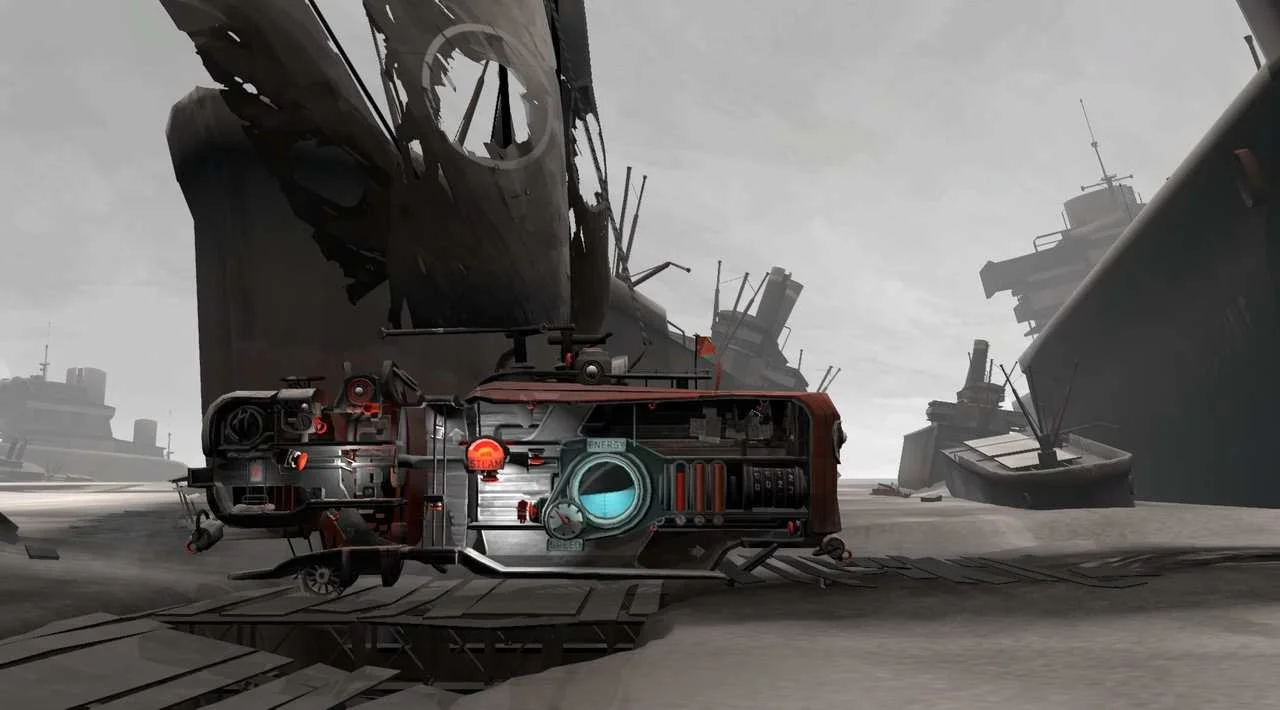
The central loop is simple to describe but more tactile to play: move from left to right, leave the vehicle to solve obstacles, collect usable objects, and return to keep the machine moving. The vehicle is not just transportation. It is the game’s main puzzle, progression system, and companion.
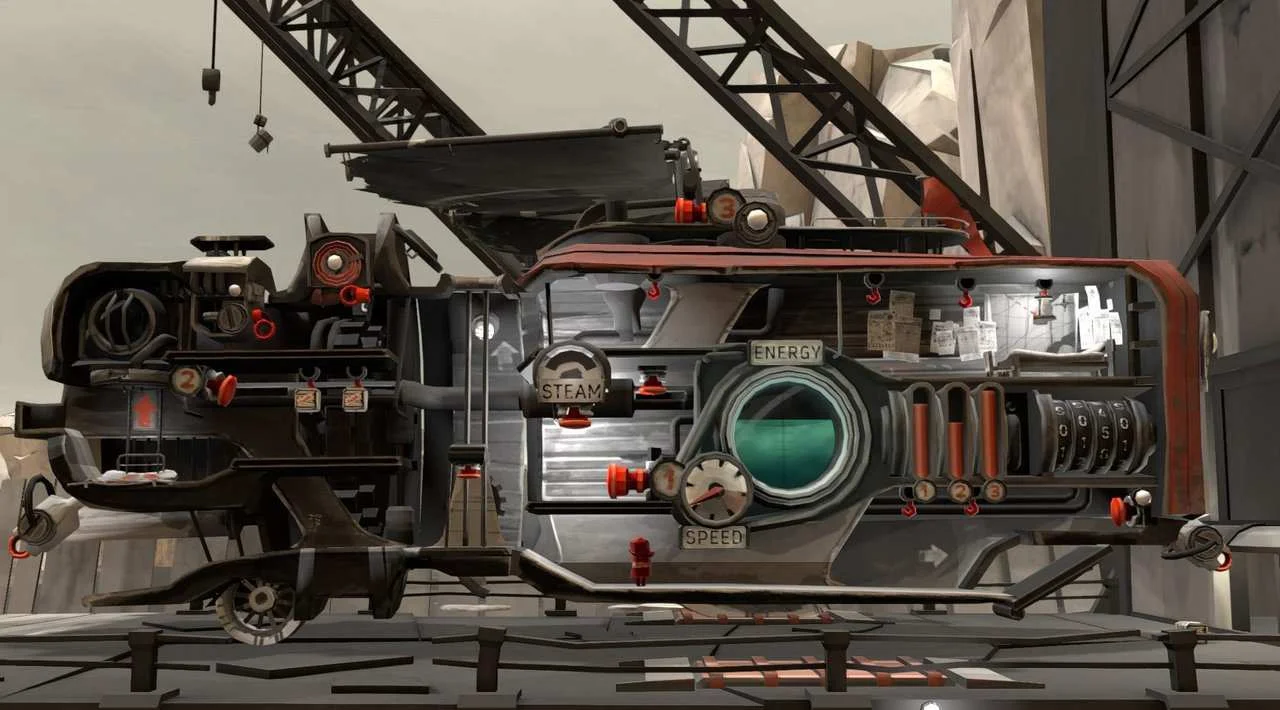
Inside the vessel, you manage several connected systems. Fuel powers the engine, the boiler can generate additional momentum, and the large sail uses favorable wind to reduce dependence on stored fuel. The player must learn when to feed the furnace, release pressure, deploy the sail, and keep the machine operating during long stretches of travel.
That management is active rather than spreadsheet-based. You carry fuel and scrap through the vehicle, interact with levers and mechanisms, and respond when something stops working. Repairing damage, feeding the engine, handling steam pressure, and deploying the sail form the practical rhythm of the journey.
Outside the landship, the character handles light platforming and environmental interaction. Roadblocks often require a short sequence of actions instead of a traditional inventory puzzle, keeping the focus on understanding how the world and vehicle fit together.
Environmental Puzzles and Silent Storytelling
FAR: Lone Sails has no combat system and no enemy encounters in the conventional sense. The tension comes from hazardous weather, mechanical failures, blocked routes, and the possibility of falling behind when the vehicle needs attention.
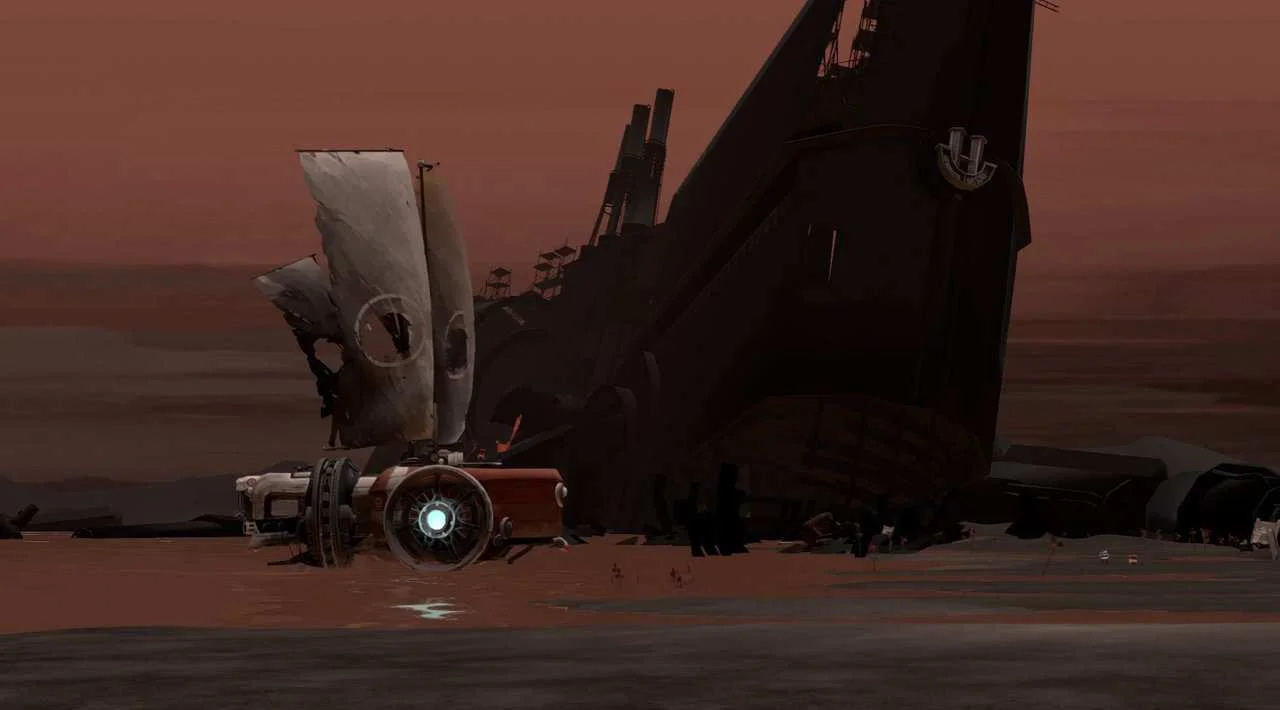
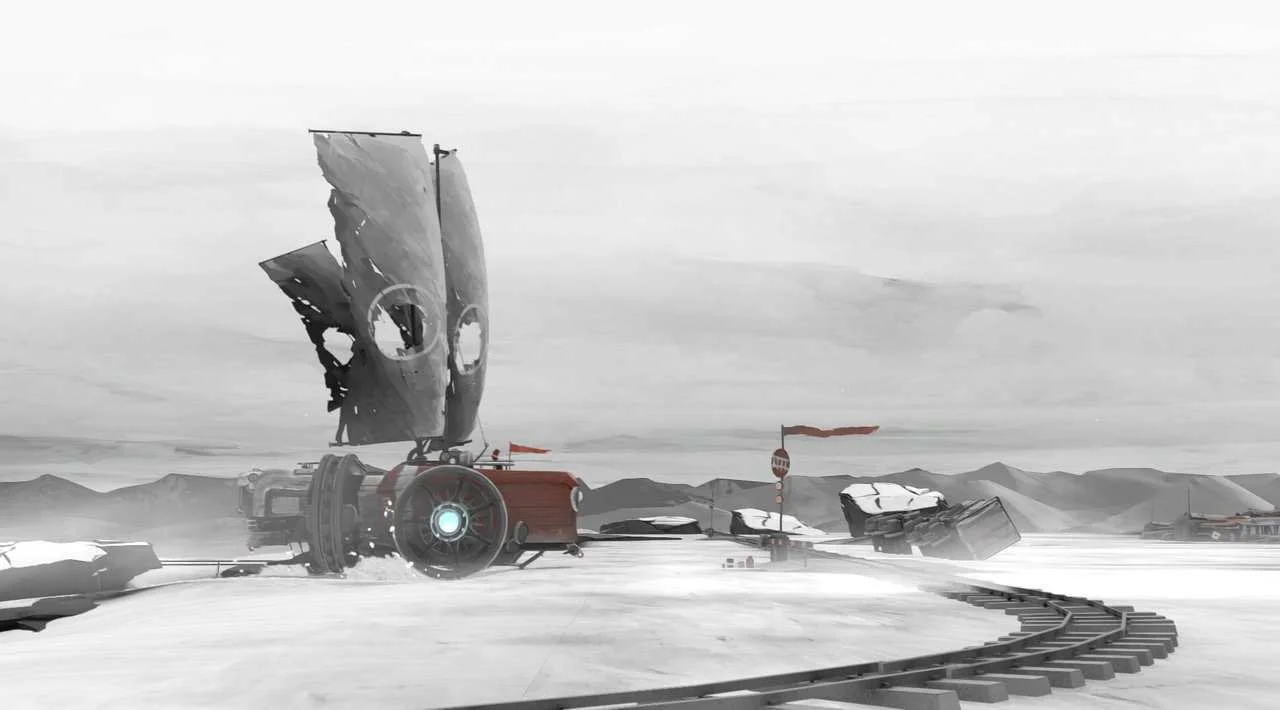
The game’s environmental storytelling leaves room for interpretation. Ruined buildings, elevated tracks, industrial remains, and abandoned objects suggest what happened to the civilization that once occupied the region. The player is not given a long chronology or a cast of speaking characters. Instead, meaning accumulates through visual context.
This approach makes observation part of the gameplay. The dried seabed is not an open-world sandbox, but it is more than a corridor between puzzles. Changes in terrain, architecture, and weather establish a sense of movement through a damaged world while keeping the adventure focused and linear.
Players who enjoy atmospheric puzzle adventures with environmental clues may also appreciate first-person mystery games such as Call of the Sea, although FAR: Lone Sails is more mechanical, more side-on, and far less focused on dialogue.
Progression Comes Through the Machine
There is no character level system, combat skill tree, equipment rarity ladder, or branching role selection. Progression comes from learning the vehicle and unlocking additional functions that make it more capable across the route.
New equipment changes how you interact with the journey. Some upgrades improve movement or handling, while others help with collecting resources, repairing the landship, or dealing with obstacles. The result is a practical form of vehicle progression: you become more efficient because both you and the machine have expanded capabilities.
Scrap and found objects also support the journey. Resources are not used to create a large crafting economy. They are part of a compact survival loop that encourages you to search the environment, bring useful materials aboard, and decide how carefully to manage what the vehicle can carry.
The structure is designed around completion and atmosphere rather than repeated procedural runs. Once the route is finished, the main reward is understanding the full journey and the story implied by its environments, not an endless endgame system.
Content, Editions, and Commercial Model
The PC version is a paid single-player game. Current storefront listings present the core adventure as a standalone purchase rather than a free-to-play product, subscription service, or multiplayer package.
Steam lists two optional add-ons: a digital artbook and a soundtrack. These are bonus-content products rather than gameplay expansions, and the base adventure is not divided into a season pass or a collection of major story chapters.
Steam also lists a digital collector’s bundle containing the game, soundtrack, and artbook. The standard purchase remains the relevant option for players who only want the playable adventure.
The game’s scale is intentionally compact. It does not promise an open-world map, a large quest database, or a long-term progression grind. Its value comes from the combination of vehicle maintenance, environmental puzzles, and a tightly controlled atmospheric journey.
Who Should Play FAR: Lone Sails?
FAR: Lone Sails is a strong fit for players who want a contemplative PC adventure with clear mechanical interactions and minimal narrative interruption. It suits people who enjoy discovering how a machine works, reading a setting through visual details, and alternating between calm travel and brief moments of urgency.
It is also a good choice for players who prefer games without combat. There are no weapons, enemy arenas, boss fights, or character builds competing for attention. The challenge is based on timing, route awareness, resource handling, and solving small environmental problems.
Players seeking a large open world, deep survival simulation, extensive dialogue, or action-heavy platforming should set expectations accordingly. FAR: Lone Sails is linear, quiet, and intentionally restrained. Its systems support the journey instead of expanding into a broader sandbox.
PC Features, Controls, and Localization
The PC storefront ecosystem is straightforward. Steam lists single-player support, Steam Achievements, Steam Cloud, Family Sharing, and Steam Remote Play on TV. GOG lists controller support and provides a DRM-free version that does not require GOG Galaxy or an online connection to play.
The game is best understood as a solo experience. There is no verified co-op, split-screen mode, competitive multiplayer, or online campaign. No dedicated server tools, mod support, anti-cheat requirement, or separate gameplay launcher is advertised in the current PC storefront information.
Steam lists interface and subtitle support for English, German, French, Italian, Spanish - Spain, Japanese, Brazilian Portuguese, Russian, Simplified Chinese, Polish, Traditional Chinese, Korean, Arabic, and Ukrainian. Full voice audio is not listed. That fits the game’s mostly visual approach, where machinery, music, sound effects, and environmental composition carry the experience.
For another PC adventure centered on mood, unusual spaces, and indirect narrative rather than combat-first progression, Somerville offers a darker 2.5D science-fiction alternative. Its stealth and danger systems make it more threatening, while FAR: Lone Sails remains more focused on operating one evolving vehicle.
Similar Games and Genre Position
FAR: Lone Sails sits between a puzzle platformer, a vehicle-management game, and an atmospheric walking adventure. It shares the environmental storytelling language of cinematic side-scrollers, but its defining feature is the landship itself and the need to keep its systems working.
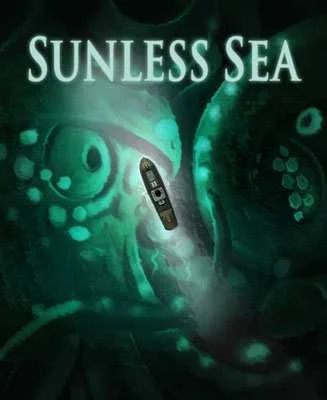
Sunless Sea-style resource management and seafaring exploration provide a useful comparison for players interested in the pressure of keeping a vessel supplied, although Sunless Sea is a much more systemic role-playing game with procedural exploration, crew management, written events, and combat.
The closest experience is therefore not a direct genre match but a mechanical one: a focused journey where movement, maintenance, and discovery are inseparable. FAR: Lone Sails is at its best when the player stops treating the landship as a menu of systems and starts treating it as a physical space that must be understood.
FAR: Lone Sails FAQ
Is FAR: Lone Sails still the current PC name?
Yes. Current Steam and GOG listings use FAR: Lone Sails. No verified PC rebrand, renamed edition, or storefront replacement was found.
Is FAR: Lone Sails multiplayer or co-op?
No. The PC version is presented as a single-player adventure. There is no official co-op, split-screen, or competitive multiplayer mode.
Does FAR: Lone Sails have combat?
No traditional combat is included. The game focuses on vehicle operation, environmental puzzles, light platforming, resource handling, weather, and mechanical hazards.
What do you do in FAR: Lone Sails?
You operate a landship across a dried-out ocean floor, gather fuel and materials, repair the vehicle, use its engine and sail, overcome roadblocks, and interpret the remains of a vanished civilization.
Does the PC version support controllers?
Yes. GOG lists controller support, while Steam also lists Remote Play on TV and standard PC platform features. The game is designed for direct interaction with the vehicle’s switches, levers, and systems.
What languages are supported?
Steam lists interface and subtitle support across 14 languages, including English, German, French, Italian, Spanish, Japanese, Brazilian Portuguese, Russian, Chinese, Polish, Korean, Arabic, and Ukrainian. Full voice audio is not listed.
Is there any gameplay DLC?
No gameplay expansion is listed for the current PC storefronts. Optional digital artbook and soundtrack add-ons are available, while the main vehicle adventure is sold as a standalone game.
System Requirements
Minimum: | Recomended: |
| Processor: Intel Core 2 Quad Q6600 2.4 GHz / AMD FX-8120 3.1 GHz Graphics: 1 GB GeForce GTX 460 / Radeon HD 6570 Memory: 4 GB RAM Disk space: 1 GB HDD Operating system: Windows 7 64-bit | Processor: Intel Core i7-920 2.7 GHz / AMD Phenom II 945 3.0 GHz Graphics: 2 GB GeForce GTX 680 / 3 GB Radeon R9 280X Memory: 8 GB RAM Disk space: 1 GB HDD Operating system: Windows 7/8/10 64-bit |
Screenshots
Trailer/Gameplay
Download
FAR: Lone Sails (2018), 0.85GB
ElAmigos release, game is already cracked after installation (crack by Codex).

Updated to version 1.30 (08.06.2022).
Change language in game options.

Included bonus content: Soundtrack (mp3), Artbook.

1. Extract files.
2. Burn or mount the image.
3. Install the game.
4. ElAmigos release, game is already cracked after installation.
5. Play the game. If you like this game, BUY IT!
FAR: Lone Sails Download
🔒 Premium access required
To see and use the download links, you must be logged in and have an active PREMIUM account.
* Unlock downloads via Torrent and TeraBox.
Torrent Download
The best torrent download speeds are with qBittorrent!