My Hero One's Justice

- Category:
- Release date:
- Game Genre:Fighting, superheroes, manga and anime, beat 'em up
- Developer:Byking Publisher: Bandai Namco Entertainment
- Release:ElAmigos
- Platform:PC
- Languages (subtitles):English, French, Italian, German, Spanish, Portuguese-Brazil, Korean, Japanese, Traditional Chinese
- Dubbing/Audio:Japanese
- Crack:Codex
- Game size:1.58GB
Game Description
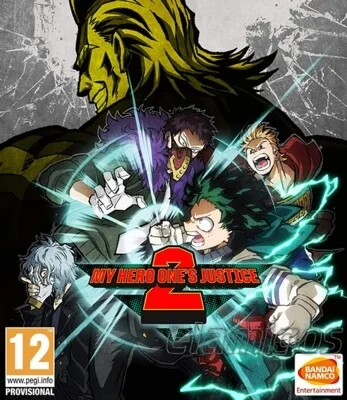
My Hero One's Justice PC is a 3D anime arena fighter built around Quirk-powered battles from My Hero Academia. The current Steam listing still uses the original name, and there is no verified rebrand to My Hero Academia: All's Justice; that is a separate, newer Bandai Namco game rather than a replacement edition. Byking developed the game, while BANDAI NAMCO Entertainment published it.
The appeal is straightforward: choose a hero or villain, enter a destructible arena, build a team with support characters, and turn each fighter's Quirk into a distinct combat style. It is designed for fans who want anime spectacle and accessible 3D movement more than a strict tournament fighter with traditional 2D footsies.
Quirk combat in a 3D arena
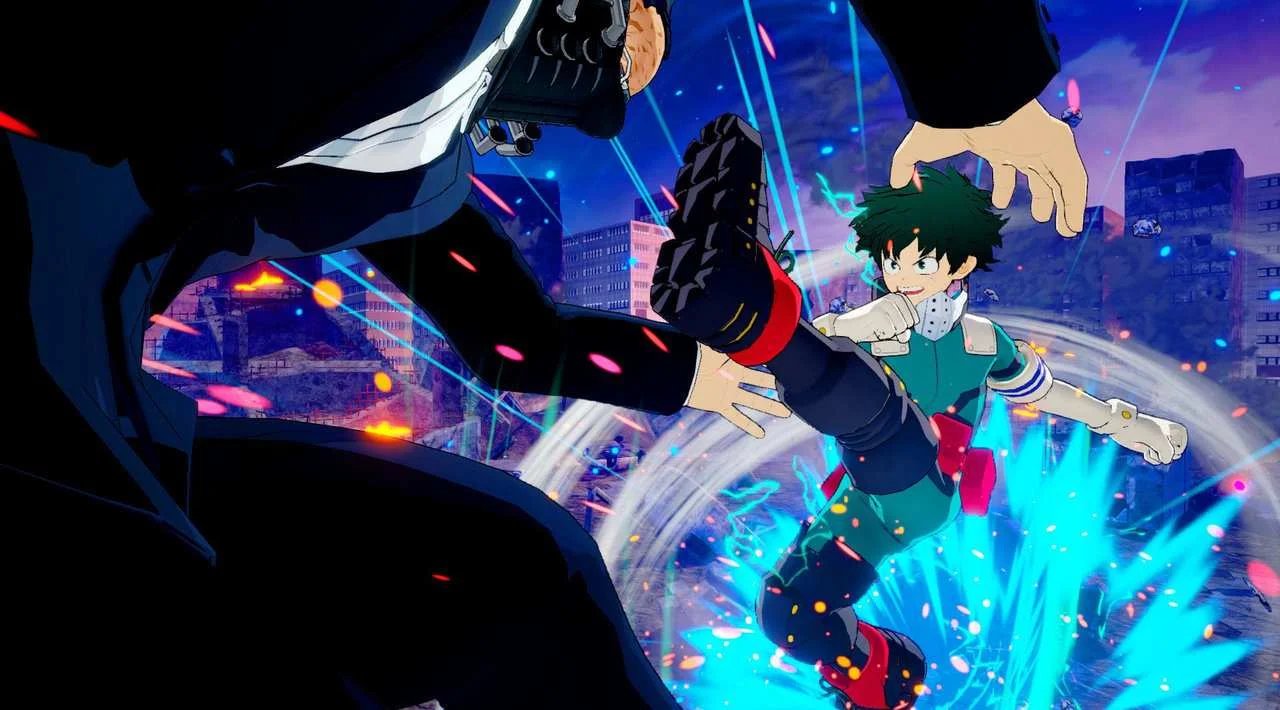
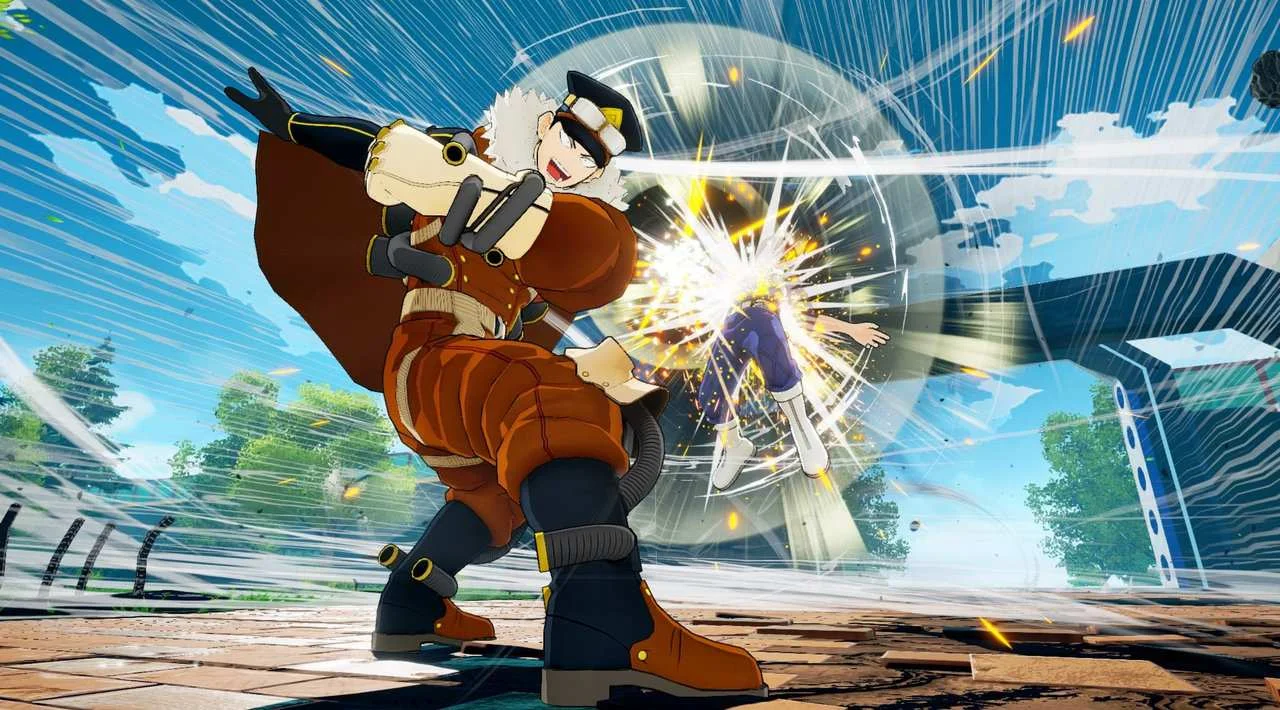
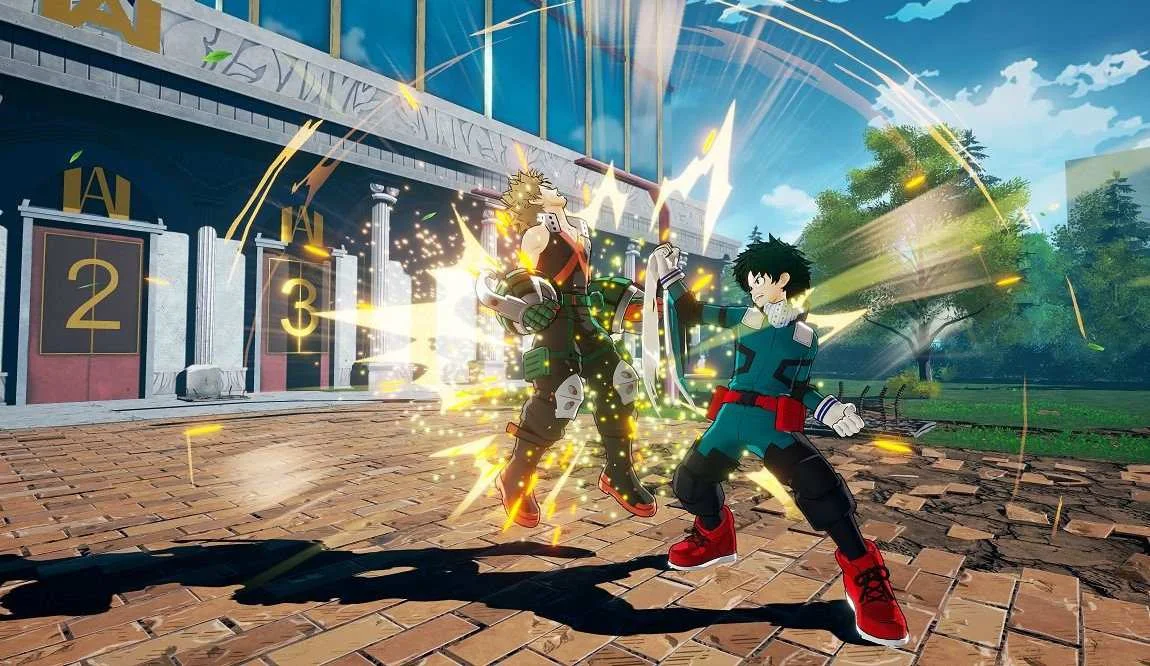
Matches use a free-movement arena perspective rather than a fixed side view. Fighters can run across the stage, jump around attacks, pressure opponents with close-range strings, and use Quirk abilities to control space. The result is a flexible combat loop where movement matters almost as much as the attack buttons.
Each character is defined by a different Quirk toolkit. Deku uses One For All, Bakugo turns Explosion into aggressive pressure, Shigaraki threatens opponents with Decay, and other characters bring their own projectiles, mobility tools, grabs, traps, or defensive options. Learning how a fighter's Quirk changes neutral play is more important than memorizing a universal combo route.
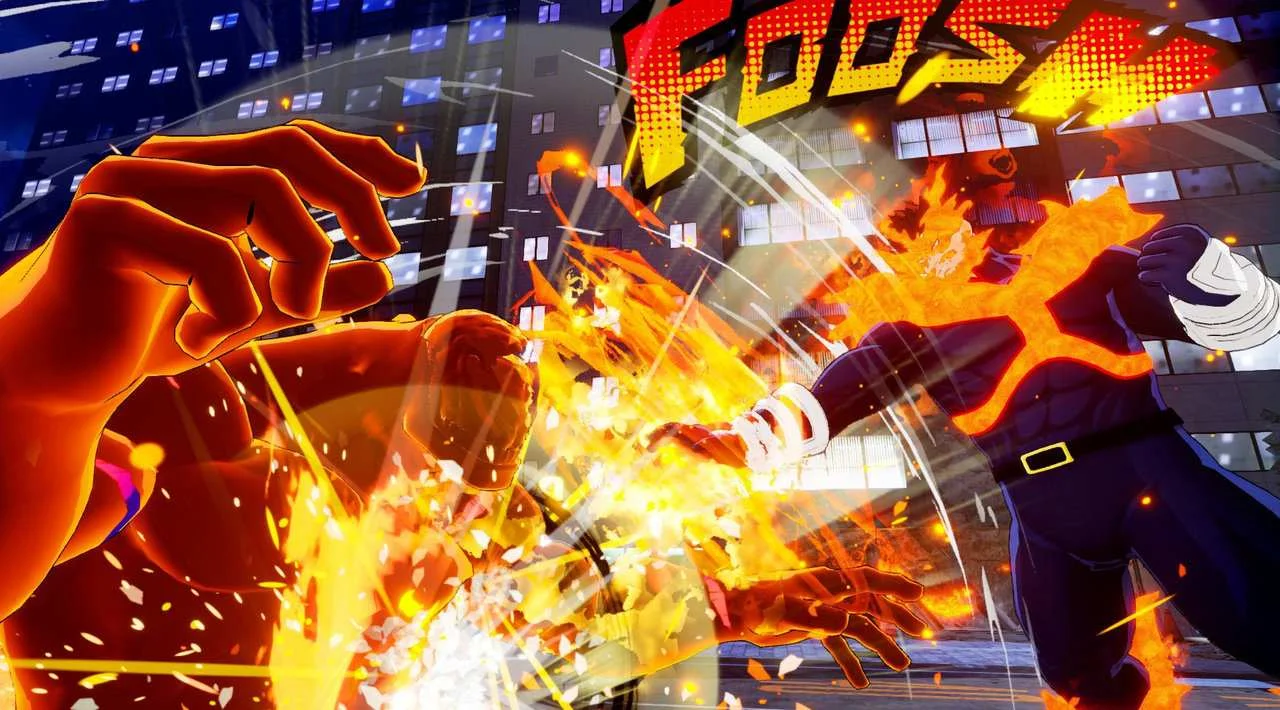
Attacks can interact with the environment, making destructible stages part of the presentation and the match flow. Arenas are not just static backdrops: powerful exchanges can damage surroundings and give battles the visual escalation associated with the anime.
The game also uses Plus Ultra techniques for high-impact attacks. Building the necessary resources and finding the right opening creates a clear risk-and-reward loop, especially when a cinematic finisher can swing momentum. New players can begin with simple attacks, while character mastery comes from spacing, timing, defensive reactions, and Quirk-specific setups.
Teams, sidekicks, and the story structure
A defining system is the ability to call on up to two sidekicks during a battle. These support characters add attacks or utility without replacing the selected main fighter, so team construction affects how a character approaches neutral, extends pressure, or escapes danger.
Sidekicks are not interchangeable visual extras. The timing of a support call can create an opening, interrupt an opponent's rhythm, or help a slower character approach. Experimenting with hero and villain combinations gives the versus game more tactical variation than a simple one-character arena brawler.
The single-player campaign presents events from both hero and villain perspectives. That dual viewpoint is one of the game's clearest differences from a straightforward hero-only adaptation, because it lets players revisit the conflict through opposing sides of the My Hero Academia cast.
Story mode is supported by Mission Mode, where players complete battles and earn items used for character and profile customization. There is also an Arcade Mode built around a ladder of CPU opponents; finishing runs with different characters can unlock exclusive items.
The main long-term loop is therefore not an open-world adventure or a role-playing campaign. It is a combination of story completion, mission challenges, customization collecting, arcade runs, training, and repeated versus matches while learning the roster.
Modes for solo, local, and online players
Solo players have several reasons to stay beyond the story chapters. Arcade battles provide repeatable character-focused challenges, Mission Mode adds objectives and unlockable rewards, and training gives players a controlled space to understand Quirk ranges, support timing, and special attacks.
Local multiplayer supports shared or split-screen PvP, making the PC version suitable for two-player matches on the same setup. Steam also lists Remote Play Together, so supported local-versus sessions can be shared through Steam's remote-play system.
Online play includes competitive battles and leaderboards. The structure is focused on player-versus-player matches rather than cooperative story progression, so buyers looking for a co-op campaign should set expectations accordingly.
Players interested in another anime arena fighter with more persistent character progression can compare this focused Quirk combat with anime 3D fighting RPGs like Dragon Ball Xenoverse 2. The two games share arena movement and franchise-driven abilities, but My Hero One's Justice keeps its attention on battles, support calls, and adaptation-focused modes.
Content model and available DLC
The PC release is a paid base game rather than a free-to-play title. The current Steam product page lists six DLC entries, consisting of a free playable Deku Shoot Style item and paid additions connected to characters and missions.
The listed paid content includes Pro Hero Endeavor, an Endeavor mission, Inasa Yoarashi, and additional mission content. Deku Shoot Style is listed separately as a free playable character addition, while its related mission content is paid.
This makes the purchase decision relatively clear. The base game supplies the core story, arena combat, team-support system, and multiplayer framework; the DLC expands the playable roster or adds optional mission content rather than converting the game into a subscription service.
There is no verified storefront rename or definitive-edition replacement for the original game. My Hero One's Justice 2 is the direct sequel, while My Hero Academia: All's Justice is a separate later entry in the broader game series.
Who should play it?
My Hero Academia fans will find the strongest value in the character-specific Quirk design, dual-sided story presentation, anime-style attacks, and customization rewards. It is also a reasonable fit for players who want a fighting game that can be enjoyed casually before its movement and support systems are studied more deeply.
The game is less suitable for players seeking a highly technical 2D fighter, a large competitive scene with modern matchmaking expectations, or a cooperative progression campaign. Its best qualities are licensed character expression and accessible arena action, not simulation-style combat precision.
It also suits groups that want local versus play on PC. A controller is the natural input choice for this style of arena fighting, especially when two players are sharing the same screen and using quick movement, guard, Quirk attacks, and support calls.
PC features, input, and localization
The PC version runs through Steam and lists full controller support. Steam's feature set also includes Steam Cloud, achievements, trading cards, leaderboards, Family Sharing, and Remote Play Together.
For local matches, the important practical feature is the combination of controller support and shared or split-screen PvP. Keyboard play is available through the PC version, but players planning regular versus sessions will generally have a smoother experience with gamepads.
Steam lists interface and subtitle support in English, French, Italian, German, Spanish, Japanese, Korean, Brazilian Portuguese, and Traditional Chinese. Full audio is listed for Japanese, making the language setup particularly relevant for players who prefer the original voice presentation.
Players seeking another licensed arena fighter with team battles and manga-based presentation can also look at anime arena combat in Naruto Shippuden: Ultimate Ninja Storm 4. Its character-switching structure differs from My Hero One's Justice's sidekick system, but both emphasize free movement, cinematic abilities, and franchise-specific matchups.
Similar PC games and buying context
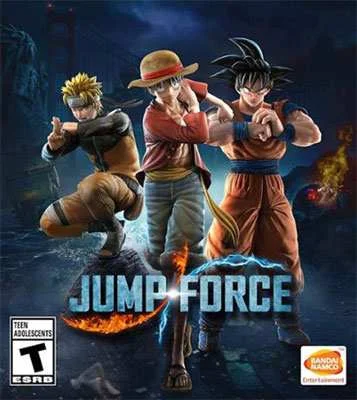
The closest comparisons are other licensed anime fighters rather than conventional arcade fighters. Crossover 3D brawlers such as Jump Force offer the same broad appeal of recognizable manga characters, arena movement, and flashy special attacks, although My Hero One's Justice is more tightly centered on one universe and its Quirk rules.
Dragon Ball Xenoverse 2 is the better comparison for players who want progression systems and a larger role-playing layer. Naruto Shippuden: Ultimate Ninja Storm 4 is closer in its anime adaptation focus. Jump Force is the natural alternative for players who prioritize a crossover roster over a dedicated My Hero Academia campaign.
My Hero One's Justice remains the more focused option when the priority is playing as heroes and villains such as Deku, All Might, Bakugo, Shigaraki, and Endeavor within destructible arenas and a story that presents both sides of the conflict.
My Hero One's Justice FAQ
Has My Hero One's Justice been renamed?
No. The current Steam listing continues to use MY HERO ONE'S JUSTICE. My Hero One's Justice 2 and My Hero Academia: All's Justice are separate games, not verified replacement names for the original.
Is My Hero One's Justice free to play on PC?
No. It is sold as a paid base game on Steam. The storefront lists six DLC entries, including one free playable character addition and paid character or mission content.
Does the PC version support local multiplayer?
Yes. Steam lists shared or split-screen PvP for local matches, along with Remote Play Together for supported remote local-play sessions. The game does not present its story campaign as a cooperative mode.
Can players use a controller on PC?
Yes. The Steam configuration lists full controller support. Keyboard input is also available, but gamepads are the more natural fit for arena movement and local versus play.
What is the real gameplay loop?
The core loop combines hero-and-villain story chapters, Mission Mode objectives, Arcade Mode ladders, unlockable customization items, training, local PvP, and online battles. It is a fighter built around roster mastery and replayable matches rather than an open-world campaign.
What languages are supported?
The PC version supports nine interface and subtitle languages: English, French, Italian, German, Spanish, Japanese, Korean, Brazilian Portuguese, and Traditional Chinese. Japanese is listed as the full-audio language.
System Requirements
Minimum: |
Processor: Intel Core i5-750 2.66 GHz / AMD Phenom II X4 940 3.0 GHz Graphics: 1 GB GeForce GTX 460 / Radeon HD 6870 Memory: 4 GB RAM Disk space: 2 GB HDD Operating system: Windows 7 64-bit |
Screenshots
Trailer/Gameplay
Download
My Hero One's Justice (2018), 1.58GB
ElAmigos release, game is already cracked after installation (crack by Codex).

Updated till 14.11.2018 (Update 2).

1. Extract files.
2. Burn or mount the image.
3. Install the game.
4. ElAmigos release, game is already cracked after installation.
5. Play the game. If you like this game, BUY IT!
My Hero One's Justice Download
 Download from TeraBox
DLC list: Additional Mission Gale, Inasa Yoarashi, O.F.A Deku Shoot Style, Pro Hero Endeavor, Above and Beyond Endeavor, Deku (Shoot Style).
Torrent Download
The best torrent download speeds are with qBittorrent!