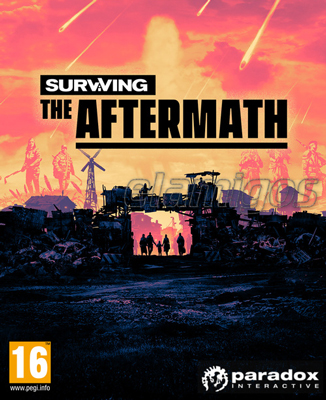
Surviving the Aftermath
Edit date: 25-03-2024, 12:03
Reason: Updated to version 1.25.0 (16.03.2023)
- Category:
- Release date:
- Game Genre:Strategy, science fiction, Economic, Post Apocalypse, city builder, Find Your Next Game
- Developer:Iceflake Studios, Publisher: Paradox Interactive
- Release:ElAmigos
- Platform:PC
- Languages (subtitles):English, French, German, Spanish (Mexico), Polish, Portuguese-Brazil, Russian, Chinese Simplified
- Crack:Tenoke
- Game size:1.74GB
Game Description
Surviving the Aftermath is a PC post-apocalyptic colony simulator that combines city building, survival management, world-map exploration, and light tactical encounters. The current Steam, Epic Games Store, and GOG listings still use the original name, with no verified rebrand or replacement edition. The standard game is sold separately, while the Ultimate Colony Edition packages the main game with its major add-ons.
Build a settlement that can survive the wasteland
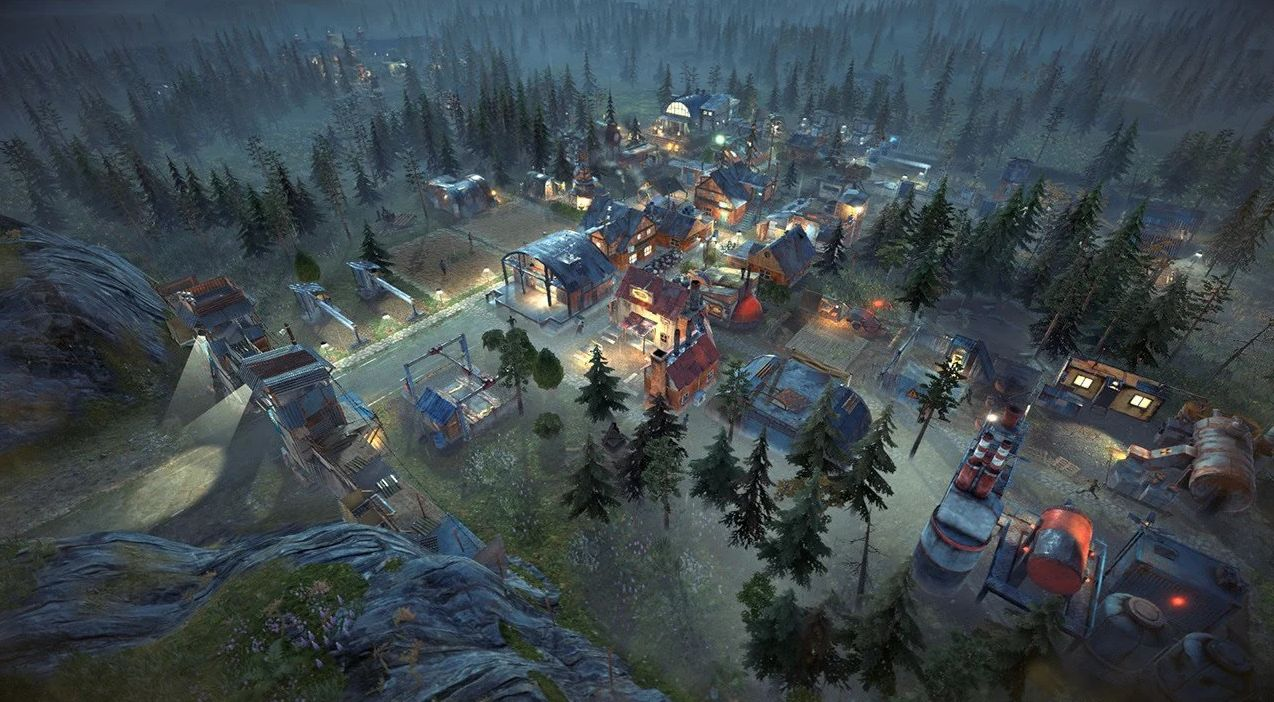
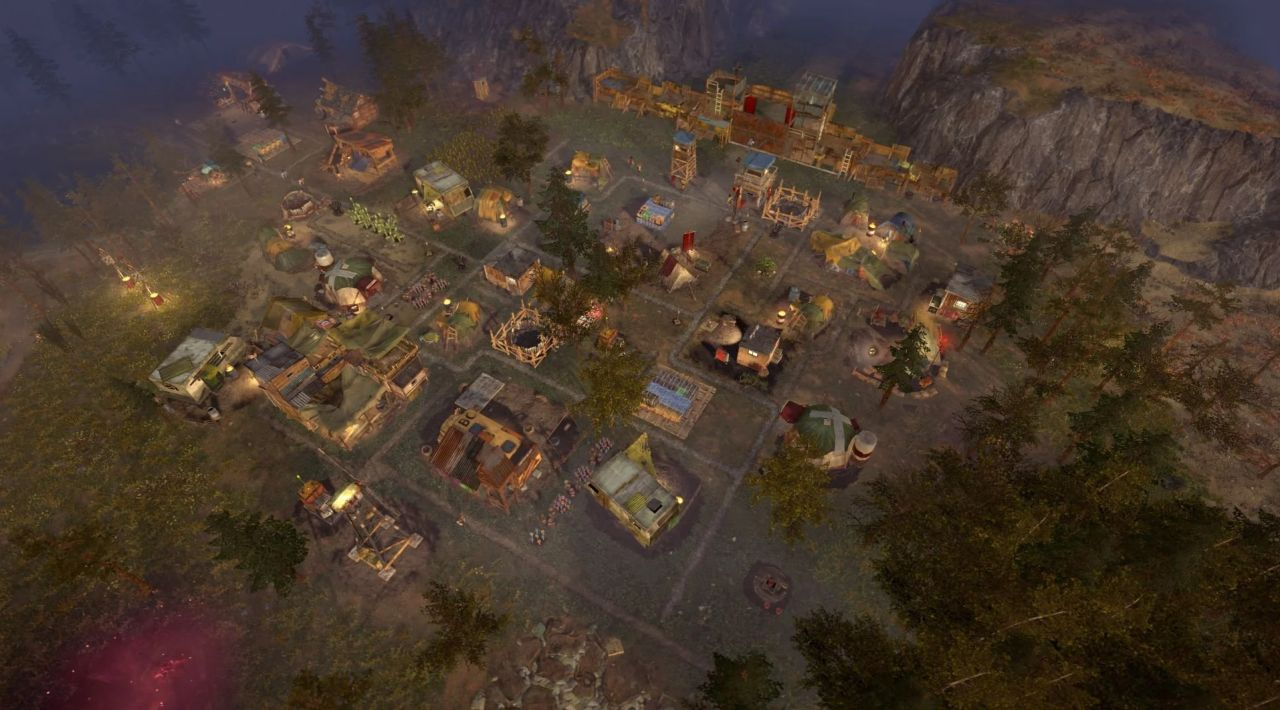
The main loop begins with a small group of survivors and a vulnerable settlement. You establish housing, food production, water access, energy generation, storage, medical facilities, defensive structures, and the infrastructure needed to keep the colony operating. More than 130 buildings are available across the base game and its development systems, giving the settlement-management layer plenty of room for specialization.
This is not a peaceful city builder. Resource scarcity, pollution, illness, environmental disasters, bandit attacks, wildlife, and changing colony needs constantly test your plans. A settlement can appear stable while quietly accumulating problems in food, medicine, protective gear, or worker availability. The strongest layouts leave room for expansion and keep essential production chains close enough to remain efficient.
The camera uses an isometric management perspective, allowing you to survey the colony, place buildings, assign work, and monitor production from above. Time controls support a deliberate rhythm: pause when several problems appear at once, then accelerate routine work after the immediate crisis is under control.
Specialists make the wider world matter
Unlike colony builders that treat every resident as an interchangeable worker, Surviving the Aftermath gives the wasteland a second layer of management through specialists. You can recruit more than 80 unique specialists, each with different skills, equipment options, personalities, and strategic value. Some are better suited to combat, while others improve scouting, resource gathering, research, diplomacy, or medical work.
Specialists leave the settlement to explore a procedurally generated world map. They search abandoned locations, collect supplies, establish outposts, encounter rival colonies, and investigate mysteries connected to the apocalypse. Sending the wrong specialist into a dangerous location can cost time, health, equipment, or an irreplaceable member of the community, so expeditions require more planning than simply selecting the nearest resource icon.
The world map also creates a useful contrast with the colony view. Inside the settlement, you solve production and population problems. Outside it, you weigh risk against opportunity, decide which locations deserve attention, and determine whether trade, cooperation, or force is the best response to other groups.
Choices, disasters, and long-term progression
Research unlocks new buildings, upgrades, production options, and survival tools. Progress is tied to the colony's ability to generate knowledge and protect the people who make that progress possible. A research decision can improve immediate stability, strengthen defenses, or prepare the settlement for threats that have not yet appeared.
Colony decisions also influence happiness and the social condition of the settlement. Events and encounters often present competing priorities rather than obvious correct answers. A decision that helps the colony's short-term economy may create dissatisfaction, while a more generous response can consume resources that are needed elsewhere.
The expansion content adds further systems instead of simply providing cosmetic extras. New Alliances expands interaction with other societies through requests, reputation, trade, covert missions, and a broader struggle for influence across the wasteland. Shattered Hope introduces lunar debris, the Hope value, anguish, feasts, trauma treatment, and a new production chain connected to moonfall events. Rebirth adds the Blight threat, new research, defensive buildings, pollution-clearing tools, and terraforming that gradually changes the surrounding land.
What the PC editions include
The base purchase provides the core single-player colony-management game, including settlement construction, specialist recruitment, world-map exploration, research, random events, disasters, rival societies, and the main survival progression. The PC storefronts also sell individual add-ons and bundles for players who want the expanded systems.
- Rebirth adds Blight, hive monsters, a cure-focused research path, new buildings, and terraforming.
- Shattered Hope adds moonfall events, lunar resources, Hope and anguish systems, feasts, trauma care, and related production.
- New Alliances expands diplomacy, rival influence, covert missions, allied societies, and world-map interaction.
- Forgotten Tracks is a radio-content pack rather than a major mechanical expansion.
The Ultimate Colony Edition is the most complete official package listed on the major PC storefronts, but the standard edition remains the entry point for players who want to evaluate the core colony loop before buying additional content.
Who will enjoy Surviving the Aftermath?
This game suits players who like watching a fragile settlement develop into a functioning community through careful planning. It is especially relevant if you enjoy survival city builders where logistics, population health, and preparation matter more than direct action. The specialist system gives the game a stronger character-management angle than a purely production-focused simulator.
Players seeking a tightly scripted story, competitive multiplayer, or constant direct control over individual characters should adjust their expectations. The game is officially presented as single-player; the Steam tag list includes multiplayer, but the storefront feature list does not identify a multiplayer or co-op mode. Its long-term appeal comes from sandbox management, changing maps, different specialist rosters, event outcomes, and the challenge of keeping the colony stable.
For a cleaner logistics-focused colony experience, robot-led settlement strategy games like The Colonists provide a useful contrast: that game emphasizes production networks and transport planning, while Surviving the Aftermath adds human needs, disasters, specialists, and wasteland expeditions.
PC features, controls, and ecosystem
Surviving the Aftermath supports mouse-and-keyboard management controls and PC controller play. The GOG edition lists controller support, cloud saves, achievements, overlay features, and optional Galaxy integration. GOG also identifies its version as DRM-free, with an offline installer that does not require Galaxy to launch the game. Steam and Epic copies remain associated with their respective storefront environments.
The official PC listings provide interface text in English, French, German, Polish, Brazilian Portuguese, Russian, Simplified Chinese, and Latin American Spanish. English is the listed audio language, while the other supported languages are presented as text or interface localization.
Mod support is part of the game's wider PC ecosystem. Paradox provides access to community mod tools and mod sharing, allowing players to extend the settlement experience beyond the standard building and event catalogue. Steam also lists achievements, cloud saves, and Family Sharing for its edition.
Players who prefer a more traditional resource-and-infrastructure challenge can also compare it with hostile-planet colony management in Planetbase. Planetbase is more focused on maintaining a compact life-support network, whereas Surviving the Aftermath divides attention between a growing settlement and an explorable wasteland.
Similar games and genre position
Surviving the Aftermath sits between a conventional city builder and a survival simulation. It has the construction and production chains of a management game, but its priorities are shaped by disasters, specialist risk, pollution, colony morale, and the possibility that a single failure can destabilize several systems at once.
Players interested in broader economic planning may find planetary colony strategy with trading and expansion like Imagine Earth a natural comparison. Imagine Earth is more economy-driven and science-fiction oriented, while Surviving the Aftermath focuses on rebuilding civilization after collapse and managing a smaller, more personal survivor population.
The strongest reason to choose Surviving the Aftermath is its combination of two management scales. You are not only optimizing a settlement's buildings and resource flows; you are also deciding which people to send into danger, which societies to support, and how much risk the colony can absorb before its basic services fail.
Surviving the Aftermath FAQ
Is Surviving the Aftermath still the official PC name?
Yes. Steam, Epic Games Store, GOG, and Paradox Interactive currently list the game as Surviving the Aftermath. No verified current rebrand or replacement title was found.
Is Surviving the Aftermath multiplayer or co-op?
No verified multiplayer or co-op mode is listed in the official PC feature information. The game is designed as a single-player colony-management experience.
Does the base game include all expansions?
No. The standard edition contains the core game. Rebirth, Shattered Hope, New Alliances, and Forgotten Tracks are sold as separate add-ons, while the Ultimate Colony Edition bundles the main game with expanded content.
Does the PC version support controllers?
Yes. The GOG listing identifies controller support, and official support documentation provides PC controller guidance. Mouse and keyboard remain well suited to detailed building, production, and specialist management.
Is there a DRM-free PC edition?
Yes. The GOG edition is listed as DRM-free and can be installed and played without GOG Galaxy. Steam and Epic editions use their respective storefront ecosystems.
Is Surviving the Aftermath a campaign or a sandbox?
It is primarily a sandbox survival-management game with a main quest, random events, world-map mysteries, specialist expeditions, and expansion-specific progression. The central objective is to stabilize and develop the colony while adapting to changing threats and limited resources.
System Requirements
Minimum: | Recomended: |
| Processor: Intel Core i5-2500K 3.3 GHz / AMD FX-6350 3.9 GHz Graphics: 1.5 GB GeForce GTX 580 / 2 GB Radeon HD 7870 Memory: 4 GB RAM Disk space: 4 GB HDD Operating system: Windows 7 SP1 64-bit | Processor: Intel Core i5-3570K 3.4 GHz / AMD Ryzen 3 2200G 3.5 GHz Graphics: 2 GB GeForce GTX 770 / Radeon R9 380 Memory: 8 GB RAM Disk space: 4 GB HDD Operating system: Windows 10 64-bit |
Screenshots


Trailer/Gameplay
Download
Surviving the Aftermath (2021), 1.74GB
ElAmigos release, game is already cracked after installation (crack by Tenoke).

Updated to version 1.25.0 (16.03.2023).

1. Extract files.
2. Burn or mount the image.
3. Install the game.
4. ElAmigos release, game is already cracked after installation.
5. Play the game. If you like this game, BUY IT!
Surviving the Aftermath Download
🔒 Premium access required
To see and use the download links, you must be logged in and have an active PREMIUM account.
* Unlock downloads via Torrent and TeraBox.
DLC: Shattered Hope, Rebirth, New Alliances, Ultimate Colony, Forgotten Tracks Radio Pack, Founder's Pack, Twitch DLC.
Torrent Download
The best torrent download speeds are with qBittorrent!