Star Trek Infinite
Edit date: 20-07-2026, 18:08
Reason: + update 1.0.7 (05.12.2023)
- Category:
- Release date:
- Game Genre:Strategy, science fiction, Economic, RTS, 4 x, sandbox, Space, TV series
- Developer:Nimble Giant Entertainment
- Release:ElAmigos
- Platform:PC
- Languages (subtitles):English, French, German, Spanish, Polish, Portuguese-Brazil, Russian, Japanese, Korean, Simplified Chinese
- Dubbing/Audio:English
- Crack:Codex/Rune, FLT
- Game size:4.52GB
Game Description
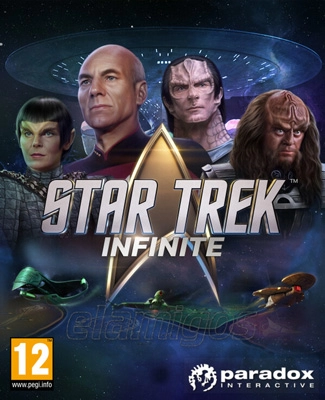
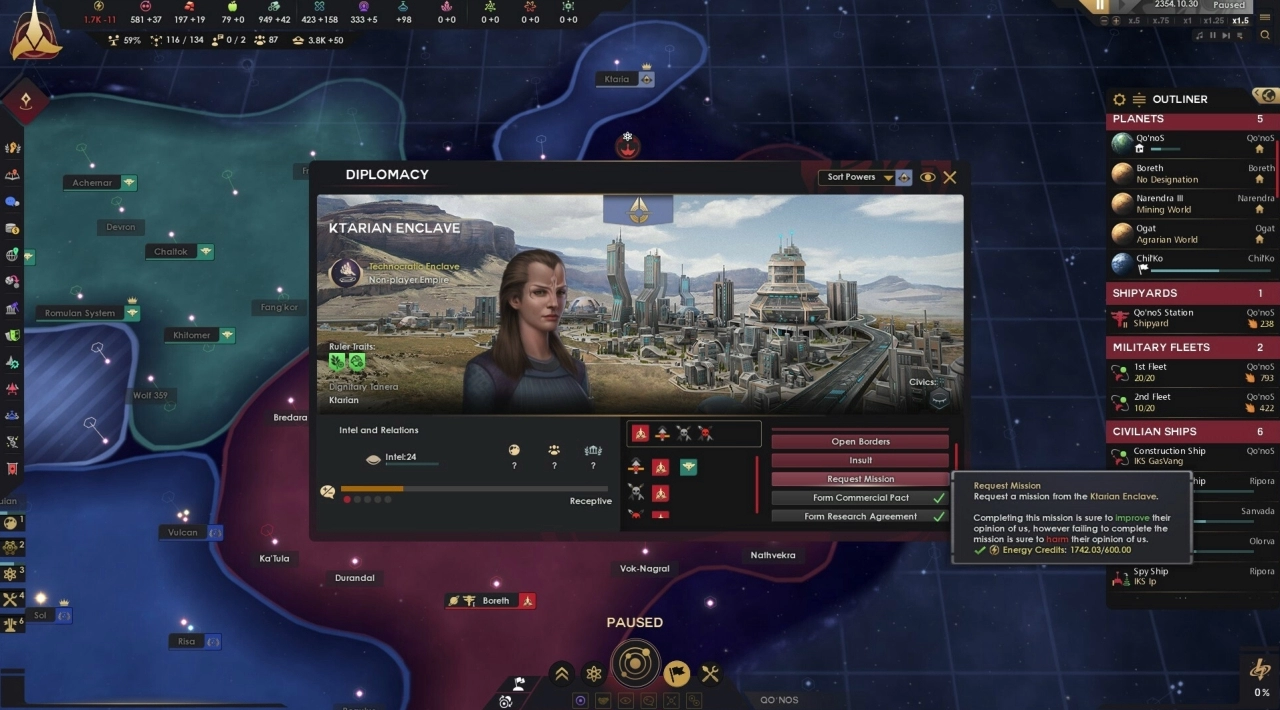
Star Trek: Infinite is a PC grand strategy and 4X space game built around faction management, exploration, diplomacy, espionage, and fleet warfare. There is no verified rebrand or replacement edition: the current storefront name remains Star Trek: Infinite. Its official support has ended, so buyers should approach it as a complete, fixed-content strategy game rather than an expanding live service.
Developed by Nimble Giant Entertainment and published by Paradox Interactive under license from Paramount Consumer Products, the game focuses on the Alpha and Beta Quadrants during the era associated with Star Trek: The Next Generation. It uses a more focused structure than Stellaris while keeping many familiar grand strategy foundations.
Commanding a Star Trek empire
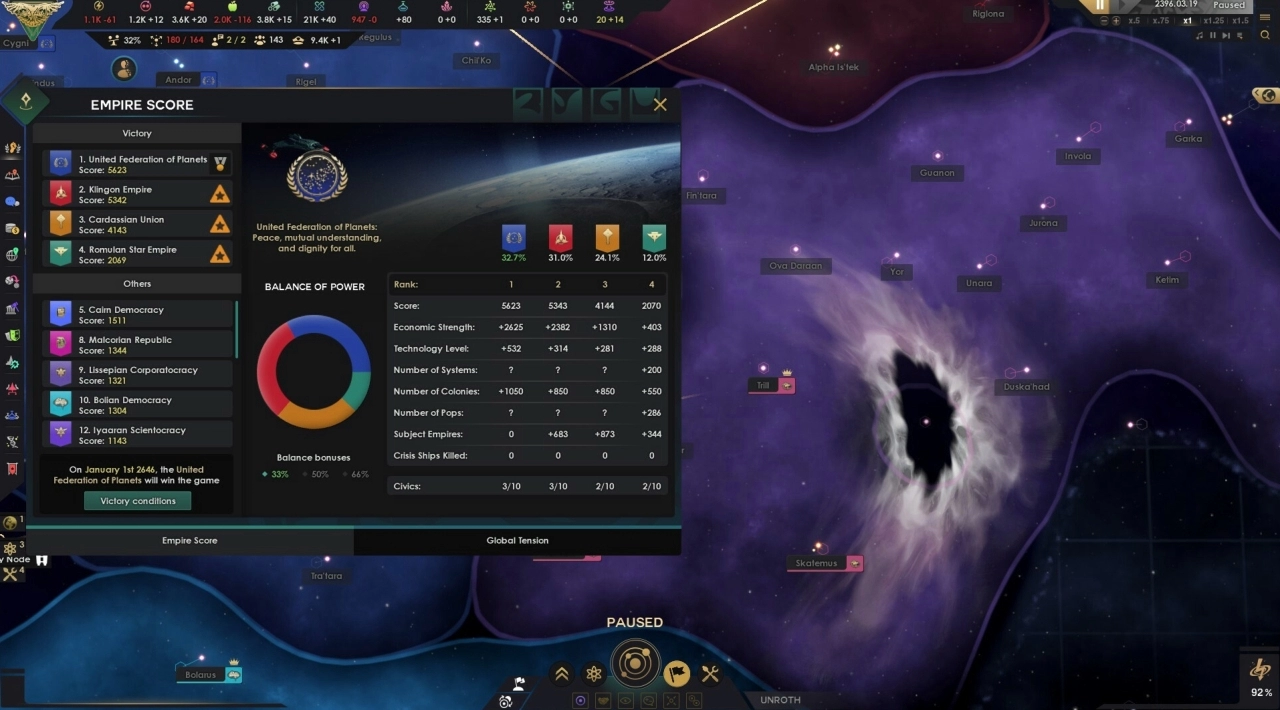
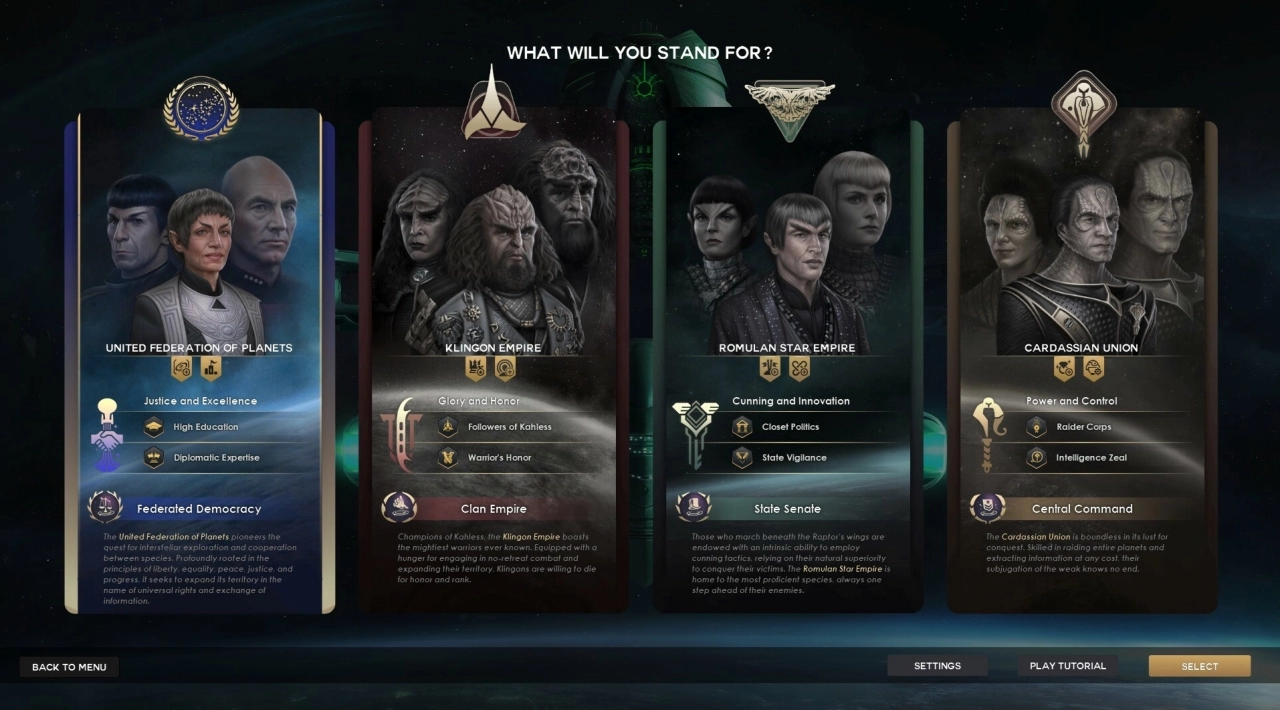
The main campaign begins with one of four major powers: the United Federation of Planets, Klingon Empire, Romulan Star Empire, or Cardassian Union. Each faction has different priorities, narrative objectives, diplomatic pressures, and strategic tools, so the opening choice changes more than the color of your territory.
Star Trek: Infinite uses a strategic galaxy map viewed from an elevated 3D perspective. Time flows continuously, but you can pause to inspect systems, queue construction, review missions, adjust fleets, and react to diplomatic changes. The practical rhythm is familiar to players of Paradox strategy games: survey space, establish infrastructure, improve worlds, research technologies, and decide when expansion is worth the political risk.
Your empire depends on resource management and population development. Colonies, stations, fleets, research projects, and diplomatic commitments all compete for economic attention. Expansion is not simply a matter of claiming empty systems; it also means maintaining enough production and strategic reach to defend what you have taken.
Exploration sends fleets into the wider galaxy to survey systems, encounter minor powers, investigate events, and open routes toward new opportunities. The game is not a direct ship-piloting simulator. Instead, individual vessels function as parts of a wider military and economic network, with fleet composition, technology, positioning, and strategic timing carrying the important decisions.
Four factions, four strategic identities
The Federation is the clearest fit for players who enjoy diplomatic expansion, exploration, and cooperation with other civilizations. Its campaign can involve recruiting familiar officers, building relationships with smaller powers, and pursuing a more measured path through the quadrant.
The Klingon Empire leans toward military pressure and aggressive fleet use. It is a natural choice for players who want warfare to shape their economy and diplomacy, although winning battles still requires preparation rather than simply producing the largest possible armada.
The Romulans emphasize stealth and manipulation, while the Cardassians support a more coercive approach built around influence, control, and political leverage. These identities are reinforced by faction-specific mission trees and events rather than being limited to cosmetic differences.
Named characters help connect the strategic layer to Star Trek lore. Depending on the faction and mission path, players can recruit figures such as Picard, Janeway, Sisko, Data, Gowron, Garak, and other recognizable officers. These characters make the campaign feel more like a playable Trek scenario than a generic space empire generator.
Mission trees and alternate Trek outcomes
The defining narrative system is the faction mission tree. It provides structured objectives based on the identity and historical position of your chosen power, while allowing decisions to redirect parts of the story. The result is more guided than a fully random 4X sandbox, but less rigid than a traditional linear campaign.
Mission objectives can encourage diplomacy, military expansion, espionage, recruitment, or control of key locations. Some paths are designed to echo familiar Star Trek events, while others let you alter the expected political balance. This is the main way the game delivers its “what if” appeal.
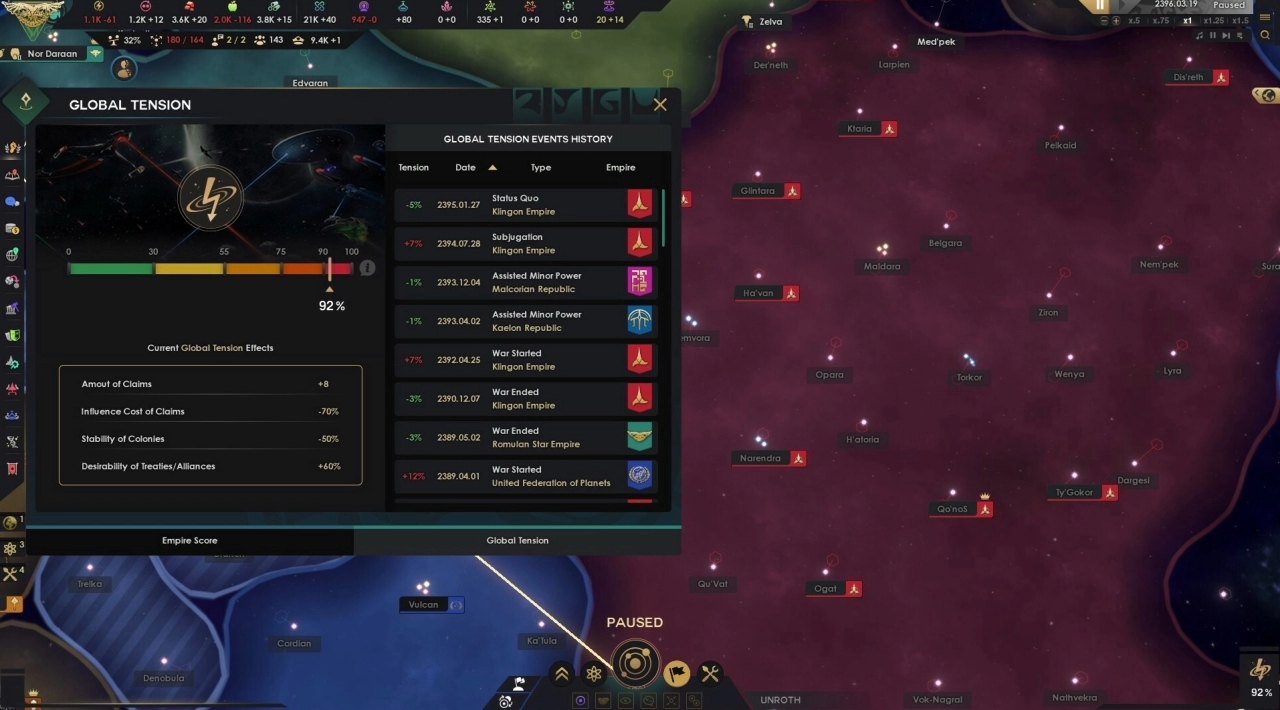
The Galactic Tension framework adds pressure to relations between the major powers. Military moves, diplomatic choices, territorial disputes, and faction decisions can raise the stakes across the map. That system helps prevent every campaign from becoming a detached sequence of construction queues.
Players who enjoy long-range political planning may prefer the larger sandbox of open-ended space empire building in Stellaris. Star Trek: Infinite is more constrained, but that narrower scope lets its mission structure and licensed factions take a larger role.
Fleets, starships, and warfare
Fleet construction draws from recognizable Star Trek ship classes, including Federation vessels, Cardassian Galor-class ships, Romulan D'deridex warships, and Klingon Negh'Var battleships. The appeal is partly strategic and partly representational: your fleet is a toolkit for war, but it is also a collection of ships with strong franchise identity.
Combat is resolved through the strategic simulation rather than direct tactical flight controls. You choose which fleets to build, where to deploy them, how to support them, and when to commit them. Starbase defenses, research progression, fleet organization, and the economic consequences of a prolonged conflict can matter as much as the battle itself.
The Federation can unlock the U.S.S. Enterprise-D through its story system. This is an example of how the game treats famous ships: they are not merely menu decorations, but rewards or objectives connected to faction progression and narrative choices.
Warfare is only one route to success. Players can combine military force with diplomacy, espionage, economic growth, and relationships with minor powers. The strongest campaigns usually mix these tools instead of treating the game as a straightforward conquest simulator.
Content, editions, and DLC
Star Trek: Infinite is a paid base game rather than a free-to-play title. The current PC storefront also lists a Deluxe Edition that combines the main game with bonus content and digital extras.
The Deluxe package includes the U.S.S. Cerritos and California-class uniform content, a Klingon voice pack, additional Star Trek music, a downloadable soundtrack, and a digital art book. The store also lists separate add-ons such as Designing the Galaxy, Galactic Tracks, and Neutral Zone Tunes.
There is no verified season-pass model or large catalog of faction expansions to evaluate. Since development has ended and no further updates are planned, the existing faction selection and feature set represent the practical scope of the game.
That limitation is important for shoppers comparing it with long-running Paradox releases. Star Trek: Infinite offers a more compact licensed experience, while games such as political and economic space grand strategy in Terra Invicta pursue broader systems and a different science-fiction premise.
Who should play Star Trek: Infinite?
This is a good fit for PC players who want to manage a Star Trek power from the strategic level rather than control a single captain or crew. It suits fans of grand strategy with pause, diplomatic maneuvering, faction-specific objectives, and recognizable ships and characters.
It is also approachable for players who find Stellaris too open-ended but still want exploration, colonization, empire management, and interstellar politics. The fixed major factions provide a clearer starting point than a fully custom civilization creator.
The game is less suitable for anyone expecting a cinematic campaign, direct starship piloting, deep tactical battles, or a regularly expanding service. Its combat is abstracted, its strategic systems are narrower than Stellaris, and the ended development cycle means there is no future content roadmap to anticipate.
PC features and ecosystem
The PC version is distributed through Steam and supports single-player and online PvP. Multiplayer lets players place competing human powers into the same strategic simulation, but the storefront does not advertise split-screen or local co-op.
Steam Workshop support gives the game a modding ecosystem that can alter the experience beyond the official content. Mods are particularly relevant here because the base game has a focused scope and the community can provide additional scenarios, balance changes, interface adjustments, or broader Star Trek interpretations.
The store lists 50 Steam achievements, family sharing, and a third-party EULA. Full controller support is not advertised, so keyboard and mouse remain the sensible default for managing the galaxy map, panels, fleets, and production queues.
Interface and subtitle support covers English, French, German, Spanish, Japanese, Korean, Polish, Brazilian Portuguese, Russian, and Simplified Chinese. English is the listed full-audio language, while the other supported languages are presented primarily as interface and subtitle localizations.
Steam also lists the game as playable on Steam Deck. That makes it a possible handheld strategy option, although the dense interface and cursor-driven controls are still better suited to players comfortable with small text and frequent map navigation.
Similar games on PC
Stellaris is the closest mechanical comparison because both games use real-time grand strategy with pause, space exploration, diplomacy, research, colony development, fleet management, and empire-scale warfare. The difference is scope: Stellaris emphasizes procedural variation and custom civilizations, while Star Trek: Infinite emphasizes fixed licensed factions and Trek-specific mission paths.
Terra Invicta is a stronger comparison for players who want heavier political and economic planning around a science-fiction crisis. Its structure is more simulation-focused and less tied to a familiar television universe.
Neither alternative is a direct replacement for Star Trek: Infinite's combination of canonical factions, named officers, mission trees, and Alpha and Beta Quadrant politics. They are better viewed as options for players deciding whether they value licensed storytelling or broader strategy systems.
Star Trek: Infinite FAQ
Is Star Trek: Infinite still called Star Trek: Infinite?
Yes. There is no verified official rebrand or replacement edition on the current PC storefront. Older listings and searches should use the same Star Trek: Infinite name.
Is Star Trek: Infinite still receiving updates?
No. Official development has ended, and the game will not receive further updates. The existing campaign, faction systems, DLC, and community mods are the relevant content for current players.
Which factions can you play?
You can play as the United Federation of Planets, Klingon Empire, Romulan Star Empire, or Cardassian Union. Each has its own strategic identity, mission structure, and faction-oriented objectives.
Does Star Trek: Infinite have multiplayer?
Yes. The Steam version supports online PvP alongside single-player play. It does not advertise split-screen or local co-op as supported modes.
Is Star Trek: Infinite a real-time strategy game or turn-based game?
It is a real-time grand strategy game with pause. You manage fleets, construction, research, diplomacy, and missions while time advances continuously, then pause whenever you need to issue detailed orders.
What does the Deluxe Edition include?
The Deluxe Edition includes the base game plus the U.S.S. Cerritos and California-class uniform content, a Klingon voice pack, additional music, a downloadable soundtrack, and a digital art book. Separate music and art-related add-ons are also listed on the PC storefront.
System Requirements
Minimum: | Recommended: |
| Processor: Intel® iCore™ i3-530 or AMD® FX-6350 Graphics: Nvidia® GeForce™ GTX 460 or AMD® ATI Radeon™ HD 5870 (1GB VRAM), or AMD® Radeon™ RX Vega 11 or Intel® HD Graphics 4600 Memory: 4 GB RAM Disk space: 15 GB available space Operating system: Windows® 7 SP1 64 Bit | Processor: Intel® iCore™ i5-3570K or AMD® Ryzen™ 5 2400G Graphics: Nvidia® GeForce™ GTX 560 Ti (1GB VRAM) or AMD® Radeon™ R7 370 (2 GB VRAM) Memory: 4 GB RAM Disk space: 15 GB available space Operating system: Windows® 10 Home 64 Bit |
Screenshots
Trailer/Gameplay
Download
Star Trek Infinite Deluxe Edition (2023), 4.52GB
ElAmigos release, game is already cracked after installation (crack by Codex/Rune or FLT).

1. Extract files.
2. Burn or mount the image.
3. Install the game.
4. ElAmigos release, game is already cracked after installation.
5. Play the game. If you like this game, BUY IT!
Star Trek Infinite Deluxe Edition Download
🔒 Premium access required
To see and use the download links, you must be logged in and have an active PREMIUM account.
* Unlock downloads via Torrent and TeraBox.
+ update 1.0.7 (05.12.2023) & crack (by Codex/Rune or FLT), 116MB
🔒 Premium access required
To see and use the download links, you must be logged in and have an active PREMIUM account.
* Unlock downloads via Torrent and TeraBox.
DLC: Galactic Tracks, Neutral Zone Tunes, Designing the Galaxy, Pre Order Bonus.
Torrent Download
The best torrent download speeds are with qBittorrent!