Storage Hunter Simulator
- Category:
- Release date:
- Game Genre:Simulation, Auction, Business Management, Open World, Trading, Co-op Multiplayer, Singleplayer
- Developer:Raccoons Studio
- Release:FitGirl
- Platform:PC
- Languages (subtitles):English, French, Italian, German, Spanish, Polish, Portuguese, Simplified Chinese, Traditional Chinese, Turkish, Japanese, Portuguese, Korean, Russian, Ukrainian
- Dubbing/Audio:English
- Crack:Tenoke
- Game size:7.51GB
Game Description
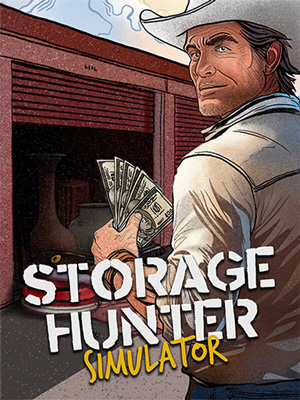
Storage Hunter Simulator is a first-person PC auction and business simulation from Raccoons Studio and astragon Entertainment. The official storefront name remains Storage Hunter Simulator; the shorter “Storage Hunter” wording appears in descriptive copy and bundles, but it is not a separate rebrand or edition. The central loop is straightforward: bid on abandoned storage spaces, uncover valuable items, sell or appraise them, and reinvest the profit into a growing pawnshop business.
This is a paid game with a free demo listed on Steam. The current storefront presents the base experience without a season pass or a named DLC lineup, so the main purchase is built around the auction, resale, exploration, and management systems rather than a fragmented content model.
How the auction loop works
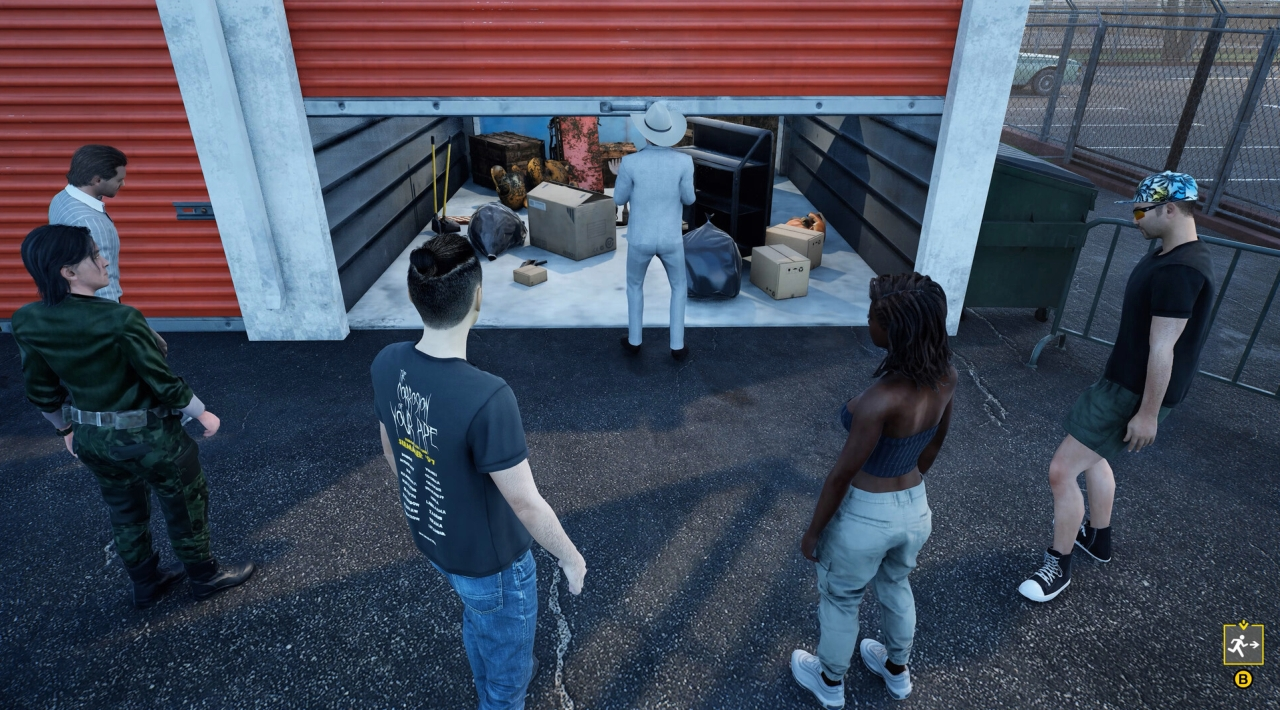
Storage Hunter Simulator begins with a gamble. You travel to auctions, inspect the visible contents of garages, shipping containers, and storage rooms, then decide how far to push your bid without knowing whether the unit contains valuable collectibles or ordinary household clutter.
Winning is only the first decision. You must collect the contents, load them into a vehicle, transport them to a pawnshop or collector, and work out whether an item should be sold immediately, held for a better opportunity, or used to complete a collection. That gives each auction a second layer of risk after the bidding ends.
The game uses a first-person perspective for auctions, item handling, driving, and shop management. Its genre blend sits between a casual business sim, a shopkeeper game, an economic simulator, and a light exploration experience rather than a traditional campaign-driven adventure.
Appraisal, collectibles, and profit management
Many objects are deliberately difficult to judge at a glance. Their condition, category, and potential resale value matter, while the in-game glossary and expert assistance help you identify finds before making expensive mistakes.
Early progress depends on using experts to verify treasures. As the business grows, you can invest in tools that let you assess more items yourself. This creates a useful progression from uncertain bidding toward better-informed buying decisions.
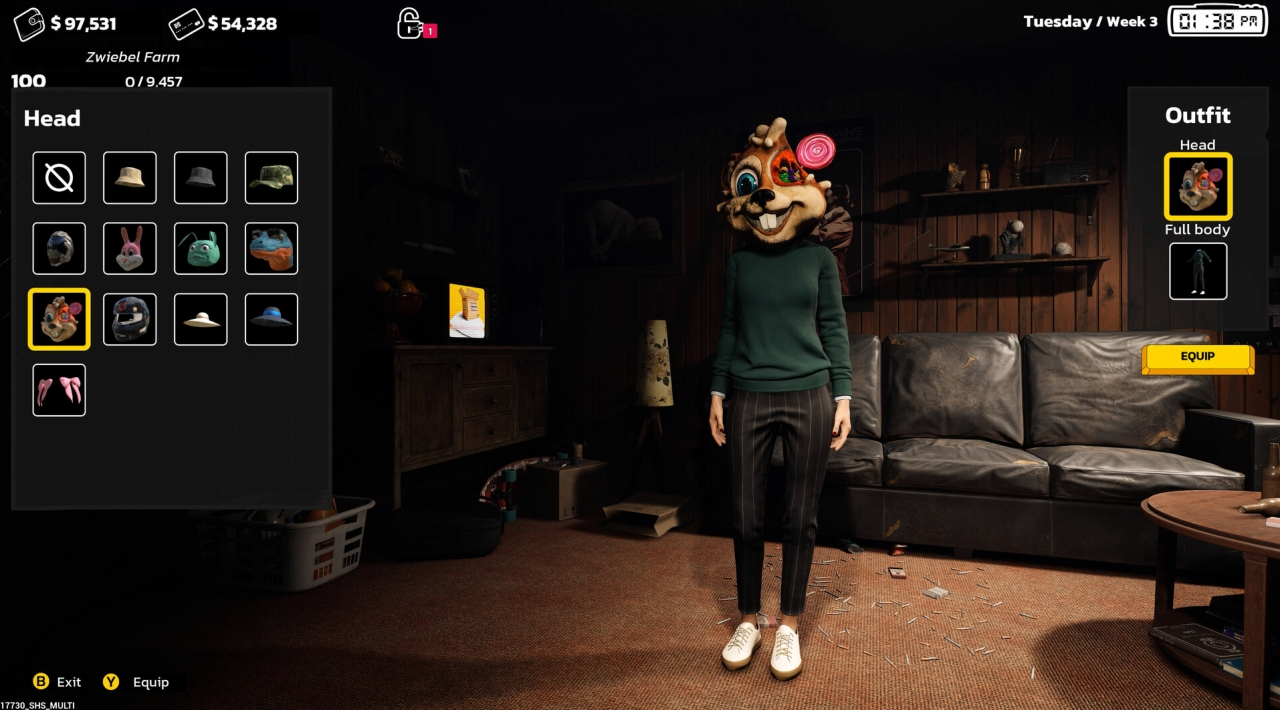
Collectors add another reason to keep unusual items instead of selling everything immediately. Completing their themed requests can provide cosmetics, vehicles, and reputation rewards, turning seemingly low-value objects into pieces of a longer-term collection strategy.
Profit also depends on running the shop properly. You can manage shelf placement, customer traffic, haggling, employee upgrades, shop capacity, and category specializations. Unsold stock can receive marketing support, while loans, daily expenses, and property costs create pressure to keep cash moving.
Pawnshops, properties, and progression
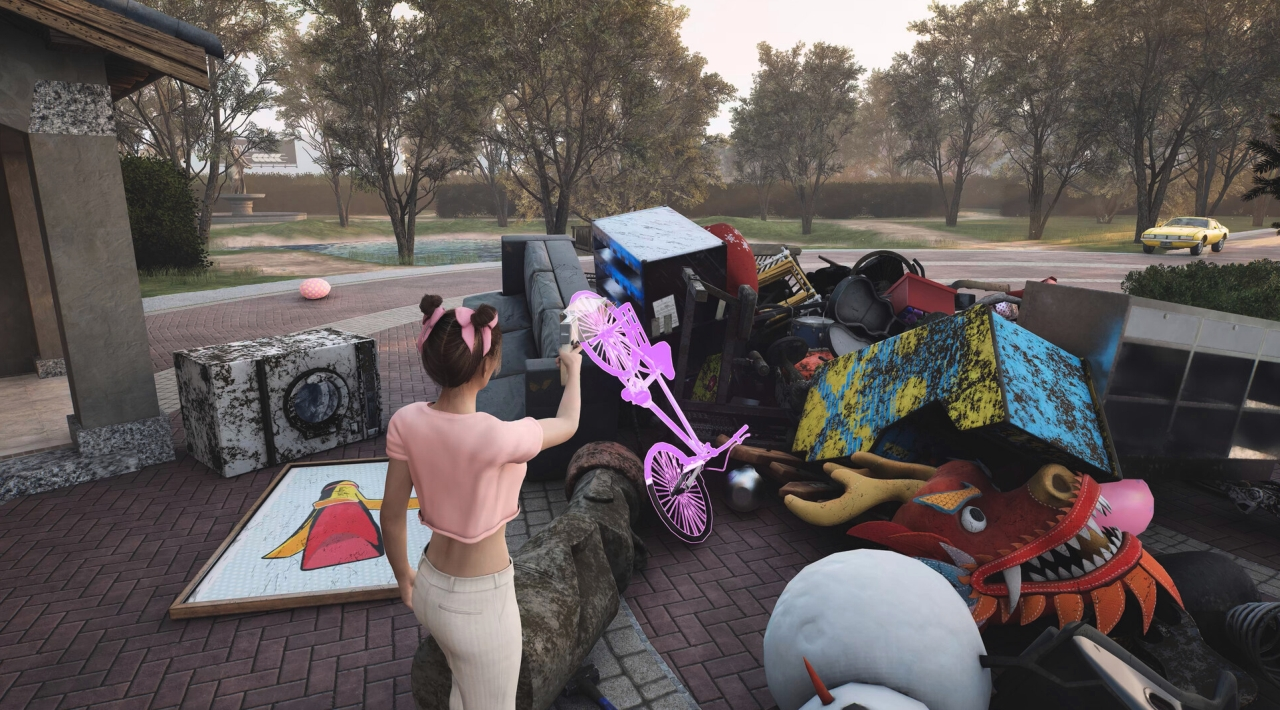
The business layer expands beyond one storefront. Successful players can build a network of pawnshops, improve their facilities, and move from a basic trailer home toward larger residences, garages, mansions, and dedicated warehouses for valuable stock.
Properties are not only financial milestones. The game includes Architect mode, allowing you to decorate and furnish owned spaces. This gives the progression loop a personal layer, although the main economic decisions still revolve around buying, valuing, transporting, and selling items.
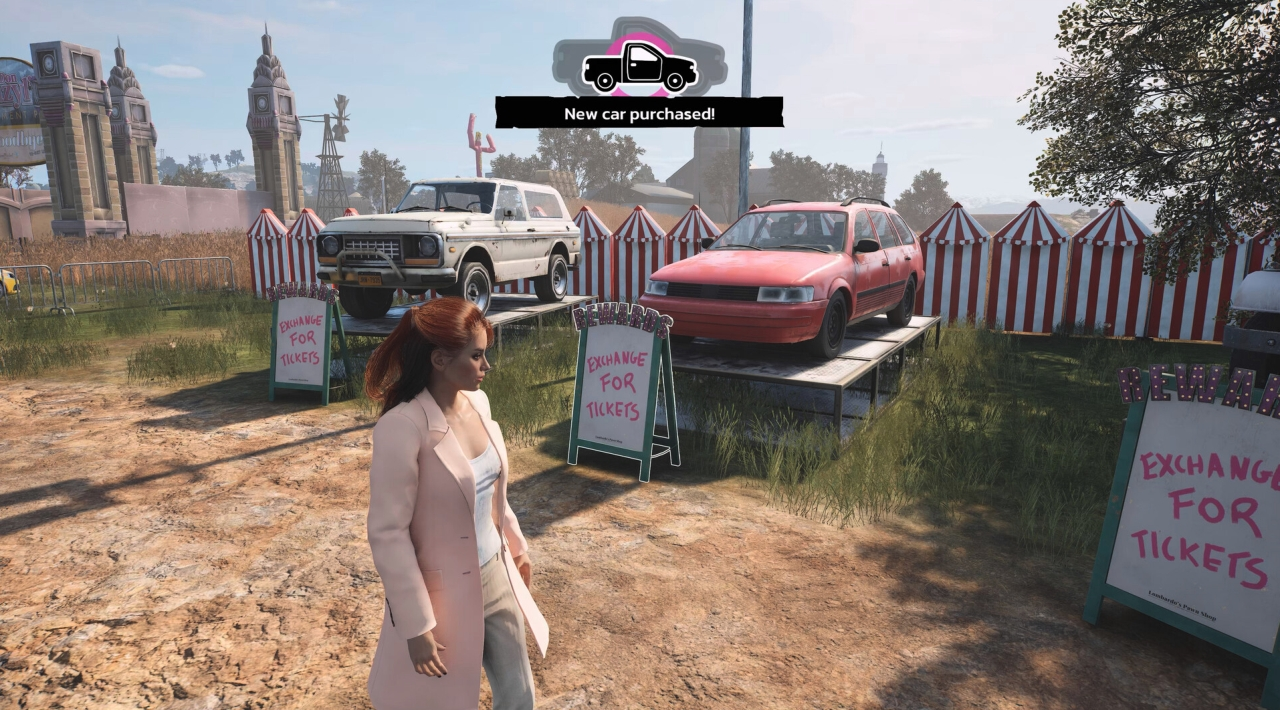
Vehicles are part of the logistics system rather than simple decoration. The game lists seven vehicles with trunk storage and fuel management, so choosing what to drive and how much to carry affects the practical side of each hunting trip.
There are also Easy mode and Hard mode options. Easy mode reduces the pressure for players who want a relaxed auction sandbox, while Hard mode is aimed at players who want tighter financial decisions and a more demanding business climb.
Co-op structure and shared finances
Storage Hunter Simulator supports online co-op for up to four players, with drop-in and drop-out sessions designed around shared auction work and pawnshop management. This is cooperative rather than competitive multiplayer in the usual sense: the group is building one operation together.
Co-op teams can attend the same auction, split up across multiple auctions, share vehicles, and work toward common objectives. The system also allows players to retain some individual progression, including personal funds, tools, outfits, and vehicle ownership.
The important catch is the shared financial structure. Pawnshops, houses, reputation, quests, collector progress, and recurring property costs affect the group, while the shared bank account means one reckless purchase can create problems for everyone.
That makes multiplayer more strategic than simply carrying extra items. A good team can divide scouting, bidding, transport, appraisal, and shop duties, while an uncoordinated group can drain its capital before the next round of expenses.
World activities and content structure
The open world is divided into five districts containing auction venues, pawnshops, roads, secrets, and places to explore between business trips. Driving connects the main activities, giving the game a slower road-trip rhythm between bursts of bidding and inventory management.
The full feature set also includes a festival area with six minigames. These activities provide a change of pace from appraising stock and managing customers, while their rewards can contribute to the broader collection and customization systems.
There are thousands of items to buy and sell, plus hundreds of unlockable items and cosmetics. The variety supports the treasure-hunting appeal, but the real depth comes from recognizing categories, tracking conditions, and deciding which discoveries are worth storing rather than flipping immediately.
Players who enjoy the restoration-and-resale side of simulation games may also appreciate property renovation sandboxes like House Flipper 2, although Storage Hunter Simulator places more emphasis on uncertainty, auctions, inventory value, and shop economics.
PC features, controls, and localization
On PC, the game is distributed through Steam and includes Steam Cloud, Steam Achievements, Family Sharing, and online multiplayer. The storefront lists 72 achievements, giving completion-focused players goals tied to auctions, collections, exploration, and business growth.
Gamepad support is available, and later updates specifically added gamepad input while also improving the Steam Deck experience. Keyboard and mouse remain natural choices for inventory interaction and shop management, but controller support makes the driving and exploration sections more accessible.
The game supports 15 languages across interface and subtitles, with English also receiving full audio. Other listed languages include French, Italian, German, Spanish, Polish, Brazilian Portuguese, Simplified Chinese, Traditional Chinese, Turkish, Japanese, European Portuguese, Korean, Russian, and Ukrainian.
There is no verified separate launcher requirement or named third-party anti-cheat system in the current storefront information. For catalog purposes, the dependable PC ecosystem details are Steam distribution, Steam Cloud, Family Sharing, controller support, Steam Deck-related fixes, and online co-op.
Who should play Storage Hunter Simulator?
This is a strong fit for players who like auction risk, shop management, item appraisal, light driving, and gradual business expansion. It is especially suitable for relaxed solo sessions or co-op groups that enjoy turning ordinary objects into a profitable inventory.
The game is less suitable if you want a tightly scripted story, deep character development, competitive online bidding against strangers, or a highly technical economic model. Its appeal comes from repeating and refining the hunt rather than completing a conventional campaign with a fixed ending.
Players who prefer detailed workshop routines can find a related progression mindset in hands-on repair simulations such as Car Mechanic Simulator 2021, but the comparison is limited: Storage Hunter Simulator is about uncertainty and resale decisions, not component-level mechanical diagnosis.
Storage Hunter Simulator FAQ
Is Storage Hunter Simulator still the official PC name?
Yes. The Steam storefront continues to use Storage Hunter Simulator as the official title. “Storage Hunter” is used as a shorter phrase in the description and bundle labels, not as a separate current edition.
What do you do in Storage Hunter Simulator?
You bid on abandoned garages, containers, and storage rooms, collect the contents, identify valuable items, sell them to customers or collectors, and reinvest the money into pawnshops, tools, vehicles, employees, and properties.
Does Storage Hunter Simulator have multiplayer?
Yes. The PC version supports online co-op for up to four players. Teams can bid together, attend separate auctions, share business resources, complete quests, and manage pawnshops as a joint operation.
Can you play Storage Hunter Simulator alone?
Yes. Single-player is supported, and the solo experience contains the complete auction, appraisal, shop management, property, vehicle, collection, and exploration loop.
Does the game support controllers and Steam Deck?
Yes. Gamepad support is available, and official updates include Steam Deck fixes and optimizations. The game also supports Steam Cloud and Family Sharing through the Steam platform.
How many languages does the PC version support?
The current storefront lists 15 supported languages. English includes full audio, while the other listed languages provide interface and subtitle localization.
Does Storage Hunter Simulator have DLC or a season pass?
The current storefront presents a paid base game and demo but does not list a named DLC pack or season pass. Its content model centers on the included auction world, vehicles, pawnshops, collectibles, minigames, progression systems, and co-op features.
System Requirements
Minimum: |
Processor: Intel Core i5 4590 (64-bit required) Graphics: NVIDIA GeForce GTX 1650 or AMD Radeon RX 5500 Memory: 8 GB RAM Disk space: 8 GB available space Operating system: Windows 10 (64-bit required) |
Screenshots
Trailer/Gameplay
Download
Storage Hunter Simulator (2025), 7.51GB

FitGirl Release

Languages: RUS/ENG/MULTI15
Original Size: 13.2 GB
Repack Size: 7.3/7.5 GB

Version: v17755

1. Extract files.
2. Install the game.
3. Play the game. If you like this game, BUY IT!
Storage Hunter Simulator Download
🔒 Premium access required
To see and use the download links, you must be logged in and have an active PREMIUM account.
* Unlock downloads via Torrent and TeraBox.
- Based on Storage.Hunter-TENOKE ISO release: tenoke-storage.hunter.iso (14,131,535,872 bytes)
- Game version: v17755
- 100% Lossless & MD5 Perfect: all files are identical to originals after installation
- NOTHING ripped, NOTHING re-encoded
- Selective Download feature: you may skip downloading and installing of useless PDB debugging files
- Significantly smaller archive size (compressed from 13.2 to 7.3/7.5 GB)
- Installation takes 7-16 minutes (depending on your system)
- After-install integrity check so you could make sure that everything installed properly
- HDD space after installation: up to 13 GB
- Language can be changed in game settings
- Repack uses XTool library by Razor12911
- At least 2 GB of free RAM (inc. virtual) required for installing this repack
Torrent Download
The best torrent download speeds are with qBittorrent!