Little Nightmares

- Category:
- Release date:
- Game Genre:Arcade, platform, horror, indie games, 2.5 D
- Developer:Tarsier Studios Publisher: Bandai Namco Entertainment
- Release:ElAmigos
- Platform:PC
- Languages (subtitles):English, French, Italian, German, Spanish, Spanish (Mexico), Russian, Polish, Portuguese-Brazil, Arabic, Swedish, Japanese, Korean, Simplified Chinese, Traditional Chinese
- Crack:Codex/Rune
- Game size:4.26GB
Game Description
Little Nightmares PC is a 2.5D horror puzzle-platformer built around stealth, environmental interaction, and carefully timed escapes rather than combat. The original game remains listed as Little Nightmares, while the current Steam package includes the updated Little Nightmares Enhanced Edition. You guide Six through The Maw, a hostile vessel where oversized rooms, distorted adults, and limited movement turn ordinary objects into survival tools.
Developed by Tarsier Studios and published by BANDAI NAMCO Entertainment, the game combines side-on platforming with a 3D third-person presentation. Its most important design decision is scale: Six is physically small, enemies dominate the screen, and familiar spaces become threatening because every gap, table, and hiding place feels oversized.
How Little Nightmares Plays on PC
The main loop is straightforward but tense. Six explores connected rooms, studies the environment, moves objects, climbs, crawls, hides, and searches for a route through The Maw. Progress usually comes from recognizing patterns rather than collecting combat upgrades or building a character.
Six carries a small lighter that provides a controlled pool of light in dark areas. It is not a weapon and does not make her powerful. Instead, it helps establish position, reveal nearby spaces, and reinforce the vulnerability that defines the game. The safest solution is usually to observe first and move only when the environment gives you an opening.
Platforming precision matters because the camera presents a three-dimensional space from an angled side view. A jump can look simple while still requiring careful alignment, especially when Six must climb furniture, cross narrow ledges, or move around obstacles without attracting attention.
The game is not built around traditional combat. Six has no conventional fighting system for dealing with The Maw's adult Residents, so encounters rely on stealth, timing, hiding places, and pursuit escapes. Failure sends Six back to a nearby checkpoint, letting you learn an enemy's movement without turning the experience into a punishment-focused survival game.
The Maw, Six, and Environmental Storytelling
The Maw is both a setting and a puzzle structure. Each area functions like a hostile room in a gigantic dollhouse, with its own visual language and threats. The official cast includes figures such as The Janitor, The Twin Chefs, The Guests, The Lady, and the skittish Nomes.
These characters are not explained through long conversations or conventional quest logs. Their behavior, rooms, animations, and relationship to The Maw communicate most of the worldbuilding. The result is a deliberately incomplete story that encourages interpretation without requiring players to understand every symbol before moving forward.
Audio design does much of the same work as the visuals. Footsteps, machinery, distant movement, and changes in ambient sound can warn you that a Resident is nearby before the camera reveals the danger. This makes listening useful during exploration, not just during chase sequences.
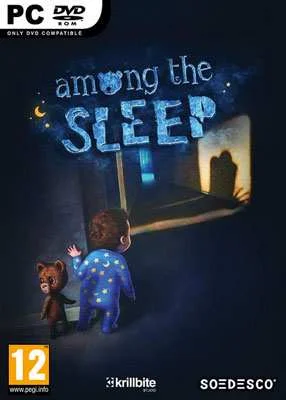
Players who enjoy the same blend of oppressive atmosphere and side-scrolling puzzle design may also want to explore surreal horror puzzle-platformers such as DARQ Complete Edition, although Little Nightmares places more emphasis on hiding and predator evasion than on manipulating dream physics.
Story Structure and Optional Content
The main campaign follows Six as she attempts to escape from The Maw and reach the world beyond it. The game is structured as a sequence of themed areas rather than an open world, with progression driven by environmental puzzles, scripted threats, and set-piece encounters.
There is no skill tree, equipment economy, or branching dialogue system. The progression loop is instead based on mastering movement, understanding enemy routines, and noticing visual clues that suggest how a room works. Collectibles and optional discoveries give completion-minded players additional reasons to revisit areas without changing Six's core abilities.
The paid expansion content is grouped under the Secrets of The Maw Expansion Pass. It adds a separate storyline featuring the Runaway Kid and includes three chapters: The Depths, The Hideaway, and The Residence. These chapters explore unseen parts of The Maw and provide additional context around its inhabitants and events.
Steam currently presents a Complete Edition that bundles the main game, the Secrets of The Maw chapters, the Enhanced Edition entitlement, and cosmetic items such as the Scarecrow Sack and Upside-down Teapot. The standard PC package includes the base experience and the Enhanced Edition, while the expansion content remains the key difference between the standard and complete options.
What the Enhanced Edition Changes
Little Nightmares Enhanced Edition is the current upgraded PC presentation of the original adventure rather than a separate sequel or a renamed replacement for the story. It adds improved visual effects, including volumetric lighting, additional particles, water effects, and ray-traced reflections.
The enhanced version also introduces additional gameplay helpers intended to make progression smoother. These changes do not turn the game into an action title or remove its stealth focus. The central experience remains Six navigating The Maw through observation, movement, and concealment.
For catalog shoppers, the important distinction is ownership and packaging. If a storefront lists Little Nightmares with Enhanced Edition included, that is the current PC presentation of the original game. If the listing is marked Complete Edition, check that it also contains Secrets of The Maw and its three story chapters.
Who Should Play Little Nightmares?
Little Nightmares suits players who want short-form atmospheric horror, environmental puzzles, visual storytelling, and chase sequences where avoiding danger is more important than defeating it. It is a strong fit for fans of unsettling fairy-tale worlds, child protagonists, and games that leave narrative details open to interpretation.
It is less suitable for players looking for weapons, deep character progression, cooperative play, or a large explorable map. The game offers tension through vulnerability and presentation, not through an extensive combat toolkit or a lengthy RPG-style progression system.
The horror is mostly built from menace, pursuit, disturbing imagery, and sound rather than constant jump scares. That makes the experience more oppressive than explosive, with the camera and environmental scale doing much of the work.
Its perspective can also divide players. The angled 2.5D camera gives The Maw its distinctive dollhouse appearance, but judging depth during jumps and climbs may require patience. That friction is part of the design, though it can feel less comfortable than a conventional side-scrolling platformer.
PC Features, Input, and Localization
The Steam version is a single-player experience with Steam Achievements, Steam Cloud, Steam Trading Cards, Family Sharing, and Remote Play on TV. The storefront requires agreement to a third-party EULA. Steam does not list online co-op, local co-op, or split-screen support, so Little Nightmares should be treated as a solo game.
PC players can use keyboard and mouse or a compatible game controller, with the controller option generally fitting the game's movement and timing better than precision mouse input. The title is also available through GOG as a DRM-free build, where the store page states that no activation or online connection is required to play.
Steam lists interface and subtitle support for English, French, Italian, German, Spanish, Korean, Brazilian Portuguese, Russian, Traditional Chinese, Japanese, Polish, Latin American Spanish, and Swedish. Full audio is not listed for these languages, so localization is primarily text-based.
Players looking for a similar young-protagonist adventure with a darker fairy-tale setting can compare it with dark folklore platform adventures like Bramble: The Mountain King. Bramble adds more direct action and boss encounters, while Little Nightmares stays focused on stealth, environmental puzzles, and escape.
Little Nightmares FAQ
Is Little Nightmares now called Little Nightmares Enhanced Edition?
The original game is still identified as Little Nightmares, but the current PC storefront package includes Little Nightmares Enhanced Edition. Enhanced Edition is an upgraded presentation of the first game, not a new sequel.
Does the PC version include Secrets of The Maw?
The standard package includes the base game and Enhanced Edition. The Complete Edition adds the Secrets of The Maw Expansion Pass, which contains The Depths, The Hideaway, and The Residence chapters, along with listed cosmetic extras.
Is Little Nightmares multiplayer or co-op on PC?
No. The PC version is designed as a single-player game. Steam lists Remote Play on TV, but that feature does not convert the game into cooperative multiplayer.
Does Little Nightmares have combat?
There is no conventional combat system. Six survives through hiding, movement, timing, object interaction, and chase escapes, with the game's adult Residents acting as threats to avoid rather than regular enemies to defeat.
What type of game is Little Nightmares?
It is a third-person, 2.5D horror adventure that combines puzzle-platforming, stealth, environmental storytelling, and survival-horror tension. The campaign is linear and chapter-based rather than open-world or role-playing focused.
Which PC edition should a new player choose?
Choose the current package that includes Enhanced Edition for the upgraded presentation. Choose Complete Edition if you also want the Runaway Kid chapters from Secrets of The Maw and the associated cosmetic extras.
System Requirements
Minimum: | Recomended: |
| Processor: Intel Core i3 3.0 GHz Graphics: 1 GB GeForce GTX 460 Memory: 4 GB RAM Disk space: 3 GB HDD Operating system: Windows 7 64-bit | Processor: Intel Core i7 3.6 GHz Graphics: 2 GB GeForce GTX 660 Memory: 8 GB RAM Disk space: 3 GB HDD Operating system: Windows 7 64-bit |
Screenshots


Trailer/Gameplay
Download
Little Nightmares Enhanced Edition (2017), 4.26GB
ElAmigos release, game is already cracked after installation (crack by Codex/Rune).

Updated till 10.10.2025.

1. Extract files.
2. Burn or mount the image.
3. Install the game.
4. ElAmigos release, game is already cracked after installation.
5. Play the game. If you like this game, BUY IT!
Little Nightmares Enhanced Edition Download
🔒 Premium access required
To see and use the download links, you must be logged in and have an active PREMIUM account.
* Unlock downloads via Torrent and TeraBox.
DLC: The Residence, The Hideaway, The Depths, Soundtrack.
Torrent Download
The best torrent download speeds are with qBittorrent!