Obduction
Edit date: 19-11-2024, 15:41
Reason: Updated to version 1.8.4.1 (07.11.2019)

- Category:
- Release date:
- Game Genre:Adventure, FPP, logical elements, crowdfunding, indie games, exploration games
- Developer:
- Release:ElAmigos
- Platform:PC
- Languages (subtitles):English, French, Italian, German, Spanish, Polish, Russian, Simplified Chinese, Dutch, Portuguese-Brazil
- Dubbing/Audio:English
- Crack:not necessary
- Game size:3.33GB
Game Description
Obduction is a first-person science-fiction puzzle adventure from Cyan, the studio behind Myst and Riven. Its current PC storefront name remains Obduction, with no verified rebrand or replacement edition found on the active listings checked. You are taken from Earth and left in an alien environment where familiar buildings, machinery, and landscapes have been displaced into a connected mystery.
This is a deliberately solitary game built around observation, exploration, and difficult environmental puzzles. There is no combat loop, character leveling, loot economy, or conventional quest log. Progress comes from understanding the world and remembering what you have seen.
Explore first, solve second
Obduction uses a first-person perspective and supports both traditional free-roam movement and a node-based point-and-click navigation option outside VR. The free-roam mode lets you walk through the environments naturally, inspect machinery from different angles, and search for details that are easy to miss when moving too quickly.
The opening area, Hunrath, looks like a small Arizona community, but its familiar structures sit inside an impossible alien setting. A house, a gas station, a locomotive, a fire station, and other pieces of Earth become part of a much larger system. The contrast between ordinary human objects and unfamiliar technology is central to the game's atmosphere.
Obduction does not constantly mark objectives for you. Instead, it asks you to identify blocked routes, unusual devices, suspicious symbols, and clues hidden in documents, screens, architecture, and recorded messages. A mechanism that appears decorative may become essential much later.
The core loop is simple but demanding: explore an area, notice a problem, search for relevant information, test a possible solution, and return when a new connection becomes clear. The game rewards players who take notes and pay attention to patterns rather than players who rush from one obvious marker to the next.
Environmental puzzles and alien logic
Most challenges involve physical machines, switches, gates, elevators, power systems, numerical codes, and routes linking different regions. The puzzles are grounded in the spaces around you, so solving them often means understanding how a device functions rather than selecting an answer from a menu.
Several puzzles require information gathered somewhere else. You may learn a symbol system in one location, find a code in another, or discover that an apparently inactive machine is connected to a structure across the world. The design encourages cross-area reasoning and makes backtracking part of the intended experience.
The game connects four distinct worlds: Hunrath, Kaptar, Maray, and Mofang. Each has its own visual language, environmental hazards, machinery, and story context. Their relationship is not explained through a conventional tutorial; you gradually assemble the larger picture by exploring and comparing what each world reveals.
Obduction also uses full-motion video performances to present characters and story fragments. These scenes provide context without turning the game into a dialogue-heavy adventure. Much of the narrative remains embedded in locations, written material, unusual devices, and the consequences of your decisions.
Players who enjoy observation-led puzzle design may also appreciate first-person discovery adventures built around environmental logic like The Witness. Obduction is less abstract, however, because its clues are tied more directly to machinery, locations, and a science-fiction mystery.
Progression without upgrades
Obduction has no skill tree, inventory progression, equipment crafting, or combat upgrades. Its most important progression system is player knowledge. A solution may become possible because you finally understand a symbol, recognize a repeated pattern, or remember a detail from an earlier area.
The world is not organized as a chain of small, isolated puzzle rooms. Routes open and close through environmental changes, and important discoveries can send you back through spaces you thought you had already exhausted. The resulting structure is closer to a connected investigation than a linear checklist.
There are also optional discoveries and achievement-oriented objectives for players who want to inspect the setting more deeply. Completion is not only about reaching an ending; it can involve finding overlooked information, testing unusual interactions, and understanding more of the conflict between the species connected to these worlds.
This structure creates a strong mastery loop, but it can also be unforgiving. Missing one visual clue or failing to notice a machine's secondary function may leave you searching several locations again. Obduction expects patience and accepts that some players will need to keep a handwritten or digital notebook.
Story, choices, and atmosphere
The premise begins with an unexplained abduction. An organic object transports you across the universe, leaving you in a place where sections of Earth have been combined with alien environments. The immediate goal is to find a way home, but exploration exposes a deeper story about survival, betrayal, and conflict between different species.
The narrative is delivered through environmental storytelling, holographic recordings, books, notes, machinery, and conversations with people connected to the worlds. The game gives you enough information to form theories, but it rarely pauses to explain every implication directly.
Your choices can affect how the story develops and which conclusion you reach. This is not a branching role-playing system with a large decision tree; the important choices emerge from what you investigate, which paths you pursue, and how you respond to the situation you uncover.
The atmosphere shifts between quiet curiosity and unease. Hunrath's American details create a sense of familiarity, while Kaptar, Maray, and Mofang introduce increasingly alien architecture and machinery. The contrast gives each area a distinct identity without losing the feeling that all four worlds are part of one system.
Content model and current PC edition
Obduction is presented as a standalone paid adventure, not a free-to-play service or live game. Its main content is the authored single-player journey across the connected worlds, with optional discoveries and achievements extending the exploration loop.
No verified official name change, definitive replacement edition, or modern rebrand was found for the PC storefront listing checked. The active Steam listing continues to use Obduction, while Cyan's current game and support pages also identify the title as Obduction.
The game is associated with Cyan, Inc. as both developer and publisher. The PC release uses the Unreal Engine technology described in the game's update history and was designed for standard monitor play as well as optional VR gameplay.
There is no separate expansion-driven structure that players need to understand before starting the main game. Storefront buyers should treat Obduction as one self-contained puzzle adventure rather than a platform built around seasons, passes, or recurring content.
PC controls, VR, and localization
Keyboard and mouse are supported, and the game also includes controller support. Steam identifies controller support as partial rather than full, so players who want the most direct menu and camera interaction should keep keyboard and mouse available even though the main exploration can be played with a gamepad.
Obduction supports PC VR through SteamVR and Oculus-compatible hardware, with tracked controller interaction and VR-specific movement options. The manual documents teleport-style movement, snap turning, comfort settings, and seated or standing play considerations. VR is an alternative presentation of the same adventure, not a separate multiplayer mode.
The Steam version includes platform features such as achievements, Steam Cloud, trading cards, and Family Sharing. The GOG digital version is identified by Cyan as DRM-free. No dedicated anti-cheat system or separate publisher launcher is identified for the PC editions checked.
Localization covers English, French, Italian, German, Spanish, Polish, Simplified Chinese, Russian, Dutch, and Brazilian Portuguese. English includes full voice audio, while the other listed languages provide interface and subtitle support according to the current storefront information.
Cyan has also documented a recurring PC startup issue affecting some players, with a specific fix involving the Windows environment variable OPENSSL_ia32cap set to ~0x20000000. This is a real support-documented issue rather than a generic performance recommendation, so it is worth checking only if Obduction stops opening on a compatible Windows installation.
Who should play Obduction?
Obduction is a strong fit for players who want slow-burn exploration, intricate machinery, science-fiction mysteries, and puzzles that require careful observation. It is especially suited to fans of Cyan's earlier work and to anyone who prefers discovering rules organically instead of receiving constant objective prompts.
It is a poor fit for players looking for combat, character builds, fast travel, inventory management, competitive modes, or cooperative puzzle solving. The tension comes from uncertainty and problem solving, not enemies or time limits.
The closest mechanical comparison on this site is first-person science-fiction puzzle adventures with exploratory logic systems such as The Talos Principle. That game offers more explicit puzzle chambers and philosophical exposition, while Obduction places more emphasis on wandering through a continuous world and interpreting physical clues.
Obduction FAQ
Is Obduction still the current PC name?
Yes. The current Steam listing and Cyan's official game and support pages use Obduction. No verified rebrand, renamed edition, or definitive replacement title was found during the storefront check.
Is Obduction a multiplayer or co-op game?
No. Obduction is a single-player adventure with no official online multiplayer, co-op campaign, or split-screen mode. Steam Remote Play may stream the game to another device, but it does not change the underlying single-player design.
Does Obduction support VR on PC?
Yes. The PC version supports VR through SteamVR and Oculus-compatible hardware, with tracked controller input, teleport movement, snap turning, and comfort options. The normal non-VR version remains fully playable on a standard display.
Can Obduction be played with a controller?
Yes. Controller support is available, although Steam labels it partial. Keyboard and mouse remain the safest default for precise camera control and menus, while a controller works for the main movement and interaction loop.
What languages does Obduction support?
Obduction supports English, French, Italian, German, Spanish, Polish, Simplified Chinese, Russian, Dutch, and Brazilian Portuguese. English has full audio, while the other listed languages are supported through interface and subtitle localization.
How does progression work in Obduction?
Progress is based on exploration, clue recognition, and solving environmental mechanisms across Hunrath, Kaptar, Maray, and Mofang. There are no character levels or equipment upgrades. Your understanding of the world's rules is the main form of advancement.
System Requirements
Minimum: | Recomended: |
| Processor: Intel Core I5-2500 3.3 GHz Graphics: 1 GB GeForce 660 GTS/Radeon HD 7700 Memory: 8 GB RAM Disk space: 3 GB HDD Operating system: Windows 7(SP1)/8.1/10 64-bit | Processor: Intel Core i5-4590 3.3 GHz Graphics: 4 GB GeForce GTX 970/Radeon R9 290 Memory: 16 GB RAM Disk space: 3 GB HDD Operating system: Windows 10 64-bit |
Screenshots
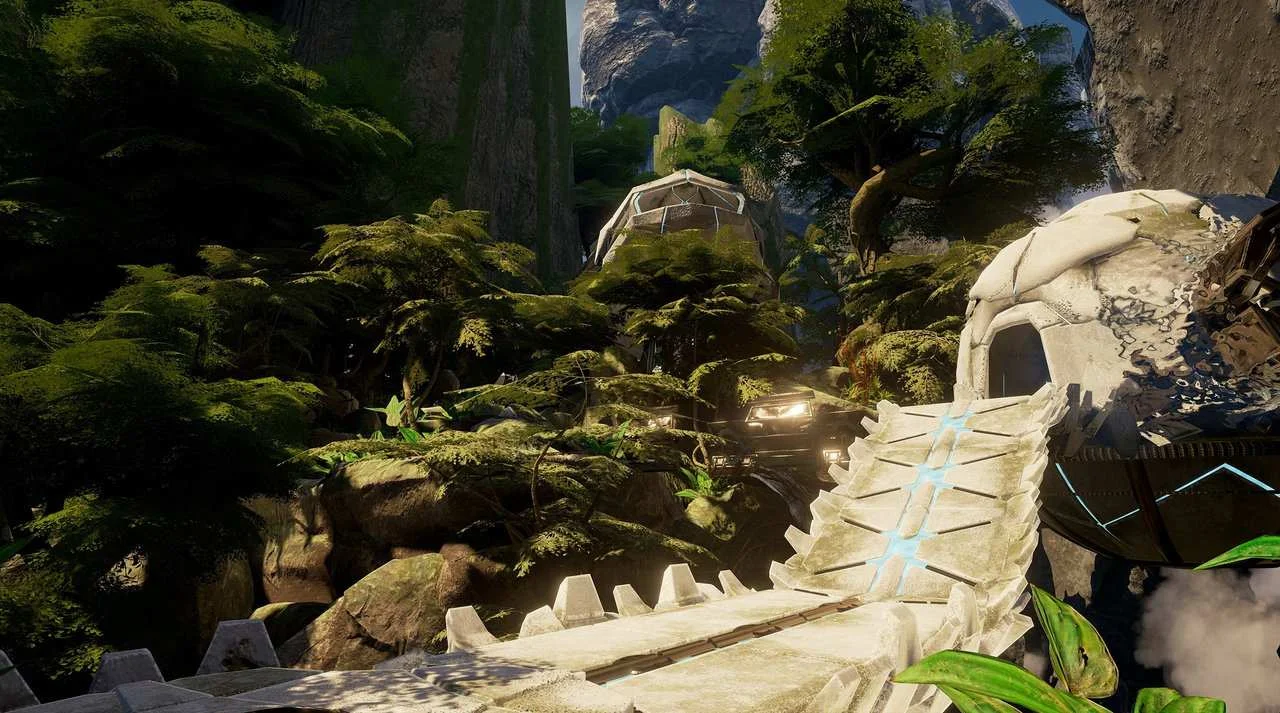


Trailer/Gameplay
Download
Obduction (2016), 3.33GB
ElAmigos release, unprotected game (crack is not necessary).

Updated to version 1.8.4.1 (07.11.2019).

Included bonus content: Soundtrack (mp3).

1. Extract files.
2. Burn or mount the image.
3. Install the game.
4. Play the game. If you like this game, BUY IT!
Obduction Download
🔒 Premium access required
To see and use the download links, you must be logged in and have an active PREMIUM account.
* Unlock downloads via Torrent and TeraBox.
Torrent Download
The best torrent download speeds are with qBittorrent!