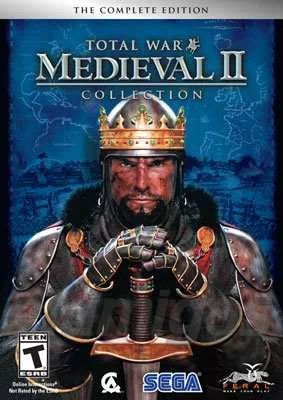
Medieval II: Total War Collection
- Category:
- Release date:
- Game Genre:Strategy, RTS, turn-based, the middle ages, multiplayer, war strategy
- Developer:Creative Assembly Publisher: SEGA
- Release:ElAmigos
- Platform:PC
- Languages (subtitles):English, French, Italian, German, Spanish, Czech, Polish
- Dubbing/Audio:English, French, Italian, German, Spanish
- Crack:Reloaded
- Game size:9.37GB
Game Description
Medieval II: Total War Collection is the legacy name for the PC historical grand strategy game now listed on Steam and GOG as Total War: MEDIEVAL II - Definitive Edition. Developed by Creative Assembly and published by SEGA, it combines a turn-based empire map with real-time battles, diplomacy, religion, character management, and the complete Kingdoms expansion.
How the campaign and battles work
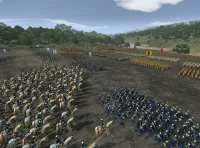
Medieval II is built around two connected layers. On the campaign map, you move armies, manage settlements, recruit troops, negotiate with rival factions, direct agents, and decide how your realm develops. When armies meet, the game switches to a real-time battlefield where formation, terrain, morale, unit matchups, and timing determine the result.
The Grand Campaign is the main experience. You choose a medieval power and pursue faction-specific victory conditions while expanding across Europe, Africa, the Middle East, and the New World. Campaign rules support short and long objectives, so players can choose between a more contained conquest and a broader attempt to dominate the map.
Settlements are divided into cities and castles, and the distinction matters. Cities support commerce, population growth, and civic development, while castles are built around military recruitment and defense. Converting one type into the other can reshape your economy and recruitment options, making settlement planning more consequential than simply capturing the next region.
Real-time combat rewards deliberate command rather than constant production. Infantry lines hold ground, cavalry can exploit exposed flanks, missile troops punish vulnerable formations, and generals influence morale and battlefield performance. Sieges introduce walls, gates, towers, artillery, breaches, and cramped urban fighting, creating a different tactical problem from an open-field engagement.
Factions, agents, and medieval politics
The campaign is not only about armies. Your faction is represented by a family tree of generals and nobles whose traits, skills, followers, and relationships develop over time. A successful commander can become a valuable asset, while a poor leader, disloyal heir, or reckless governor can damage a campaign from inside the realm.
Agents give the strategic map another layer of control. Spies gather information and infiltrate settlements, assassins target important characters, merchants compete for trade resources, diplomats negotiate treaties, and priests influence religious order. Princesses can also affect diplomacy and family politics, while hostile agents such as inquisitors and heretics create threats that do not always arrive with an army.
Religion is a defining system rather than background decoration. Christian factions must manage relations with the Papal States, respond to missions from the Pope, and deal with excommunication risks. Muslim and Christian powers can be drawn into crusades and holy wars, while religious unrest can weaken settlements and complicate expansion.
The campaign map also uses missions and event reports to create pressure beyond simple conquest. Royal marriages, faction changes, declarations of war, natural disasters, and regional objectives can alter your priorities. The result is a sandbox where economic growth, family succession, diplomacy, and military timing often matter as much as the outcome of an individual battle.
What the Definitive Edition includes
The current Definitive Edition is the complete package associated with the older Collection name. It includes the base Medieval II campaign and the Kingdoms expansion, rather than treating the expansion as an optional separate purchase on the current storefront listing.
Kingdoms adds four standalone campaigns: Britannia, Teutonic, Crusades, and Americas. Each focuses on a different region and historical conflict, with distinct factions, units, maps, objectives, and scenario battles. The expansion also adds new custom battle maps and a large set of additional building and agent options.
The Americas campaign expands the New World conflict and makes factions including the Aztecs, Apaches, and Mayans playable. The Britannia campaign concentrates on the British Isles, the Teutonic campaign covers northern Europe, and the Crusades campaign shifts attention toward the Middle East and the struggle between Christian and Muslim powers.
This structure gives the collection a broader identity than a single long campaign. The base game is the large open-ended medieval sandbox, while Kingdoms provides focused campaigns with more specific political and military situations. Players who prefer scenario-driven objectives can move directly into the expansion instead of repeating the same grand campaign framework.
Multiplayer, mods, and PC features
The PC version supports single-player, online multiplayer battles, LAN battles, and custom battle setups. Multiplayer is centered on battles rather than a modern shared campaign structure, while Kingdoms adds hotseat multiplayer for one-versus-one campaign play on the same computer.
Hotseat is especially notable because it lets players alternate turns in a campaign without requiring separate machines. It suits two people who want the full strategic layer, but it is slower and more deliberate than a conventional real-time multiplayer match.
Steam lists the game as moddable, and the title has a long-running PC mod ecosystem built around alternate campaigns, total conversions, faction changes, and expanded historical settings. Mod support is one of the main reasons the game remains relevant to veteran strategy players after they have completed the official campaigns.
Display options include fullscreen and windowed mode through the pre-game configuration tools. Steam does not advertise official controller support, so the intended control scheme is keyboard and mouse. Steam users launch through the Steam client, while the GOG edition is presented as DRM-free and does not require GOG Galaxy to play.
Who should play Medieval II on PC?
Medieval II is a strong fit for players who want a campaign with persistent consequences. Armies take time to assemble, characters can survive for generations, and a victory on the battlefield may still create economic or diplomatic problems elsewhere. The game expects players to read tooltips, understand unit roles, and accept that a poor decision several turns earlier can become a major crisis.
It is also well suited to fans of historical strategy who prefer a broad medieval setting over a tightly scripted narrative. England, France, Spain, the Holy Roman Empire, and the Papal States all create different strategic pressures, while the Mongols and Timurids can transform the late campaign with sudden military threats.
Players looking for fast matches, streamlined interfaces, or highly automated diplomacy may find the game demanding. Its systems are layered, its campaign pacing is measured, and battles require active control of formations rather than a few broad commands. The appeal is long-term planning and emergent history, not instant accessibility.
For a more economy-focused medieval RTS comparison, castle-building strategy games such as Stronghold Crusader Definitive Edition place more emphasis on settlement production and fortress defense, while Medieval II gives greater weight to empire-wide expansion and faction politics.
Related strategy games on PC
Players who enjoy the same campaign-to-battle structure may find historical grand strategy with real-time battles like Total War ROME II Emperor Edition a natural follow-up. Rome II moves the setting to the ancient Mediterranean, but the central rhythm of governing provinces, moving armies, and taking direct control of battles is familiar.
Classic medieval RTS play in Age of Empires II Definitive Edition is a better match for players who want real-time base construction, resource gathering, and shorter competitive engagements. It does not replicate Medieval II's turn-based empire layer, but it shares the medieval warfare setting and unit-counter strategy.
These comparisons also clarify what makes Medieval II distinct. It is not primarily a castle-building game or a traditional base-building RTS; its defining loop is the combination of turn-based realm management, character-led faction politics, and large real-time battles.
Medieval II: Total War Collection FAQ
Is Medieval II: Total War Collection still the current name?
No. “Medieval II: Total War Collection” remains a useful legacy and search name, but the current Steam and GOG storefront title is Total War: MEDIEVAL II - Definitive Edition. The current edition represents the complete package associated with the Collection branding.
Does the Definitive Edition include Kingdoms?
Yes. The package includes the Kingdoms expansion with the Britannia, Teutonic, Crusades, and Americas campaigns, along with its additional factions, units, agents, buildings, maps, and scenario battles.
Can you play the campaign with another player?
Kingdoms includes hotseat campaign multiplayer, allowing two players to take turns on the same computer. The game also supports online and LAN multiplayer battles, including custom battles and historical battle setups.
Does Medieval II support mods on PC?
Yes. Steam identifies the game as moddable, and the PC version has an established mod ecosystem covering new campaigns, factions, maps, units, and total conversions. Mod installation and compatibility can vary by project, so players should follow the instructions supplied with each mod.
Which languages are supported?
The Steam version lists English, French, Italian, German, Spanish, Czech, Hungarian, Polish, and Russian interface support. Full audio is listed for English, French, Italian, German, and Spanish, while the remaining listed languages are supported through the interface.
Is a controller recommended?
The storefront does not list official controller support. Medieval II is designed around keyboard-and-mouse controls for selecting formations, navigating campaign panels, issuing orders, and managing settlements.
System Requirements
Minimum: |
Processor: Pentium 4 1.8 GHz Graphics: 128MB VRAM Memory: 512MB RAM Disk space: 10 GB HDD Operating system: Windows 2000/XP |
Screenshots


Trailer/Gameplay
Download
Medieval II: Total War Collection (2006-2007), 9.37GB
ElAmigos release, game is already cracked after installation (crack by Reloaded).

Updated to version 1.52.

1. Extract files.
2. Burn or mount the image.
3. Install the game.
4. ElAmigos release, game is already cracked after installation.
5. Play the game. If you like this game, BUY IT!
Medieval II: Total War Collection Download
 Download from TeraBox
Included content: Medieval II: Total War + Medieval II: Total War - Kingdoms.
Torrent Download
The best torrent download speeds are with qBittorrent!