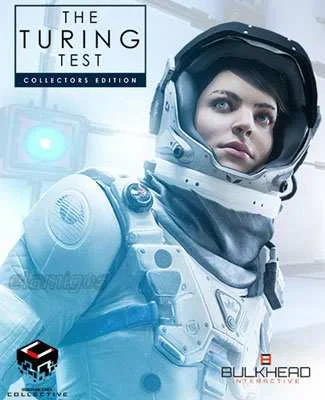
The Turing Test Collector's Edition
- Category:
- Release date:
- Game Genre:Logic, FPP, science fiction, exploration games
- Developer:Bulkhead Interactive Publisher: Square-Enix / Eidos
- Release:ElAmigos
- Platform:PC
- Languages (subtitles):English
- Dubbing/Audio:English
- Crack:Ali213, Codex
- Game size:3.71GB
Game Description
The Turing Test Collector's Edition is a first-person science-fiction puzzle adventure for PC set on Europa, one of Jupiter's moons. The current PC storefront still lists the base game as The Turing Test and offers the Collector's Edition as a bundle rather than a renamed standalone edition. It combines the complete single-player game with development extras for players who want both the puzzle campaign and a closer look at how BULKHEAD built it.
You play Ava Turing, an engineer for the International Space Agency sent to investigate the disappearance of a ground crew. Station AI Tom guides you through an abandoned facility, but the deeper you travel, the less certain the relationship between human judgment, machine logic, and the station's official story becomes.
Power-routing puzzles in first person
The central loop is room-based puzzle solving. Each chamber presents a physical problem involving doors, platforms, cameras, robotic devices, switches, and energy sockets. Progress comes from understanding the room's logic, routing power correctly, and reaching the exit rather than from combat or resource management.
Ava's main tool is the Energy Manipulation Tool, usually abbreviated as EMT. It lets her collect energy orbs from compatible points and place them into powered sockets elsewhere in the room. The tool is not a portal gun, and it does not freely reshape space; its purpose is to manipulate the flow of energy and make existing machinery work in the correct sequence.
The early chambers teach the basic rules gradually. Later puzzles combine several systems, forcing you to consider the order in which energy is collected, which machines need constant power, and whether a device must be activated before another mechanism can be used. Carrying multiple orbs at once adds another layer of planning because the order of stored energy can affect what you are able to deploy next.
The game also uses switches between perspectives as part of its puzzle design. Certain challenges require you to think about what Ava can see, what a remote device can observe, or how control of a machine changes the available solution. These sequences support the wider question at the heart of the story: whether intelligence is defined by calculation, obedience, perception, or the ability to make a choice.
Seven sectors, optional chambers, and a story mystery
The campaign is structured as a linear progression through the Europa facility. Its main route contains more than seventy puzzle chambers distributed across seven story-focused sectors, with each area adding new combinations to the established energy-routing rules rather than replacing them with unrelated mini-games.
Alongside the main route are optional puzzles hidden away from the critical path. These chambers are more demanding and reward players who inspect side areas instead of moving directly toward the next story objective. They provide a useful second layer for puzzle fans who find the standard progression too gentle.
The narrative is delivered through exploration, conversations with Tom, environmental details, and discoveries connected to the missing crew. The tone stays closer to atmospheric science fiction and philosophical mystery than to action horror. The facility is the primary threat, and the tension comes from uncertainty about who created the tests and what they are intended to prove.
Players looking for a traditional action game should set expectations accordingly. There is no combat-focused loop, no character build system, and no multiplayer campaign. The appeal lies in interpreting systems, noticing contradictions, and connecting the station's puzzles with the questions raised by its story.
What the Collector's Edition includes
The Collector's Edition is not a separate gameplay overhaul. It packages the base game with The Turing Test - Upgrade Pack, which adds behind-the-scenes material rather than another campaign or co-op mode.
The upgrade content includes the game's original soundtrack, an official digital art book, and the original pre-alpha prototype. The prototype is particularly relevant for players interested in development history because it shows an earlier white-box version of the project before the final presentation and puzzle structure were completed.
The art book focuses on BULKHEAD's development process, including concept work and early material for characters and environments. The soundtrack is presented as a separate extra, while the prototype offers a playable comparison point for anyone curious about how the finished game evolved from its initial design.
In practical terms, the bundle contains the full single-player game plus the upgrade content. The Collector's Edition does not turn the title into a live-service product, add competitive features, or introduce a progression system beyond the campaign's puzzle and story structure.
Who should play The Turing Test?
The strongest audience is players who enjoy first-person logic puzzles with a clear narrative frame. The game suits people who prefer manipulating machines, testing rules, and solving compact spaces rather than searching a large open world for objectives.
It is also a good fit for science-fiction fans interested in artificial intelligence, human agency, and the moral consequences of exploration. Tom's presence gives the campaign a conversational structure, while the abandoned ISA facility provides a consistent setting for the mystery.
The game may be less suitable if you want unrestricted experimentation, heavy simulation, or constant mechanical variety. Most challenges remain grounded in the same energy-routing foundation, so players who prefer the broad system variety of first-person light and physics puzzlers like Lightmatter should still expect The Turing Test to be more focused and linear.
That focus is part of its identity. The puzzles are designed as a guided sequence, with new complications introduced as the story advances. The experience is better approached as a compact, authored puzzle journey than as an endlessly replayable sandbox.
PC features and storefront details
On PC, the game is distributed through Steam under the base title The Turing Test, while The Turing Test Collector's Edition remains the name of the bundle containing the base game and Upgrade Pack. No verified storefront rebrand has replaced either name with a new definitive edition.
The Steam listing credits BULKHEAD as both developer and publisher for the current PC product. Older references may mention Square Enix Collective in connection with publishing, but the present storefront metadata identifies BULKHEAD for the listed game and bundle.
The PC version supports full controller support, making it suitable for players who prefer a gamepad for first-person movement and environmental interaction. Steam also lists single-player play, achievements, trading cards, cloud saves, Family Sharing, and Remote Play on TV among the platform features associated with the game.
Localization is limited on the verified Steam listing: English is supported for the interface, full audio, and subtitles. The game is therefore most accessible to players comfortable following English dialogue, written clues, and environmental text.
The storefront does not present the game as a co-op or competitive title. Its structure is strictly single-player, and the Collector's Edition extras are intended for individual use alongside the main campaign.
Comparable PC puzzle games
The closest comparison is not based on story alone but on the way a first-person viewpoint turns environmental rules into spatial problems. Players who want more portal-based experimentation can move toward first-person physics puzzle campaigns such as Portal 2, which offers broader mechanical variety and a separate co-op experience.
Portal is another useful reference point for understanding the design lineage: both games place a tool in the player's hands, introduce rules through controlled chambers, and use an artificial intelligence presence to shape the atmosphere. The Turing Test is more concerned with energy routing and moral questions, while Portal leans harder into portal geometry, timing, and comedy.
For a more expansive philosophical puzzle experience, The Talos Principle is a natural genre neighbor, although its puzzle spaces and thematic scope are considerably broader. The Turing Test stays more compact, more linear, and more tightly tied to its Europa facility.
The Turing Test Collector's Edition FAQ
Is The Turing Test Collector's Edition a different game from The Turing Test?
No. The current PC storefront lists The Turing Test as the base game and the Collector's Edition as a bundle containing that game plus The Turing Test - Upgrade Pack. It is an expanded purchase option, not a renamed sequel or remaster.
What is included in the Collector's Edition?
It includes the complete single-player game, the original soundtrack, an official digital art book, and the original pre-alpha prototype through the Upgrade Pack.
Does The Turing Test have co-op or multiplayer?
No. The verified PC listing identifies the game as single-player. There is no co-op campaign, split-screen mode, or competitive multiplayer loop in the Collector's Edition.
What is the main puzzle mechanic?
The core mechanic is the Energy Manipulation Tool. Ava uses it to collect and transfer energy orbs between compatible sockets, powering machines and opening routes through each chamber.
Does the PC version support controllers?
Yes. The Steam version lists full controller support, alongside the standard PC platform features associated with Steam.
What languages are supported on PC?
The verified Steam metadata lists English for the interface, full audio, and subtitles. No additional language localization is listed for this PC version.
Is the game suitable for players who want a long replay loop?
It is primarily a linear puzzle campaign with optional chambers and achievement goals. Its replay value comes from revisiting missed puzzles, optional areas, and story details rather than from procedural generation, character builds, or multiplayer competition.
System Requirements
Minimum: | Recomended: |
| Processor: Intel Core 2 Duo E6600 2.4 GHz/AMD Athlon 64 X2 6400+ 3.2 GHz Graphics: 1 GB GeForce GTX 560/ Radeon HD 5770 Memory: 4 GB RAM Disk space: 4 GB HDD Operating system: Windows 7 64-bit | Processor: Intel Core i7-920 2.66 GHz/AMD A8-3870K 3.0 GHz Graphics: 2 GB GeForce GTX 670/3 GB Radeon R9 280 Memory: 8 GB RAM Disk space: 4 GB HDD Operating system: Windows 7/8.1/10 64-bit |
Screenshots

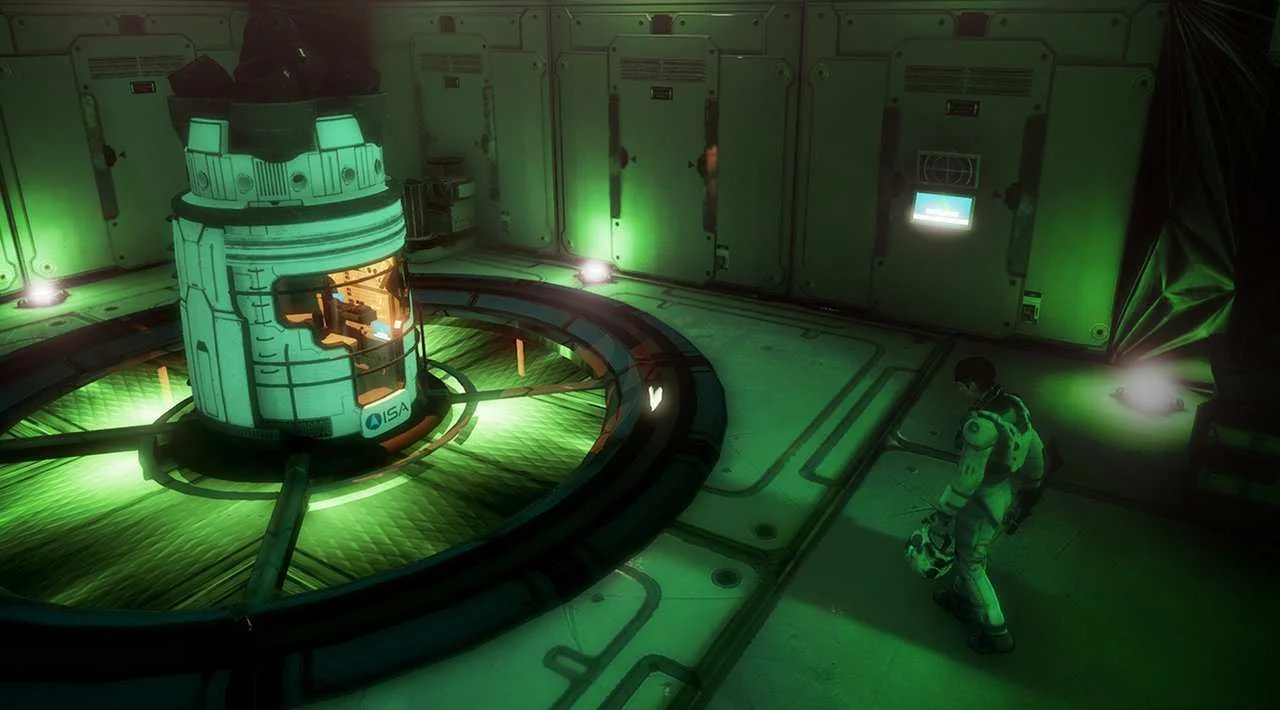

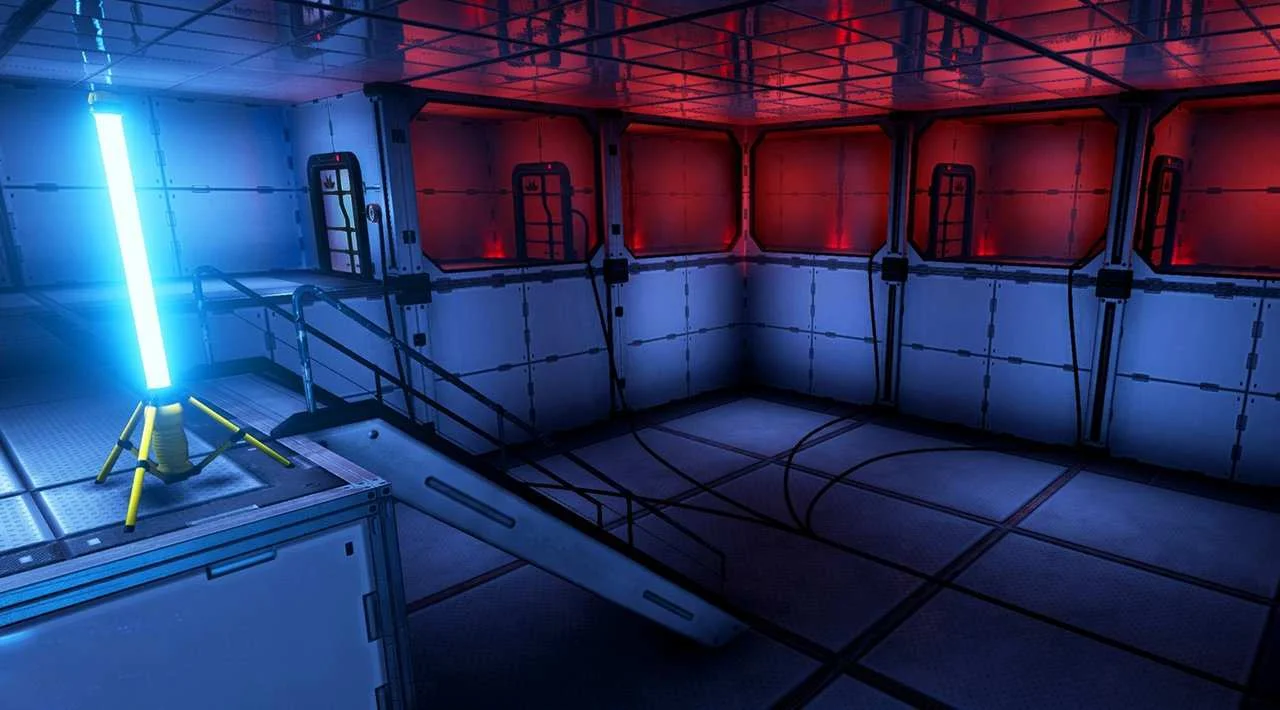
Trailer/Gameplay
Download
The Turing Test Collector's Edition (2016), 3.71GB
ElAmigos release, game is already cracked after installation (crack by Ali213 or Codex).

Updated till 31.08.2016 (Update 1).

+ patch/update 3 (02.09.2016) & crack 3 (by Ali213 or Codex), 321MB

Bonus content: Prototype DLC, Soundtrack (mp3), Artbook.

1. Extract files.
2. Burn or mount the image.
3. Install the game.
4. ElAmigos release, game is already cracked after installation.
5. Play the game. If you like this game, BUY IT!
The Turing Test Download
🔒 Premium access required
To see and use the download links, you must be logged in and have an active PREMIUM account.
* Unlock downloads via Torrent and TeraBox.
Torrent Download
The best torrent download speeds are with qBittorrent!