The Longest Journey
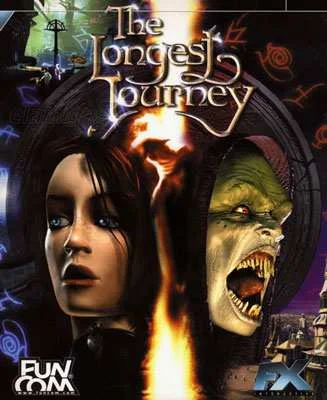
- Category:
- Release date:
- Game Genre:Adventure, fantasy, science fiction, point-and-click, urban fantasy
- Developer:
- Release:ElAmigos
- Platform:PC
- Languages (subtitles):English, French, Italian, German, Spanish, Polish
- Dubbing/Audio:English, French, German, Spanish, Polish
- Crack:not necessary
- Game size:3.58GB
Game Description
The Longest Journey on PC is a story-rich point-and-click adventure from Funcom, built around April Ryan’s passage between the technological world of Stark and the magical realm of Arcadia. The current Steam and GOG listings retain the original title, with no verified rebrand or replacement edition. This is a single-player, dialogue-heavy adventure for players who value world-building, character writing, exploration, and demanding object-based puzzles over combat.
A classic point-and-click journey across two worlds
The game follows April Ryan, an eighteen-year-old art student living in Newport and attending the Venice Academy of the Visual Arts. Her ordinary life is disrupted by visions of another reality, eventually drawing her into a conflict involving Stark, Arcadia, and the mysterious Balance that connects them.
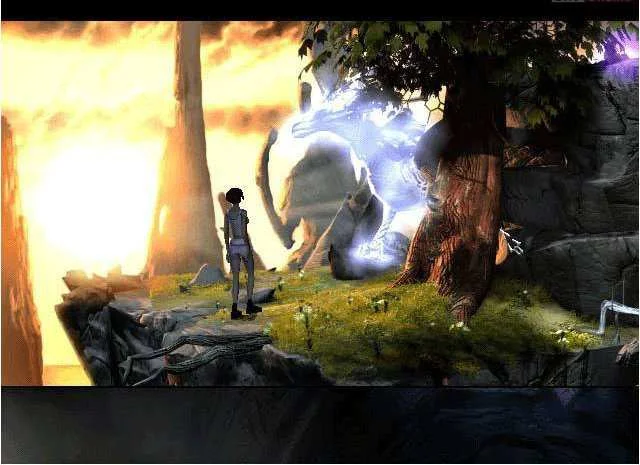
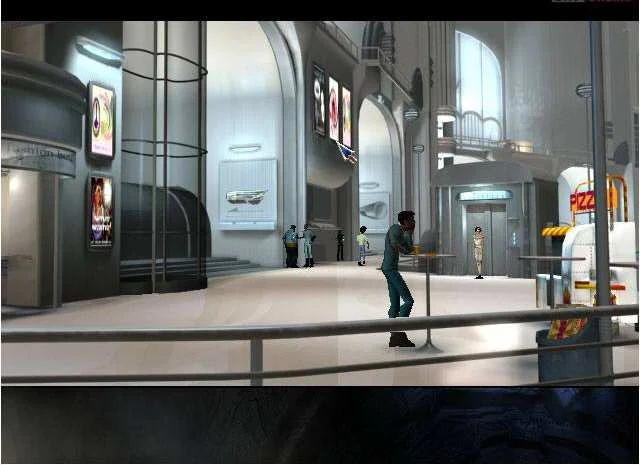
Moment to moment, the core loop is traditional but substantial: inspect locations, identify interactive objects, speak with characters, collect items, combine clues, and test solutions against the environment. The presentation uses a third-person point-and-click perspective with pre-rendered backgrounds and animated characters. Movement is deliberate, and progress depends on observation rather than reflexes.
April’s inventory is the main problem-solving tool. Items can be examined, combined, or used on people and scenery, while conversations frequently reveal the information needed to interpret a puzzle. The game also rewards revisiting locations and exhausting dialogue options, since seemingly casual remarks can establish later solutions or clarify the larger mystery.
What makes the gameplay distinctive
The Longest Journey is not an action adventure despite the occasional danger in its story. There are no combat systems, character builds, weapon upgrades, or conventional fail-state battles. The official manual describes April as unable to die, making experimentation safer than in many older adventure games and keeping the focus on deduction.
The challenge comes from interpreting each situation correctly. Some puzzles are direct inventory problems, while others depend on environmental logic, conversation clues, timing, or the player recognizing an unusual connection between objects. The design often expects patience: search every screen, read April’s notes, question characters repeatedly, and consider whether an apparently decorative item has a practical use.
The strongest feature is the contrast between the two settings. Stark presents a futuristic but socially recognizable city shaped by technology, corporations, surveillance, and urban routine. Arcadia is more openly fantastical, filled with magic, strange creatures, and locations that operate according to different assumptions. Moving between these worlds gives the investigation a broader scope than a conventional single-setting mystery.
Players who enjoy methodical clue hunting and densely written conversations may also appreciate classic point-and-click mysteries such as Broken Sword: Shadow of the Templars - Reforged, although The Longest Journey places more emphasis on fantasy and science-fiction world-building.
Story, characters, and exploration
April is both the player character and the narrative anchor. Her background as an artist matters because the game frames discovery through imagination, dreams, memory, and visual interpretation rather than through conventional heroics. Her relationships with friends, teachers, residents of Newport, and inhabitants of Arcadia gradually expand the story from a personal disturbance into a much larger metaphysical conflict.
The game’s world is unusually broad for a linear adventure. Steam describes more than 150 locations and over 70 speaking characters, while the campaign is organized into a sequence of chapters with a prologue and epilogue. Those numbers matter less than the variety of spaces: apartment interiors, school facilities, city streets, technological districts, wilderness areas, and fantastical settlements all serve as investigation spaces.
Dialogue is a major part of the experience. Conversations can be lengthy and frequently mix exposition with humor, social observation, and clues. That makes the game a strong fit for readers who want a substantial narrative, but a weaker match for players who prefer minimal text, constant action, or highly streamlined puzzle design.
PC editions, storefront status, and content model
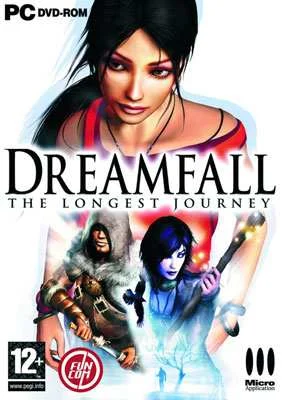
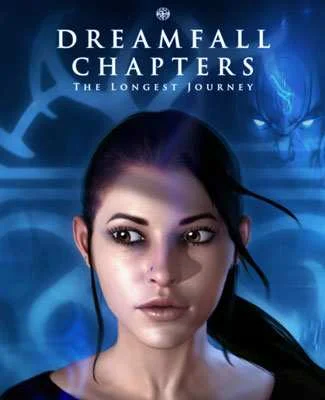
The current PC storefronts present The Longest Journey as the original standalone adventure rather than a remaster, remake, definitive edition, or renamed successor. Steam also offers bundles containing Dreamfall: The Longest Journey and, in a larger package, Dreamfall Chapters: The Final Cut Edition. Those are separate games and should not be confused with extra chapters or DLC for the original.
There is no verified modern season-pass structure or live-service content model attached to the game. The purchase is centered on the complete single-player adventure. Its value comes from the narrative campaign, exploration, puzzle chain, soundtrack, and world design rather than repeatable modes or multiplayer content.
For another narrative-focused point-and-click experience with a more mechanical and travel-oriented structure, the story-driven puzzle adventure Syberia 2 is a reasonable comparison, though its tone and setting differ substantially from April Ryan’s two-world journey.
Steam, GOG, controls, and localization
Steam lists the game as single-player with Family Sharing and does not list built-in co-op, competitive multiplayer, split-screen, controller support, mod support, or anti-cheat features. The original interface is designed around mouse-and-keyboard control, which suits its cursor-based interaction system and inventory puzzles.
Storefront support differs by platform. Steam currently lists English interface support. GOG lists English and Polish audio and text, and its edition includes an optional Galaxy path alongside a DRM-free offline installer. The GOG version can therefore be installed and played without requiring the Galaxy client, while the Steam edition is tied to the Steam ecosystem.
Neither current storefront presents a verified modern controller-focused redesign, ultrawide feature set, cabinet mode, dedicated server option, or official mod ecosystem. Players should approach the PC version as a preserved classic adventure rather than a modernized interface overhaul.
Who should play The Longest Journey?
This is a strong choice for players who want single-player storytelling, speculative fiction, urban fantasy, memorable supporting characters, and puzzles that require attention to dialogue and surroundings. It is especially suited to fans of long-form adventure writing and games where reading conversations is part of the main gameplay loop.
It is less suitable for players seeking combat, branching action systems, open-world freedom, or short puzzle rooms with immediate feedback. The pacing is patient, the dialogue is extensive, and some solutions reflect older adventure-game conventions. That friction is part of the package, not a sign that the game secretly contains an action or role-playing progression layer.
The Longest Journey FAQ
Is The Longest Journey still sold under its original name?
Yes. Current Steam and GOG listings use The Longest Journey. It has not been verified as rebranded under a new storefront name. Dreamfall: The Longest Journey and Dreamfall Chapters: The Final Cut Edition are separate follow-up games.
What type of game is The Longest Journey?
It is a single-player point-and-click adventure with third-person exploration, inventory puzzles, environmental investigation, and extensive dialogue. Combat, character builds, and traditional action mechanics are not part of its core structure.
Does The Longest Journey have multiplayer or co-op?
No verified multiplayer, co-op, or split-screen mode is listed. The game is designed as a solo narrative adventure centered on April Ryan.
Is the PC version controller compatible?
Controller support is not listed on the current Steam feature panel, and the game’s interaction model is built around mouse-and-keyboard input. A mouse is the safest choice for examining locations, selecting dialogue, and managing inventory.
Which languages are available on PC?
Steam lists English interface support. GOG lists English and Polish for both audio and text. The storefront data does not verify a broader official localization set for the current PC editions.
Is the GOG version DRM-free?
Yes. GOG states that its edition uses no DRM and can be played offline without Galaxy. Steam provides the game through the Steam client ecosystem.
How does progression work?
Progression is chapter-based and story-driven. You advance by discovering information, completing environmental puzzles, obtaining useful items, and triggering new conversations or locations. There are no levels, loot tiers, skill trees, or repeatable score modes.
System Requirements
Minimum: |
Processor: Pentium II 300MHz Graphics: 16 MB VRAM Memory: 64 MB RAM Disk space: 4 GB HDD Operating system: Windows XP |
Screenshots


Trailer/Gameplay
Download
The Longest Journey (1999), 3.58GB
ElAmigos release, unprotected game (serial or crack is not necessary).

Included bonus content: Artworks, Avatars, Dreamfall Trailer, Guide, Manual, Soundtrack (mp3), Wallpapers.

1. Extract files.
2. Burn or mount the image.
3. Install the game.
4. Play the game. If you like this game, BUY IT!
The Longest Journey Download
 Download from TeraBox
Torrent Download
The best torrent download speeds are with qBittorrent!