Final Fantasy V
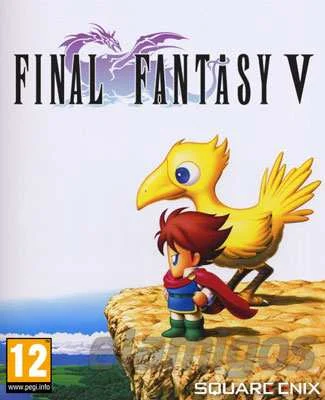
- Category:
- Release date:
- Game Genre:RPG, fantasy, 2D, jRPG
- Developer:
- Release:ElAmigos
- Platform:PC
- Languages (subtitles):English, French, Italian, German, Spanish, Russian, Portuguese-Brazil
- Dubbing/Audio:English
- Crack:Reloaded
- Game size:0.68GB
Game Description
Final Fantasy V PC is a classic turn-based JRPG with overhead exploration, side-view Active Time Battle combat, and one of the most flexible character-building systems in the 2D era. The current Steam storefront lists it simply as FINAL FANTASY V and presents it as the PC edition of the FINAL FANTASY pixel remaster series, commonly searched as Final Fantasy V Pixel Remaster.
Rather than locking Bartz, Lenna, Galuf, Faris, and Krile into permanent roles, the game lets you reshape the party as the adventure develops. That emphasis on experimentation is the reason Final Fantasy V remains especially relevant to PC players who enjoy build crafting inside a traditional single-player RPG.
A party RPG built around job mastery
The central loop combines world exploration, towns, dungeons, treasure hunting, random encounters, and command-based battles. Battles run through an Active Time Battle system, so characters act as their gauges fill rather than waiting for a purely static turn order.
Victory awards experience, currency, and Ability Points, usually abbreviated as ABP. ABP advances the currently equipped job, allowing characters to learn commands and passive abilities before changing to another role.
That distinction is important. A character does not simply become stronger by switching from one class to another; they carry learned abilities into new jobs. A Knight can gain defensive tools, a Black Mage can learn offensive spells, and a Thief can contribute useful utility even after moving into a different role.
The system encourages practical combinations instead of one permanent “correct” party. You can build dedicated physical attackers, spellcasters, hybrids, support specialists, or unusual combinations designed around a particular boss or dungeon.
Named jobs include Knight, Monk, Black Mage, White Mage, Blue Mage, Time Mage, Summoner, Ninja, Chemist, Bard, Samurai, and Mime. Each has its own command identity and progression path.
Why the job system changes the whole game
Final Fantasy V is structured around discovering new jobs through story progression, then deciding how much time to invest in mastering them. The best decisions are often about future flexibility rather than immediate damage.
Once an ability is learned, it can be equipped by another job when the rules allow it. This creates a compact form of cross-job customization without turning the game into a spreadsheet-heavy tactical RPG.
Some encounters reward conventional preparation, while others make experimentation worthwhile. A boss that punishes physical attacks may encourage a stronger magical setup; an enemy vulnerable to a particular status effect can make a normally overlooked job suddenly valuable.
The result is a mastery loop with more tactical depth than the straightforward story presentation might suggest. Players who enjoy the skill experimentation of party-based 2D JRPGs such as Final Fantasy VI will find Final Fantasy V more focused on mechanical planning than character-specific combat identities.
Freelancer becomes particularly interesting later because mastered abilities can influence its effectiveness. The game therefore rewards players who rotate jobs deliberately instead of treating the class menu as a cosmetic choice.
Story, worlds, and exploration
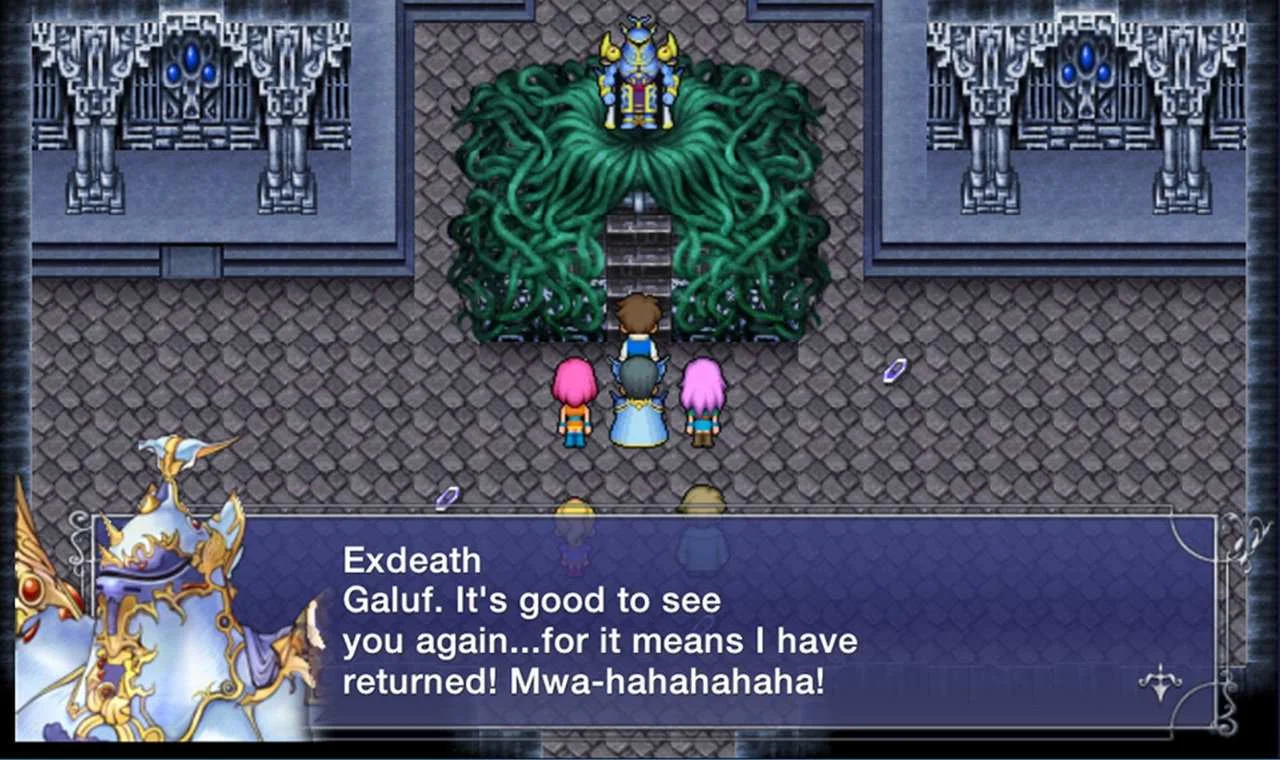
The story begins with the crystals that maintain the balance of the world. King Tycoon responds to a disturbance in the wind and disappears, drawing Bartz and his Chocobo into a wider conflict involving Lenna, Galuf, Faris, Krile, and the warlock Exdeath.
Its tone moves comfortably between earnest fantasy stakes and lighter character moments. The narrative is built around elemental crystals, shifting alliances, airship travel, and a party that gradually becomes more important than any single fixed hero.
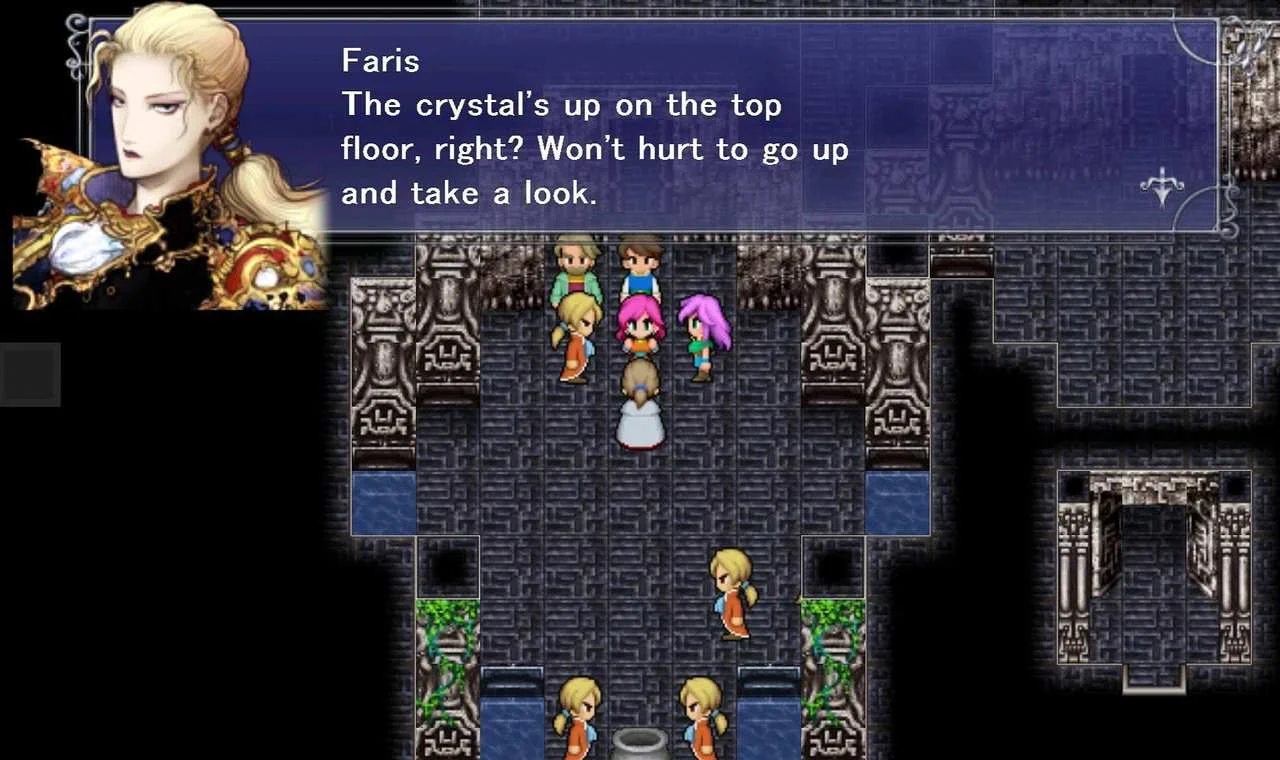
Exploration uses an overhead perspective for towns, fields, caves, forests, and other locations. The world map expands as the party gains access to new forms of travel, making movement and revisiting locations part of the progression structure.
Dungeons mix combat with environmental obstacles, hidden paths, treasure rooms, and occasional puzzles. The bestiary and illustration gallery in the Pixel Remaster provide useful reference material for players who want to track their discoveries beyond the main path.
What the current PC edition includes
The current PC version is a paid standalone game rather than a free-to-play service. Steam also offers a Final Fantasy I-VI bundle, while the individual listing includes optional soundtrack-related add-ons rather than a catalogue of gameplay expansions.
This edition uses redrawn 2D pixel graphics associated with Kazuko Shibuya and a rearranged soundtrack overseen by Nobuo Uematsu. The presentation remains recognisably classic, but the interface is designed for modern PC play.
It is worth distinguishing this release from older versions of Final Fantasy V. Square Enix states that the Pixel Remaster games are based on the original Nintendo and Super Nintendo versions, and that additions from previous remakes are not necessarily included.
In practical terms, players seeking the Game Boy Advance version’s extra jobs and additional post-game material should not assume those additions are present here. The current PC edition is best understood as a polished remaster of the original core game, not a compilation of every later version.
The Pixel Remaster also adds quality-of-life options that change how much friction you want during a playthrough. The PC version includes auto-battle, encounter toggles, adjustable experience and ABP multipliers, font selection, and the ability to switch between rearranged and original-style music.
PC features and practical expectations
Steam lists single-player functionality, Steam Achievements, Steam Trading Cards, Steam Cloud, and Family Sharing. There is no advertised co-op, competitive multiplayer, split-screen mode, or online party feature.
The game is designed primarily for keyboard and mouse on PC. Steam Input can be useful for players who prefer a gamepad-oriented layout, but the storefront does not present Final Fantasy V as a modern full-controller showcase, so keyboard controls are the safest baseline expectation.
The interface supports English, French, Italian, German, Spanish from Spain, Japanese, Korean, Brazilian Portuguese, Russian, Simplified Chinese, Thai, and Traditional Chinese. The listing presents these as interface languages, with no full voice-acting track advertised.
There is also no competitive anti-cheat requirement to consider. Final Fantasy V is a self-contained offline RPG, and its PC ecosystem is centered on saves, achievements, collection tools, and optional presentation settings rather than live-service infrastructure.
Who should play Final Fantasy V on PC?
Final Fantasy V is a strong fit for players who enjoy party customization, classic JRPG exploration, random-encounter dungeon design, and combat systems that reward learning enemy patterns and testing unusual abilities.
It is especially appealing if you want a retro RPG where the party’s identity comes from player decisions. The story provides the framework, but the job menu determines much of how your team actually functions.
Players looking for fully voiced dialogue, modern real-time combat, cinematic presentation, or a heavily authored character progression system may find the structure dated. The game also expects patience with menu management and repeated experimentation.
Those preferences are not flaws to hide; they define the experience. Final Fantasy V is more interested in giving you a ruleset to exploit than in limiting every character to one carefully scripted role.
Similar PC games and useful comparisons
The closest comparison within the same series is Final Fantasy VI, although its character abilities are more individually defined. Final Fantasy V is the better choice when job switching and ability combinations are the main attraction.
For a broader classic-JRPG comparison, time-traveling 2D RPG adventures like Chrono Trigger share the emphasis on overworld discovery, party-based battles, and compact sprite-driven storytelling, but Chrono Trigger uses a more fixed character progression model.
That contrast helps explain Final Fantasy V’s appeal. Its strongest hook is not a single memorable combat gimmick or a large roster of permanent heroes, but the way jobs, ABP, equipment, and learned commands interact across the entire adventure.
Final Fantasy V FAQ
What is the current PC name for Final Fantasy V?
The current Steam listing is titled FINAL FANTASY V and describes the game as a 2D pixel remaster. “Final Fantasy V Pixel Remaster” remains the clearest name for distinguishing this edition from older PC and console releases.
Does Final Fantasy V Pixel Remaster include the Game Boy Advance additions?
No complete version of every later release is included. The Pixel Remaster is based on the original game and does not automatically include the additional jobs and post-game material associated with the Game Boy Advance edition.
Is Final Fantasy V on PC multiplayer?
No. The current PC edition is a single-player RPG with no advertised co-op, split-screen, or online multiplayer mode.
Can you turn off random encounters?
Yes. The current Steam version includes an encounter toggle, along with adjustable experience and ABP multipliers. These options let you reduce repetition or accelerate experimentation without changing the underlying job system.
Does the PC version have original music?
Yes. Players can switch between the rearranged Pixel Remaster soundtrack and the original-style music through the PC version’s presentation options.
Is Final Fantasy V good for players who like character builds?
Yes, provided you enjoy classic menu-driven combat. The game’s defining feature is its job and ability system, which lets you master roles, carry selected abilities forward, and build a party around different tactical ideas.
System Requirements
Minimum: |
Processor: Intel Pentium IV 2.4 GHz Graphics: 512 MB GeForce 8800 Memory: 2 GB RAM Disk space: 700 MB HDD Operating system: Windows Vista |
Screenshots


Trailer/Gameplay
Download
Final Fantasy V (2015), 0.68GB
ElAmigos release, game is already cracked after installation (crack by Reloaded).

1. Extract files.
2. Burn or mount the image.
3. Install the game.
4. ElAmigos release, game is already cracked after installation.
5. Play the game. If you like this game, BUY IT!
Final Fantasy V Download
🔒 Premium access required
To see and use the download links, you must be logged in and have an active PREMIUM account.
* Unlock downloads via Torrent and TeraBox.
Torrent Download
The best torrent download speeds are with qBittorrent!