The Bard's Tale Remastered Collection
Edit date: 4-01-2023, 12:51
Reason: Update The Bard's Tale Trilogy Remastered (v4.34; 26.11.2019)
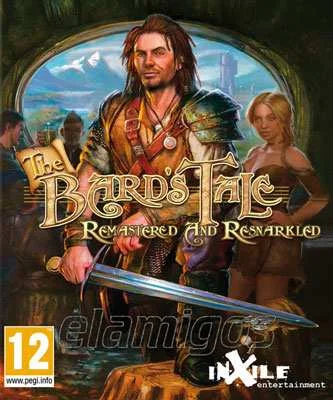
- Category:
- Release date:
- Game Genre:RPG, FPP, fantasy, turn-based, dungeon-crawler, reeditions/remasters/remakes, classic RPG
- Developer:Krome Studios Publisher: inXile entertainment
- Release:ElAmigos
- Platform:PC
- Languages (subtitles):(The Bard's Tale Remastered): English, French, Italian, German, Spanish, Polish, Russian || (The Bard's Tale Trilogy Remastered): English, French, German, Spanish, Polish, Russian
- Dubbing/Audio:English, German
- Crack:Codex
- Game size:3.17GB
Game Description
The Bard's Tale Remastered Collection is the common name for The Bard's Tale Trilogy, the current PC storefront title for a remastered first-person dungeon-crawling RPG collection. Developed by Krome Studios and inXile Entertainment, it includes three connected classic adventures with party creation, grid-based exploration, turn-based combat, spellcasting, character progression, and optional systems designed to preserve the original challenge.
What The Bard's Tale Trilogy actually is
The most important naming detail is that The Bard's Tale Trilogy is the official current name used on PC storefronts and by inXile Entertainment. Players may also search for The Bard's Tale Remastered Collection, The Bard's Tale Remastered Trilogy, or simply the original trilogy remaster, but these refer to the same modern collection rather than a separate product.
This is not the later action RPG commonly listed as The Bard's Tale or The Bard's Tale ARPG: Remastered and Resnarkled. The Trilogy is a separate collection built around the original first-person, grid-based computer role-playing games. That distinction matters when searching for screenshots, guides, controller information, or the correct PC edition.
The collection contains The Bard's Tale: Tales of the Unknown, The Bard's Tale II: The Destiny Knight, and The Bard's Tale III: Thief of Fate. The three games retain their individual settings, maps, enemies, spells, items, and objectives while sharing a more consistent interface and modern presentation.
Party-based dungeon crawling and turn-based combat
The core loop begins in the Adventurer's Guild, where you create a custom party and assign character classes suited to different roles. A typical group may combine front-line fighters, defensive specialists, rogues, spellcasters, and a bard whose songs provide tactical benefits during exploration and combat.
Exploration uses grid-based movement from a first-person viewpoint. You move through towns, wilderness areas, towers, ruins, and dangerous dungeons one square at a time. Position, orientation, locked routes, hidden passages, environmental hazards, and incomplete information all matter, so the game rewards careful observation rather than constant forward movement.
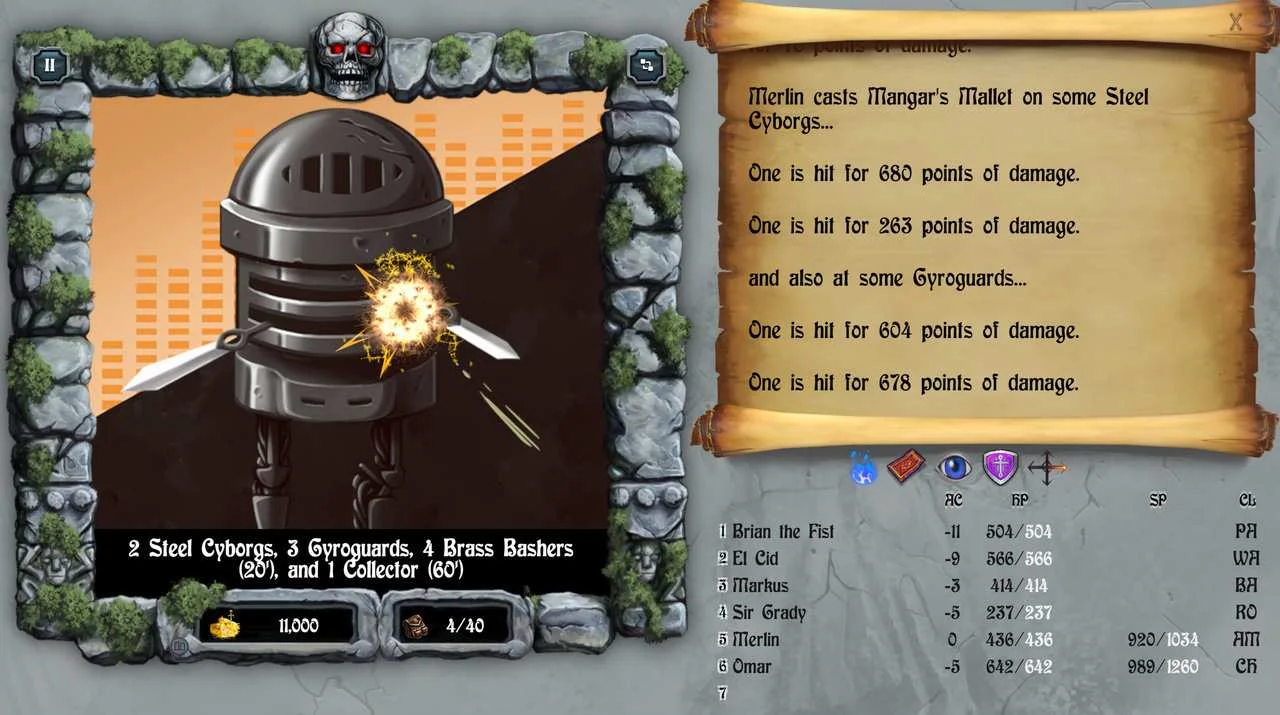
Combat is turn-based party combat. You select commands for your adventurers, manage physical attacks, choose spells from multiple schools, and respond to enemy formations that can punish an unbalanced party. Winning is less about reflexes than preparation: character levels, equipment, spell access, party order, and resource management shape the outcome of difficult encounters.
The progression loop is deliberately old-school. You explore to find better equipment and experience, return to town when supplies or healing run low, improve your party, and then push farther into areas that previously overwhelmed you. There is no modern quest-marker structure guiding every objective.
Spells, classes, maps, and Legacy Mode
Character development is built around class-based progression, equipment upgrades, attributes, hit points, spell access, and the transfer of experienced characters between games. The party you establish in the first volume can continue through the trilogy, making long-term decisions more meaningful than they would be in three unrelated campaigns.
Magic is central to survival. Spellcasters provide offensive damage, defensive protection, recovery, utility, and access to solutions that physical characters cannot replicate. The bard adds another layer through song-based abilities, which can support the group while also consuming attention and resources that must be managed during an expedition.
The remaster adds an optional automap for all three games, along with a larger map view and improved notation tools. This is a major accessibility change for modern players because the original style expected players to track complex dungeon layouts manually. The map does not remove the need to understand doors, traps, puzzles, encounters, and route planning, but it makes navigation far less dependent on external graph paper.
Players who want the older rules can enable Legacy Mode. This collection of options restores more of the original friction and difficulty, including the harsher exploration experience associated with the classic releases. The default remastered presentation is more approachable, while Legacy Mode is better suited to players deliberately seeking a historically faithful challenge.
Other quality-of-life changes include an in-game manual, a bestiary, updated inventory handling, improved spell access, party reordering, enhanced presentation, and the ability to save more flexibly than in the original versions. These additions reduce unnecessary friction without turning the trilogy into a modern action RPG.
Three games, one continuing party
The collection is structured as a connected sequence rather than a single seamless campaign. Tales of the Unknown establishes the party and the threat surrounding Skara Brae. The Destiny Knight expands the scope of the adventure and introduces a new central objective. Thief of Fate pushes the story into a broader fantasy conflict involving unusual locations and threats beyond a conventional dungeon crawl.
The key commercial advantage is simple: the paid package includes all three remastered games. It is not presented as a free-to-play product, a rotating service, or a table of separately purchased episodes. The trilogy is the content model, with no season-pass structure required to access its central adventure sequence.
The games are also valuable as a historical package. They show how early party-based computer RPG design handled exploration, character roles, spell systems, and persistent progression before the genre adopted modern quest logs and cinematic presentation. Players approaching the collection should expect uneven pacing and dated design assumptions, even with the remaster improvements enabled.
That historical character is also why the collection remains relevant beside later party RPGs. For a different branch of classic, turn-based role-playing from the same developer, classic squad-based RPGs such as Wasteland Remastered provide a useful comparison: both emphasize careful party management, resource decisions, and systems that trust the player to experiment.
Who should play it on PC?
The Bard's Tale Trilogy is a strong fit for players who enjoy first-person dungeon crawlers, manual exploration, character building, spell lists, and turn-based combat where preparation matters. It also suits players interested in the history of computer RPGs who want a modern presentation without losing the structure of the originals.
It is less suitable for anyone expecting a cinematic party RPG with extensive voiced dialogue, real-time combat, open-world freedom, or a heavily guided campaign. The trilogy often asks you to remember clues, test routes, manage limited resources, and accept that a failed expedition may reveal information even when it does not produce immediate progress.
The collection can be played as a long-form progression challenge or as a historical study of dungeon-crawler design. Newcomers should begin with the standard remastered settings, learn the party roles, and use the automap before deciding whether Legacy Mode offers the preferred experience.
PC features, input, and localization
The PC version is primarily a single-player experience. It includes Steam Cloud, Steam Achievements, Steam Trading Cards, Family Sharing, and 47 listed achievements on the Steam edition. There is no competitive multiplayer, online co-op, or split-screen mode that changes the structure of the adventure.
Controller support is available but marked as partial on Steam. The game can be played with a controller for most gameplay, while text-entry situations such as naming characters or solving certain riddles are less convenient because the PC version does not provide a full virtual keyboard workflow. Keyboard and mouse remain the safest choice for players who expect frequent text input.
The collection supports interface and subtitle localization in English, French, German, Spanish, Polish, and Russian. Full audio is not the focus of this release, so players should think of the localization primarily as translated interface and text support rather than a voiced presentation.
PC players also benefit from the unified modern presentation: updated graphics, refreshed audio and music, improved menus, optional free-look presentation, more readable portraits, and the ability to consult manuals and bestiary information in-game. These features make the collection more practical to play than an unmodified original release or a basic emulation setup.
Similar PC RPGs and useful comparisons
The closest comparison is not a modern action RPG but another party-focused classic CRPG built around deliberate decisions. Players who enjoy the trilogy's emphasis on squad composition and turn-based planning may also appreciate choice-driven turn-based party RPGs like Wasteland 2 Director's Cut, although Wasteland 2 uses an isometric view, firearms, skill checks, and a post-apocalyptic setting instead of first-person fantasy dungeon exploration.
The Bard's Tale Trilogy is also a useful fit for fans of old-school dungeon crawlers who prefer structured maps over open-world wandering. Its closest mechanical identity comes from the combination of a persistent party, spatial navigation, class roles, spell selection, equipment management, and repeated expeditions into increasingly dangerous areas.
Do not confuse this collection with The Bard's Tale IV or the action-focused Bard's Tale ARPG. They share franchise branding, but their combat models, camera perspectives, pacing, and character systems are substantially different. The Trilogy is the choice for players specifically seeking the original party-based dungeon-crawling formula.
The Bard's Tale Trilogy FAQ
Is The Bard's Tale Remastered Collection now called The Bard's Tale Trilogy?
Yes. The Bard's Tale Trilogy is the official storefront and publisher-facing name for the remastered collection of the original three games. The Bard's Tale Remastered Collection and Remastered Trilogy remain useful search terms, but they are not separate PC editions.
What games are included?
The package includes Tales of the Unknown, The Destiny Knight, and Thief of Fate. You create a party in the first game and can carry that party through the connected trilogy.
Does the collection include the action RPG version?
No. The action RPG is a separate product with real-time combat and a different design. The Trilogy contains the original first-person, grid-based, turn-based RPG series and its remastered presentation.
Does it support multiplayer or co-op?
No. The Bard's Tale Trilogy is a single-player collection. There is no online co-op, local co-op, or split-screen campaign.
Can I play with a controller?
Yes, but Steam lists controller support as partial. Most gameplay can be handled with a controller, while character naming and some text-entry moments are better suited to keyboard and mouse.
What is Legacy Mode?
Legacy Mode is an optional set of settings that brings the experience closer to the original releases by reducing or removing selected modern conveniences. Use the normal remastered settings for a more accessible introduction, or enable Legacy Mode when you want a stricter old-school challenge.
Is there a campaign or replay loop?
The main structure is a connected trilogy campaign built around party creation, exploration, combat, upgrades, spell management, and character transfer. It is not a roguelike or an endless score mode; its replay value comes from experimenting with party compositions, difficulty settings, and Legacy Mode.
System Requirements
Minimum: | Recomended: |
| Processor: Intel Core 2 Quad Q9300 2.5 GHz / AMD Athlon 64 X2 4200+ 2.2 GHz Graphics: 512 MB GeForce 8800 Memory: 4 GB RAM Disk space: 3 GB HDD Operating system: Windows 7(SP1)/8/8.1/10 64-bit | Processor: Intel Core i5-760 2.8 GHz / AMD FX-6100 3.3 GHz Graphics: 1 GB GeForce GTX 750 Memory: 8 GB RAM Disk space: 3 GB HDD Operating system: Windows 7(SP1)/8/8.1/10 64-bit |
Screenshots
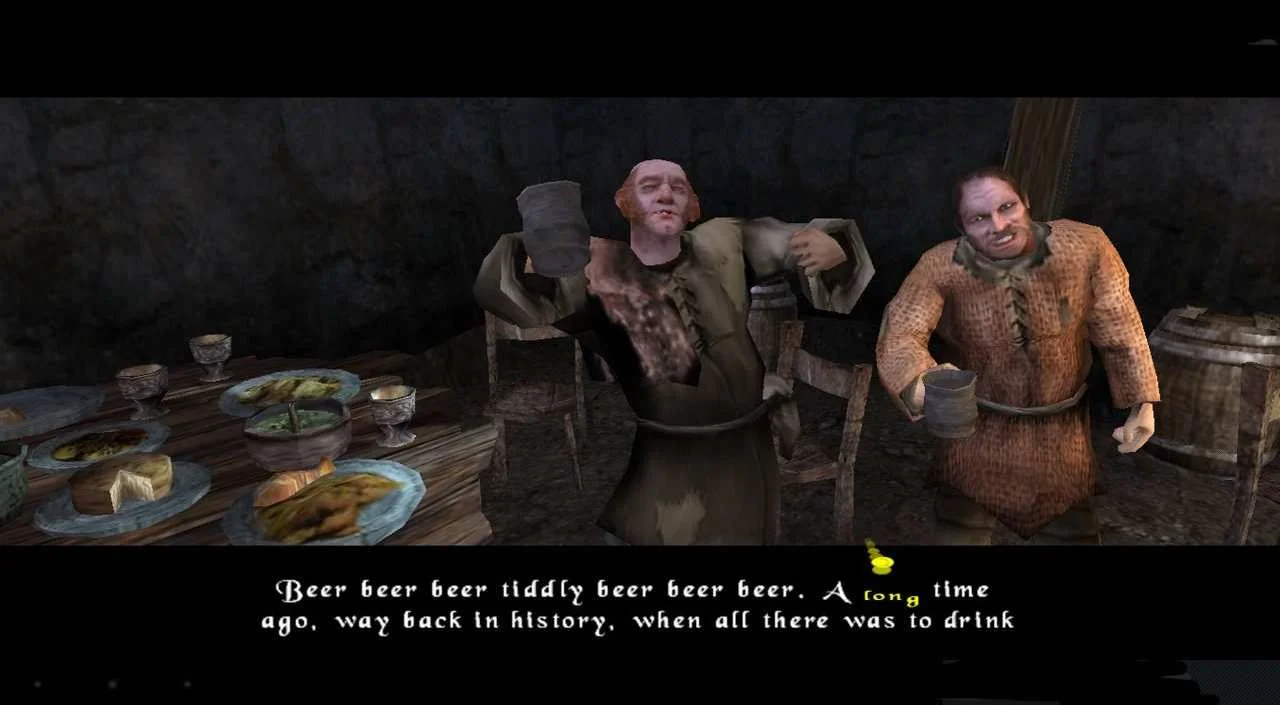
Trailer/Gameplay
[media=https://www.youtube.com/watch?v=-XGZy_RzGxI]
Download
The Bard's Tale Remastered Collection (2017-2018), 3.17GB
ElAmigos release, game is already cracked after installation (crack by Codex).

1. Extract files.
2. Burn or mount the image.
3. Install the game.
4. ElAmigos release, game is already cracked after installation.
5. Play the game. If you like this game, BUY IT!
The Bard's Tale Remastered Download
🔒 Premium access required
To see and use the download links, you must be logged in and have an active PREMIUM account.
* Unlock downloads via Torrent and TeraBox.
Included content:
The Bard's Tale Remastered & Resnarked (Update 1; 15.11.2017)
The Bard's Tale Trilogy Remastered (v4.34; 26.11.2019)
Torrent Download
The best torrent download speeds are with qBittorrent!