Graveyard Keeper
Edit date: 28-12-2023, 13:16
Reason: Updated to version 1.407 (05.07.2023)
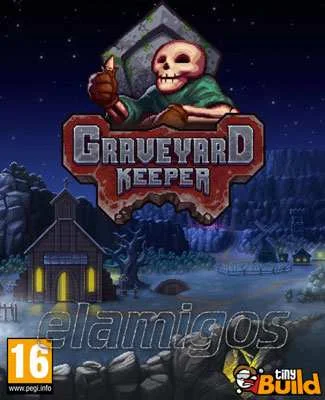
- Category:
- Release date:
- Game Genre:RPG, fantasy, Economic, 2D, humorous, top-down, indie games, crafting
- Developer:Lazy Bear Games Publisher: tinyBuild Games
- Release:ElAmigos
- Platform:PC
- Languages (subtitles):English, French, Italian, German, Spanish, Polish, Russian, Portuguese-Brazil, Chinese Simplified, Japanese, Korean
- Crack:Codex
- Game size:0.70GB
Game Description
Graveyard Keeper on PC is a darkly comic management RPG about running a medieval cemetery, expanding a church, processing corpses, and turning questionable resources into profit. The current storefront name remains Graveyard Keeper; Last Journey Edition is a complete bundle rather than a rebrand, combining the base game with its major paid expansions and bonus content.
Developed by Lazy Bear Games and published by tinyBuild, it blends cemetery management, crafting, farming, adventure, mystery, and light dungeon combat from a 2D top-down perspective. The tone is deliberately macabre, but the real challenge is logistical: every new building, sermon, recipe, corpse, and quest competes for time, energy, materials, and access to the right weekly visitor.
What the daily loop actually involves
The central routine begins at the morgue, where incoming bodies must be examined before burial or further processing. You decide whether a corpse deserves a place in the graveyard, should be cremated, or can provide useful materials through autopsy and organ extraction. Those choices affect the quality of individual graves and therefore the reputation of the cemetery.
After handling the dead, you can farm crops, cut timber, mine stone and iron, fish, gather plants, repair structures, and move between workshops. Crafting is not a single menu. It is a connected production chain involving the yard, basement, church, kitchen, furnace, anvil, carpenter's bench, alchemy lab, and other stations.
Time advances while you work, and important characters visit on specific days rather than whenever you choose. That calendar creates the game's signature planning problem: a task may be ready in terms of materials but impossible to complete until the correct NPC arrives. Teleportation options and better infrastructure eventually reduce the walking, but the early game intentionally makes route planning part of the management challenge.
The game is not structured like a conventional action RPG with a linear mission list. Progress comes through overlapping NPC questlines, technology unlocks, church improvements, cemetery ratings, crafting milestones, and access to new areas. Players who enjoy crafting-heavy workshop sims such as My Time at Portia will recognize the satisfaction of turning raw materials into a more efficient production network.
Systems that make Graveyard Keeper different
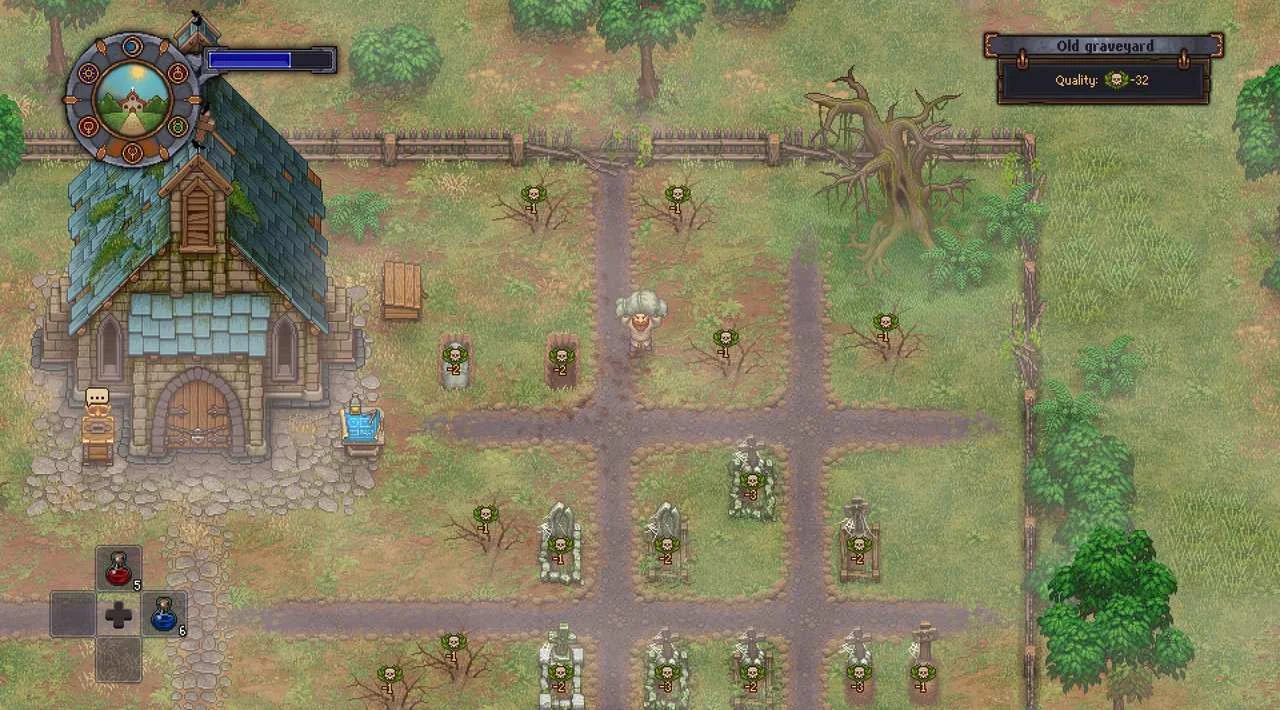
The cemetery is more than a decorative home base. Each grave has a quality value influenced by the buried body's condition and the furniture placed around it. Raising the overall graveyard rating is necessary for church progression, so careful corpse preparation becomes a strategic system rather than a background chore.
The church introduces a second management layer. Once improved, it can host sermons that generate faith and money, while the study area supports research into new technologies. Faith and science feed different parts of the progression web, making technology trees essential for unlocking advanced crafting, construction, writing, alchemy, and corpse-related options.
Alchemy is deliberately experimental. Ingredients can be combined into useful mixtures, harmful results, and materials required for quests or advanced production. Dungeon exploration supplies additional ingredients and introduces real-time melee combat, but fighting is a supporting activity rather than the game's primary identity.
The zombie workforce, added through the Breaking Dead content, changes the late-game economy. Zombies can be assigned to production stations, letting you automate portions of mining, woodcutting, farming, and crafting. This creates a second progression loop built around automation and workstation efficiency, not just personal character upgrades.
Ethical decisions are part of the writing and the systems design. The game regularly asks whether you will buy legitimate supplies or use whatever is already available in the morgue. Its dark humor works best when the most efficient business decision is also the most morally questionable one.
Base game, DLC, and complete editions
The PC base game includes the core cemetery, church, farming, crafting, quest, alchemy, dungeon, and exploration systems. On PC, Breaking Dead is treated as included content rather than one of the separately sold expansions. It adds the zombie production system and related automation tools.
Steam currently lists three paid story expansions: Stranger Sins, Game of Crone, and Better Save Soul. Stranger Sins adds a tavern-focused storyline and deeper background for the village characters. Game of Crone adds a refugee camp to develop, new quests, and additional items. Better Save Soul adds soul-related progression, new workbenches, and global control over zombie workstations.
The Steam Last Journey Edition bundles the base game, the three paid expansions, soundtrack, and artbook. Because Breaking Dead is included with the PC base experience, the official website can accurately describe the finished package as containing all four DLC components even though only three are sold as paid DLC on the Steam listing.
There is no seasonal pass or multiplayer-focused content model here. The commercial structure is straightforward: buy the single-player base game, then add the three paid expansions individually or choose the complete bundle if you want the expanded questlines and automation systems together.
Who should play it, and who should skip it
Graveyard Keeper suits players who enjoy slow-burn progression, resource chains, dark comedy, and games that make planning more important than reflexes. It is especially appealing if you like improving a poor starting setup until several connected systems begin supporting one another.
It also rewards players who are comfortable with incomplete information. Recipes, quest requirements, visitor schedules, and technology dependencies are not always presented in the clearest order. The game expects experimentation, note-taking, and occasional backtracking, so its friction is part of the experience rather than a temporary tutorial problem.
Players looking for a relaxed farming game with a clearly guided routine may find the workload excessive. The graveyard, church, farm, workshops, NPC stories, dungeon, and DLC systems can pull in different directions, and the game rarely reduces that complexity for you.
It is also a poor fit for anyone expecting cooperative play, split-screen, competitive modes, or a combat-first RPG. The official PC listings identify it as single-player, and its strongest moments come from production planning, quest sequencing, and gradual infrastructure upgrades.
PC features, controller support, and storefront differences
On Steam, the game supports Steam Cloud, achievements, trading cards, Family Sharing, and Remote Play on phone, tablet, and TV. Those features make it practical to play away from a traditional desk setup, although the game remains fundamentally designed around deliberate menu navigation and repeated interaction with workstations.
Controller support is listed for the PC release, and the top-down perspective keeps the game comfortable on a gamepad. Mouse and keyboard remain useful when managing inventory, choosing recipes, and navigating the technology interface, so the best input method depends on whether you prioritize relaxed movement or faster menu selection.
GOG lists official support for Windows, Linux, and macOS, along with controller support and cloud saves. Its version is DRM-free and can be installed and played offline without requiring GOG Galaxy. Steam remains the better fit for players who want Steam Remote Play and platform achievements.
The storefront listings provide subtitle and interface localization in English, French, German, Simplified Chinese, Spanish, Brazilian Portuguese, Korean, Japanese, Russian, Italian, and Polish. Full audio is not listed, so players should expect text localization rather than a voiced campaign.
Similar PC games and the real point of comparison
The closest comparison is not about setting but about structure. Graveyard Keeper shares the farming, town relationships, crafting, and day-planning framework associated with farm-life games such as Stardew Valley, but replaces seasonal routine and community warmth with corpse processing, church economics, research bottlenecks, and morally dubious supply chains.
For players more interested in gathering, brewing, and helping a settlement than in cemetery management, crafting-focused village RPGs like Potion Permit offer a cleaner comparison. Graveyard Keeper is more systems-heavy and less immediately transparent, while Potion Permit places its central production loop around diagnosis and potion creation.
These comparisons explain the game's appeal without reducing it to a simple farming clone. Its defining combination is cemetery optimization, church management, corpse-based crafting, alchemy, and optional zombie automation within one interconnected solo sandbox.
Graveyard Keeper FAQ
Is Graveyard Keeper still called Graveyard Keeper on PC?
Yes. Steam and GOG continue to list the base game as Graveyard Keeper. Last Journey Edition is the name of a complete bundle, not a replacement title or storefront rebrand.
What is included in the PC version?
The base experience includes the cemetery, church, farm, crafting, alchemy, dungeon, NPC questlines, and exploration. Breaking Dead is included on PC, while Stranger Sins, Game of Crone, and Better Save Soul are separate paid expansions unless purchased through a complete edition bundle.
Does Graveyard Keeper have multiplayer or co-op?
No. The PC storefront features identify the game as single-player. Steam Remote Play options refer to streaming the solo game to supported devices, not cooperative multiplayer.
Is Graveyard Keeper good with a controller?
Controller support is listed on both the Steam-related PC ecosystem and GOG storefront data. A controller works well for movement and routine interactions, while mouse and keyboard can be faster for inventory, crafting, and technology-tree management.
Does the game require an online connection?
The GOG version is DRM-free and supports offline installation and play without GOG Galaxy. Steam users still access the game through the Steam platform and can use its cloud, achievement, and Remote Play features.
What is the actual long-term gameplay loop?
There is no fixed campaign timer or multiplayer ladder. The long-term loop is to improve the graveyard, expand the church, unlock technologies, complete interlocking NPC stories, master crafting and alchemy, explore the dungeon, and eventually automate production through zombies.
System Requirements
Minimum: |
Processor: Intel Core 2 Duo 1.5 GHz Graphics: 256 MB GeForce 8600 Memory: 4 GB RAM Disk space: 400 MB HDD Operating system: Windows 7 |
Screenshots

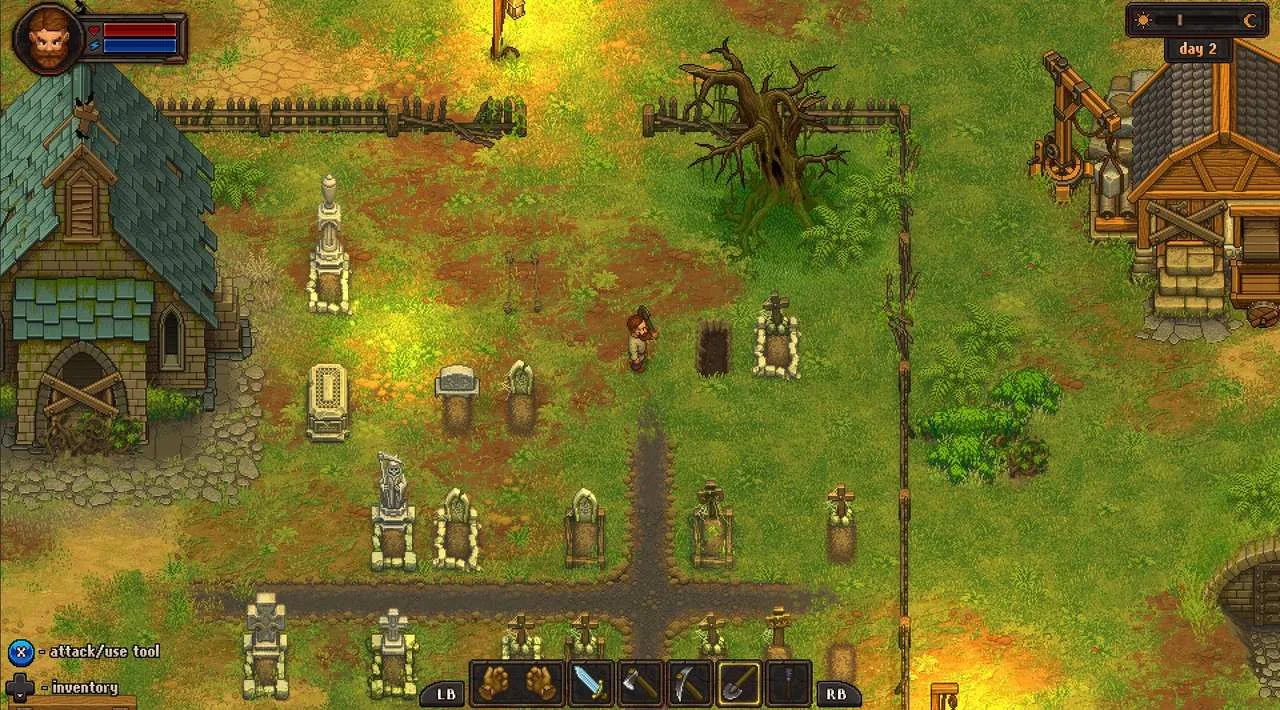

Trailer/Gameplay
Download
Graveyard Keeper (2018), 0.70GB
ElAmigos release, game is already cracked after installation (crack by Codex).

Updated to version 1.407 (05.07.2023).

1. Extract files.
2. Burn or mount the image.
3. Install the game.
4. ElAmigos release, game is already cracked after installation.
5. Play the game. If you like this game, BUY IT!
Graveyard Keeper Download
🔒 Premium access required
To see and use the download links, you must be logged in and have an active PREMIUM account.
* Unlock downloads via Torrent and TeraBox.
DLC: Better Save Soul, Game of Crone, Stranger Sins, Breaking Dead, Soundtrack (mp3), Artbook.
Torrent Download
The best torrent download speeds are with qBittorrent!