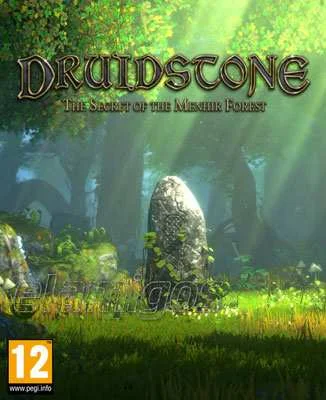
Druidstone: The Secret of the Menhir Forest
- Category:
- Release date:
- Game Genre:RPG, fantasy, turn-based, roguelike, Isometric view, tactical, indie games
- Developer:
- Release:ElAmigos
- Platform:PC
- Languages (subtitles):English
- Dubbing/Audio:English
- Crack:Codex
- Game size:0.71GB
Game Description
Druidstone: The Secret of the Menhir Forest is a tactical PC RPG built around turn-based, tile-based combat, handcrafted puzzle missions, and a compact party of fixed heroes. Ctrl Alt Ninja, the studio formed by co-creators of Legend of Grimrock, keeps the focus on deliberate decisions rather than open-world exploration, procedural campaigns, or character creation.
The current Steam and GOG storefronts still use the original name, Druidstone: The Secret of the Menhir Forest. No verified rebrand, definitive edition, free-to-play transition, or replacement storefront title is presented by the developer or the major PC stores.
Mission-based tactics with puzzle logic
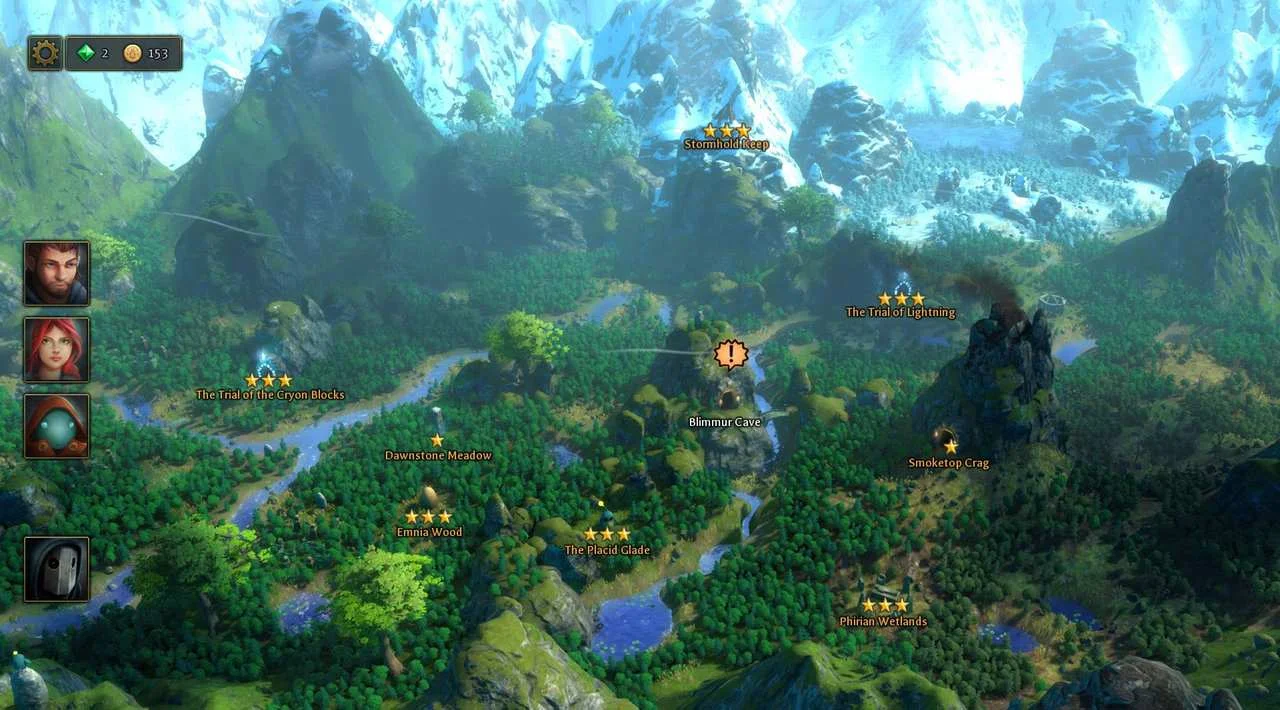
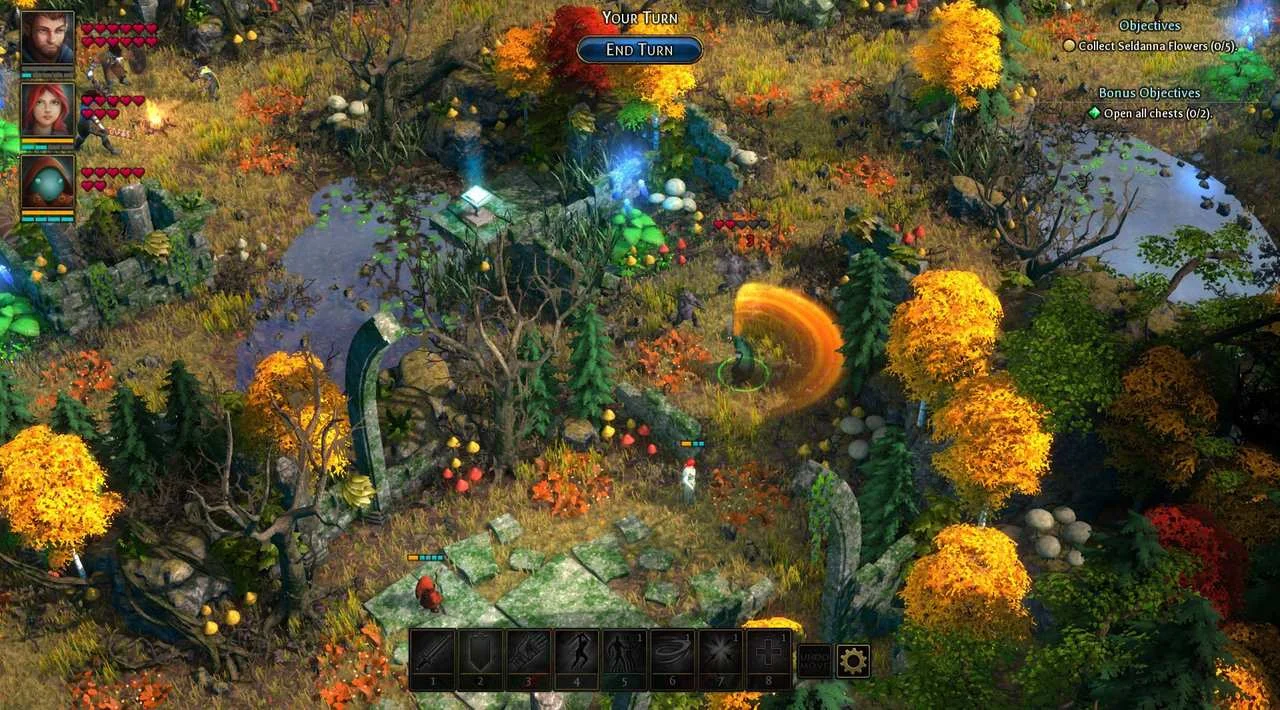
Druidstone is best understood as a sequence of compact tactical scenarios rather than a traditional party-based adventure. You guide Aava, Leonhard, Oiko, and later companions across fixed battlefields viewed from an isometric perspective, spending movement and action resources to attack, reposition, interact with objects, and complete objectives.
Every mission has a clear structure, but the objective is not always simple elimination. Maps can ask you to reach a location, protect a target, collect an item, survive pressure from enemies, or solve a non-combat puzzle. Optional objectives add another layer because the safest route is not always the route that produces the best rewards.
The combat system rewards planning each turn in sequence. Movement order, attack range, ability timing, enemy positioning, and the use of environmental objects can determine whether a plan works. The game communicates much of the immediate tactical information clearly, making a failed turn feel more like a planning error than an unexplained dice roll.
This deterministic structure places Druidstone closer to a tactical puzzle game than to a conventional statistics-heavy RPG. Players who enjoy turn-based puzzle strategy like Into the Breach will recognize the appeal of studying a situation, testing a line of play, and repeating a mission with a better solution.
Heroes, abilities, and upgrade gems
The playable cast is fixed rather than custom-built. Aava, the archdruid's daughter, Leonhard, a warden with a mysterious past, and Oiko, a failed Red Priest, each bring a defined identity and ability set. That design gives encounters a puzzle-like character: the challenge is usually finding the right combination of existing tools, not building a perfect anonymous squad.
Progression expands the party through new active and passive abilities, equipment, and upgrade gems. Gems can modify abilities or gear, allowing a familiar skill to gain a different range, effect, or tactical purpose. The system is deliberately compact, so there is less inventory management and statistical clutter than in a large traditional CRPG.
Upgrade choices matter because Druidstone does not rely on dramatic level scaling to solve every problem. A stronger character is useful, but understanding how to combine skills, movement, terrain, and enemy behavior is usually more important than simply accumulating power.
Hidden treasures and mission rewards feed the upgrade system, while lost shipments unlock additional options through Steelface's Emporium of Curios. The result is a progression loop that supports experimentation without turning the campaign into a long grind.
Handcrafted missions and non-combat challenges
The campaign contains 35 handcrafted missions, with individual scenarios designed to be completed in focused sessions. The maps are authored challenges rather than randomly generated runs, so learning an encounter and improving your solution is part of the intended experience.
That authored structure is one of the game's most important distinctions. Enemy placements, map layouts, and objectives are designed around specific tactical problems. Druidstone is therefore not a roguelike, and it does not use permadeath or a procedural campaign loop as its primary source of replayability.
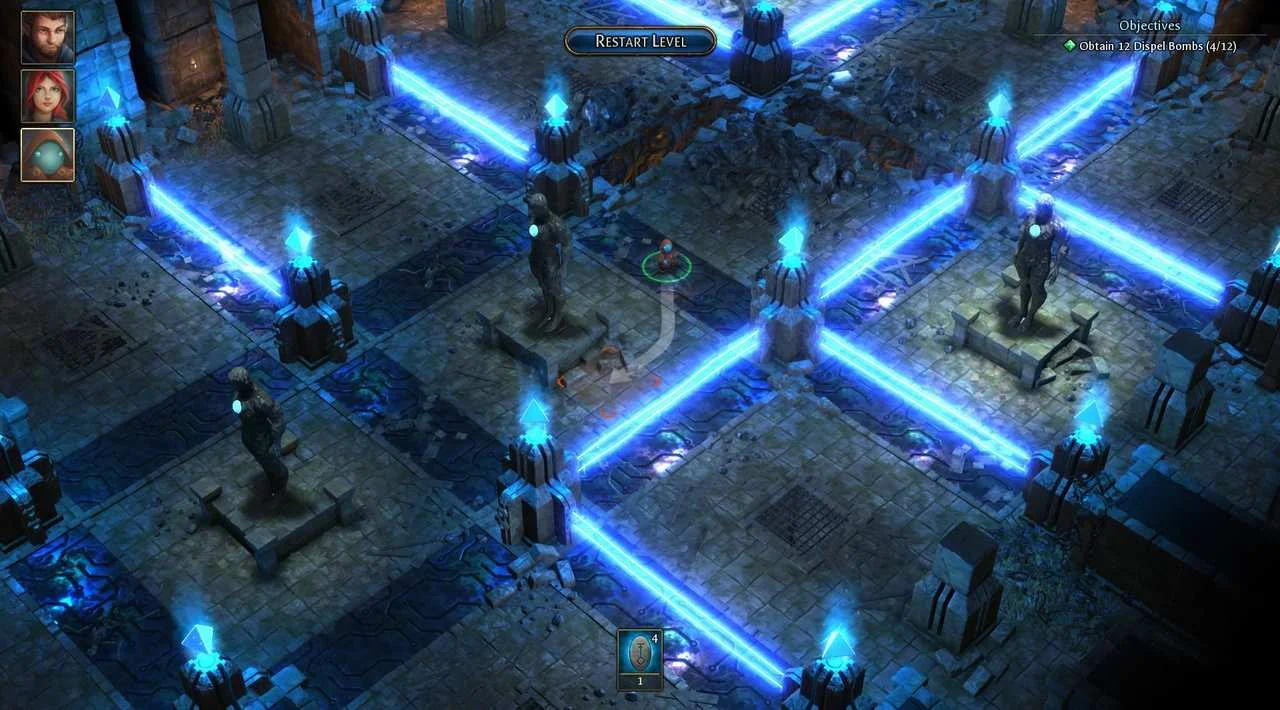
Combat missions are mixed with non-combat puzzle levels that test movement, timing, and interaction with the environment. These sections give the campaign more variety and provide additional resources for improving the party.
The story follows the corruption spreading through Menhir Forest and the disappearance of its archdruid. The setting includes standing stones, forest ruins, dangerous creatures, and the wider fantasy regions of Elo Sphaera and Ecodari, but the game keeps its narrative delivery focused around missions rather than freeform exploration.
Content model and custom campaigns
The PC version is sold as a premium single-player game. The Steam DLC listing does not show paid expansion packs, a season pass, or a separate content roadmap, while the main storefront description presents the campaign, puzzle missions, gear progression, and editor features as part of the core product.
One major addition is the Druidstone Level Editor. On Steam, the game includes Steam Workshop support, allowing players to browse custom missions and publish their own creations. This gives the game a second content layer beyond the authored campaign.
The editor is especially relevant for players who enjoy constructing tactical scenarios rather than only consuming them. Custom missions can extend the basic format with new maps, objectives, and challenge arrangements, although the quality and scope of user-created content naturally vary.
GOG lists the game as DRM-free and playable without GOG Galaxy or a permanent online connection. Steam provides the connected Workshop ecosystem, achievements, trading cards, family sharing, and the standard Steam client layer.
Who should play Druidstone?
Druidstone suits players who want single-player tactical combat with clear objectives and limited randomness. It is a strong fit for people who enjoy optimizing turns, replaying a map to improve a result, and treating each ability as part of a wider puzzle.
It also works well for players who prefer a shorter, mission-based structure over a sprawling open-world RPG. The campaign moves from one authored scenario to the next, with progression and story providing continuity between battles.
The game is less suitable if you want a character creator, a large recruitable roster, branching dialogue, open-ended exploration, or local and online co-op. There is no multiplayer campaign, no split-screen mode, and no conventional party-management sandbox in which every hero can be rebuilt from scratch.
Players expecting Legend of Grimrock-style first-person dungeon crawling should also adjust their expectations. Druidstone shares a development lineage and fantasy sensibility with that series, but its central experience is isometric tactical puzzle solving, not real-time dungeon navigation.
PC features, controls, and localization
Steam lists Druidstone as a single-player Windows game with achievements, trading cards, Steam Workshop, family sharing, and the included level editor. The storefront lists English interface text and does not list full audio or subtitle localization in additional languages.
The interface and tactical design are built primarily around mouse-and-keyboard play. Steam does not present native controller support as a standard store feature, so a traditional gamepad should not be treated as the default control method. Steam Deck compatibility has been reported with configuration caveats, including occasional reliance on touchscreen or virtual keyboard input for some functions.
For offline-focused PC players, the GOG edition is the clearest storefront option because its product page identifies the game as DRM-free. Steam is the more relevant choice for Workshop access and the broader community-created mission ecosystem.
The game also includes a rewind-style safety net for many tactical mistakes, which supports experimentation without removing the need to understand the mission. This is important because the intended challenge comes from solving the encounter, not from protecting a permanently fragile campaign state.
Similar PC games and the main point of difference
Druidstone shares its deterministic, objective-driven tactical DNA with Into the Breach, but the two games differ in structure. Into the Breach is built around short roguelike runs and telegraphed threats, while Druidstone offers a fixed fantasy campaign with character abilities, equipment, story scenes, and authored puzzle maps.
For a more literal tabletop comparison, board-game-inspired turn-based dungeon tactics such as Demeo PC Edition provide another useful reference point. Demeo emphasizes cooperative dungeon sessions and dice-driven uncertainty, whereas Druidstone is single-player, more deterministic, and designed around solving handcrafted missions.
Crown Wars: The Black Prince is another nearby catalog comparison because it combines turn-based battles with RPG progression, but its broader army management and strategic layer make it a different type of experience. Druidstone remains narrower and more puzzle-oriented, with fewer systems competing for attention during each mission.
The gap many general game pages leave unanswered is this distinction between a tactical RPG and a tactical puzzle campaign. Druidstone has leveling, equipment, abilities, and a fantasy story, but its defining question is still: what is the cleanest way to solve this map with the tools currently available?
Druidstone: The Secret of the Menhir Forest FAQ
The questions below focus on the practical details most relevant to PC players deciding whether the game matches their preferred tactical format.
Is Druidstone: The Secret of the Menhir Forest still its current name?
Yes. Current Steam and GOG listings use Druidstone: The Secret of the Menhir Forest. No verified official rebrand or replacement edition has been identified.
Is Druidstone multiplayer or co-op?
No. The game is designed as a single-player tactical RPG. It does not offer online co-op, local co-op, or split-screen multiplayer.
Does Druidstone have procedural generation or permadeath?
No. Its main campaign uses handcrafted missions with authored layouts and objectives. It is not structured as a procedural roguelike run, and permadeath is not the core progression model.
Does the PC version include a level editor?
Yes. The game includes the Druidstone Level Editor, and the Steam edition supports custom mission sharing through Steam Workshop.
Does Druidstone support controllers?
Mouse-and-keyboard controls are the safest expectation. Steam does not list native controller support as a standard feature, although Steam Deck users may run the game through compatibility and community control configurations.
What language is supported on PC?
The Steam storefront lists English interface text. It does not list full audio or subtitle support for additional languages.
System Requirements
Minimum: | Recomended: |
| Processor: Intel Quad Core 2.66 GHz Graphics: 2 GB GeForce GTX 660 Ti / Radeon HD 6850 Memory: 4 GB RAM Disk space: 2 GB HDD Operating system: Windows 7 64-bit | Processor: Intel Quad Core 2.66 GHz Graphics: 4 GB GeForce GTX 1050 / Radeon RX 570 Memory: 4 GB RAM Disk space: 2 GB HDD Operating system: Windows 10 64-bit |
Screenshots

Trailer/Gameplay
Download
Druidstone: The Secret of the Menhir Forest (2019), 0.71GB
ElAmigos release, game is already cracked after installation (crack by Codex).
Updated to version 1.0.17 (17.05.2019).

1. Extract files.
2. Burn or mount the image.
3. Install the game.
4. ElAmigos release, game is already cracked after installation.
5. Play the game. If you like this game, BUY IT!
Druidstone: The Secret of the Menhir Forest Download
🔒 Premium access required
To see and use the download links, you must be logged in and have an active PREMIUM account.
* Unlock downloads via Torrent and TeraBox.
Torrent Download
The best torrent download speeds are with qBittorrent!