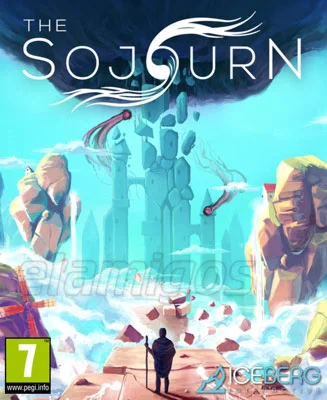
The Sojourn
- Category:
- Release date:
- Game Genre:Logic, FPP, fantasy, adventure elements, indie games, experimental/art, Epic Store exclusive
- Developer:Shifting Tides Publisher: Iceberg Interactive
- Release:ElAmigos
- Platform:PC
- Languages (subtitles):English, French, Italian, German, Spanish, Portuguese-Brazil, Russian, Simplified Chinese
- Dubbing/Audio:English
- Crack:not necessary
- Game size:2.09GB
Game Description
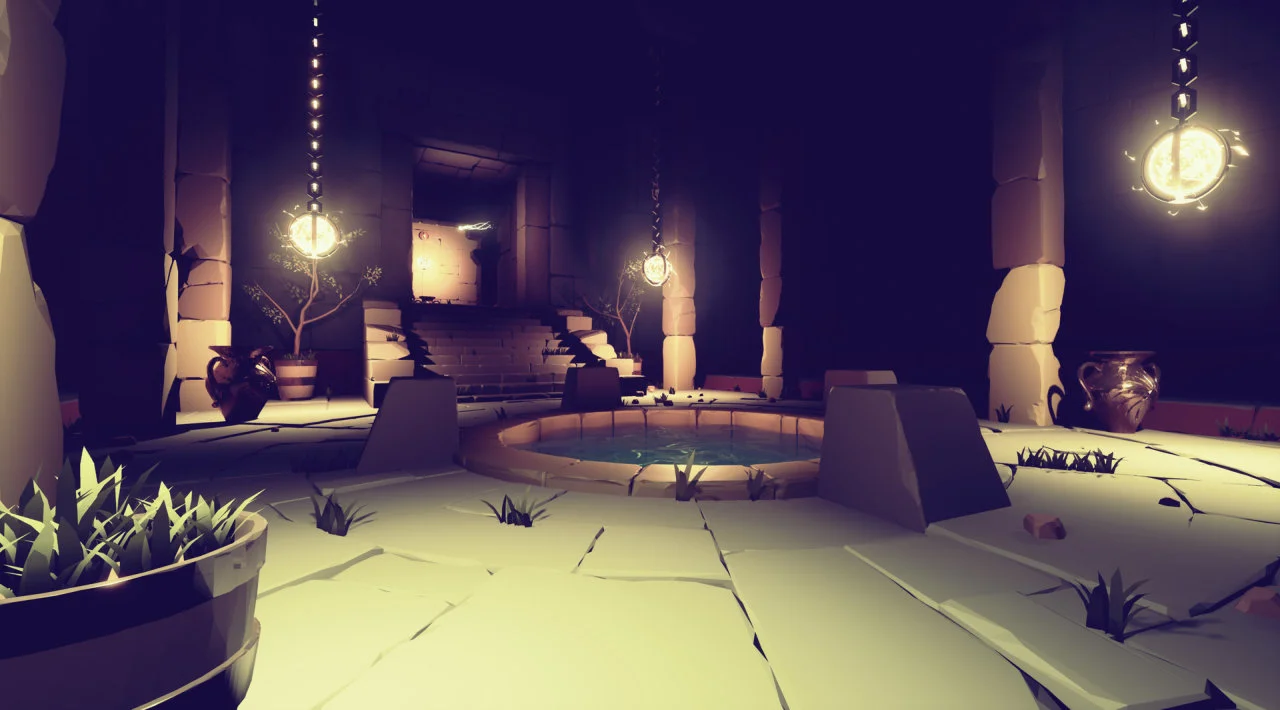
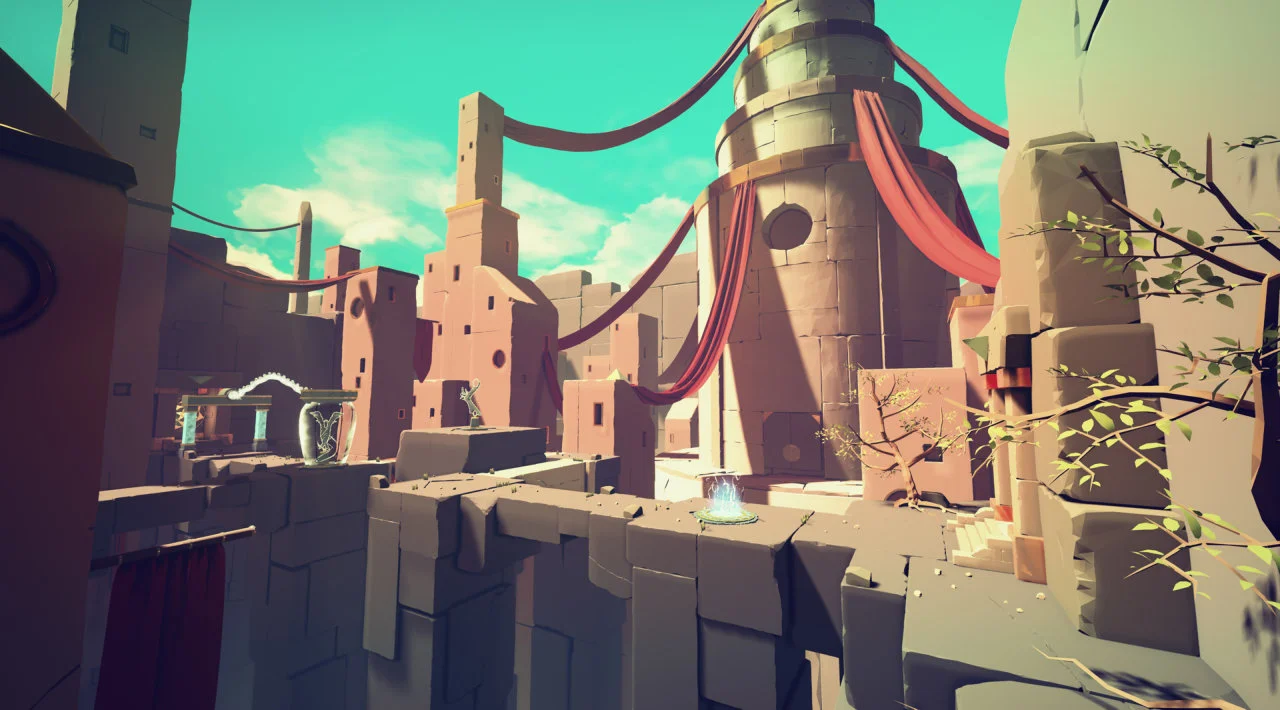
The Sojourn on PC is a first-person puzzle adventure built around parallel worlds of light and darkness. The current Steam and Epic Games Store listings still use The Sojourn as the official name, with no verified rebrand or renamed successor edition. Developed by Shifting Tides and published by Iceberg Interactive, it combines environmental exploration, abstract storytelling, and carefully staged logic challenges rather than combat or traditional adventure-game inventory puzzles.
How The Sojourn plays
The core loop is simple to understand but becomes increasingly demanding: enter a self-contained puzzle area, study the route ahead, manipulate the environment, and reach the exit. The game uses a first-person perspective, but movement is deliberate rather than action-focused. Most challenges are about planning several steps ahead and recognizing how the light and dark versions of the world affect one another.
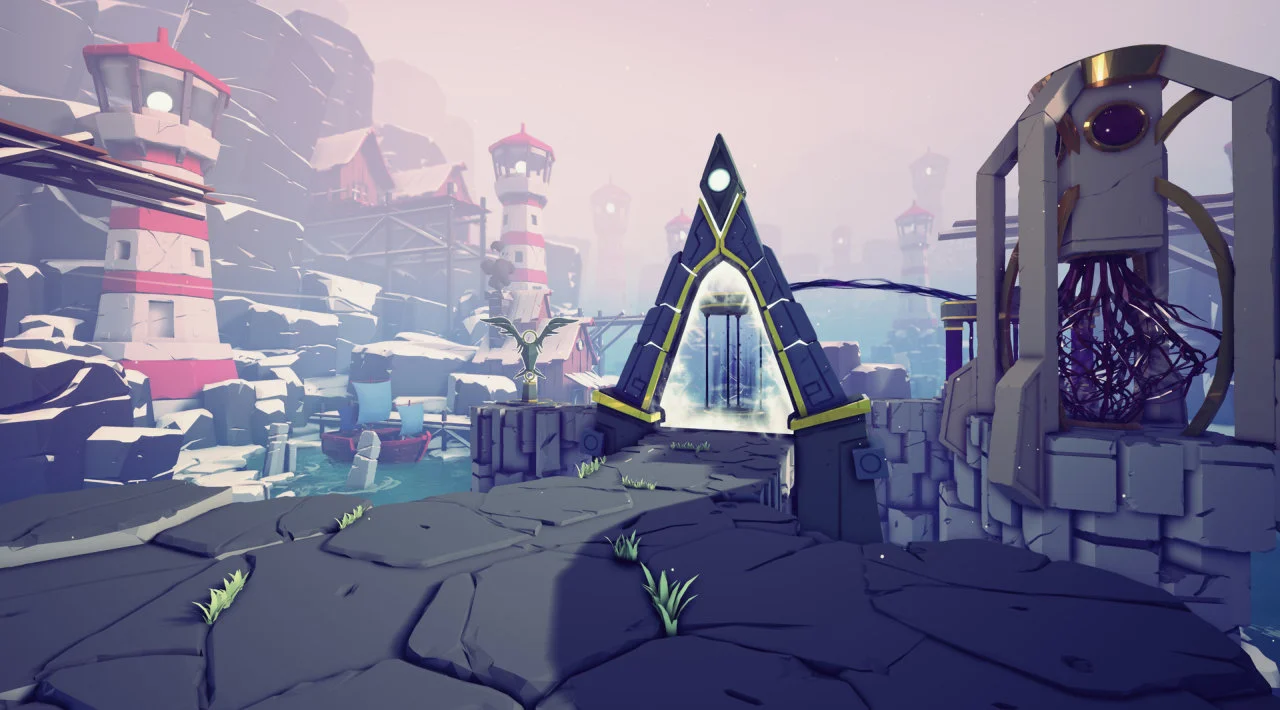
The defining mechanic is the ability to shift between parallel light and dark worlds. In the light state, the environment is generally safer to navigate and provides the normal spatial layout. The dark state exposes different paths and interactions, allowing you to activate objects, manipulate statues, and access routes that do not exist in the brighter version of the area.
Darkness is not simply a second visual filter. It is a limited resource governed by movement, so careless exploration can exhaust your access to the shadow world before a puzzle is complete. This creates a controlled rhythm of observation, repositioning, and commitment. The best solution is often not to move faster, but to enter darkness from the correct location and spend its energy only when each step has a purpose.
Light, statues, mirrors, and relics
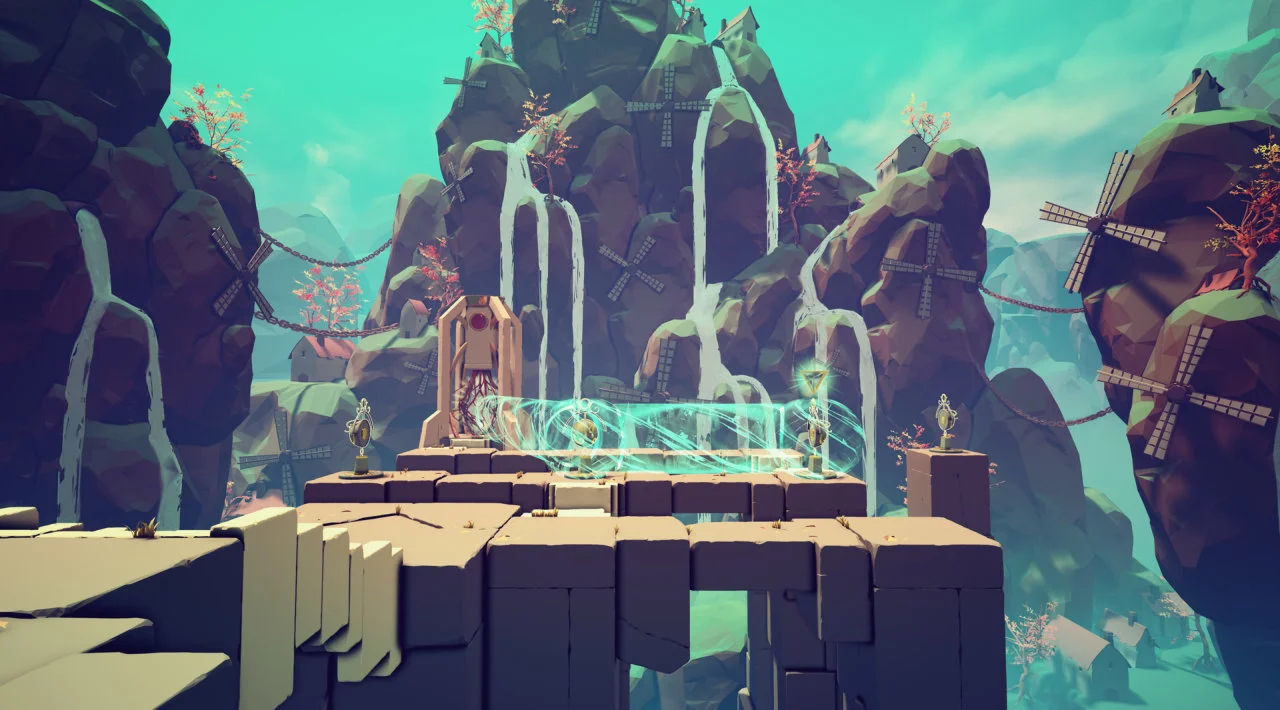
The Sojourn gradually layers new rules onto its central light-and-shadow system. Statue position swapping lets you exchange places with stone figures, opening routes and changing the geometry of a puzzle. A statue may serve as a bridge to a distant platform, a way to cross a blocked passage, or the key to reaching an otherwise inaccessible interaction point.
Other challenges introduce mirrors and light paths that redirect the power needed to activate objects. Some rooms also use structures that copy or reproduce statues, forcing you to think about both the original object and its duplicate. These mechanics reward spatial memory because the useful arrangement may only become clear after comparing the light and dark states of the same space.
Relics expand the puzzle vocabulary by allowing certain interactions without remaining fully inside the dark state. Harps and other environmental objects can create bridges or reveal routes, while additional systems change how energy, objects, and traversal interact. The game is at its strongest when a familiar rule is reused in a less obvious context rather than replaced by an unrelated minigame.
Players who enjoy first-person logic games with a philosophical tone may find a useful comparison in thoughtful puzzle adventures such as The Talos Principle, although The Sojourn is more linear and places greater emphasis on light, shadow, and spatial transitions.
Chapters, story, and optional mastery
The campaign is divided into four distinct chapters, each with its own visual identity and atmosphere. Progression comes from solving a sequence of discrete puzzle spaces rather than freely roaming a large open world. This structure makes the game easy to approach in short sessions, while the later challenges expect you to combine several previously introduced rules.
The narrative is presented through environmental scenes, sculptures, and symbolic moments rather than conventional dialogue-heavy exposition. The journey follows the stages of a life and examines ideas surrounding perception, reality, darkness, and understanding. Players looking for a heavily character-driven plot should set expectations accordingly: the story is intentionally abstract and functions more as thematic context for the puzzle progression.
Beyond simply reaching the end of each room, The Sojourn includes optional objectives and collectible-style challenges that encourage closer examination of its spaces. These extras are best treated as bonus mastery puzzles rather than mandatory content. They can require a more exact understanding of the room's rules and often make the player reconsider a route that seemed complete.
Base game and extra content
The standard PC purchase contains the complete single-player puzzle campaign and its four chapters. The game is not free-to-play, does not use a season-pass structure, and does not present a competitive multiplayer model. Its main content is the puzzle journey itself, with optional challenges adding more reasons to revisit completed areas.
The current Steam catalog also lists a separate Digital Deluxe upgrade. This add-on is not a new campaign expansion. It contains two official artbooks featuring concept art, level designs, and screenshots, along with Equilibrium, an early playable prototype connected to the game's design process. A separate soundtrack product is also listed, but it is an audio extra rather than playable content.
That makes the regular edition the practical choice for players who want the full game. The Deluxe material is aimed at fans interested in development artwork, design experiments, and the creative work behind the finished puzzle systems.
Who should play The Sojourn?
The Sojourn is a strong fit for players who enjoy atmospheric first-person puzzles, visual rule discovery, and games that let the environment carry much of the storytelling. It suits patient problem-solvers who like testing an idea, resetting their position, and gradually building a mental model of how a room works.
It is less suitable for anyone expecting combat, character builds, branching dialogue, or a conventional action-adventure campaign. There is no co-op mode and no competitive component. The experience is deliberately solitary, with the challenge coming from spatial reasoning rather than enemy encounters or reflex-based fights.
The game also favors players who are comfortable with repetition during the learning process. A puzzle may ask you to revisit the same area several times after discovering that the important solution depends on a detail you initially ignored. That design can feel methodical, but it is central to the game's intended mastery loop.
PC features and storefront details
The Sojourn is listed for PC through Steam and the Epic Games Store. The PC versions provide single-player support, cloud-save functionality through their respective storefront ecosystems, and controller support. Steam also lists achievements, trading cards, and Family Sharing, while the Epic listing identifies cloud saves and controller support.
Keyboard and mouse work well for precise movement through puzzle spaces, while a gamepad is a reasonable alternative for players who prefer a more relaxed exploration setup. The game does not require a specialized peripheral, online connection for multiplayer, or a separate competitive service. No multiplayer mode or anti-cheat system is presented because the experience is entirely single-player.
Interface text is available in English, French, Italian, German, Spanish, Brazilian Portuguese, Russian, and Simplified Chinese. The storefront listings identify interface localization rather than a broad full-audio localization package, so players should not assume that every listed language includes voice acting.
The PC edition also benefits from the game's clear chapter-based structure. There is no sprawling quest log or live-service layer to manage. You can focus on solving rooms, following the abstract narrative, and returning to optional challenges when you want a stricter test of your understanding.
Similar first-person puzzle games
The closest comparisons are other first-person puzzle games that build their identity around a small number of rules and then steadily recombine them. Exploration-driven logic puzzles like The Witness share The Sojourn's emphasis on observation and learning through repeated encounters, although The Witness is more open-ended and centered on environmental discovery.
For players who prefer enclosed challenge spaces and more explicit mechanical manipulation, first-person room puzzles such as Q.U.B.E. 2 offer a closer structural parallel. The Sojourn distinguishes itself through its light-and-shadow duality, statue movement, symbolic presentation, and quieter philosophical framing.
These comparisons are useful for setting expectations, but The Sojourn is not a Portal-style physics sandbox or a combat-oriented adventure. Its appeal comes from the interaction between two versions of the same world and the way each new rule changes how you read the space around you.
The Sojourn FAQ
Is The Sojourn still called The Sojourn on PC?
Yes. The current Steam and Epic Games Store listings use The Sojourn as the official title. There is no verified storefront rebrand or replacement edition that players need to search for instead.
Is The Sojourn multiplayer or co-op?
No. The Sojourn is a single-player puzzle game with no online co-op, split-screen mode, or competitive multiplayer feature.
What is the main gameplay mechanic?
The central system is switching between light and dark versions of the environment. You use shadow-world movement, statue swaps, mirrors, relics, and other objects to create a route through each puzzle space.
How many chapters does The Sojourn have?
The campaign is organized into four chapters, each with a distinct visual style and atmosphere. The game presents its content as a sequence of individual challenges rather than as an open-world map.
Does the Digital Deluxe upgrade add more levels?
No. The Digital Deluxe upgrade focuses on behind-the-scenes material, including two artbooks and the playable prototype Equilibrium. It does not replace the base campaign or add a separate multiplayer mode.
Does The Sojourn support controllers on PC?
Yes. The PC storefront listings identify controller support, alongside keyboard-and-mouse input. The game is designed around movement and environmental interaction rather than fast combat controls.
System Requirements
Minimum: | Recomended: |
| Processor: Quad Core 2.5 GHz Graphics: 1 GB GeForce GTX 460 / Radeon HD 6870 Memory: 4 GB RAM Disk space: 3 GB HDD Operating system: Windows 7 SP1 64-bit | Processor: Quad Core 2.5 GHz Graphics: 2 GB GeForce GTX 770 / 3 GB Radeon R9 280 Memory: 8 GB RAM Disk space: 3 GB HDD Operating system: Windows 10 64-bit |
Screenshots
Trailer/Gameplay
Download
The Sojourn (2019), 2.09GB
ElAmigos release, unprotected game (serial or crack is not necessary).

Change language in game options.

1. Extract files.
2. Burn or mount the image.
3. Install the game.
4. ElAmigos release, game is already cracked after installation.
5. Play the game. If you like this game, BUY IT!
The Sojourn Download
 Download from TeraBox
Torrent Download
The best torrent download speeds are with qBittorrent!