Unity of Command II
Edit date: 15-12-2025, 10:15
Reason: Updated till 08.12.2025.
- Category:
- Release date:
- Game Genre:Strategy, World War II, turn-based, war, multiplayer, for 2 people, war strategy, indie games
- Developer:
- Release:ElAmigos
- Platform:PC
- Languages (subtitles):English, German, Russian, Simplified Chinese
- Crack:Codex/Rune
- Game size:1.93GB
Game Description
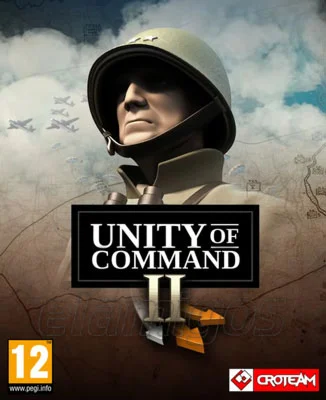
Unity of Command II is a PC turn-based World War II operational wargame from 2x2 Games and Croteam, published by 2x2 Games. The current Steam storefront still uses the name Unity of Command II, with no verified rebrand or replacement edition. Its focus is clear: command divisions across historical campaigns, maintain supply, exploit breakthroughs, and make every hex of the battlefield support the next move.
Operational warfare built around supply
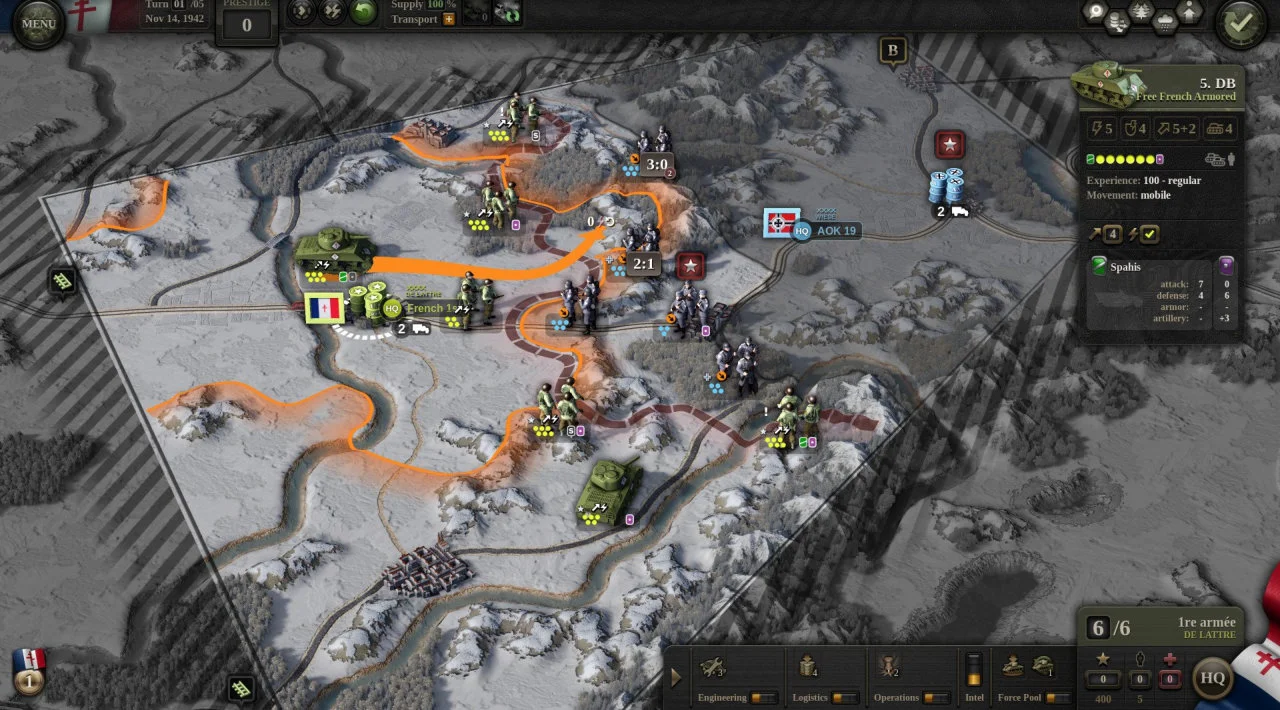
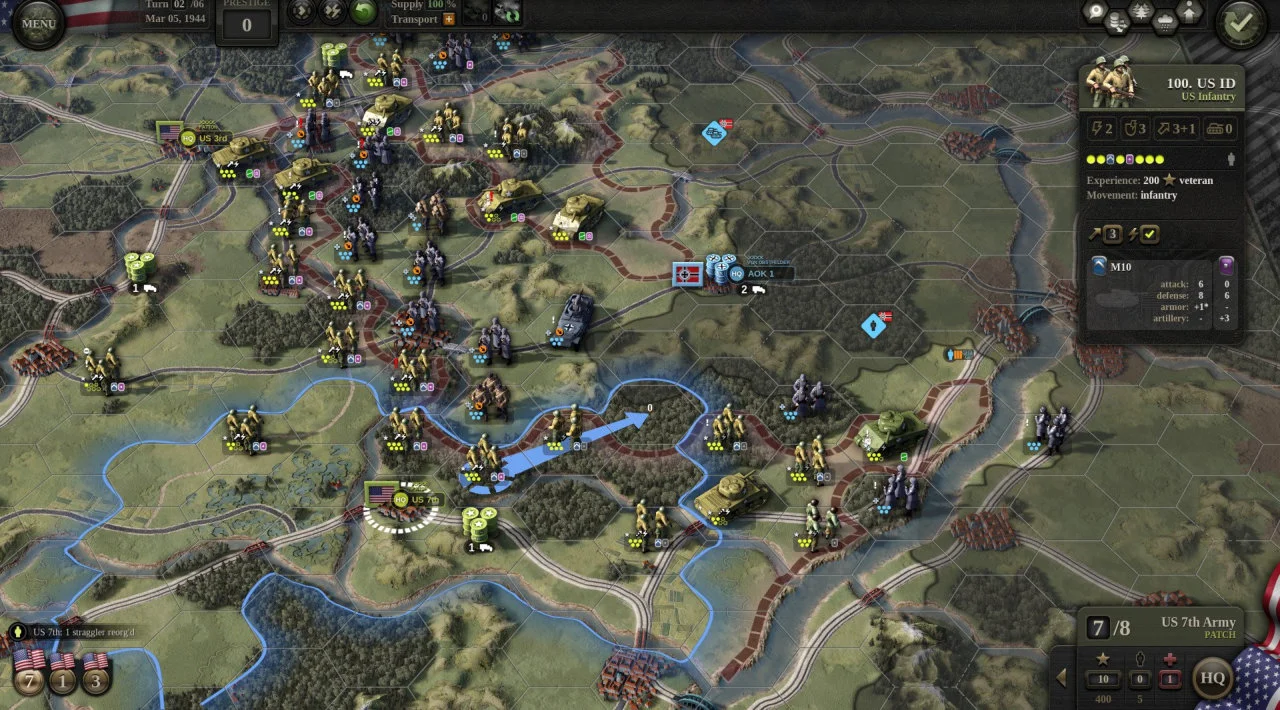
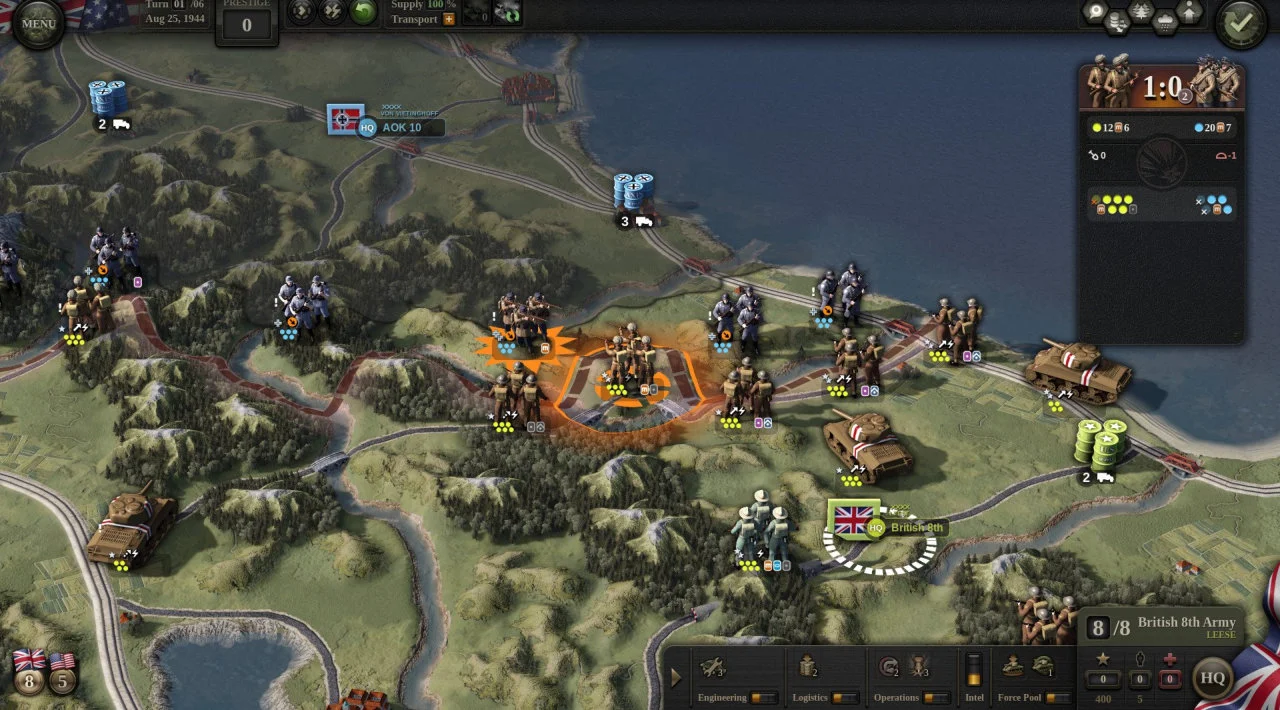
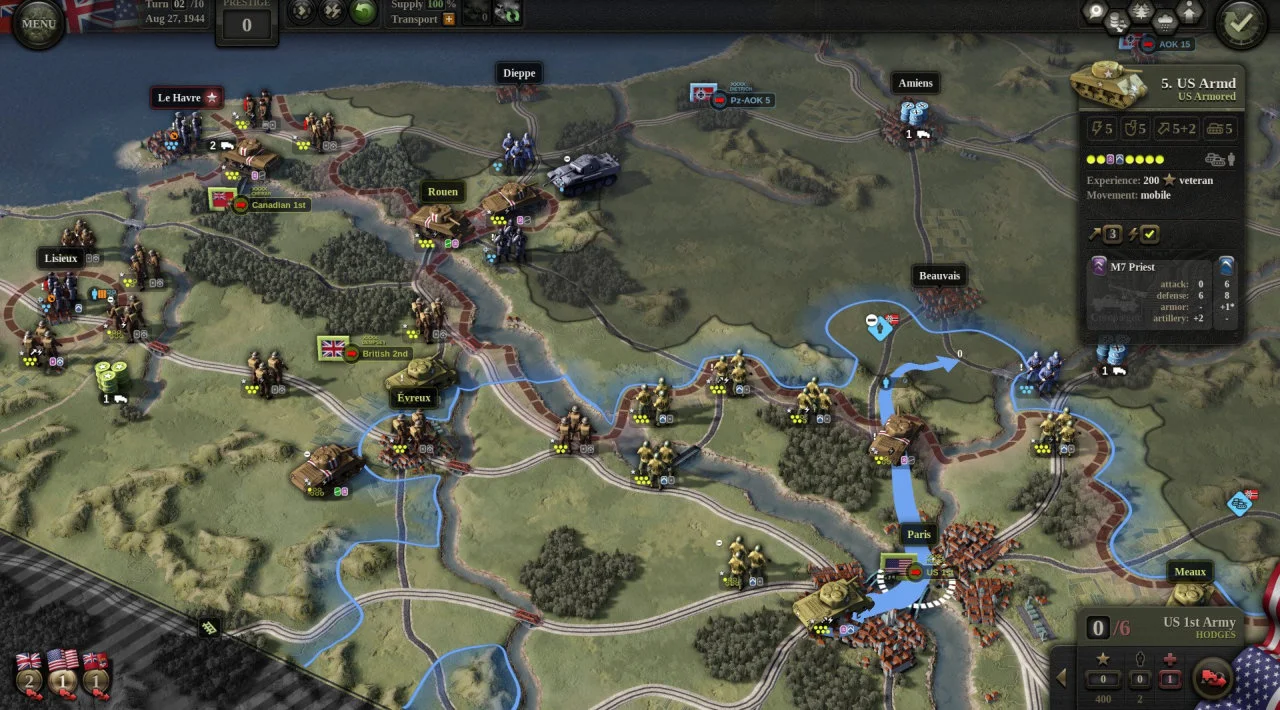
Unity of Command II uses a top-down, rotatable 3D map and a hex-based turn structure. You move formations, attack enemy positions, capture objectives, and manage the operational space between front lines, roads, bridges, railways, headquarters, and supply hubs. It is not a conventional grand strategy game because the action stays focused on individual operations rather than diplomacy, national production, or a world economy.
The defining system is supply and logistics. Units need a functioning network of fixed sources, movable supply hubs, trucks, and usable routes to retain their combat power. Push too far without preparing the network and an apparently successful offensive can stall. Cutting enemy supply is equally important, allowing you to isolate formations and turn movement, terrain, and timing into weapons.
Combat is presented in a readable way, but the decisions behind each attack are substantial. Divisions contain strength steps, including specialist attachments such as artillery, engineers, armor, or other supporting elements. Losses, suppression, terrain, entrenchment, weather, command range, and available support all influence whether an attack creates a gap or merely drains your force.
Headquarters, command points, and battlefield support
Army Headquarters are active pieces on the map rather than passive campaign menus. They reorganize units, restore strength, manage supply, provide motor transport, build or repair bridges, and unlock specialized actions as they develop. Their position matters because command range and access to HQ abilities can decide whether a distant formation is ready for another push.
Theater assets add another layer to the operational plan. Depending on the campaign and available cards, you can use reconnaissance, air attacks, air supply, sabotage, emergency supply, and other limited-use tools. These abilities are strongest when they solve a specific operational problem, such as exposing a hidden defender, disrupting a bridge, or keeping an isolated spearhead alive for one more turn.
Fog of war changes how you approach the map. Enemy positions are not always fully visible, so reconnaissance, captured stragglers, HQ intelligence abilities, and careful movement become part of the core loop. This prevents every scenario from becoming a simple exercise in following a known solution and makes information management as important as raw combat strength.
Campaigns that reward timing and adaptation
The main campaign structure carries experienced units and headquarters from battle to battle. Between operations, Conference phases let you spend prestige on HQ upgrades, cards, reinforcements, and other strategic choices. That creates a persistent command layer: a decision made before one operation can change the tools available in the next.
Scenarios normally combine primary objectives with optional bonus objectives. Primary goals determine victory, while bonus goals can provide prestige, cards, or campaign advantages. Timed objectives create pressure without reducing the game to a race, because you must balance rapid advances against the need to secure supply, reduce losses, and avoid leaving exposed units behind.
The campaign includes historical operations for the Western Allies, beginning in the Mediterranean and moving through Western Europe. Branching routes and what-if objectives can alter the direction of a campaign, so the game supports both historical context and alternate outcomes. A dedicated Tutorial Campaign introduces movement, combat, supply, and the broader operational interface before the full campaign asks you to combine those systems under pressure.
Base content, DLC, and user-created scenarios
The paid base game is built around its Allied campaign, tutorial content, individual scenarios, and the campaign systems shared across the wider package. The Steam storefront currently lists ten campaign-focused DLC packs: Ardennes 44, Blitzkrieg, Barbarossa, Moscow 41, Stalingrad, Don 42, Kursk, Berlin, Desert Fox, and Desert Rats. Two soundtrack items are also listed separately, but they are not gameplay expansions.
The DLC lineup broadens the historical scope with additional Eastern Front, Western Front, North African, and Axis-focused campaigns. Players comparing editions should check whether they want only the base Allied experience or the larger collection of campaign packs, because the additional content is sold separately from the base game.
A built-in Scenario Editor and Steam Workshop support extend the game beyond its official campaigns. The editor supports new battlefields and user-created scenarios, while the underlying campaign tools also support branching and persistent units. For a game built around repeatable operational puzzles, community content is a meaningful part of its long-term value.
Who should play Unity of Command II?
This is a strong fit for PC players who want a focused historical wargame with clear objectives and serious logistical consequences. It suits people who enjoy planning encirclements, protecting supply corridors, exploiting weak points, and replaying a scenario to improve the result rather than simply expanding an empire over a long sandbox campaign.
It is less suitable if you want real-time battles, detailed individual soldier control, unrestricted historical simulation, or a large economy and diplomacy layer. The game abstracts many military details to keep attention on operational command. That makes the interface approachable, but it also means the challenge comes from timing, positioning, and resource allocation rather than from managing every tactical action.
Players coming from other turn-based World War II campaigns may find the same broad appeal in turn-based WWII strategy games such as Panzer Corps 2, although Unity of Command II places more direct pressure on logistics, command radius, fog of war, and operational tempo.
PC features and multiplayer reality
The Steam version includes Steam Workshop, Steam Cloud, achievements, trading cards, Family Sharing, and Remote Play Together. Steam lists shared or split-screen PvP and shared or split-screen multiplayer, so the confirmed multiplayer format is local or hotseat-style play rather than a conventional online matchmaking ecosystem.
There is no verified listing for full controller support, a separate launcher, or a dedicated anti-cheat system. The PC experience is designed around map interaction, information panels, tooltips, and precise unit selection, making mouse-and-keyboard play the safest expectation. Steam lists interface support for English, German, Russian, and Simplified Chinese; full audio and subtitle-specific support should not be assumed beyond the storefront language table.
Unity of Command II FAQ
Has Unity of Command II been renamed?
No verified rebrand is currently listed. The active Steam storefront continues to use Unity of Command II, while references to Unity of Command 2 are usually informal shorthand or bundle naming.
Is Unity of Command II a real-time strategy game?
No. It is a turn-based operational wargame played on a hex grid. The emphasis is on movement, combat resolution, supply, objectives, headquarters, and campaign-level decisions.
Does Unity of Command II have multiplayer?
Yes, but the confirmed format is shared or split-screen PvP and shared or split-screen play. Steam also lists Remote Play Together, making it possible to use that feature for supported local multiplayer sessions.
What is the most important mechanic for new players?
Supply management should be the first priority. Before advancing, inspect the route, supply hubs, trucks, bridges, and HQ reach. A strong unit outside the network can become ineffective quickly.
Does the game include a campaign editor?
It includes a full Scenario Editor for creating and sharing custom battlefields and scenarios. Steam Workshop support provides a way to access community-made content.
What does the DLC add?
The DLC expands the game with additional historical campaigns and operations, including Eastern Front, Western Front, North African, and Axis-focused content. The base game and the ten gameplay DLC packs are listed separately on Steam.
System Requirements
Minimum: | Recomended: |
| Processor: Dual Core Graphics: 1 GB GeForce GTX 460 Memory: 4 GB RAM Disk space: 5 GB HDD Operating system: Windows 7/8/8.1/10 64-bit | Processor: Intel Core i5-6600 3.3 GHz Graphics: 4 GB GeForce GTX 970 Memory: 8 GB RAM Disk space: 5 GB HDD Operating system: Windows 10 64-bit |
Screenshots
Trailer/Gameplay
Download
Unity of Command II (2019), 1.93GB
ElAmigos release, game is already cracked after installation (crack by Codex/Rune).

Updated till 08.12.2025.

1. Extract files.
2. Burn or mount the image.
3. Install the game.
4. ElAmigos release, game is already cracked after installation.
5. Play the game. If you like this game, BUY IT!
Unity of Command II Download
🔒 Premium access required
To see and use the download links, you must be logged in and have an active PREMIUM account.
* Unlock downloads via Torrent and TeraBox.
DLC: Ardennes 44, Berlin, Kursk, Don 42, Desert Fox, Desert Rats, Stalingrad, Moscow 41, Barbarossa, Blitzkrieg.
Torrent Download
The best torrent download speeds are with qBittorrent!