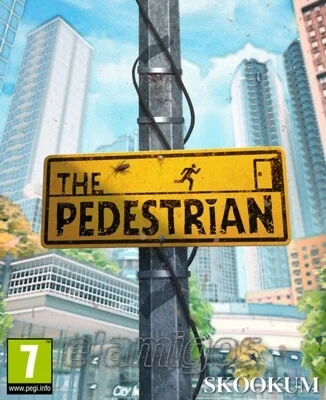
The Pedestrian
- Category:
- Release date:
- Game Genre:Logic, platform, indie games, 2.5 D
- Developer:
- Release:ElAmigos
- Platform:PC
- Languages (subtitles):English
- Dubbing/Audio:N/A
- Crack:not necessary
- Game size:0.72GB
Game Description
The Pedestrian on PC is a textless 2.5D puzzle-platformer from Skookum Arts, built around a simple but unusual idea: you guide a stick-figure pedestrian through public signs embedded in a fully modeled 3D city. The current Steam storefront still uses the original name, with no verified rebrand, definitive edition, or renamed legacy version to distinguish from it.
Instead of moving through a conventional sequence of rooms, you solve each area by reconnecting signs, opening routes, and then navigating the resulting platforming challenge. It is a focused single-player game for players who prefer visual logic, environmental discovery, and carefully layered mechanics over combat or dialogue-heavy storytelling.
How The Sign-Based Puzzle Loop Works
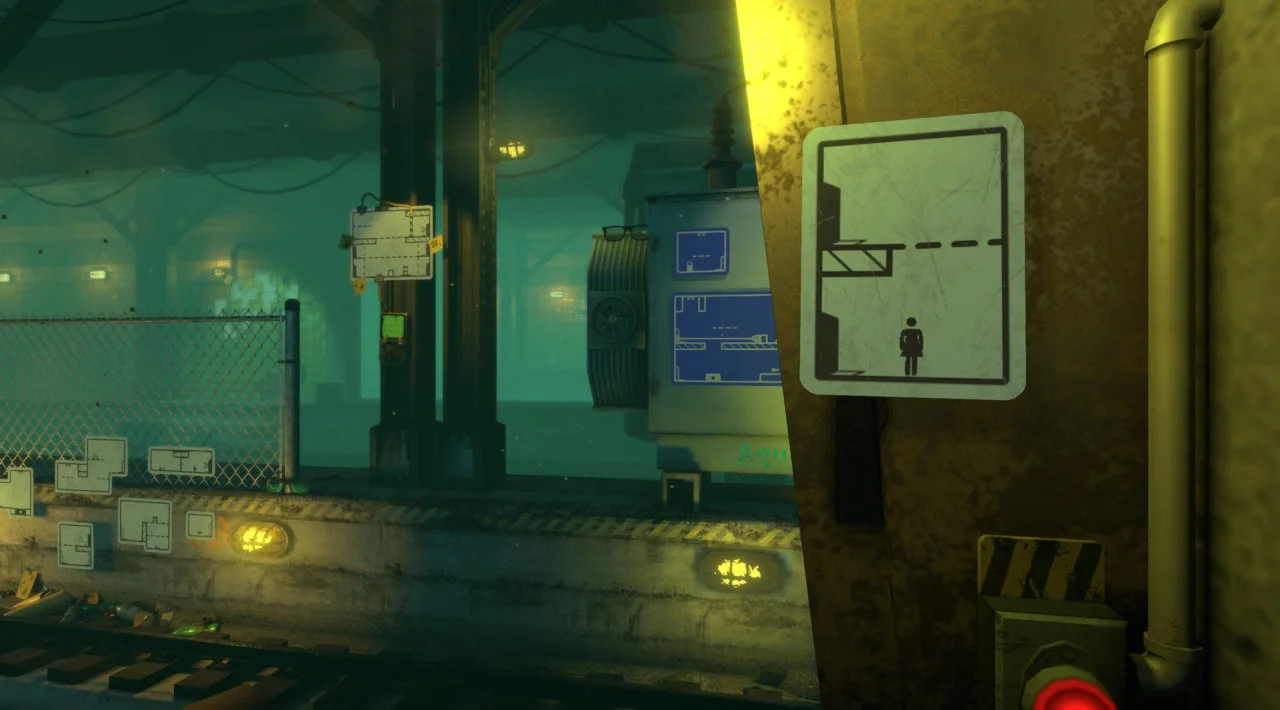
The main loop alternates between puzzlemode and playmode. In puzzlemode, you rearrange sign panels and connect matching doorways to create a continuous route. In playmode, you enter that route as the pedestrian and handle the actual platforming, switches, hazards, and object interactions inside each sign.
This distinction is the foundation of the design. A sign may contain a ladder leading to one exit, while another panel holds the doorway you need to reach. The correct solution often requires more than finding a path through one screen; you must understand how several independent signs fit together and whether their entrances and exits can form a workable chain.
Inside the signs, the pedestrian can walk, jump, drop through suitable platforms, use ladders, operate switches, collect keys, and interact with doors. Later challenges combine these familiar actions with moving platforms, elevators, trampolines, electrical systems, locked routes, and dangerous environmental obstacles.
A 2D Character Inside A 3D City
The character remains a flat figure moving through the two-dimensional surfaces of signs, but the surrounding world is rendered in 3D. Public information boards, warning signs, building interiors, subway spaces, rooftops, and street furniture become part of a connected urban journey rather than isolated puzzle screens.
That contrast gives The Pedestrian its identity. The sign itself supplies the rules of the platforming space, while the city provides context, movement between puzzle groups, and visual continuity. You are not merely solving abstract diagrams; you are moving through a world where the placement of each sign suggests how the next stage fits into the environment.
The game also uses a textless presentation. Instructions, objectives, and story context are communicated through symbols, animation, environmental details, and the behavior of new devices. This keeps the interface clean, but it also means players must observe how a mechanism works instead of waiting for a conventional tutorial explanation.
Mechanics That Escalate Without Combat
The early puzzles establish the basic language of doors, ladders, platforms, and connections. As the game progresses, it introduces additional systems that change how you evaluate a route. A key may need to be collected before a locked door can be used, while a switch elsewhere in the sign network may control a barrier or power a new section.
The strongest puzzles make the two layers interact. You may build a correct connection between signs but still fail because the pedestrian reaches a dead end inside one panel. Conversely, a platforming section may be straightforward once solved, yet difficult to access until the surrounding signs are rearranged in the right order.
There is no combat system, character build, inventory progression, or conventional difficulty selection driving the experience. The challenge comes from spatial reasoning, route planning, observation, and platforming precision. Deaths are part of the learning process, but the lasting progression is your understanding of the puzzle language rather than an upgraded character.
Players who enjoy visual rule discovery may find a useful comparison in observation-led logic adventures like The Witness, although The Pedestrian adds real-time movement and platform navigation to every major puzzle group.
Story, Atmosphere, And Progression
The Pedestrian does not rely on long conversations or a visible quest log. Its story is delivered through the spaces you pass through and the gradual movement from one urban environment to another. Background details, visual transitions, and recurring motifs invite interpretation without stopping the puzzle flow.
Progression is therefore best understood as a sequence of increasingly complex sign networks. New mechanics are introduced, combined, and revisited in different contexts. The game expects players to remember what a device does and recognize when a familiar tool has a new spatial use.
This structure makes the experience approachable at first while still leaving room for genuine problem-solving. The game is not an open-world sandbox and does not offer an endless puzzle generator. Its value comes from mastering the authored sequence and reaching the later combinations with a clear understanding of how the sign system works.
PC Storefront, Editions, And Features
On PC, Skookum Arts is both the developer and publisher. The game is distributed through Steam and is presented as a paid single-player title. Steam also lists a free demo, allowing players to test the sign-based format before buying the complete game.
The standard purchase contains the game itself. A Deluxe Edition bundles the base game with the official soundtrack and digital artbook. These are companion extras rather than gameplay expansions, and the storefront currently lists the soundtrack and artbook separately as additional content. There is no verified season pass, multiplayer expansion, or large collection of gameplay DLC attached to the PC edition.
Steam features include Steam Cloud, Steam Achievements, Family Sharing, and cloud gaming support. The PC version also lists full controller support, while keyboard and mouse remain suitable for players who prefer direct control over movement and menu navigation.
Localization is limited compared with many larger PC releases. Steam lists English interface and subtitles, with no full-audio track or additional language package shown for the game. The absence of spoken dialogue also means that most of the experience is communicated visually rather than through voice acting.
Who Should Play The Pedestrian?
The game is a strong fit for players who want a compact, single-player puzzle adventure with a clear central idea. It suits people who enjoy logic puzzles, platforming built around spatial problems, wordless storytelling, and unusual art direction more than combat or character progression.
It is less suitable if you want cooperative play, online features, open-ended exploration, or a traditional narrative with frequent exposition. The Pedestrian asks you to stop, inspect the layout, test a connection, and revise your plan. Its rhythm is deliberate, even when the platforming inside a sign becomes more demanding.
Controller users are supported, but players who prefer precise cursor-driven rearrangement may favor keyboard and mouse during the sign-linking portions. Either control method serves the core loop; the important distinction is whether you enjoy solving a route before committing to the movement challenge inside it.
Similar Puzzle Games On PC
The closest comparisons are games that make observation and spatial interpretation the main form of progression. Perspective-bending puzzle games such as Viewfinder share The Pedestrian’s interest in turning visual presentation into a mechanical rule, although Viewfinder is first-person and centers on photographs rather than connected signs.
The Witness is another useful reference for players seeking an observation-heavy puzzle experience, but its island-wide exploration and line-drawing panels create a much more open structure. The Pedestrian is more linear, more platform-focused, and more explicit about building a route through linked spaces.
These comparisons should not obscure what makes The Pedestrian distinct: sign rearrangement, a 2D character moving through a 3D setting, and the constant switch between editing a level layout and playing inside it.
The Pedestrian FAQ
Is The Pedestrian still called The Pedestrian on PC?
Yes. The current Steam storefront uses The Pedestrian as the official name. No verified rebrand, renamed definitive edition, or replacement PC storefront title was found during research.
What type of game is The Pedestrian?
It is a 2.5D side-scrolling puzzle-platformer. You rearrange and reconnect public signs in puzzlemode, then control a stick-figure pedestrian through the resulting 2D platforming spaces inside a 3D city.
Does The Pedestrian have multiplayer or co-op?
No. The PC version is designed as a single-player experience. Steam lists single-player functionality rather than online co-op, split-screen, or competitive multiplayer.
Does The Pedestrian support controllers on PC?
Yes. Steam lists full controller support. Keyboard and mouse are also supported and can feel natural for rearranging sign layouts and navigating menus.
Is The Pedestrian textless?
Yes. The game uses symbols, environmental cues, animation, and visual demonstrations instead of relying on conventional written instructions or extensive dialogue. English subtitles are listed, but the design itself is primarily visual.
What is included in The Pedestrian Deluxe Edition?
The Deluxe Edition includes the base game, the official soundtrack, and a digital artbook. The additional items are presentation extras, not separate gameplay campaigns or multiplayer content.
System Requirements
Minimum: | Recomended: |
| Processor: Intel Core i3 Graphics: 1 GB GeForce GTX 460 Memory: 4 GB RAM Disk space: 4 GB HDD Operating system: Windows 7/8/10 64-bit | Processor: Intel Core i5 Graphics: 2 GB GeForce GTX 660 Memory: 8 GB RAM Disk space: 4 GB HDD Operating system: Windows 7/8/10 64-bit |
Screenshots



Trailer/Gameplay
Download
The Pedestrian (2020), 0.72GB
ElAmigos release, unprotected game (crack is not necessary).

Updated to version 1.0.7 (07.02.2020).

Included bonus content: Soundtrack (mp3).

1. Extract files.
2. Burn or mount the image.
3. Install the game.
4. ElAmigos release, game is already cracked after installation.
5. Play the game. If you like this game, BUY IT!
The Pedestrian Download
🔒 Premium access required
To see and use the download links, you must be logged in and have an active PREMIUM account.
* Unlock downloads via Torrent and TeraBox.
Torrent Download
The best torrent download speeds are with qBittorrent!