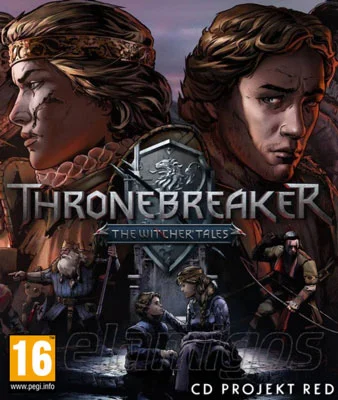
Thronebreaker The Witcher Tales
- Category:
- Release date:
- Game Genre:RPG, fantasy, books, Isometric view, logical elements, card games, elements of strategy, Polish
- Developer:
- Release:ElAmigos
- Platform:PC
- Languages (subtitles):English, French, Italian, German, Spanish, Spanish (Mexico), Polish, Portuguese-Brazil, Japanese, Korean, Russian, Chinese Simplified, Chinese Traditional
- Dubbing/Audio:English, French, Italian, German, Spanish, Polish, Portuguese-Brazil
- Crack:Codex
- Game size:8.09GB
Game Description
Thronebreaker: The Witcher Tales is a single-player PC RPG that combines isometric exploration, branching narrative decisions, resource management, and card-based battles. It remains listed under the same official name on current storefronts, with no verified rebrand or replacement edition. Instead of following Geralt, the campaign places you behind Queen Meve of Lyria and Rivia during a war against Nilfgaard.
Developed and published by CD PROJEKT RED, Thronebreaker is best understood as a story-driven Witcher adventure built around a specialized version of Gwent. It is not the standalone competitive card game, and it is not a conventional real-time action RPG. Its appeal comes from how exploration, camp management, tactical card play, and moral choices continually affect one another.
A Witcher campaign built around decisions
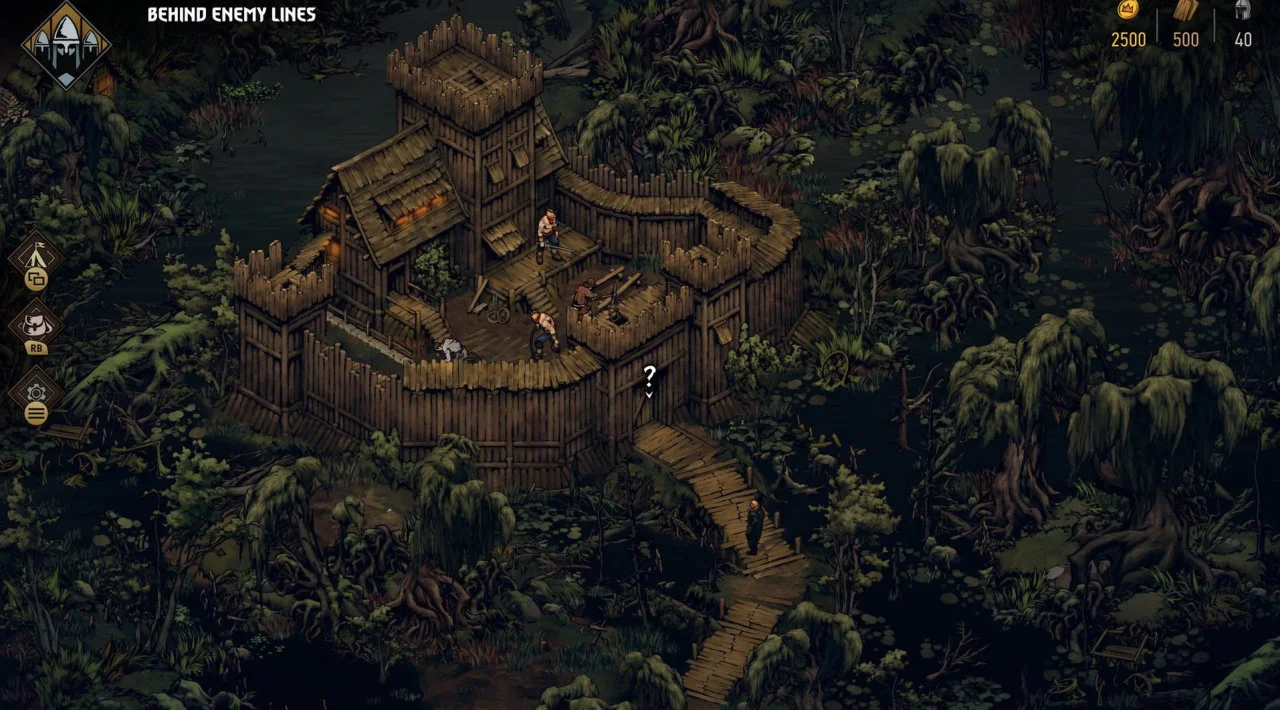
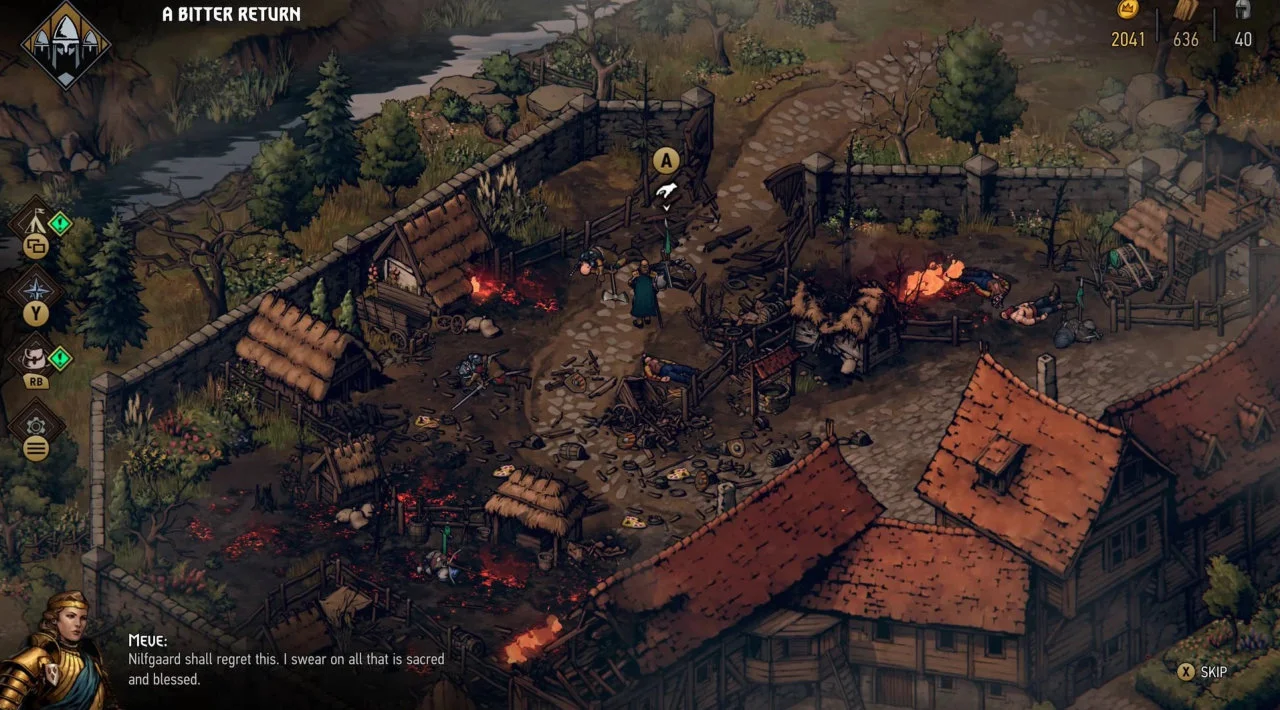
The main loop alternates between travelling across hand-drawn maps, investigating locations, speaking with companions, resolving quests, and entering battles represented through cards. Meve moves through regions threatened by war and monsters, with optional paths often leading to resources, encounters, treasure, or difficult choices.
Choice and consequence is the campaign's defining narrative system. Decisions can alter relationships, change the state of the world, affect available quests, and influence which characters remain in Meve's army. The game does not frame every decision as obviously heroic or villainous, so players who prefer morally grey fantasy writing will find more depth here than in a straightforward good-versus-evil adventure.
The presentation is closer to an interactive illustrated chronicle than a fully explorable 3D world. Dialogue, narration, character portraits, and map events carry much of the storytelling, while Meve's journey supplies the structure connecting each chapter and conflict.
How card battles work
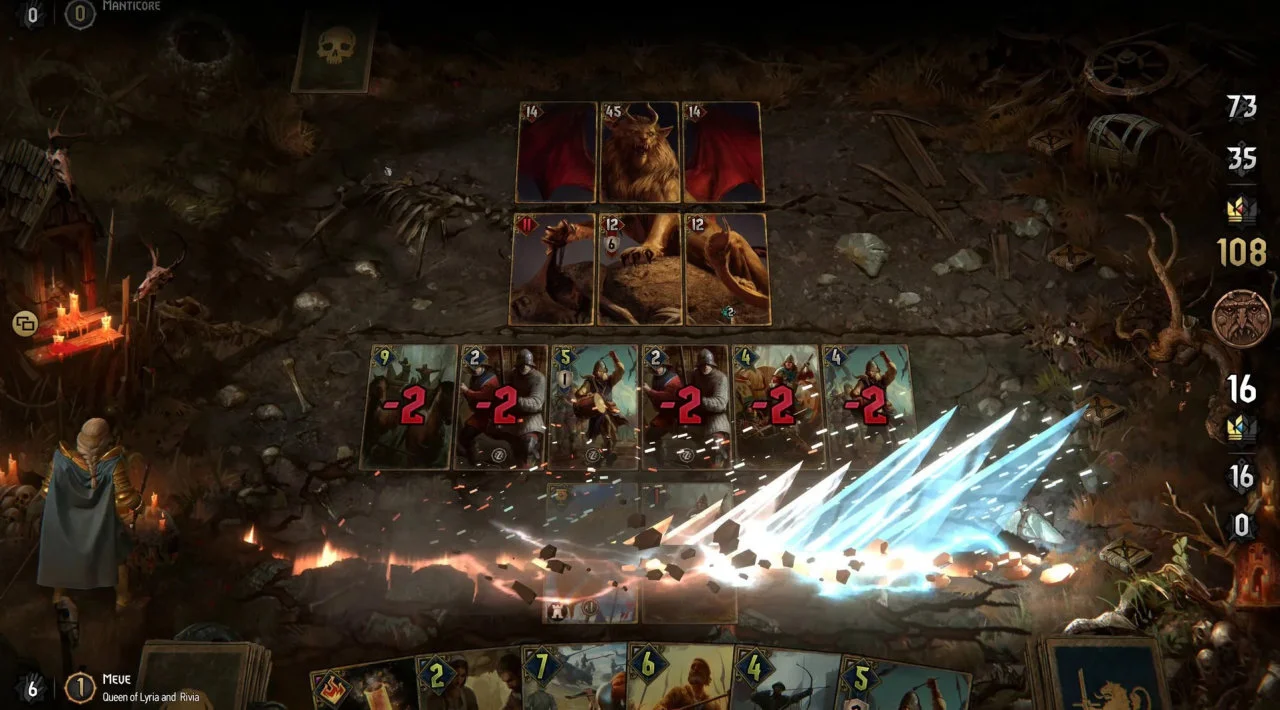
Combat uses a campaign-specific form of Gwent card battle. You assemble an army from units and characters encountered during the journey, then use those cards to overcome standard encounters, story battles, and unusual puzzle scenarios.
Unlike competitive Gwent, Thronebreaker's battles are designed around authored situations and campaign progression. Some encounters use special objectives or altered rules, turning the board into a tactical puzzle rather than a simple contest of total strength. A winning approach may involve sequencing abilities correctly, protecting key units, or completing a condition instead of merely producing the highest score.
Your deck reflects the army Meve builds. Cards can represent soldiers, leaders, allies, and special abilities, while battlefield effects and companion skills create opportunities for card synergies. The strongest decisions often happen before the battle begins, when you decide which units to recruit, which cards to upgrade, and how to shape the army around the next region's challenges.
Players familiar with The Witcher 3's tavern game should expect recognizable foundations but not an identical ruleset. Thronebreaker uses Gwent as its tactical language while adapting it to a linear, choice-driven RPG campaign. For a more traditional route-based deckbuilding structure, the turn-based card combat and procedural planning of roguelike deckbuilders such as Slay the Spire provide a useful contrast.
Camp management and army progression
Between missions, Meve returns to a mobile war camp that functions as the campaign's strategic hub. The camp is where you can recruit units, improve cards, unlock abilities, and develop the resources needed to keep the army effective.
Resource management gives exploration a practical purpose. Gold, wood, and other materials support camp development and can be traded with merchants. Choosing whether to pursue a distant cache, investigate a side event, or continue toward the main objective creates a steady tension between preparation and momentum.
Companions are more than dialogue partners. Their presence can influence the story, unlock new interactions, and contribute distinct abilities to the army. Building trust with some characters may produce benefits, while ignoring their beliefs or making incompatible decisions can create lasting consequences.
The progression system is intentionally campaign-focused rather than an endless character-build treadmill. You improve the tools available to Meve's army, learn how different units interact, and make strategic adjustments as the story introduces new threats and objectives.
Content structure and commercial model
Thronebreaker is a paid single-player game, not a free-to-play service. The main purchase contains the narrative campaign, exploration maps, card battles, puzzle encounters, companions, camp progression, and the branching choice system.
The current Steam listing identifies a separate free bonus-content package and a separately sold soundtrack. The game itself does not use a recurring battle pass, competitive card economy, or live-service progression model. There are no verified gameplay expansions that need to be purchased to complete the campaign.
The storefront package also lists bonus extras associated with the game, including an artbook, concept material, and a digital graphic novel. These additions support the setting but do not change the core campaign systems.
Thronebreaker's content is therefore best suited to players who want a contained narrative RPG with a defined arc. Its replay value comes from revisiting choices, exploring alternate consequences, refining battle solutions, and seeing how different companion and political decisions reshape the journey.
Who should play Thronebreaker on PC?
This is a strong fit for players who enjoy branching stories, political fantasy, tactical card games, and exploration that rewards curiosity. Witcher fans will recognize the setting's harsh decisions and dry character writing, but prior knowledge of the wider series is not required to follow Meve's campaign.
It is also a good option for players who like strategy without needing constant mechanical pressure. Battles are turn-based, readable, and usually built around deliberate sequencing rather than reflexes. The puzzle encounters are particularly appealing to anyone who enjoys solving a combat scenario with unusual restrictions.
Players looking for real-time swordplay, open-world freedom, or a large character-action system should set expectations accordingly. Thronebreaker is more focused on dialogue, planning, and card tactics than on direct combat. Its maps provide exploration and optional objectives, but they are not designed as a seamless 3D sandbox.
For a comparable choice-heavy isometric RPG that replaces battlefield tactics with investigation, dialogue checks, and internal skill conflicts, narrative RPGs such as Disco Elysium offer a different but relevant point of comparison.
PC features, controls, and localization
The PC version supports full controller functionality for Xbox 360 and Xbox One controllers, as well as wired and wireless PlayStation 4 controllers according to CD PROJEKT RED's support documentation. Mouse and keyboard remain natural choices for map navigation, menus, dialogue selection, and card placement.
Steam lists Steam Cloud, achievements, trading cards, Family Sharing, and Remote Play on TV. It also identifies the game as single-player and does not advertise online co-op, split-screen multiplayer, or competitive multiplayer modes.
Interface, subtitles, and full audio are listed for English, French, Italian, German, Spanish, Japanese, Korean, Polish, Brazilian Portuguese, Russian, Latin American Spanish, Simplified Chinese, and Traditional Chinese. English voice acting is included by default, while CD PROJEKT RED's support information notes that additional language content may be provided through free language downloads.
Steam also lists accessibility-oriented options including adjustable difficulty, a mouse-only option, camera comfort settings, custom volume controls, and the ability to play without quick-time events. These features make the game easier to approach for players who prefer slower, deliberate interaction.
Thronebreaker: The Witcher Tales FAQ
The questions below address the practical points that most affect whether the PC version matches your expectations.
Is Thronebreaker still called Thronebreaker: The Witcher Tales?
Yes. Current storefront and official support listings continue to use Thronebreaker: The Witcher Tales. There is no verified current rebrand, definitive replacement edition, or official storefront transition that changes the game's name.
Is Thronebreaker the same as standalone Gwent?
No. Thronebreaker uses a campaign-specific version of Gwent-inspired card combat. It is built for authored battles, story objectives, and puzzle encounters rather than online competitive matches or a live card-collection economy.
Does Thronebreaker have multiplayer or co-op?
No. The PC version is a single-player campaign. Steam lists Remote Play on TV, but that is a platform feature for playing the game remotely and does not turn the campaign into online co-op.
Can you play Thronebreaker with a controller?
Yes. CD PROJEKT RED officially lists Xbox 360, Xbox One, and PlayStation 4 controllers for PC. The storefront also identifies full controller support, although mouse and keyboard work well for card selection and map interaction.
Is Thronebreaker a good choice if you dislike card games?
It depends on how much card combat you are willing to tolerate. The story, exploration, and character decisions are substantial, but battles are the central gameplay system and cannot be treated as a minor side activity. Players who want the Witcher setting without tactical card encounters may prefer the action-RPG structure of open-world fantasy RPGs like The Witcher 3: Wild Hunt.
Does Thronebreaker have multiple endings?
Yes. The campaign tracks major choices and can produce different world outcomes. The official storefront describes 20 possible world end-states, making decision tracking and alternate playthroughs a meaningful part of the game's structure.
System Requirements
Minimum: | Recomended: |
| Processor: Intel Celeron G1820 2.7 GHz / AMD A4-7300 3.8 GHz Graphics: 1 GB GeForce GT 730 / Radeon R7 240 Memory: 2 GB RAM Disk space: 15 GB HDD Operating system: Windows 7/8/8.1/10 64-bit | Processor: Intel Core i3-6100 3.7 GHz / AMD FX-6300 3.5 GHz Graphics: 2 GB GeForce GTX 660 / Radeon R7 265 Memory: 4 GB RAM Disk space: 15 GB HDD Operating system: Windows 7/8/8.1/10 64-bit |
Screenshots
Trailer/Gameplay
Download
Thronebreaker: The Witcher Tales (2018), 8.09GB
ElAmigos release, game is already cracked after installation (crack by Codex).

Updated to version 1.0.2.12 (19.05.2020);

1. Extract files.
2. Burn or mount the image.
3. Install the game.
4. ElAmigos release, game is already cracked after installation.
5. Play the game. If you like this game, BUY IT!
Thronebreaker: The Witcher Tales Download
🔒 Premium access required
To see and use the download links, you must be logged in and have an active PREMIUM account.
* Unlock downloads via Torrent and TeraBox.
DLC: 4K Textures, Soundtrack (mp3).
Torrent Download
The best torrent download speeds are with qBittorrent!