The Texas Chain Saw Massacre

- Category:
- Release date:
- Game Genre:Action, horror, videos, network, co-op, Xbox Game Pass, Find Your Next Game, very brutal, asymmetrical multiplayer
- Developer:
- Platform:PC
- Languages (subtitles):English
- Dubbing/Audio:English
Game Description
The Texas Chain Saw Massacre PC is a third-person asymmetrical horror game built around tense 3v4 matches between the Slaughter Family and four Victims. The current PC storefront name remains The Texas Chain Saw Massacre; no rebrand or replacement edition is listed. Sumo Digital developed the game, while Gun Interactive published it, and the catalog is now best understood as a complete, content-frozen multiplayer package rather than an actively expanding live service.
That status matters for new buyers. Gun Interactive has stated that the game will not receive further DLC, balance updates, or bug fixes after its final planned support work, while also confirming that it remains playable and is not being removed from storefronts. The announced move toward peer-to-peer matchmaking is not currently active, so the existing online structure remains the relevant one for PC players.
How the 3v4 horror loop works
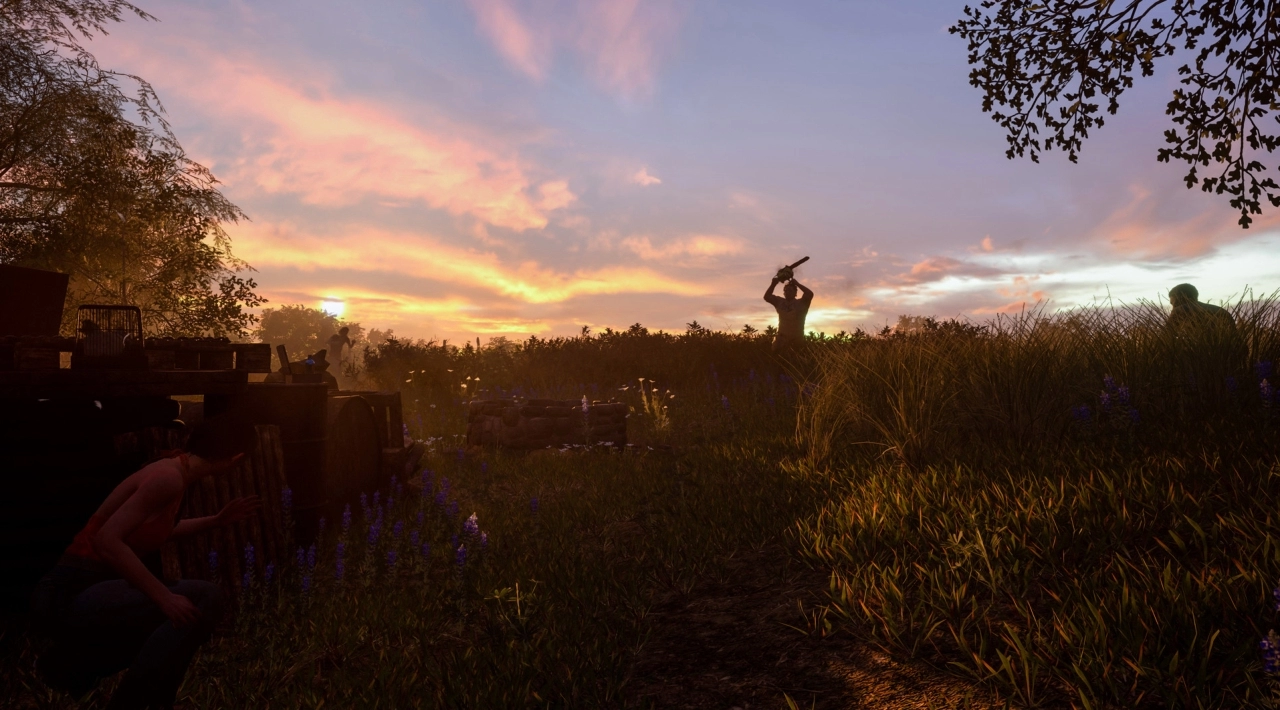
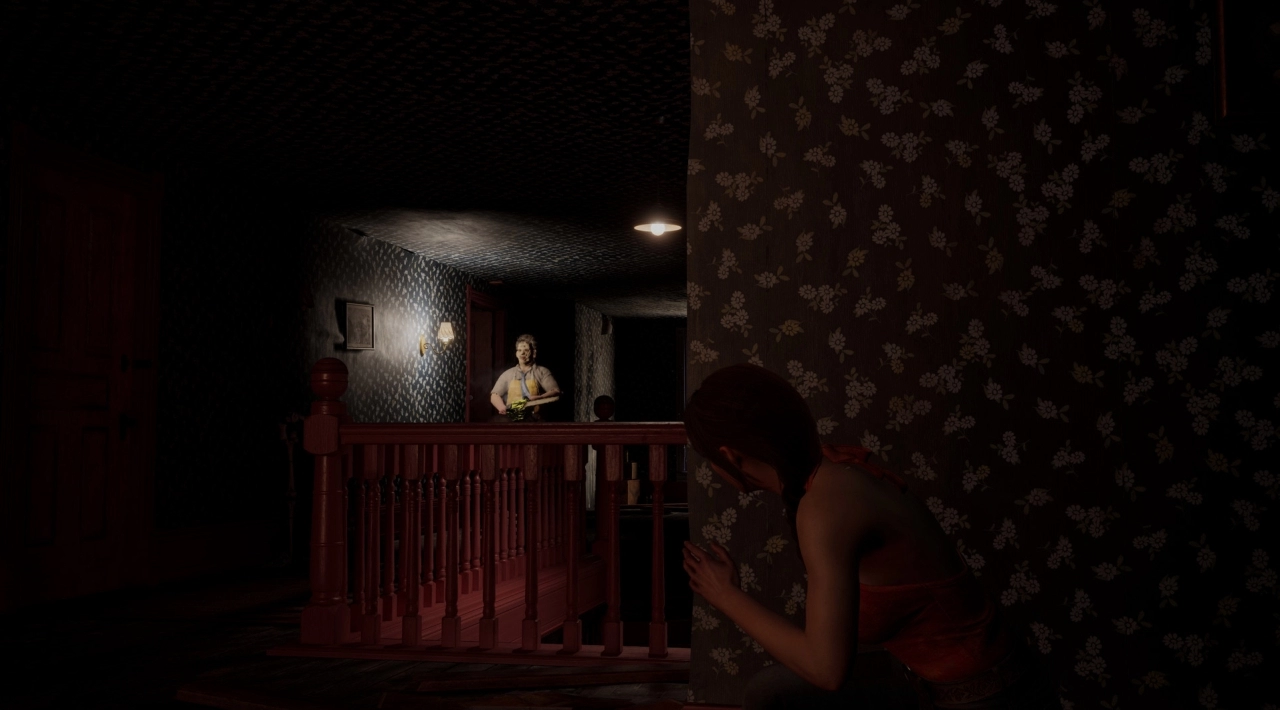
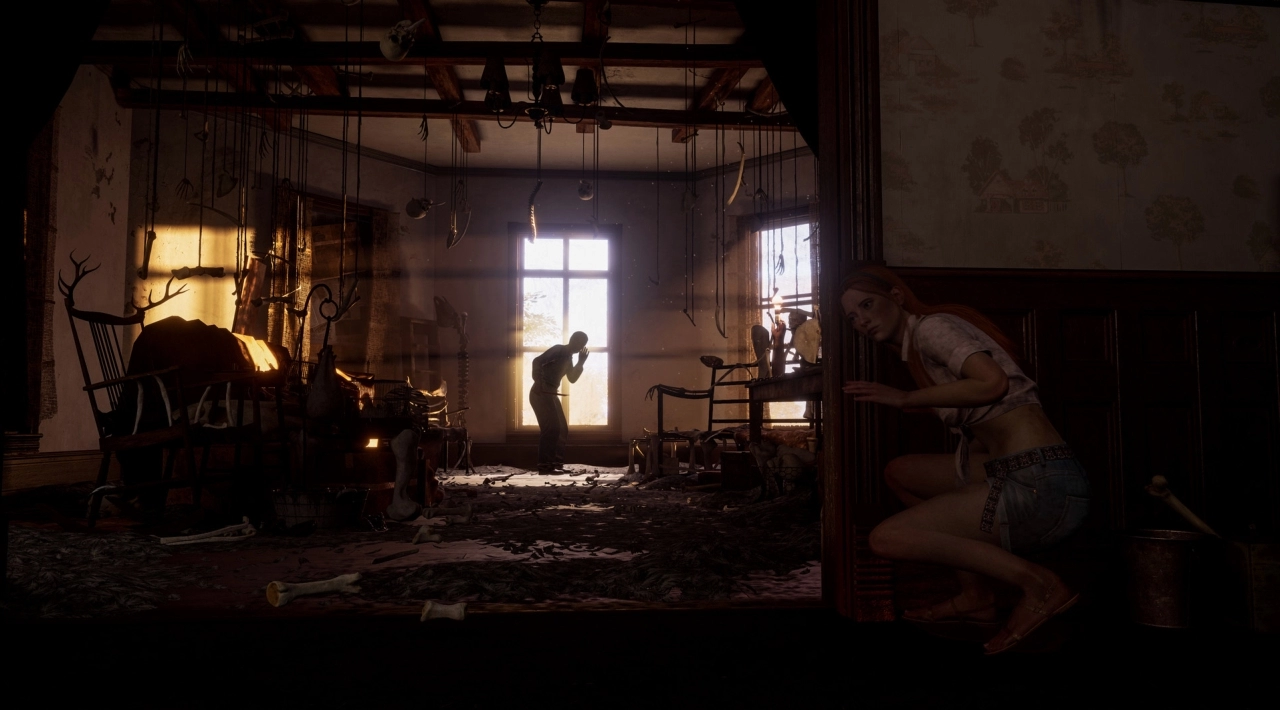
A standard match places three Family members against four Victims across a dangerous property connected to the film's world. Victims begin in the basement and must search for tools, unlock routes, manage health and stamina, and reach one of several exits. The Family must patrol the map, gather blood, secure objectives, and eliminate the opposing team before an escape is completed.
Victim play is not a straightforward chase game. Movement creates risk, noisy interactions can reveal a position, and every unlocked door changes the available routes for both teams. Players must decide when to hide, when to split up, and when to make noise deliberately to create an opening for someone else.
The Family side has a different rhythm. Each character brings a distinct ability and traversal profile, so a match depends on dividing defensive responsibilities rather than simply pursuing the nearest Victim. The Cook can reinforce an area with padlocks, the Hitchhiker can place traps, Sissy can use poison, and Leatherface turns tight basement routes into high-pressure kill zones.
These roles create a strong information game. Victims watch patrol patterns and objective states, while Family members listen for disturbances, inspect likely routes, and use their tools to make particular exits harder to reach. Players who enjoy asymmetrical slasher multiplayer like Friday the 13th: The Game will recognize the hide-and-escape foundation, but The Texas Chain Saw Massacre places more emphasis on map control, stealth, and layered objectives.
Family pressure, Victim builds, and Grandpa
The central progression layer comes from attributes, perks, abilities, and skill trees. Victims specialize in areas such as stealth, toughness, proficiency, strength, or endurance, while Family members can develop damage, blood harvesting, stamina, tracking, or defensive utility. Builds can be adjusted between matches, allowing the same character to serve different team plans.
Family members also feed blood to Grandpa, a stationary threat whose increasing level improves detection pressure. Blood comes from buckets placed around the map and from damaging Victims. Grandpa's sonar can expose moving Victims, forcing them to freeze, hide, or change direction when the Family's information advantage grows.
Victims have tools for resisting that pressure. Bone scraps can support close encounters and distractions, lockpicks open important doors, health items restore survivability, and wells or crawl spaces can break a chase. These systems reward players who know the geography and understand which interactions are worth exposing themselves to.
The game also supports close encounters, stealth attacks, barricades, gaps, hiding spots, wells, fuse objectives, valve objectives, generators, and car batteries. None of these mechanics is individually complicated, but their combination makes route knowledge more important than raw reflexes. A strong Victim player is usually planning the next safe transition before the current interaction ends.
Maps and match structure
The main mode uses a collection of properties with different layouts, sightlines, basement connections, and escape arrangements. Family House creates a compact defensive problem with dangerous exterior approaches, while Gas Station and Slaughterhouse emphasize route knowledge and the relationship between basement, interior, and outdoor spaces.
Map variants alter the feel of familiar locations through lighting and weather presentation. Night layouts reduce certainty and make audio, landmarks, and memorized traversal routes more valuable. Storm variants add a more oppressive visual atmosphere without turning the game into a procedural map generator.
There is no traditional campaign to complete. The real progression loop is match mastery: learning a character, improving a build, memorizing objective locations, reading enemy habits, and coordinating with teammates. That structure suits players who enjoy repeatable competitive sessions, but it is a poor fit for anyone seeking a solo story mode or a conventional cinematic horror adventure.
Rush Week and additional modes
Rush Week is a separate 1v6 multiplayer mode inspired by late-1970s Giallo slasher films. One player controls Johnny, while six Sorority Girls search the house for escape options and ways to delay him. The mode changes the usual team composition and does not use the standard Victim perk structure.
Rush Week takes place in a two-story sorority house with a basement, windows, ladders, an attic route, and multiple objectives. The Sorority Girls can use items such as a wrench, knife, pepper spray, and perfume to create time or reveal Johnny's position. Their goal is to call for help, complete escape objectives, and survive long enough to leave.
Johnny becomes more dangerous as executions increase, while a Fear system makes frightened Sorority Girls easier to locate. The result is a faster, more focused mode that works well as a change of pace from the slower information battle of the original 3v4 format.
Private matches are also available for organized groups. They are useful for learning maps, testing builds, or creating custom sessions with friends, although the game remains fundamentally designed around online multiplayer rather than offline solo play.
Base game, characters, and DLC model
The PC version is a paid online multiplayer game with optional paid additions. The base package provides the core Family-versus-Victim experience, while later purchases expand the roster or add executions, outfits, weapon appearances, and other cosmetic content.
Paid playable additions include characters such as Nancy, Danny, Virginia, Maria, Hands, Bones, and Wyatt. The catalog also includes a 2003 Leatherface interpretation, execution packs, outfit bundles, character cosmetics, and the Content Pass. Cosmetic DLC does not replace the core match structure, but playable characters can change team composition and tactical options.
Rush Week is a distinct free mode rather than a separate game. Players should therefore distinguish between the base multiplayer package, optional character purchases, and cosmetic packs instead of assuming that every storefront bundle includes the entire post-launch catalog.
PC features, crossplay, and localization
The PC edition is distributed through online storefronts and requires online matchmaking for its principal modes. Steam lists online PvP, Steam Cloud, Family Sharing, achievements, and trading cards. There is no offline campaign equivalent, so the game's long-term value depends on the availability of online players and the stability of its matchmaking services.
Crossplay connects PC with PlayStation 5 and Xbox Series X|S in the supported matchmaking pool. Crossplay can be disabled, and players can use generated invite codes to form parties across supported platforms. Progression is not shared between platforms, so a player's unlocks and account progress remain tied to the platform where they were earned.
Steam lists nine interface and subtitle languages: English, French, Italian, German, Spanish from Spain, Japanese, Brazilian Portuguese, Russian, and Simplified Chinese. English is the listed full-audio language. The game is played from a third-person camera and is designed for online keyboard-and-mouse or controller sessions, but the storefront information does not advertise specialist hardware features such as cabinet support or multi-monitor modes.
One important current limitation is the end of active development. The game is still playable, but buyers should not expect a regular content roadmap, new balance passes, or ongoing bug-fix support. That makes the existing roster and map pool the deciding factors when judging whether the PC version fits your group.
Who should play The Texas Chain Saw Massacre?
This is a strong choice for players who want team-based stealth horror, asymmetrical PvP, recognizable film characters, and matches where communication matters more than mechanical speed. It is especially suited to groups willing to learn map layouts and accept that early matches can feel punishing.
Family players will enjoy controlling territory, setting traps, gathering blood, and coordinating a layered defense. Victim players will prefer it if they like stealth routes, risky objectives, improvised escapes, and the satisfaction of turning a small opening into a successful extraction.
It is less suitable for players who want a complete single-player story, reliable progression without online matchmaking, or a game that is still receiving frequent updates. The frozen development status is not a hidden detail; it is a central part of the current buying decision.
The Texas Chain Saw Massacre FAQ
Is The Texas Chain Saw Massacre still the official PC name?
Yes. The PC storefront listing continues to use The Texas Chain Saw Massacre. No current Steam or publisher rebrand has replaced it with a new main edition.
Is The Texas Chain Saw Massacre single-player?
No. Its main experience is online multiplayer, with three Family members opposing four Victims. Private matches can be created for groups, but there is no conventional offline story campaign.
Does The Texas Chain Saw Massacre support crossplay on PC?
Yes. PC can matchmake with PlayStation 5 and Xbox Series X|S when crossplay is enabled. Cross-progression is not available, so platform-specific progress does not transfer between systems.
What is Rush Week?
Rush Week is a separate 1v6 mode in which Johnny hunts six Sorority Girls inside a sorority house. It uses different objectives, items, escape routes, and a Fear system instead of the standard Victim perk setup.
Does the base game include every character?
No. The base game supplies the core multiplayer structure, while several later playable characters and cosmetic items are sold separately or through bundled content. Check the selected storefront package carefully before buying.
Will The Texas Chain Saw Massacre receive more DLC or balance updates?
No further DLC, balance updates, or bug fixes are planned under the publisher's current support statement. The game remains playable, but its roster, maps, and mechanics should be treated as the finished package.
Screenshots
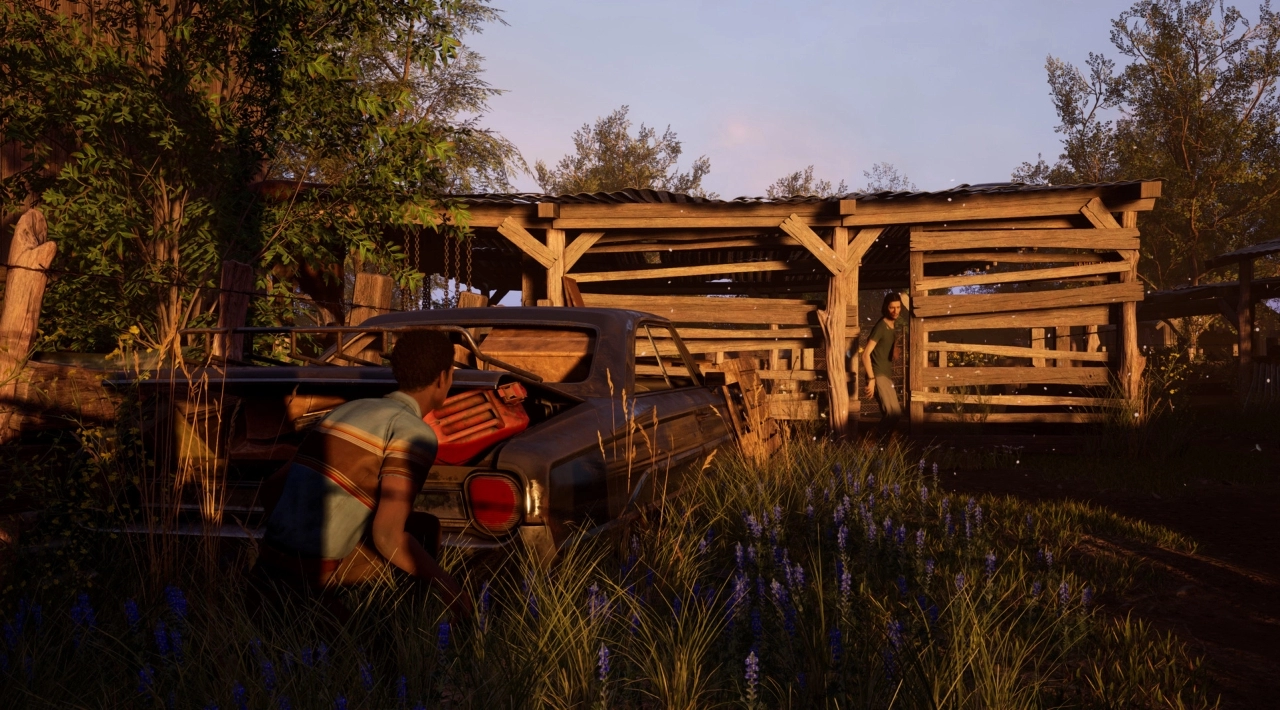
Trailer/Gameplay
Download
The Texas Chain Saw Massacre (2023)

1. Extract files.
2. Burn or mount the image.
3. Install the game.
4. ElAmigos release, game is already cracked after installation.
5. Play the game. If you like this game, BUY IT!
The Texas Chain Saw Massacre Download
🔒 Premium access required
To see and use the download links, you must be logged in and have an active PREMIUM account.
* Unlock downloads via Torrent and TeraBox.