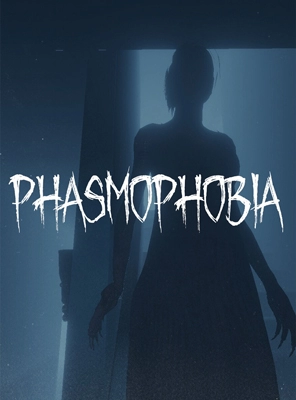
Phasmophobia
Edit date: 10-09-2024, 15:57
Reason: Updated to version v0.10.1.2
- Category:
- Release date:
- Game Genre:Adventure, FPP, survival horror, horror, indie games, co-op, Oculus Rift/Quest, SteamVR, virtual reality
- Developer:Kinetic Games
- Platform:PC
- Languages (subtitles):English, Portuguese - Portugal, Spanish - Spain, Portuguese - Brazil, German, French, Italian, Bulgarian, Czech, Danish, Dutch, Finnish, Greek, Hungarian, Japanese, Korean, Norwegian, Polish, Romanian, Russian, Simplified Chinese, Swedish, Traditional Chinese, Turkish, Ukrainian, Catalan
- Dubbing/Audio:English
- Game size:11.97GB
Game Description
Phasmophobia PC is a first-person psychological horror and paranormal investigation game for solo players or teams of up to four. Kinetic Games remains both developer and publisher, and the current Steam listing still uses the original name with no verified rebrand or replacement edition. The central task is simple to explain but difficult to master: investigate a haunted location, identify the ghost, complete optional objectives, and leave before the investigation turns into a hunt.
The game remains an Early Access product, so its maps, systems, character presentation, and quality-of-life features continue to evolve. That ongoing development is relevant for catalog shoppers because Phasmophobia is not a fixed campaign with a final endpoint; its value comes from repeatable contracts, accumulating knowledge, and learning how different ghost behaviors expose themselves under pressure.
How the ghost-hunting loop works
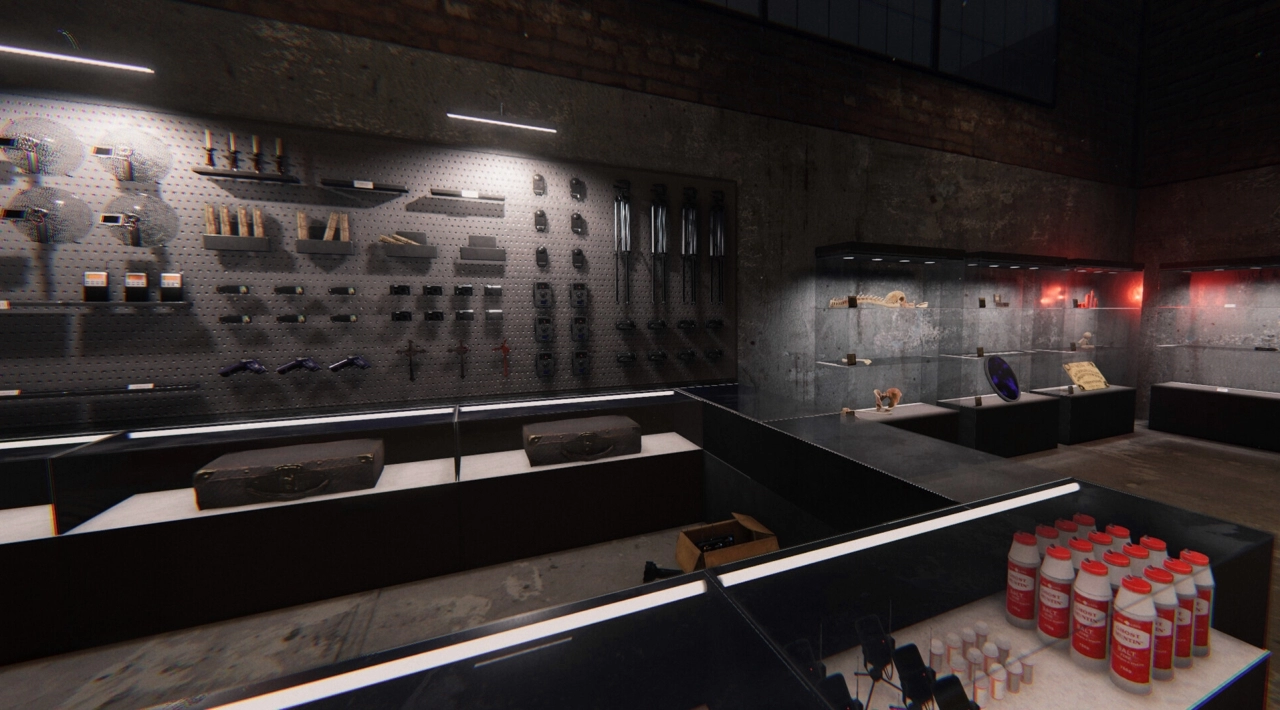
Each contract begins in the investigation van, where players select equipment and review the location. The first practical goal is to find the ghost’s active area. An EMF Reader, thermometer, sound clues, disturbed objects, and changes in the environment can narrow the search before the team brings in heavier equipment.
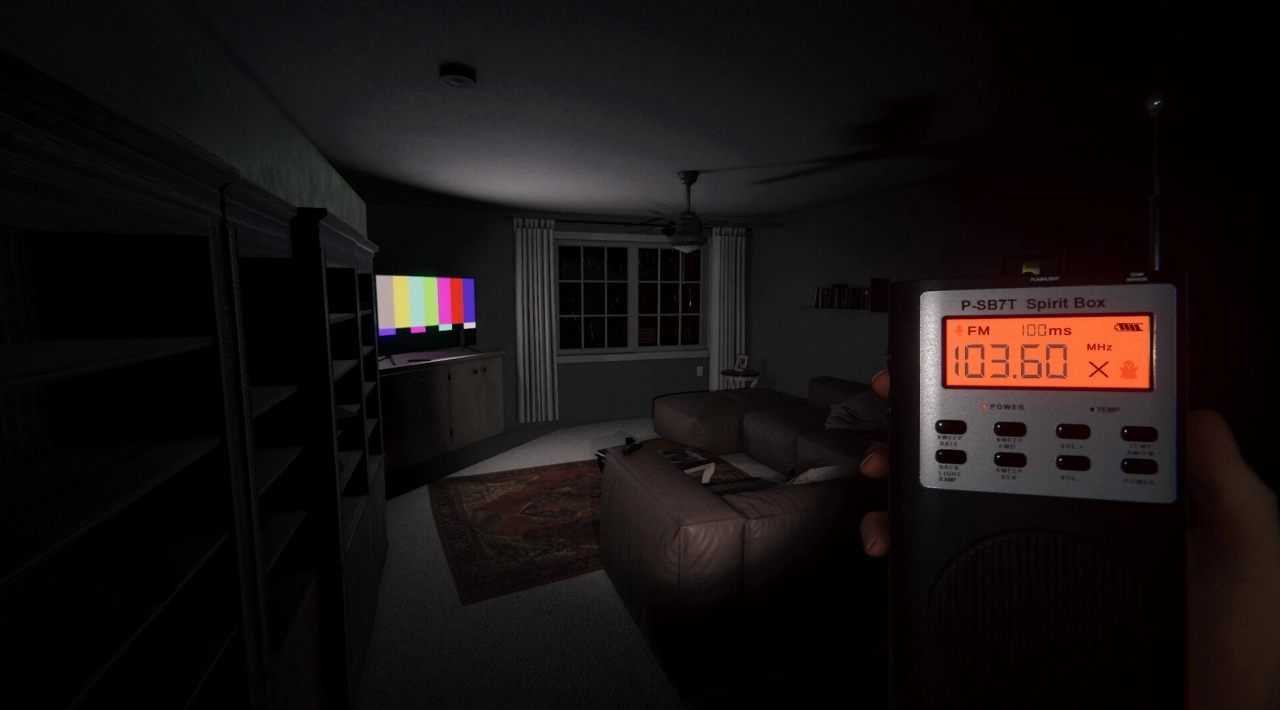
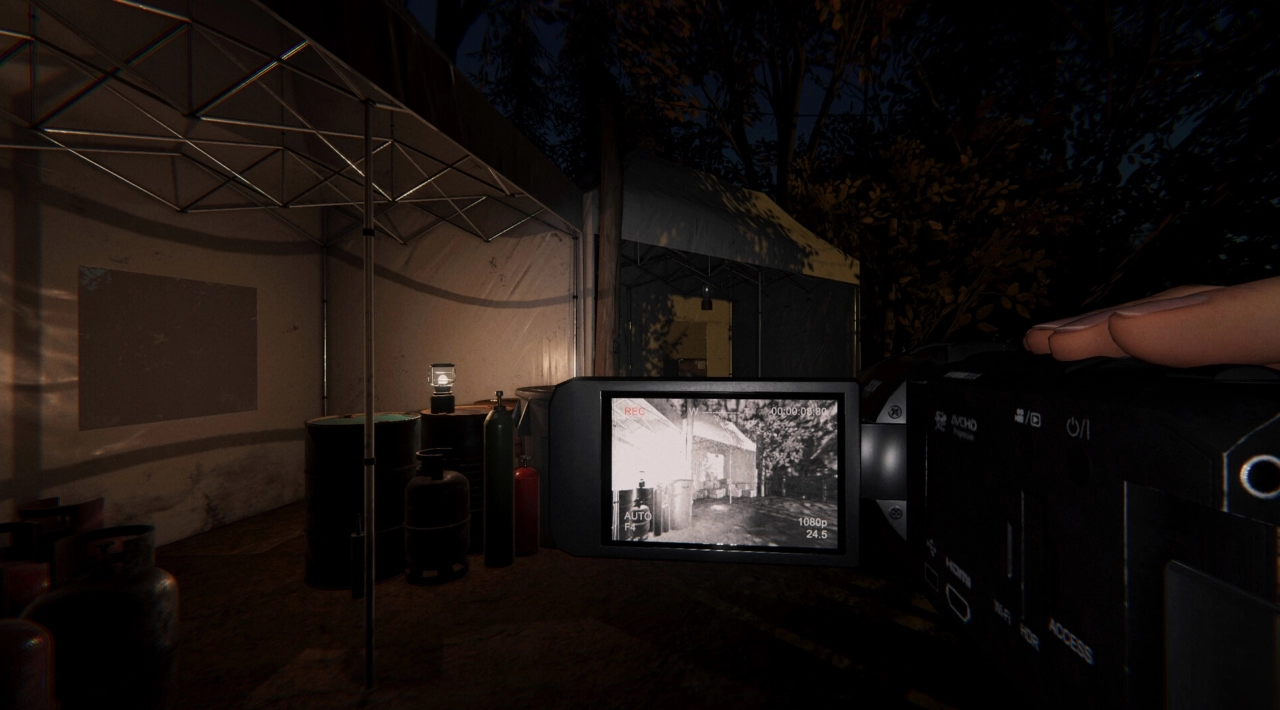
Once the likely room is found, players deploy tools such as the Spirit Box, D.O.T.S. Projector, Ghost Writing Book, UV Light, video camera, and other investigation equipment. The aim is to collect enough evidence to distinguish one ghost type from the others, then record the conclusion in the journal before exiting.
That process is not a safe checklist. Ghosts can interact with doors, lights, furniture, electronics, and players, while falling sanity increases the danger of a hunt. During a hunt, the front exit is locked and survival depends on recognizing the warning signs, breaking line of sight, hiding intelligently, and controlling electronic equipment.
Phasmophobia is more about information management than combat. There are no weapons designed to defeat the ghost. Your advantages are preparation, communication, map knowledge, and the discipline to stop investigating when the evidence is good enough.
Evidence, behavior, and investigation depth
The journal is the game’s main reasoning tool, but it is not a substitute for observation. Evidence can be limited or hidden by harder rule sets, which means experienced teams must combine equipment results with movement speed, hunting behavior, interactions, and ghost-specific abilities.
That distinction creates two different skill curves. New players learn what each tool does and how to survive a first hunt. Advanced players learn to identify a ghost from incomplete information, test behavioral tells, and make deductions in low-evidence investigations where the obvious clues are unavailable.
Cursed Possessions add a deliberate risk-and-reward layer. Items such as the Ouija Board and Monkey Paw can provide information or trigger unusual interactions, but using them can damage sanity or create immediate danger. They are optional tools, not mandatory objectives, which lets a cautious team ignore them while a confident group uses them to accelerate an investigation.
Evidence gathering also connects to the photo system and optional objectives. Photographing interactions, discovering the bone, witnessing events, and completing contract-specific tasks can improve the financial result. The best investigations therefore balance certainty, reward, and survival instead of treating ghost identification as the only meaningful goal.
Progression and difficulty choices
Phasmophobia uses a persistent progression system built around experience, money, prestige, unlocks, and equipment access. Equipment is organized into three upgrade tiers, allowing familiar tools to become more capable as players progress. The upgrade structure changes how a team approaches a contract without turning the game into a traditional character-class RPG.
The current PC version provides several default difficulty settings, alongside Custom Difficulty for groups that want to tune investigation conditions and rewards. Custom rules can transform the same location from a forgiving training space into a tightly controlled survival puzzle.
Difficulty is not only about making the ghost more aggressive. Higher settings can restrict evidence, alter resources, reduce safety, or punish mistakes more severely. That makes the game suitable for both casual social sessions and demanding mastery runs, provided every player understands which rules are active.
There is no conventional story campaign to complete. The progression loop is contract-based: investigate locations, improve your equipment access, learn ghost patterns, earn better rewards, and attempt more demanding rule sets. Players who want a replayable deduction game will find a strong long-term structure; players expecting a scripted horror narrative should look elsewhere.
Content model and current PC edition
Steam currently presents Phasmophobia as a paid base game rather than a free-to-play title. The core purchase provides the investigation loop, locations, ghosts, equipment progression, solo play, online co-op, and ongoing updates associated with the Early Access build.
The current storefront does not present a season pass or a required collection of paid gameplay expansions. Player customization and cosmetics are supported through in-game progression and currency systems, while seasonal activities may add temporary goals or rewards without changing the basic contract structure.
For players comparing cooperative horror catalogs, the important distinction is that Phasmophobia is not a wave shooter or a linear escape-room campaign. Its content is designed to be replayed through changing ghost assignments, evidence combinations, difficulty rules, map layouts, and team decisions.
Who should play Phasmophobia?
Phasmophobia is a strong fit for players who enjoy cooperative deduction, first-person exploration, voice-led teamwork, and horror that builds tension through uncertainty rather than constant combat. It is especially effective with friends who are willing to divide tasks, share evidence, and keep talking when the lights begin to fail.
It also suits players who like improving through knowledge. A veteran investigator is not merely better equipped; they understand when a ghost is manipulating electronics, how sanity affects risk, which behaviors are unusual, and when a seemingly reliable clue may be misleading.
The game is less suitable if you want a fully scripted single-player campaign, local split-screen, action-heavy combat, or a guaranteed sequence of cinematic scares. Solo play is supported, but the atmosphere and information flow are designed around the possibility that teammates may be working in different rooms or watching from the van.
Players who prefer maze navigation and environmental puzzle solving may also enjoy co-op survival horror built around haunted mazes like Labyrinthine, although Phasmophobia places more emphasis on evidence analysis and ghost behavior than on escaping a fixed labyrinth.
PC features, controls, and online play
The PC version supports standard monitor play as well as VR, and Steam lists full controller support alongside keyboard-and-mouse input. VR changes the physical feel of handling equipment, opening doors, placing objects, and reacting to a hunt, while non-VR play keeps the same investigation rules through conventional controls.
Phasmophobia supports online co-op for up to four players and allows players using different input types to join the same group. Cross-platform play also lets PC investigators team up with supported console players. There is no local split-screen mode listed for the PC edition.
Voice communication is central to the design. Players can coordinate through local and longer-range communication, call out evidence, warn teammates about hunts, and use voice-driven interactions such as asking questions through the Spirit Box when the relevant recognition settings are enabled.
The Steam listing identifies achievements, Steam Cloud, Family Sharing, Remote Play features, and VR support. The current storefront materials do not identify a separate named anti-cheat product, so anti-cheat support should not be inferred beyond what the platform and game services require.
Interface localization is broad, with Steam listing 26 supported interface languages. English is the listed full-audio language, while the other supported languages focus on interface coverage. That distinction matters because voice recognition and spoken communication are not equivalent to translated menus or subtitles.
Related cooperative horror games
Phasmophobia’s closest appeal comes from turning horror into a shared problem-solving exercise. If you want a more objective-driven stealth structure with procedural missions and coordinated escapes, cooperative first-person stealth horror such as The Blackout Club offers a useful contrast: it emphasizes avoiding detection and completing missions, while Phasmophobia asks you to classify an intelligent supernatural threat.
Another difference is combat. Games such as Sker Ritual frame cooperative horror around weapons, enemy waves, and build choices. Phasmophobia removes that safety valve, so every piece of equipment is investigative rather than offensive and every contract depends on reading the situation correctly.
That narrow focus is the reason Phasmophobia remains distinctive. Its strongest moments come from ordinary actions becoming dangerous: checking a hallway alone, asking a question into the dark, placing a camera, or returning for one final piece of evidence after the team already has enough to leave.
Phasmophobia FAQ
Is Phasmophobia still called Phasmophobia on PC?
Yes. The current Steam listing uses Phasmophobia, and no verified rebrand, definitive-edition replacement, or alternate PC storefront name was identified in the current storefront check.
Is Phasmophobia single-player or multiplayer?
Both. You can investigate alone or play online with up to four players. The main design favors co-op communication, but solo contracts use the same evidence, sanity, equipment, and hunt systems.
Does Phasmophobia support VR and controllers?
Yes. The PC version supports VR and Steam lists full controller support. Standard keyboard-and-mouse play is also available, so a VR headset is not required for the non-VR experience.
Does Phasmophobia have crossplay?
Yes. PC players can join supported console players through online crossplay. Crossplay does not add local split-screen, and every participant still needs access to the game on a supported platform.
What is the actual progression loop?
Contracts award money and experience for identifying ghosts, completing optional objectives, gathering photographs, and surviving. Progress unlocks equipment tiers, difficulties, prestige-related rewards, and customization options rather than advancing a linear story campaign.
Is Phasmophobia free or does it use paid DLC?
It is sold as a paid base game on Steam. The current listing does not show a season pass or required paid gameplay expansion. Cosmetics and customization are connected to in-game progression and currency systems.
What languages does the PC version support?
Steam lists 26 interface languages, with English as the listed full-audio language. Localization coverage applies primarily to menus and interface text, so players should not assume that every supported language includes voice recognition or complete spoken audio.
System Requirements
Minimum: | Recommended: |
| Processor: Intel Core i5-4590 / AMD Ryzen 5 2600 Graphics: NVIDIA GTX 970 / AMD Radeon R9 390 Memory: 8 GB RAM Disk space: 21 GB available space Operating system: Windows 10 64Bit | Processor: Intel Core i5-10600 / AMD Ryzen 5 3600 Graphics: NVIDIA RTX 2060 / AMD Radeon RX 5700 Memory: 8 GB RAM Disk space: 21 GB available space Operating system: Windows 10 64Bit |
Screenshots

Trailer/Gameplay
Download
Phasmophobia (2020), 11.97GB

v0.10.1.2 + OnLine
After unpacking: 26.6GB

1. Extract files.
2. Play the game. If you like this game, BUY IT!
How To Play OnLine
Fix By : online-fix
Modes : MultiPlayer ? | Co-oP 
1) Download Steam-Fix
2) Copy the content of this crack to your game folder (currently added to the game)
3) Start Steam , go to your profile.
4) Run the game through Launcher.exe
5) In-game -> We go through training. Connection : Play -> We connect to any server.
Creating a server : Play -> Create -> We are waiting for other players to join.
6) Play & Enjoy !
Phasmophobia Download
🔒 Premium access required
To see and use the download links, you must be logged in and have an active PREMIUM account.
* Unlock downloads via Torrent and TeraBox.
Torrent Download
The best torrent download speeds are with qBittorrent!