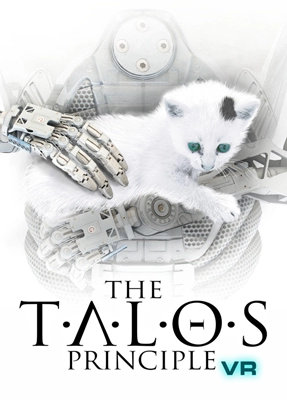
The Talos Principle VR
- Release date:
- Game Genre:Puzzle, FPP, science fiction, Oculus Rift/Quest, SteamVR, virtual reality
- Developer:Croteam
- Release:ElAmigos
- Platform:PC
- Languages (subtitles):English, French, Italian, German, Spanish, Polish, Czech, Portuguese-Brazil, Russian, Korean, Japanese, Traditional Chinese, Simplified Chinese
- Dubbing/Audio:English, French, Italian, German, Spanish, Polish, Japanese, Russian, Korean, Traditional Chinese, Simplified Chinese
- Crack:Hoodlum
- Game size:3.88GB
Game Description
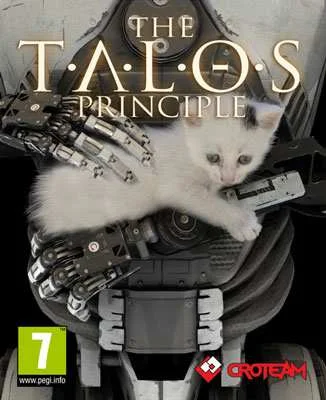
The Talos Principle VR is a PC virtual reality first-person puzzle game from Croteam VR, published by Devolver Digital and Croteam Publishing. The current Steam listing still uses the name The Talos Principle VR; it is a separate VR edition rather than a rebrand of The Talos Principle Reawakened. Its focus is deliberate exploration, spatial reasoning, philosophical science fiction, and hands-on interaction with machines inside a non-linear world.
A first-person puzzle world built for VR
The game places you in a strange environment where ancient ruins sit beside advanced technology. Elohim, the voice of your creator, guides you through a sequence of increasingly complex tests while the story asks questions about identity, consciousness, humanity, and purpose.
The main loop is simple to understand but difficult to master: enter a puzzle area, inspect its layout, collect the available tools, and discover the order in which those tools must be used. The challenge comes from spatial reasoning, timing, line-of-sight, and recognizing how one device can affect another rather than from combat or reflex-heavy action.
Across more than 120 puzzles, you manipulate jammers, connectors, fans, weighted objects, and other devices to open barriers and reach sigils. Laser routing, pressure plates, force fields, drones, and moving platforms gradually introduce new relationships between the tools, encouraging experimentation instead of trial-and-error guessing.
The world is non-linear, so players can often choose which puzzle group to tackle next. That structure makes the experience feel more like a connected archaeological site than a conventional level list. Optional secrets and harder challenges reward players who examine spaces carefully instead of following the most obvious route.
How the VR interaction changes the puzzles
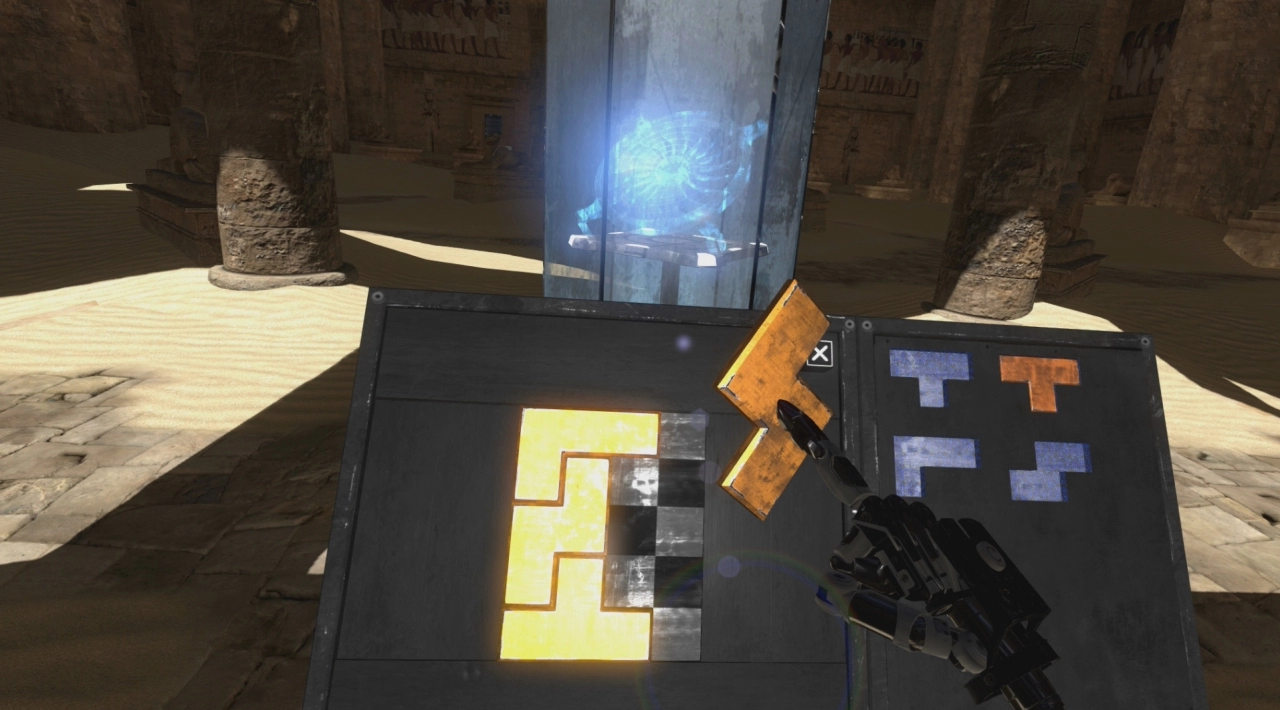
The Talos Principle VR was rebuilt around tracked motion controllers and room-scale play. You can reach out to grab objects, place them on mechanisms, redirect devices, manipulate laser connections, and interact with puzzle elements from a physical first-person perspective.
That interaction is important because positioning becomes easier to read when objects occupy real depth. A connector is not merely an icon in an inventory; you can hold it, turn it, and judge whether its beam can reach the required targets. The game still uses the original puzzle logic, but hand-based manipulation makes the relationship between objects and spaces more immediate.
The VR edition supports several locomotion approaches, including teleport movement, instant teleport, blink teleport, and classic full locomotion. Players can also use comfort-focused movement options, including comfort mode and different turning preferences. This gives experienced VR users room to use smooth movement while offering safer alternatives for players who prefer stationary traversal.
Room-scale support lets you physically move within the tracked play area while solving puzzles. It is especially useful when examining machines at close range or reaching around environmental objects, although the game remains playable without a large dedicated play space.
Road to Gehenna and the complete puzzle package
The Steam edition includes Road to Gehenna, a separate narrative campaign divided into four episodes. It expands the setting with additional writing and some of the most demanding puzzle designs associated with The Talos Principle.
Road to Gehenna is not just a small collection of bonus stages. Its puzzles assume that players understand the interaction rules from the main journey and are willing to combine those rules in more restrictive layouts. The result is a useful reason to choose the VR edition for a complete single-player experience rather than treating it as a short technology demonstration.
The commercial model is straightforward: this is a paid, single-player game with the main campaign and Road to Gehenna included in the listed package. There is no co-op campaign, competitive multiplayer mode, or live-service progression loop. The long-term appeal comes from solving the content, pursuing achievements, revisiting difficult rooms, and exploring community-created material.
Steam also lists 40 achievements, an included level editor, and Steam Workshop support. Those features give experienced players more to do after the authored puzzles are complete, although Workshop content depends on what the community has created and shared.
Who should play The Talos Principle VR?
This is a strong fit for PC players who enjoy slow-burn puzzle solving, environmental exploration, and science-fiction stories that leave room for interpretation. It suits players who would rather spend several minutes testing a theory than receive constant action or explicit objective markers.
The game is also a good choice for VR users who want a thoughtful experience with adjustable locomotion and limited physical pressure. Most challenges are cerebral rather than athletic, and the pace allows players to stop, look around, and reconsider an approach without being chased by enemies.
Players looking for gunplay, combat progression, online co-op, or a fast arcade rhythm should look elsewhere. The Talos Principle VR does not turn its philosophical puzzle structure into an action game. Its satisfaction comes from understanding a system and then executing the solution cleanly.
For another PC VR puzzle adventure centered on tactile object interaction and story-driven exploration, supernatural VR puzzle games such as Ghost Town VR offer a more mystery-focused alternative, while The Talos Principle VR remains more abstract and systems-driven.
PC platform features and input support
The PC version is listed as VR Only and supports SteamVR or Oculus PC. The storefront identifies tracked controller support, Steam Cloud, Steam Achievements, Steam Workshop, the level editor, and Family Sharing. These options make it a conventional PC VR release rather than a flat-screen game with a basic headset mode.
Motion controllers are the intended input for grabbing and positioning puzzle objects, but the game also supports a gamepad-oriented style for players who prefer less physical interaction. The most important distinction is not whether a controller works, but whether the selected control scheme matches your comfort needs and preferred way of navigating.
The listed localization covers interface and subtitle support across English, French, Italian, German, Spanish, Czech, Japanese, Korean, Polish, Brazilian Portuguese, Russian, Simplified Chinese, and Traditional Chinese. Full audio is available for several of those languages, while others provide interface or subtitle localization only.
There is no multiplayer or anti-cheat feature presented as part of the PC package. The experience is designed around offline-style single-player puzzle progression, with Steam services used for platform features such as achievements, cloud saves, and Workshop content.
How it compares with other puzzle games
The Talos Principle VR is closer to a philosophical exploration game than to a conventional escape room. Its environments are open enough to invite wandering, and the puzzle rules are introduced gradually across a large connected structure.
Players who prefer tactile VR adventures with a more compact story format may enjoy inventive room-scale puzzle experiences like Another Fisherman's Tale VR. That game emphasizes physical manipulation and perspective-based surprises, whereas The Talos Principle VR emphasizes repeatable logic systems, laser networks, and carefully staged mechanical constraints.
The closest comparison outside VR is the broader first-person logic-puzzle tradition associated with games such as Portal, but The Talos Principle VR is quieter, less comedic, and more interested in philosophical dialogue. It also offers a more exploratory structure than a sequence of tightly framed test chambers.
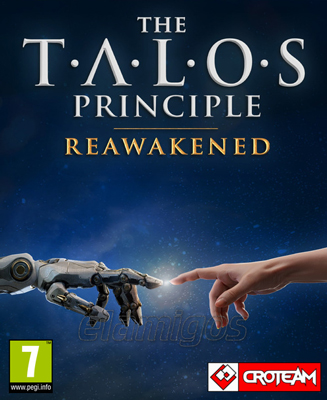
Players considering the wider series should distinguish this edition from The Talos Principle Reawakened. The VR release presents the original puzzle adventure in a headset-focused format with tracked interaction, locomotion options, and room-scale support; it is not simply the same product under a new storefront title.
The Talos Principle VR FAQ
Is The Talos Principle VR still listed under that name?
Yes. The current Steam storefront name remains The Talos Principle VR. It should not be confused with The Talos Principle Reawakened, which is a separate modern edition of the original game and is not the VR edition described here.
Does The Talos Principle VR include Road to Gehenna?
Yes. The listed VR package includes Road to Gehenna, a four-episode narrative expansion with additional and more demanding puzzles.
Does it support multiplayer or co-op?
No. The Talos Principle VR is a single-player puzzle game. Its Steam feature list includes achievements, Workshop, cloud support, and a level editor, but not online multiplayer or split-screen co-op.
Can you play The Talos Principle VR seated?
The game provides multiple movement and turning options, including teleport and full locomotion variants, so it can be adapted to different play spaces and comfort preferences. Room-scale support is available, but a large room is not required for the core puzzle experience.
Which PC VR platforms does it support?
The Steam listing identifies SteamVR and Oculus PC support. The game is marked VR Only and is designed around tracked controller interaction.
Does it have community-made content?
Yes. The PC version includes a level editor and Steam Workshop support, allowing players to access compatible user-created puzzle content alongside the authored campaign.
Is The Talos Principle VR mainly a story game or a puzzle game?
It is primarily a first-person puzzle game, with the story delivered through exploration, dialogue, environmental details, and philosophical questions. The narrative supports the puzzle structure rather than replacing it, so players should expect to spend most of their time analyzing spaces and combining tools.
System Requirements
Minimum: | Recomended: |
| Processor: Intel Core i5 - 4590 equivalent Graphics: AMD R9 290 or NVIDIA GTX 970 Memory: 6 GB RAM Disk space: 6 GB available space Operating system: Windows 7 64bit | Processor: Intel Core i7-6800 equivalent Graphics: AMD Fury or NVIDIA GTX 1070 Memory: 8 GB RAM Disk space: 6 GB available space Operating system: Windows 10 64bit |
Screenshots

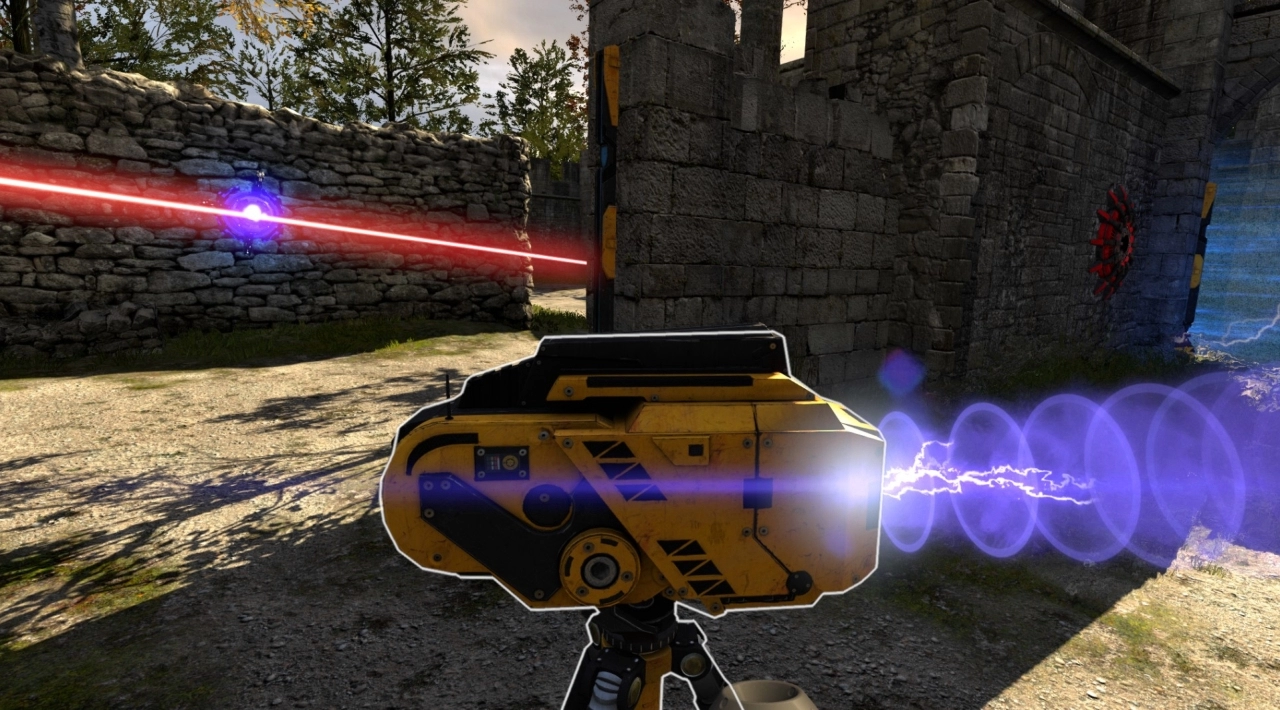
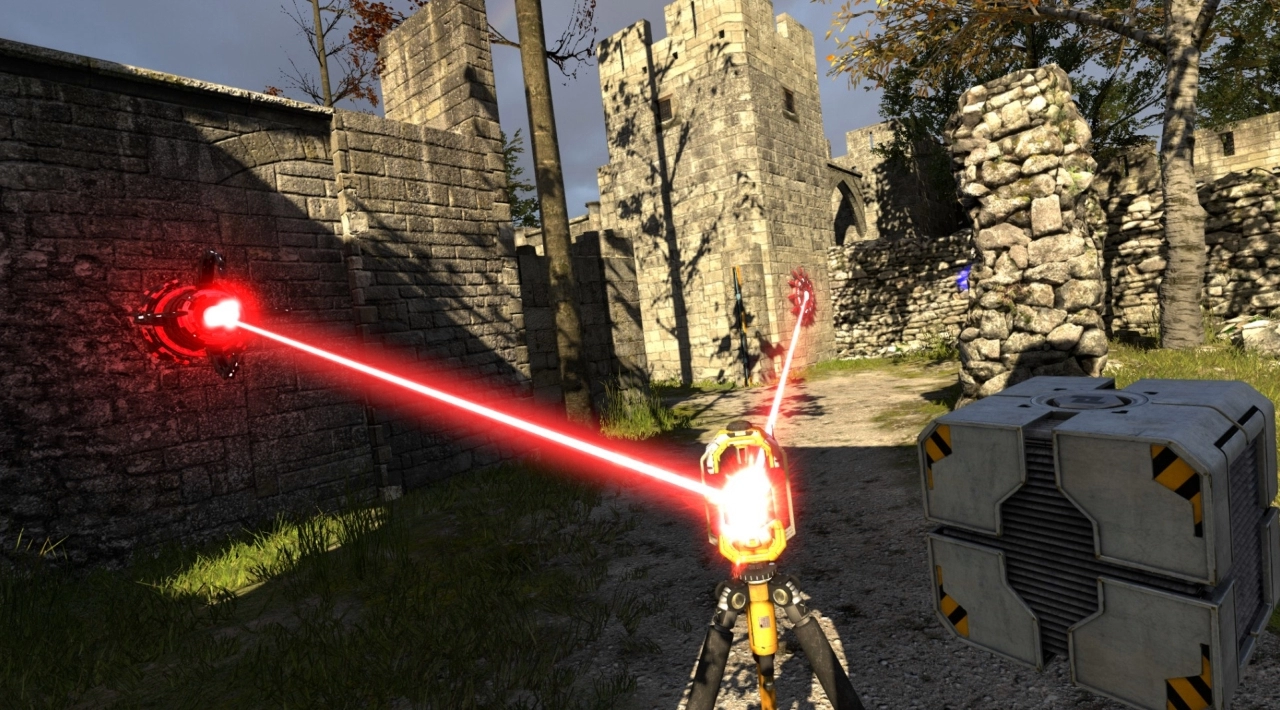
Trailer/Gameplay
Download
The Talos Principle VR (2017), 3.88GB
ElAmigos release, game is already cracked after installation (crack by Hoodlum).

Updated to version 443779 (28.06.2019)

1. Extract files.
2. Burn or mount the image.
3. Install the game.
4. ElAmigos release, game is already cracked after installation.
5. Play the game. If you like this game, BUY IT!
The Talos Principle VR Download
🔒 Premium access required
To see and use the download links, you must be logged in and have an active PREMIUM account.
* Unlock downloads via Torrent and TeraBox.
DLC: Road To Gehenna.
Torrent Download
The best torrent download speeds are with qBittorrent!