7 Days to Die
Edit date: 1-06-2026, 16:26
Reason: Updated to version 2.6 (01.04.2026)
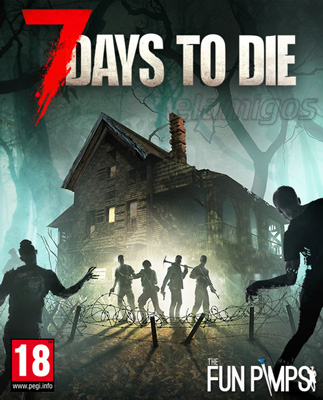
- Category:
- Release date:
- Game Genre:Action, FPP, zombie, Post Apocalypse, sandbox, horror, survival, crafting
- Developer:The Fun Pimps Entertainment
- Release:ElAmigos
- Platform:PC
- Languages (subtitles):English, French, Italian, German, Spanish, Russian, Polish, Portuguese-Brazil, Turkish, Japanese, Korean, Simplified Chinese, Traditional Chinese
- Crack:Codex/Rune
- Game size:11.99GB
Game Description
7 Days to Die PC is an open-world survival horror sandbox that combines a first-person shooter, crafting game, voxel building system, tower-defense challenge, and RPG progression. Steam still lists the game under its original name; Alpha branch labels and the 1.0-era terminology describe development builds rather than a current storefront rebrand.
Survival, scavenging, and the Blood Moon loop
The core loop is built around a repeating pressure cycle. You explore abandoned buildings, search containers, mine raw materials, complete trader jobs, improve equipment, and prepare a defensible position before the next Blood Moon horde. Daytime is for expansion. Nighttime makes every mistake more expensive.
Combat uses a first-person perspective across firearms, melee weapons, bows, explosives, and improvised tools. Zombies are not passive targets: different infected types bring distinct attacks and behaviors, while the escalating game stage increases the danger of continued exploration. The best runs balance aggression with noise, stamina, ammunition, durability, and escape routes.
Survival needs also matter without turning the game into a simple hunger meter simulator. Food, water, injuries, illnesses, buffs, and debuffs shape how long you can stay away from shelter. That makes a short scavenging trip a meaningful decision, especially when a quest sends you into a dense urban location filled with enclosed rooms and structural hazards.
A destructible world where construction is strategy
Building is more than cosmetic customization. The world uses structural stability, so poorly supported floors, bridges, towers, and defensive platforms can collapse when damaged. A base must account for access points, enemy pathing, repair work, ammunition supply, and the possibility that zombies will attack the structure rather than simply walk toward its front door.
Construction ranges from basic shelters to engineered compounds with traps, electric power, automated doors, turrets, defensive firing positions, and layered corridors. You can reinforce an existing building, claim a trader-adjacent location, or create a settlement from the ground up. Players who enjoy the freedom of sandbox survival building games such as Minecraft Bedrock Edition will recognize the appeal, but 7 Days to Die adds hostile pathfinding and scheduled siege pressure.
Mining also feeds directly into this strategy. Stone, clay, metal, fuel, and other materials support tools, weapons, ammunition, vehicles, and defensive infrastructure. Digging tunnels or extracting resources beneath a base can be productive, but it can also weaken the ground and create another way for disaster to reach you.
RPG progression through perks, magazines, and gear
Character growth is tied to five main attributes and a broad set of perks. Investing in one direction changes how efficiently you fight, craft, loot, harvest, heal, or move through the world. The system supports recognizable roles without locking a co-op group into rigid classes.
Progression also depends on skill magazines and schematics. Finding repeated volumes improves specific crafting disciplines, while schematics unlock access to more advanced recipes. This creates a useful reason to search offices, garages, bookstores, hospitals, kitchens, and industrial sites rather than treating every building as a generic loot container.
Loot has multiple quality ranges, randomized item properties, and mod slots. A weapon is therefore not just a weapon category; it can become part of a broader build involving damage, durability, ammunition, armor bonuses, and perk investment. Armor sets, clothing customization, and equipment mods give long-term players more choices than simply replacing an old item with a higher-tier version.
Worlds, quests, vehicles, and content structure
The PC version supports both the authored Navezgane world and randomly generated worlds. Random generation creates roads, settlements, wilderness locations, terrain features, and points of interest, while the handcrafted environment provides a more deliberate map structure. Neither option turns the game into a linear campaign; the main objective is to establish a sustainable routine and decide how far you want to push each run.
Trader NPCs offer jobs, buy unwanted goods, sell supplies, and direct players toward locations that fit their progression. Questing provides a practical reason to move between towns and biomes, but it remains connected to the wider survival economy. A successful mission can improve equipment and resources, while a failed trip can cost time, ammunition, health, and the safety of your current base.
Transportation develops alongside the character. You can find parts, learn recipes, and build vehicles including a bicycle, minibike, motorcycle, four-wheel-drive vehicle, and gyrocopter. Vehicle storage, fuel, mobility, and repair requirements make travel a progression system rather than a simple fast-movement option.
The commercial model is straightforward: the base game is paid, while the current Steam catalog lists optional cosmetic armor packs and soundtrack content. The storefront does not present the game as free-to-play, and the cosmetic add-ons are separate from the main survival, crafting, building, and progression systems.
Who should play 7 Days to Die?
This is a strong fit for players who want co-op survival with meaningful division of labor. One player can specialize in construction, another in scavenging, another in farming or vehicle preparation, and another in combat. Shared emergencies still force the group to coordinate, particularly when a Blood Moon exposes weaknesses in a base design.
Solo play works, but it demands more planning because every role, repair task, quest, and defensive responsibility belongs to one character. The game is most satisfying when players enjoy self-directed goals, repeated improvement, inventory management, and the consequences of bad preparation.
It is less suitable for anyone looking for a tightly scripted horror campaign, a purely atmospheric zombie experience, or a fast arcade shooter. The pacing is deliberately uneven. Long stretches of gathering and construction can lead into sudden panic when a building collapses, a stealth mistake attracts a group, or the horde arrives before the defenses are finished.
PC features, multiplayer, and modding
Steam lists single-player, online co-op, LAN co-op, online PvP, and cross-platform multiplayer features. The game also supports dedicated-server setups, making it possible to maintain a persistent world for a regular group instead of relying only on one player's local session.
PC players can use keyboard and mouse controls or a compatible controller, with Steam Input available as part of the platform ecosystem. The game includes Steam achievements, trading cards, Remote Play features, Family Sharing, and an integrated level editor listing. Its PC identity is also strengthened by a long-running modding community that supports server-side changes, content additions, and larger overhaul projects.
The storefront lists Easy Anti-Cheat and a required third-party EULA. That matters for players who switch between vanilla multiplayer and heavily modified profiles, because some code-based modifications require anti-cheat changes or matching files between server and client.
Interface localization is available in English, French, German, Spanish, Italian, Japanese, Korean, Polish, Brazilian Portuguese, Russian, Simplified Chinese, Latin American Spanish, Traditional Chinese, and Turkish. Steam lists English interface support but no full audio localization, so spoken language should not be confused with subtitle or interface availability.
Related PC survival games
Players who want a more movement-focused zombie action game may prefer first-person parkour survival horror like Dying Light, where traversal and nighttime pursuit replace 7 Days to Die's construction-heavy preparation loop.
For a community-management alternative, sandbox zombie survival with survivor rosters in State of Decay 2 emphasizes base upkeep, recruitment, and character loss rather than voxel engineering and scheduled horde defenses.
These games overlap in scavenging, risk management, and post-apocalyptic exploration, but 7 Days to Die remains unusual because its shooting, mining, crafting, RPG progression, and tower-defense systems all operate inside one destructible world.
7 Days to Die FAQ
Is 7 Days to Die still called 7 Days to Die on PC?
Yes. The current Steam storefront continues to use 7 Days to Die. Alpha branch names and historical build terminology may appear in older guides, but they are not a current PC storefront rebrand.
Is the base game free to play?
No. The PC version is sold as a paid base game. Steam also lists optional cosmetic armor packs and soundtrack content, while the central survival sandbox is part of the base purchase.
Does 7 Days to Die support co-op?
Yes. Steam lists online co-op and LAN co-op, alongside single-player and online PvP. Cross-platform multiplayer is also listed, although players should confirm that their chosen platforms, server type, and game build are compatible before starting a shared world.
What is the actual gameplay structure?
There is no traditional mission-only campaign that dictates every step. You choose between Navezgane and randomly generated worlds, then build progression through exploration, trader quests, loot, crafting, perks, skill magazines, vehicles, and increasingly dangerous Blood Moon defenses.
Does the PC version support mods?
Yes. The PC community supports modlets, server-side modifications, content changes, and larger overhauls. Mod compatibility depends on the game build and server configuration, and some code-based mods may require Easy Anti-Cheat to be disabled.
What languages are available on PC?
Steam lists interface localization for fourteen languages, including English, French, German, Spanish, Italian, Japanese, Korean, Polish, Brazilian Portuguese, Russian, Simplified Chinese, Latin American Spanish, Traditional Chinese, and Turkish. Full audio localization is not listed.
System Requirements
Minimum: | Recommended: |
| Processor: 2.8 Ghz Quad Core CPU Graphics: 2 GB Dedicated Memory Memory: 8 GB RAM Disk space: 15 GB available space Operating system: Windows 10 or higher (64-bit) | Processor: 3.2 Ghz Quad Core CPU or faster Graphics: 4 GB Dedicated Memory Memory: 12 GB RAM Disk space: 15 GB available space Operating system: Windows 10 or higher (64-bit) |
Screenshots
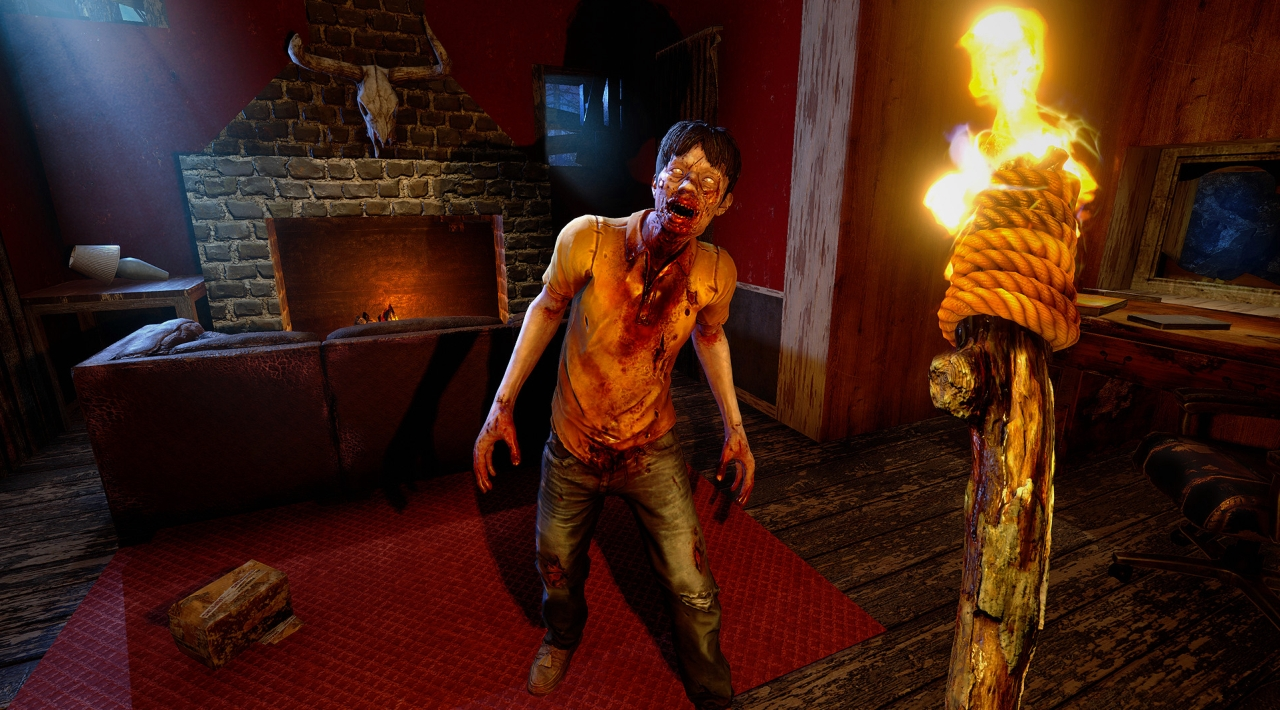


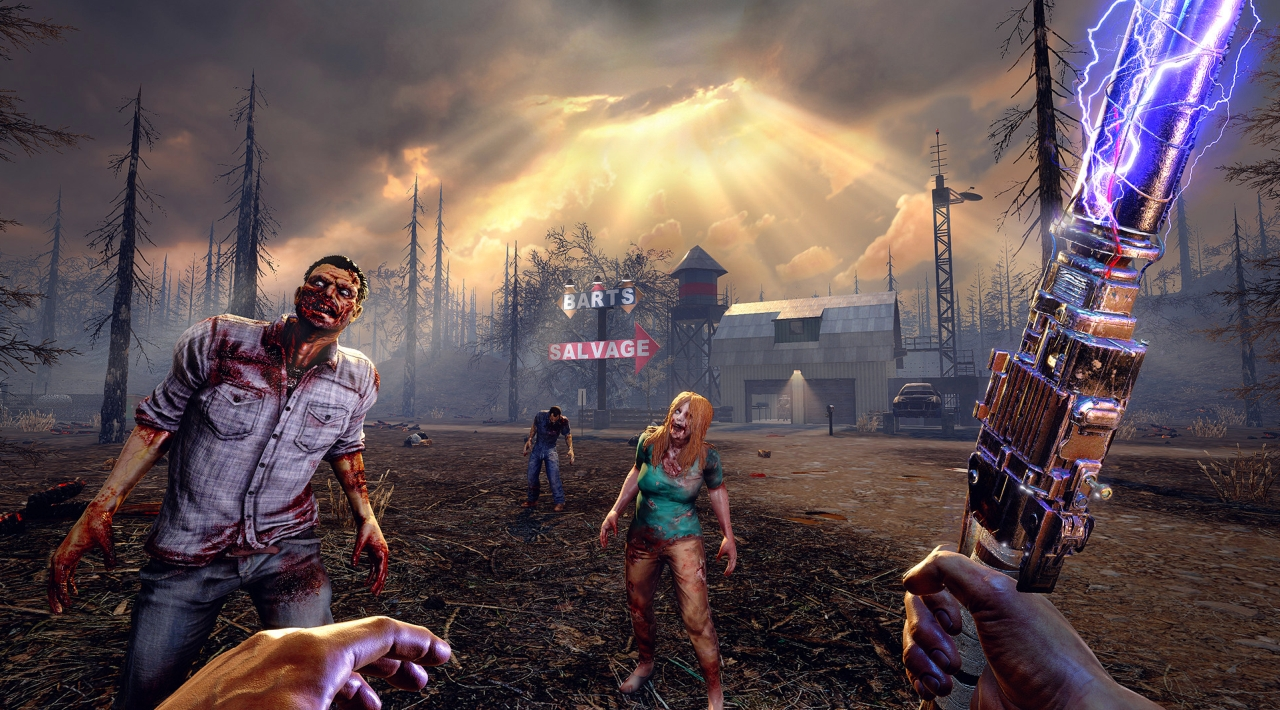
Trailer/Gameplay
Download
7 Days to Die (2024), 11.99GB
ElAmigos release, game is already cracked after installation (crack by Codex/Rune).

Updated to version 2.6 (01.04.2026)

1. Extract files.
2. Burn or mount the image.
3. Install the game.
4. ElAmigos release, game is already cracked after installation.
5. Play the game. If you like this game, BUY IT!
7 Days to Die Download
🔒 Premium access required
To see and use the download links, you must be logged in and have an active PREMIUM account.
* Unlock downloads via Torrent and TeraBox.
DLC: 8 DLC are included.
Torrent Download
The best torrent download speeds are with qBittorrent!