Deathbound
Edit date: 9-03-2026, 00:17
Reason: Updated to version 1.2.0 (29.10.2024).
- Category:
- Release date:
- Game Genre:RPG, TPP, fantasy, action RPG, soulslike
- Developer:Trialforge Studio
- Release:ElAmigos
- Platform:PC
- Languages (subtitles):English, French, Italian, German, Spanish, Spanish (Mexico), Russian, Polish, Portuguese-Brazil, Japanese, Korean, Simplified Chinese, Traditional Chinese
- Dubbing/Audio:English
- Crack:Codex/Rune, FLT
- Game size:8.30GB
Game Description
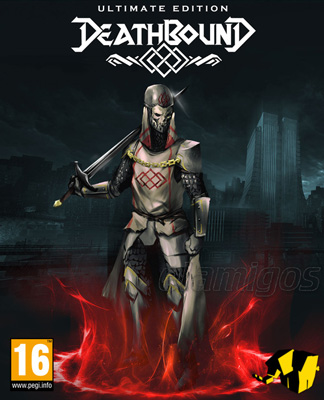
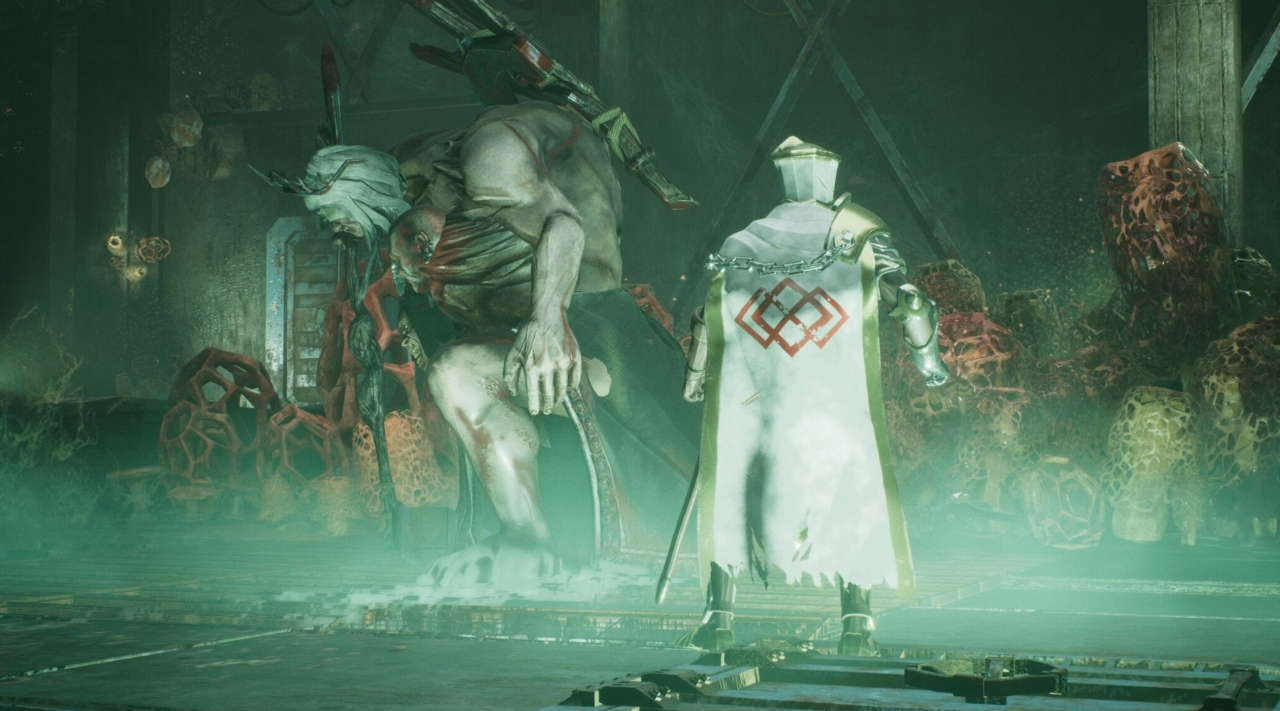
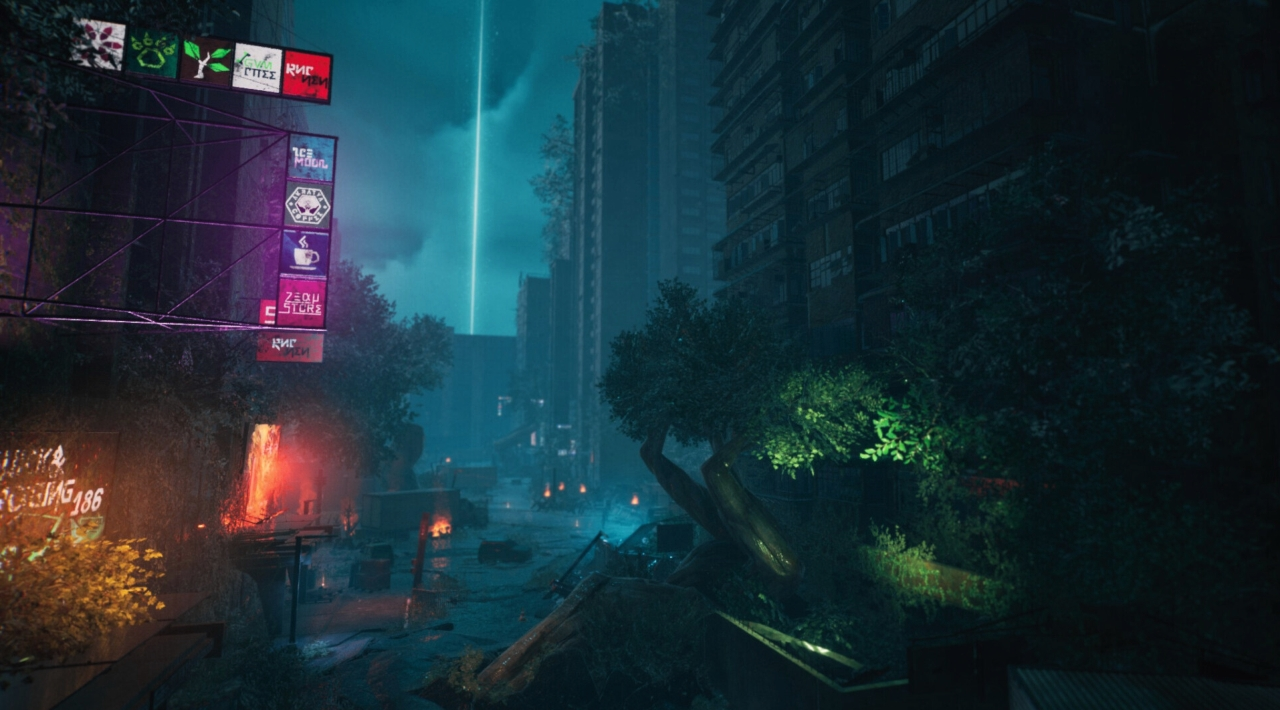
Deathbound is a third-person Soulslike action RPG for PC built around a rare party concept: instead of commanding several adventurers at once, you absorb fallen warriors and switch between them inside a single body. Trialforge Studio and Tate Multimedia frame the experience around mortality, identity, fanaticism, and grief, with a dark science-fantasy setting where medieval ruins coexist with the remains of advanced technology.
The current PC storefront listing still uses the name Deathbound. There is no verified Steam rebrand or replacement title; the available naming differences refer to editions and add-ons, including Deathbound Ultimate Edition and the Cult of Life Edition bundle.
One body, four combat styles
Deathbound's central loop begins with exploration and the search for fallen warriors known as Essences. You can capture characters from five different classes, then assemble a party of up to four Essences. Each one contributes a separate identity, skill set, weapon style, personality, and approach to combat.
You control one warrior at a time, but the other three are always part of the build. A quick swap can move you from a heavy melee fighter to a ranged attacker, spellcaster, or more agile combatant without opening a traditional party command screen. The result is a Soulslike that asks you to think about character rotation as much as dodging, attacking, and stamina management.
That system is more than a convenience feature. Different warriors are suited to different enemy patterns, ranges, and openings, so a strong run depends on understanding when to switch rather than forcing one favorite build through every encounter. Players who prefer one fixed protagonist may find the system demanding, while players who enjoy experimenting with combat roles get a broader toolkit than the usual single-character Soulslike.
Morphstrikes, synergies, and build planning
The most distinctive offensive mechanic is the Morphstrike. These attacks unleash the combined power of the fallen warriors in your party, turning a well-timed sequence of swaps into a high-impact finisher. Morphstrikes give the combat a combo-oriented edge, but they still sit inside a methodical action RPG framework where spacing and timing matter.
Deathbound also uses talent trees to shape each Essence. The party screen is therefore a build-planning space rather than a simple character selector. You are choosing which abilities to develop, which combat roles to combine, and how the personal affiliations of your characters affect their synergy in death.
The game supports a more aggressive rhythm than many traditional Soulslikes, but it does not remove the genre's emphasis on learning enemy behavior. Attacks, dodges, blocks, resource management, and party swaps all compete for your attention. The unusual part is that failure can come from choosing the wrong warrior for the moment, not only from mistiming a dodge.
Deathbound's combat design is also the main point raised by competing guides and reviews: the four-hero idea is easy to understand, but its execution can feel busy and less precise than the genre's strongest examples. That makes the game more interesting to analyze than a standard fantasy action RPG, but it also means players should approach it for the system's experimentation rather than expecting the cleanest possible Soulslike controls.
Akratya and the world of Ziêminal
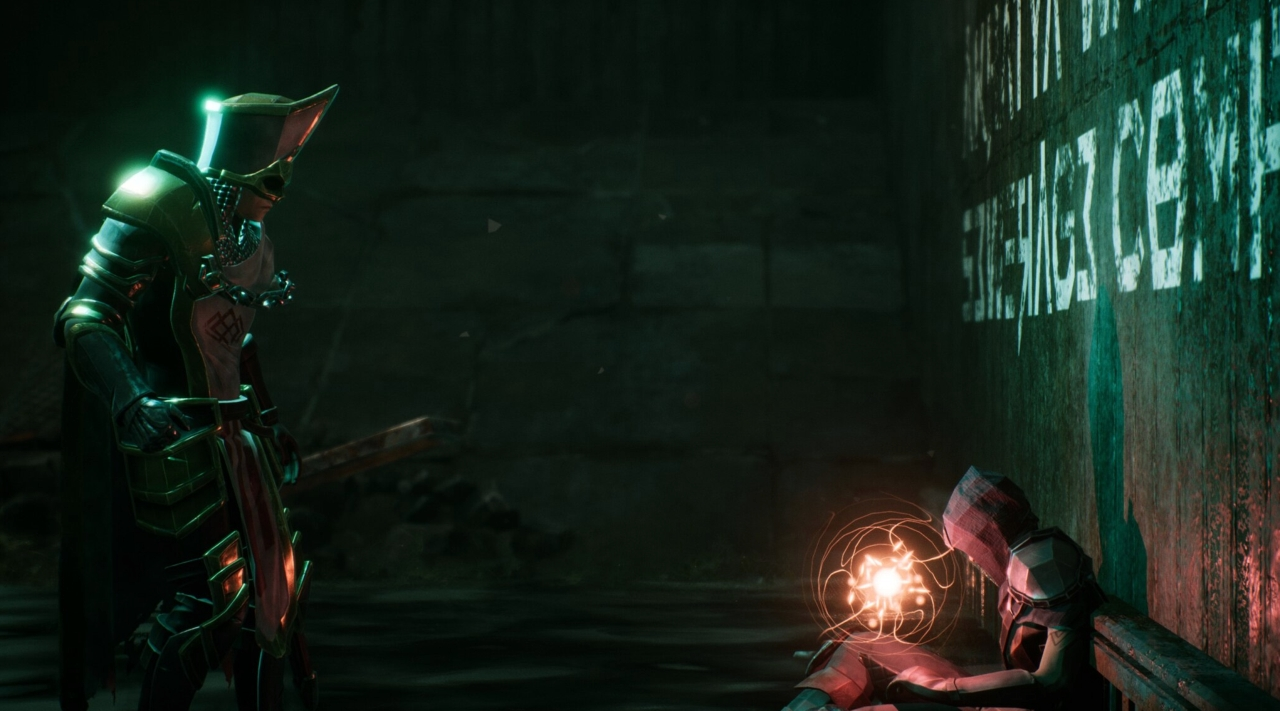
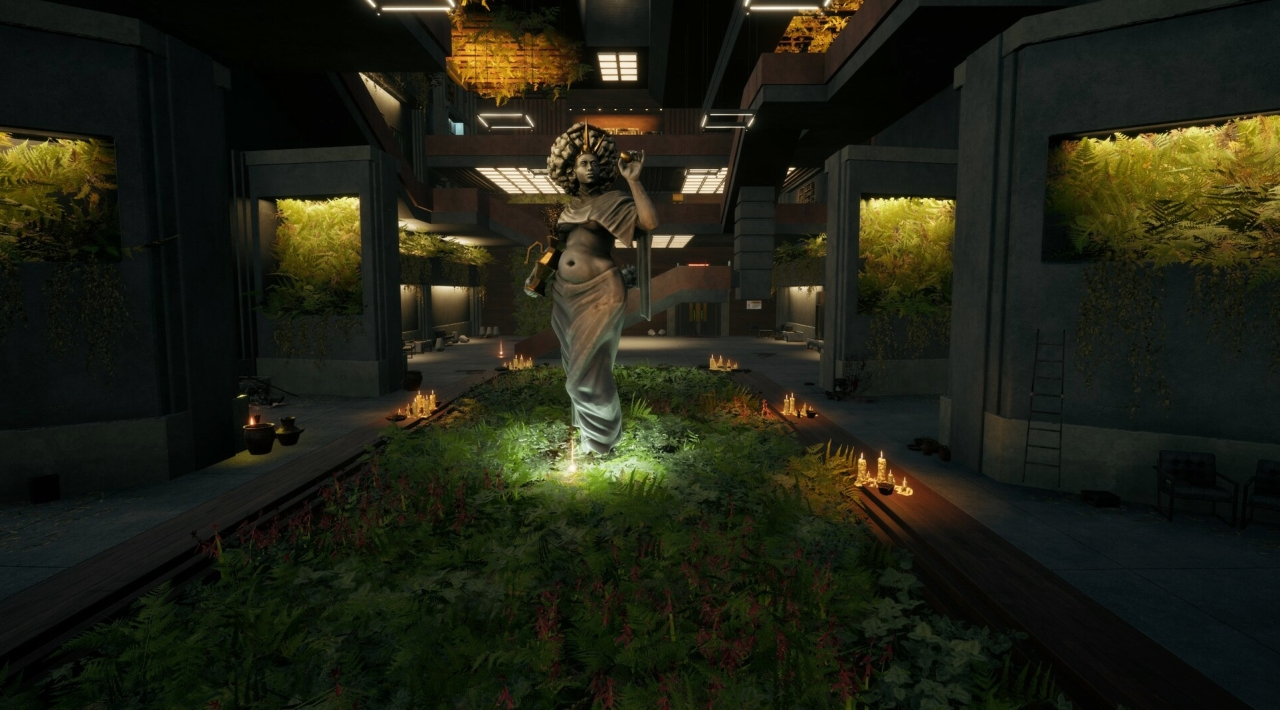
The setting combines a medieval present with the remnants of a technological past. The city of Akratya is the main focal point, presented as a place of ruined streets, arenas, places of worship, brutalist structures, and the remains of a society caught between faith and science.
You play as the Prisoner of a Thousand Faces, a being trapped between life and death while pursuing the forces connected to your creation. The story explores mortality, identity, and the competing beliefs of groups seeking power over death. The fallen warriors are not anonymous loadout presets; their memories, personalities, and past affiliations contribute to the game's narrative texture.
Enemy design is tied to the five stages of grief, giving major confrontations a thematic structure beyond simple faction warfare. The setting's blend of dark fantasy, dystopian science fiction, and religious imagery is one of Deathbound's clearest strengths, particularly for players who want a Soulslike world that is not built from familiar medieval-gothic pieces alone.
For a different take on third-person Soulslike exploration and equipment-driven progression, science-fiction action RPGs such as The Surge provide a useful comparison, although Deathbound's focus is party composition rather than targeted dismemberment and gear harvesting.
Base game, DLC, and editions
The base game is a paid, single-player action RPG. The Steam catalog currently lists one paid gameplay add-on, Accepted by Death, alongside separate soundtrack, artbook, and cosmetic content. The standard purchase and the Ultimate Edition should therefore be treated as different content packages rather than alternate names for the same game.
Accepted by Death adds a liminal challenge centered on bosses representing the five stages of grief. Its content includes a Boss Rush structure, a final confrontation with Grief - The Purifier, and additional modifiers known as Mutators that affect subsequent fights.
The add-on also includes a Hardcore Mode for the main game. In this mode, death is permanent for fallen characters, creating a stricter version of the party-management loop. That is a meaningful addition for experienced players because it changes the value of every Essence, not merely the damage or health values of enemies.
The Cult of Life Edition bundle combines Deathbound with the artbook, soundtrack, and Legacies of Zeminal Skin Pack. Players interested in the extra combat content should check whether their chosen edition includes Accepted by Death, because the cosmetic bundle and the gameplay DLC serve different purposes.
Who should play Deathbound?
Deathbound is best suited to PC players who already understand the basic Soulslike loop and want a combat system with more build switching than a conventional protagonist allows. The strongest audience is likely to be players who enjoy comparing weapons, classes, and character identities, then testing how those pieces interact against difficult encounters.
It is also a good fit for players drawn to dark fantasy with science-fiction ruins, morally divided factions, and character-focused lore. The individual Essences give the world a more personal angle than a silent avatar would, even when their stories are delivered through memories, dialogue, and environmental context.
Deathbound is less suitable if you want a highly polished, immediately readable combat system or a cooperative party RPG. This is not a traditional multiplayer adventure where each player controls one member of a team. The party exists as a build and swapping system inside a solo campaign.
If you prefer a more conventional single-character Soulslike with tightly focused weapon handling, dark third-person fantasy RPGs like Lords of the Fallen 2 offer a more familiar structure. Deathbound's appeal is its unusual multi-identity combat, not its adherence to the genre template.
PC features and localization
The Steam version is listed as single-player and includes Steam Achievements, Steam Cloud, Family Sharing, and full controller support. Keyboard and mouse play is available through the PC version, but the combat's quick swapping and timing-sensitive inputs make a gamepad a natural option for many players.
English is the only listed full-audio language. The interface and subtitles also support Brazilian Portuguese, French, Italian, German, Spanish from Spain, Japanese, Russian, Simplified Chinese, Latin American Spanish, Traditional Chinese, Polish, and Korean.
There is no verified co-op, online multiplayer, split-screen mode, dedicated server feature, or mod-support promise in the current storefront information. The reliable way to describe Deathbound on PC is as a solo, controller-friendly action RPG with Steam account features and broad subtitle localization.
Players comparing darker PC action RPGs may also find mechanical Soulslike hybrids such as The Surge relevant, but Deathbound remains distinct because its major progression decision is which Essences to bind and how to rotate them during combat.
Deathbound FAQ
Is Deathbound a Soulslike?
Yes. It is a third-person Soulslike action RPG with stamina-conscious combat, difficult enemies, dodge and block timing, character progression, and a dark interconnected world. Its defining variation is the ability to switch between up to four absorbed warriors during play.
Does Deathbound have co-op or multiplayer?
No verified multiplayer or co-op mode is listed for the current PC storefront. Deathbound is presented as a single-player game, and its party system refers to four Essences controlled by one player rather than a group of online characters.
How does the four-character system work?
You absorb the Essences of fallen warriors, choose up to four for your active party, and transform between them during exploration and combat. Each Essence has a different class identity, abilities, personality, and combat style, while talent trees let you refine their role.
What are Morphstrikes?
Morphstrikes are powerful attacks that draw on the combined abilities of your party. They reward deliberate switching and can turn the relationship between different Essences into a direct combat advantage.
What does Accepted by Death add?
The DLC adds a liminal boss-focused challenge built around the five stages of grief, a Boss Rush mode, new encounters culminating in Grief - The Purifier, Mutators, and Hardcore Mode. Hardcore Mode makes character death permanent.
Does Deathbound support controllers and multiple languages?
Yes. The PC storefront lists full controller support. English has full audio, while the interface and subtitles include English plus twelve additional language options covering European, Asian, and Latin American localization.
System Requirements
Minimum: | Recommended: |
| Processor: Intel Core i5 or AMD Ryzen 5 Graphics: Nvidia GeForce GTX 950 or Radeon HD 7970 Memory: 8 GB RAM Disk space: 16 GB available space Operating system: Windows 10 (64 Bit) | Processor: Intel Core i7 or AMD Ryzen 7 Graphics: Nvidia GeForce GTX 1060 or AMD RX 580 Memory: 16 GB RAM Disk space: 16 GB available space Operating system: Windows 10 (64 Bit) |
Screenshots
Trailer/Gameplay
Download
Deathbound (2024), 8.30GB
ElAmigos release, game is already cracked after installation (crack by Codex/Rune or FLT).

Updated to version 1.2.0 (29.10.2024).

1. Extract files.
2. Burn or mount the image.
3. Install the game.
4. ElAmigos release, game is already cracked after installation.
5. Play the game. If you like this game, BUY IT!
Deathbound Download
🔒 Premium access required
To see and use the download links, you must be logged in and have an active PREMIUM account.
* Unlock downloads via Torrent and TeraBox.
Torrent Download
The best torrent download speeds are with qBittorrent!