The Wandering Village
Edit date: 23-02-2026, 00:47
Reason: Updated to version 1.1.5 (08.12.2025).
- Category:
- Release date:
- Game Genre:Strategy, Fantasy, Economic, RTS, Post-apocalypse, Crowdfunding, Indie Games, Xbox Play Anywhere, Singleplayer
- Developer:Stray Fawn
- Release:ElAmigos
- Platform:PC
- Languages (subtitles):English, French, Italian, German, Spanish, Polish, Russian, Portuguese-Brazil, Dutch, Czech, Hungarian, Slovak, Arabic, Turkish, Korean, Japanese, Chinese Simplified, Chinese Traditional
- Dubbing/Audio:English
- Crack:Codex/Rune
- Game size:0.67GB
Game Description
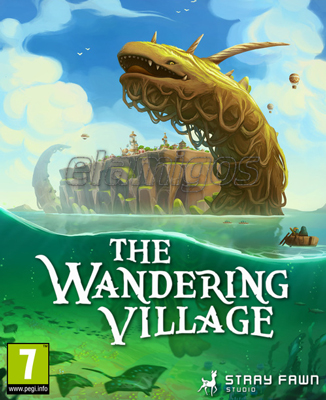
The Wandering Village is a PC city-building survival strategy game set on the back of Onbu, a colossal creature crossing a world poisoned by invasive plants. The current storefront name remains The Wandering Village; no verified rebrand, renamed edition, or definitive replacement supersedes it. Stray Fawn Studio developed the game, with Stray Fawn Publishing and WhisperGames listed as publishers.
The premise is more than a visual novelty. Your settlement, its production chains, and the host carrying everyone through the wasteland are parts of one connected management problem. Every expansion creates new demands for food, water, space, labor, and protection.
Build a settlement that cannot stand still
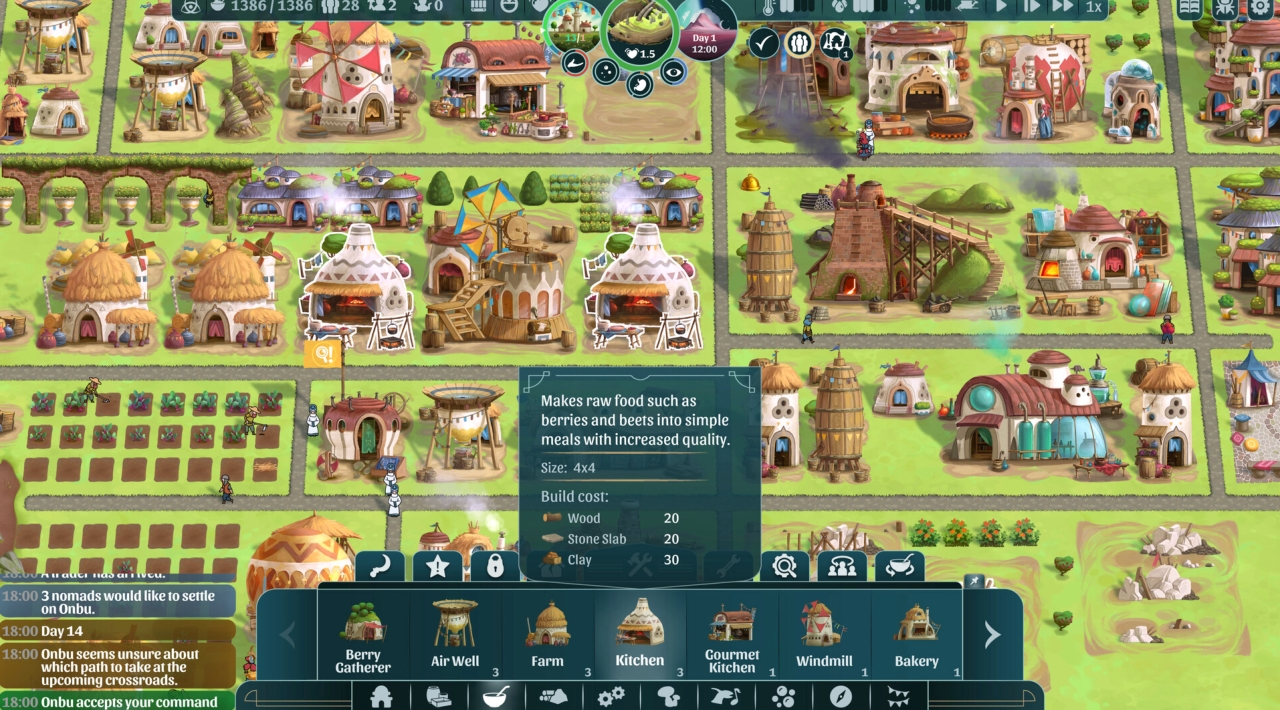
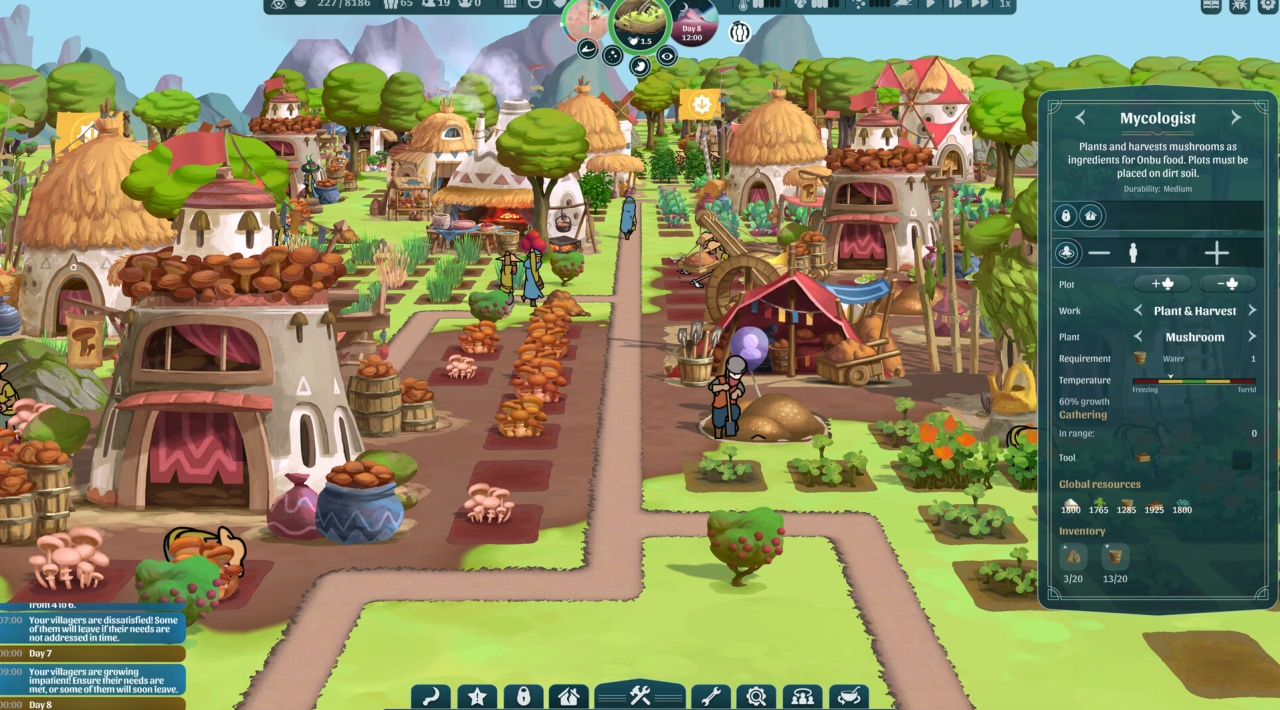
The core loop combines overhead village construction, workforce management, resource logistics, research, and environmental survival. You place buildings across Onbu’s back, assign villagers to jobs, organize production chains, and adjust the settlement as the moving creature enters different regions.
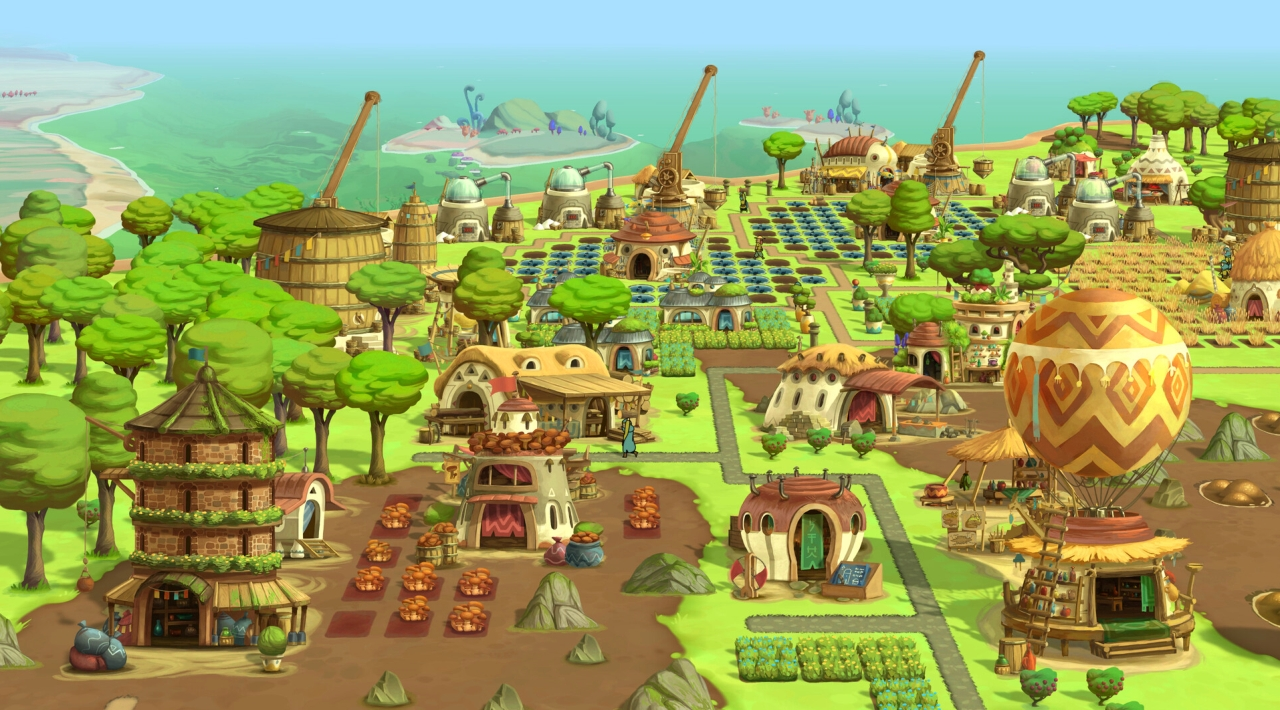
Space is limited, so efficiency matters from the beginning. Housing, farms, storage, processing buildings, roads, and specialist facilities must fit around the shape of Onbu’s back. A layout that works in the opening can become inefficient once the population grows and new production steps compete for the same ground.
The settlement is also tied to a changing overworld. Biomes affect available resources, climate conditions, threats, and the usefulness of particular buildings. Rather than developing one permanent town on a fixed map, you repeatedly adapt a mobile colony to what lies ahead.
Villagers need reliable access to food, water, shelter, medicine, and work. Production is not simply about collecting raw materials; it is about keeping the complete chain stable while weather, toxic spores, parasites, and movement interrupt normal routines.
Onbu is your transport, responsibility, and strategic partner
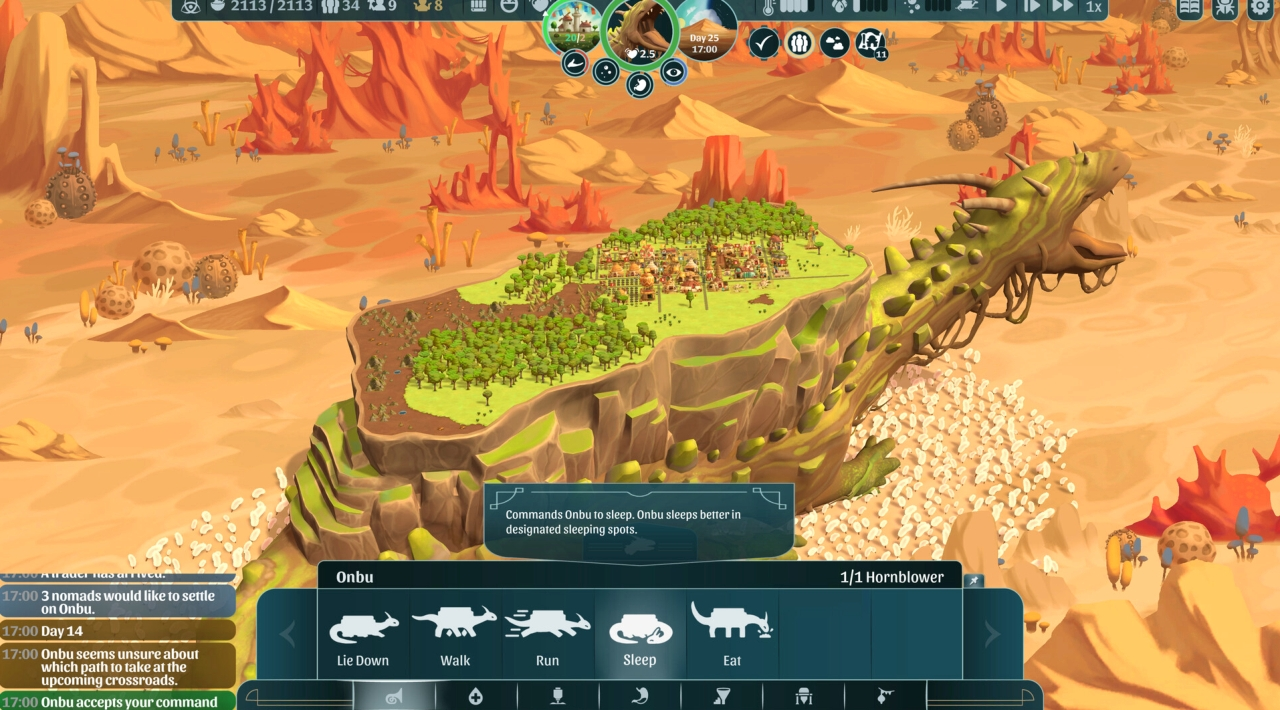
Onbu has its own needs and health state, making the creature a second management layer rather than a decorative vehicle. You must monitor hunger, health, poison, and rest while ensuring that the village does not consume resources in ways that weaken its host.
The relationship with Onbu is governed by trust and symbiosis. Villagers can feed the creature, care for it, and develop technologies that improve communication. As trust increases, Onbu is more likely to respond to commands about resting or choosing between routes.
That relationship creates a meaningful ethical and logistical choice. You can support Onbu and build a cooperative settlement, or treat the creature as a resource by extracting materials and prioritizing short-term human needs. Both approaches affect the risks your village faces.
Harvesting from Onbu’s body can provide useful materials, but careless extraction may cause pain, shaking, or structural damage. The strongest early strategy is therefore not simply to build as quickly as possible; it is to understand which resources are safe to take and when the host needs protection more than the village needs expansion.
Scouting and expeditions extend the game beyond the settlement. Villagers can investigate locations around Onbu, search ruins, gather rare materials, encounter survivors, and recover remnants of old-world knowledge. Because Onbu continues moving, expedition range and timing become part of the resource puzzle.
Research, hazards, and the moving production chain
The research tree unlocks new buildings, processing options, medical solutions, and Onbu-related technologies. Research is valuable, but progress can create its own pressure by introducing additional costs, dependencies, or systems that must be maintained.
Biome adaptation is one of the game’s defining systems. A crop or production setup that performs well in one climate may become less useful after Onbu enters another. Players must read the route, prepare supplies, and decide which buildings deserve scarce space before the next environmental shift.
Threats include toxic spores, severe weather, parasites, contaminated areas, and events that can destabilize either the villagers or Onbu. The danger is usually systemic rather than combat-focused. Your response comes through preparation, worker assignments, research, route decisions, and stockpile management.
The game also supports a broader challenge structure through configurable difficulty and hostility settings. These options let experienced players increase pressure after learning the basic economy, while gentler settings provide more room to understand the relationship between village survival and Onbu’s condition.
Modes and paid content
The PC version offers Story Mode, Challenge Mode, and Sandbox Mode. Story Mode provides the most directed introduction and connects the settlement’s survival journey with the setting’s lore. Challenge Mode removes the story focus and emphasizes repeat runs with escalating hostility options.
Sandbox Mode is designed for experimentation. Its customizable settings can reduce or remove failure conditions, alter the pressure placed on villagers and Onbu, and support players who want to concentrate on layout design, production chains, or relaxed settlement building.
The base game is a paid single-player product. The storefront lists separate extras including an Onbu Skin Pack, soundtrack, and artbook-style content. These are not presented as a season-pass model or as mandatory gameplay purchases.
The Last Leviathan is an announced gameplay expansion rather than part of the standard base-game campaign. It introduces Levi, a marine creature with different needs, new resources, more than a dozen buildings, and a dedicated technology tree. The expansion is listed separately and requires the base game.
PC features and localization
The PC edition is available through Steam for Windows, macOS, Linux, and Steam Deck. Its listed platform features include controller support, Steam Cloud, achievements, trading cards, and Family Sharing. It is a single-player game with no advertised online co-op, competitive multiplayer, or split-screen mode.
The game uses a layered presentation: a close overhead view for placing and managing the village, a broader map view for reading the route, and a detailed view of Onbu and its condition. This makes keyboard-and-mouse control useful for precise building and workforce management, while controller support provides an alternative for players using a living-room setup.
The current Steam listing identifies English full audio, with interface and subtitle localization for French, German, Spanish from Spain, Japanese, Korean, Polish, Brazilian Portuguese, Russian, Simplified Chinese, Traditional Chinese, Arabic, Turkish, and Italian.
The listed PC feature set does not advertise a separate publisher launcher or a dedicated anti-cheat system. The relevant platform ecosystem is Steam, including its cloud-save and achievement services.
Who should play The Wandering Village?
The Wandering Village suits players who enjoy survival city builders, production-chain planning, ecological themes, and management games where the environment changes around the settlement. It is especially strong for players who like solving interlocking problems instead of following a fixed construction recipe.
It is also a good fit if you want a city builder with a clear identity. The combination of a mobile settlement, a living host, expedition decisions, and biome-based planning gives the game a different rhythm from conventional town builders.
Players looking for direct combat, character-driven role-playing, online co-op, or a large military campaign should look elsewhere. The tension comes from logistics and survival decisions, not from controlling a hero or commanding battlefield units.
The pace can be deliberate, particularly when the village is stable and Onbu is traveling through a manageable region. The appeal is in observing systems, anticipating shortages, and making careful adjustments before a small problem becomes a crisis.
Related PC city-building games
Players who enjoy settlement survival and long-term resource balancing may also appreciate survival-focused town building in Banished. Both games turn food, labor, production, and population growth into interconnected risks, although The Wandering Village adds a mobile host and environmental route management.
For a harsher and more detailed medieval settlement economy, city builders such as Farthest Frontier with deeper survival logistics are a natural comparison. The Wandering Village is less concerned with permanent territorial development and more focused on keeping a moving community functional.
The key distinction is that The Wandering Village makes mobility part of the city-building rules. You are not simply choosing where to place a settlement; you are constantly deciding how that settlement should function while its foundation walks through a hostile world.
The Wandering Village FAQ
Has The Wandering Village been renamed?
No verified rebrand has replaced the name. The current PC storefront listing uses The Wandering Village, and the game is not presented as a renamed classic, definitive edition, or successor product.
Is The Wandering Village multiplayer or co-op?
No. The PC edition is listed as single-player. There is no advertised online co-op, split-screen mode, or shared settlement multiplayer.
What are the main game modes?
The game includes Story Mode, Challenge Mode, and Sandbox Mode. Story Mode provides the directed narrative journey, Challenge Mode focuses on repeat survival runs and hostility settings, and Sandbox Mode allows more customized conditions.
What makes Onbu important?
Onbu is both the settlement’s host and a major survival system. You must protect its health, manage its food and poison levels, build trust, and decide when to follow or influence its movement through the world.
Does the PC version support controllers?
Yes. Controller support is listed for the PC version, alongside Steam Cloud, achievements, trading cards, and Family Sharing. Keyboard and mouse remain useful for detailed construction and workforce management.
What languages are supported on PC?
Steam lists English full audio and interface and subtitle support for French, German, Spanish from Spain, Japanese, Korean, Polish, Brazilian Portuguese, Russian, Simplified Chinese, Traditional Chinese, Arabic, Turkish, and Italian.
Is The Last Leviathan included in the base game?
No. The Last Leviathan is listed as separate downloadable content requiring the base game. It adds Levi, a marine host, new needs, new resources, new buildings, and a dedicated research tree.
System Requirements
Minimum: | Recommended: |
| Processor: Quad Core Processor Graphics: GeForce GTX 660, Radeon RX 460 or similar dedicated graphics card Memory: 4 GB RAM Disk space: 2 GB available space Operating system: Windows® 7, Windows® 10 | Processor: Quad Core Processor Graphics: GeForce RTX 2070, Radeon RX 5700 or similar dedicated graphics card Memory: 8 GB RAM Disk space: 2 GB available space Operating system: Windows® 10 |
Screenshots
Trailer/Gameplay
Download
The Wandering Village (2025), 0.67GB
ElAmigos release, game is already cracked after installation (crack by Codex/Rune).

Updated to version 1.1.5 (08.12.2025).

1. Extract files.
2. Burn or mount the image.
3. Install the game.
4. ElAmigos release, game is already cracked after installation.
5. Play the game. If you like this game, BUY IT!
The Wandering Village Download
🔒 Premium access required
To see and use the download links, you must be logged in and have an active PREMIUM account.
* Unlock downloads via Torrent and TeraBox.
Torrent Download
The best torrent download speeds are with qBittorrent!