Dear Esther: Landmark Edition
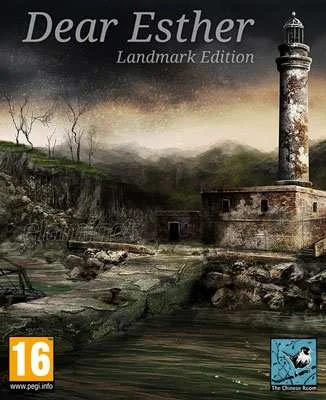
- Category:
- Release date:
- Game Genre:Adventure, FPP, indie games, experimental/art, exploration games
- Developer:
- Release:ElAmigos
- Platform:PC
- Languages (subtitles):English, French, Italian, German, Spanish, Russian, Polish, Czech, Bulgarian, Hungarian, Chinese, Portuguese, Brazilian, Turkish
- Dubbing/Audio:English
- Crack:not necessary
- Game size:1.62GB
Game Description
Dear Esther: Landmark Edition is a first-person narrative exploration game for PC, built around walking through a remote island in the Outer Hebrides while a narrator reads fragments of a fractured letter. The current Steam and GOG listings retain the full Landmark Edition name; there is no verified PC rebrand replacing it with another edition. ([store.steampowered.com](https://store.steampowered.com/app/520720/Dear_Esther_Landmark_Edition/))
Developed by The Chinese Room with Robert Briscoe and published by Secret Mode, it sits between adventure, interactive fiction, walking simulator, atmospheric mystery, and psychological horror. The island is the central character, and the game expects attention rather than reflexes.
A First-Person Journey Without Conventional Objectives
The core loop is deliberately spare: move through cliffs, beaches, caves, ruins, and coastal paths; observe landmarks; listen to voice-over; and form your own interpretation of what happened. There are no weapons, enemies, inventory screens, combat encounters, or conventional puzzle chains driving progression. Walking and looking are the primary verbs.
That restraint changes how the environment functions. A distant light, a cluster of symbols, a derelict structure, or a sudden shift in the music can become the reason to keep moving. The route is structured rather than freely open, but optional detours allow players to inspect the island more closely and find additional visual context.
The perspective remains first-person throughout, giving the landscape an intimate, physical quality. You are not managing a character build or solving a sequence of mechanical challenges. You are moving through a place whose meaning develops gradually through sound, image, and suggestion.
Fragmented Storytelling And Semi-Randomized Discovery
Dear Esther is less about receiving a single clearly ordered plot than about assembling a set of recurring images and ideas. The narration presents fragments of letters connected to love, loss, guilt, a fatal crash, and a mysterious island. Its writing is intentionally poetic and ambiguous, leaving room for competing interpretations rather than confirming every detail.
A key system is the semi-randomized narrative. Audio fragments, visual details, and certain events can vary between playthroughs, so players may not hear the same sequence or encounter every piece of context in the same order. This is not procedural level generation: the island remains authored, while the delivery of story material changes around a fixed journey. ([store.wearesecretmode.com](https://store.wearesecretmode.com/games/dear-esther?utm_source=openai))
The result is a game that rewards replay for interpretation, not for unlocking stronger abilities. A second visit may clarify a relationship, emphasize a different character, or make a familiar location feel different because the narration has changed. The ambiguity is central to the design, not a missing explanation.
What The Landmark Edition Adds
The Landmark Edition rebuilds the experience in the Unity engine and includes a full audio remaster. The island’s presentation, soundscape, and narration are designed to work together, with composer Jessica Curry providing the orchestral score and Nigel Carrington delivering the English narration. ([store.wearesecretmode.com](https://store.wearesecretmode.com/games/dear-esther?utm_source=openai))
Its most valuable addition for returning players is Director's Commentary mode. This mode lets you revisit the island while learning about the creative decisions behind the environments, writing, sound, and production. It turns the game into both a narrative walk and a compact study of how an experimental exploration project was constructed.
Steam also lists 10 achievements, Steam Cloud, commentary support, Remote Play on TV, and Family Sharing. These features do not transform the gameplay, but they make the Landmark Edition easier to revisit and discuss as a complete PC package. ([store.steampowered.com](https://store.steampowered.com/app/520720/Dear_Esther_Landmark_Edition/))
Content Model And Edition Choice
This is a single, self-contained experience rather than a live-service game or an expansion-driven catalog. The PC storefront listings present Dear Esther: Landmark Edition as a paid standalone title, with the main journey and Director's Commentary included in the edition. No separate DLC packs, season pass, or multiplayer content are listed.
The practical choice is between storefront ecosystems rather than different gameplay packages. The Steam version provides platform features such as achievements and cloud saves, while the GOG listing identifies its build as DRM-free and playable without activation or an online connection. ([store.steampowered.com](https://store.steampowered.com/app/520720/Dear_Esther_Landmark_Edition/))
Who Should Play Dear Esther On PC?
Dear Esther suits players who want slow-burn atmosphere, literary narration, environmental mystery, and a short experience that can be absorbed in focused sittings. It is a strong fit for anyone interested in the history of narrative exploration games, especially players who prefer interpreting a story to being directed toward a single answer.
It is a poor match for players expecting combat, branching dialogue, collectible-heavy progression, traditional puzzles, or a clearly explained mystery. Even the word “exploration” needs qualification here: the pleasure comes from noticing and interpreting, not from mastering a large map or collecting resources.
Players who enjoy first-person environmental storytelling with more object interaction may find a fuller investigative loop in quiet first-person mystery adventures such as Gone Home. Those games share the emphasis on place and personal history, but Dear Esther removes most direct interaction to keep attention on movement, narration, and mood.
PC Features, Controls, And Localization
The PC edition is designed as a single-player experience. Steam confirms Steam Cloud, achievements, commentary support, Remote Play on TV, and Family Sharing, but does not advertise online co-op, local co-op, split-screen, competitive multiplayer, mod support, VR support, or dedicated server tools. Controller support is likewise not identified as an official Steam feature, so keyboard and mouse should be treated as the confirmed input setup unless the storefront or launcher detects a compatible controller independently. ([store.steampowered.com](https://store.steampowered.com/app/520720/Dear_Esther_Landmark_Edition/))
English is the only listed language with full audio. The interface and subtitles are also available in French, German, Spanish from Spain, and Russian. That makes the game accessible to a wider audience, while the meaning and tone of the spoken narration remain centered on the English performance. ([store.steampowered.com](https://store.steampowered.com/app/520720/Dear_Esther_Landmark_Edition/))
The game is best played with sound enabled and enough time to examine the surroundings. Headphones are not a required feature, but they make the relationship between voice, wind, footsteps, water, and music easier to appreciate.
Related Narrative Exploration Games
Dear Esther is a foundational example of the walking simulator format, but its closest comparisons depend on which part of the experience matters most. For family drama and environmental investigation, story-rich first-person adventures like What Remains of Edith Finch offer a more interactive and structurally varied alternative.
For players who want a more traditional adventure framework with movement, platforming, and environmental puzzles, third-person island adventures such as RiME provide a stronger gameplay layer while retaining a quiet, symbolic approach to setting and story.
These comparisons also clarify what makes Dear Esther unusual. It does not use exploration as a route to upgrades, puzzle solutions, or branching choices. It uses exploration as the storytelling mechanism itself.
Dear Esther: Landmark Edition FAQ
Is Dear Esther: Landmark Edition the current PC name?
Yes. Steam and GOG currently list the PC version as Dear Esther: Landmark Edition. The publisher’s storefront presents the game under the same Landmark Edition branding, although promotional copy may shorten the name to Dear Esther. ([store.steampowered.com](https://store.steampowered.com/app/520720/Dear_Esther_Landmark_Edition/))
What kind of game is Dear Esther?
It is a first-person narrative exploration adventure commonly grouped with walking simulators, interactive fiction, atmospheric mystery, and psychological horror. Its main activities are walking, observing, listening, and interpreting.
Does Dear Esther have puzzles or combat?
No conventional combat system, weapon system, inventory, or puzzle progression is advertised. The challenge is interpretive: players decide how to connect the narration, scenery, symbols, and recurring images.
Does the story change between playthroughs?
Yes, the game uses semi-randomized story delivery. Narration fragments, visual elements, and events can be selected differently, meaning a replay may reveal context in a new order. ([store.wearesecretmode.com](https://store.wearesecretmode.com/games/dear-esther?utm_source=openai))
What is included in the Landmark Edition?
The edition includes the Unity rebuild, remastered audio, the main island journey, Director's Commentary mode, and Steam achievements on the Steam version. It is presented as a complete standalone release rather than a base game requiring DLC.
Is Dear Esther multiplayer or co-op?
No. It is an explicitly single-player experience. Steam Remote Play on TV is listed as a platform feature, but that should not be confused with co-op or multiplayer gameplay. ([store.steampowered.com](https://store.steampowered.com/app/520720/Dear_Esther_Landmark_Edition/))
System Requirements
Minimum: |
Processor: Core 2 Duo 2.4 GHz Graphics: 256 MB VRAM Memory: 1 GB RAM Disk space: 2 GB HDD Operating system: Windows XP/Vista/7 |
Screenshots


Trailer/Gameplay
Download
Dear Esther: Landmark Edition (2017), 1.62GB
ElAmigos release, unprotected game (serial or crack is not necessary).

Two versions are included: Standard 2012 and Landmark 2017, selectable during setup.

1. Extract files.
2. Burn or mount the image.
3. Install the game.
4. Play the game. If you like this game, BUY IT!
Dear Esther: Landmark Edition Download
🔒 Premium access required
To see and use the download links, you must be logged in and have an active PREMIUM account.
* Unlock downloads via Torrent and TeraBox.
Torrent Download
The best torrent download speeds are with qBittorrent!