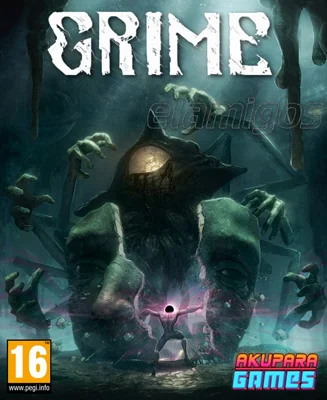
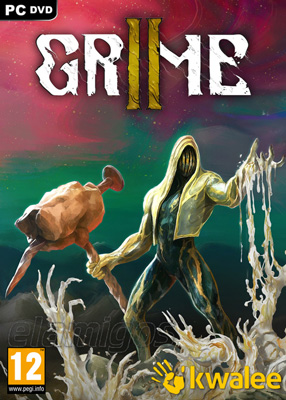
Grime II
Edit date: 4-05-2026, 01:19
Reason: Updated to version 1.2.17960 (01.05.2026).
- Category:
- Release date:
- Game Genre:Metroidvania, Action Platformer, Soulslike, Action RPG, Indie, 2.5D, Side-Scrolling, Singleplayer
- Developer:Clover Bite
- Release:ElAmigos
- Platform:PC
- Languages (subtitles):English, French, German, Spanish, Russian, Portuguese-Brazil, Japanese, Korean, Chinese Simplified, Chinese Traditional
- Crack:Codex/Rune
- Game size:9.69GB
Game Description
GRIME II on PC is a surreal 2.5D action metroidvania from Clover Bite and Kwalee. The current Steam storefront still uses the name GRIME II; no verified PC rebrand or replacement edition needs to be reconciled. Its central loop combines nonlinear exploration, demanding combat, enemy absorption, and summon-based build customization in a world shaped by art, mimicry, and strange living civilizations.
The game is designed for single-player progression rather than co-op or competitive play. It is a strong fit for PC players who want a darker metroidvania with soulslike combat ideas, layered character builds, and a setting that feels more abstract than conventional fantasy.
Combat built around forms, parries, and positioning
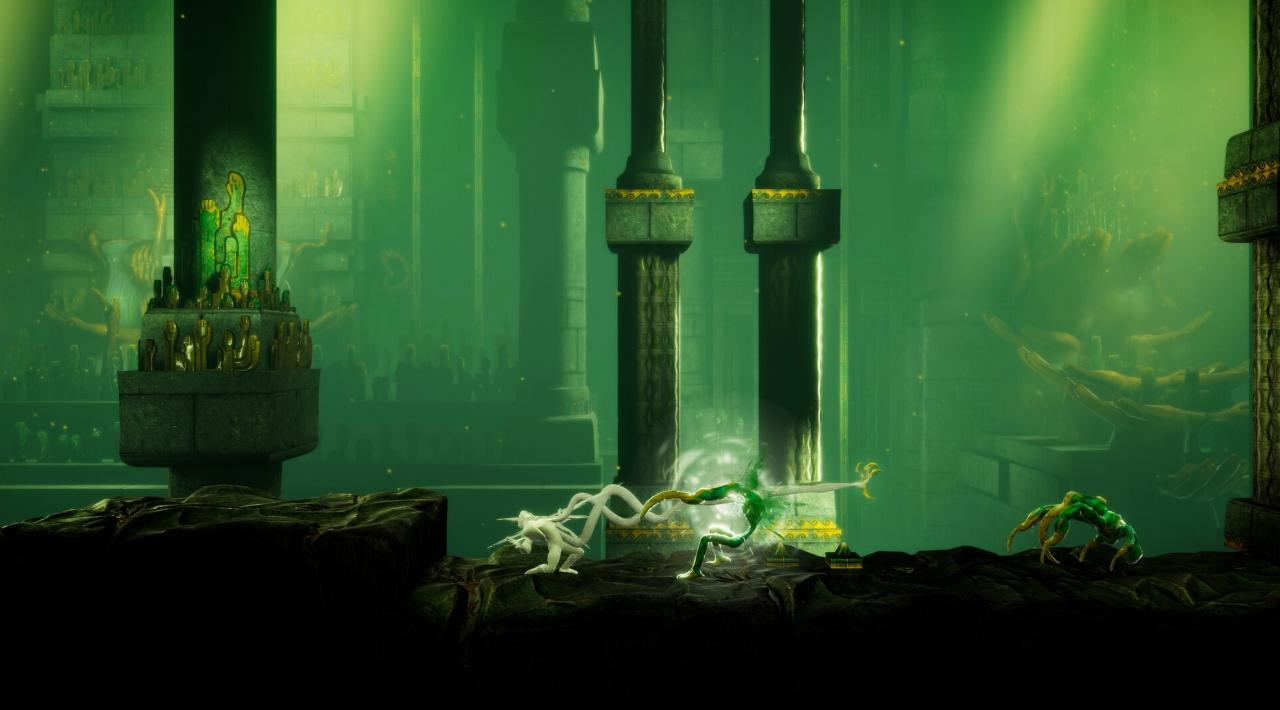
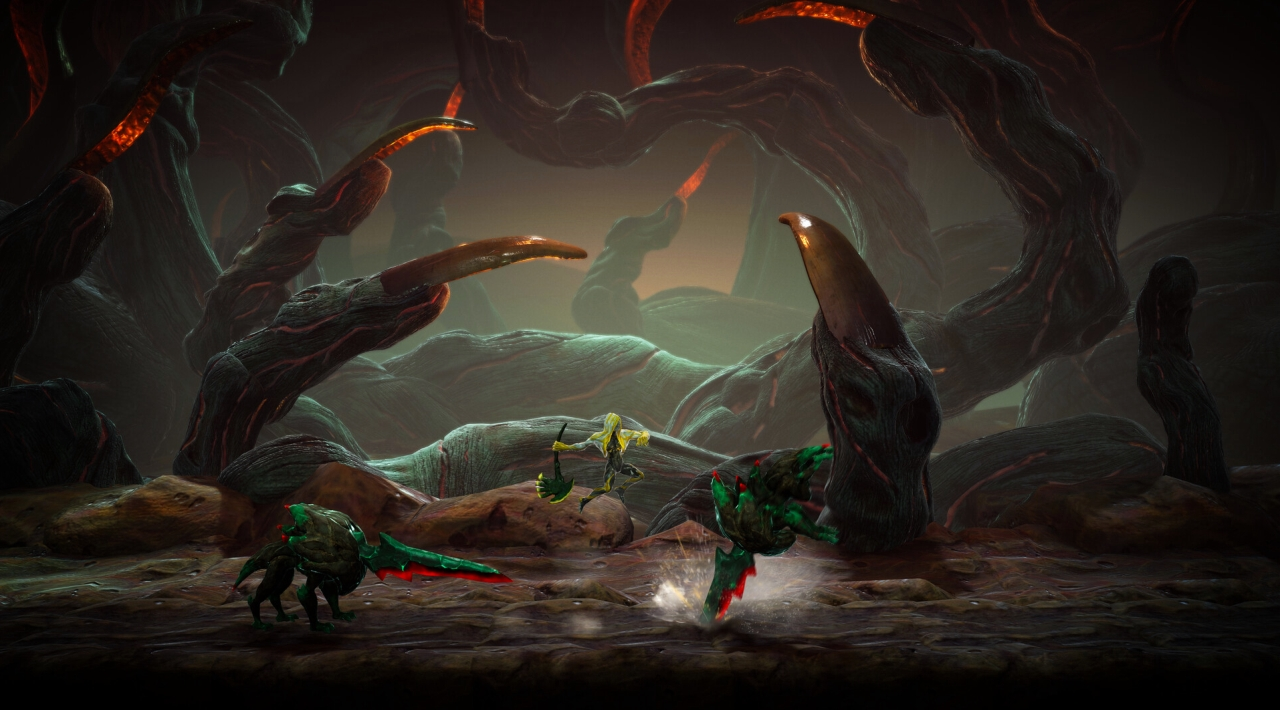
GRIME II uses side-scrolling exploration with a 2.5D presentation. Movement, attacks, evasive actions, and enemy spacing all take place within interconnected environments where combat and traversal are closely connected.
The defining system is mold absorption. After defeating enemies, the Formless can learn their shapes and turn them into molds for later use. These molds are not simple cosmetic collectibles; they provide practical combat options that can change how an encounter is approached.
Depending on the mold, the player can throw enemies, launch projectiles, stun targets, or create a temporary summon. Some molds provide direct damage, while others create breathing room or distract hostile creatures. This gives ordinary encounters a tactical layer beyond choosing a weapon and attacking until the enemy falls.
Parry and grasp mechanics define the defensive side of combat. Hand-like tendrils can intercept attacks, while grasping enemies helps the Formless absorb their forms and pull targets into a more advantageous position. Timing matters, particularly when several enemies attack from different distances.
Environmental combat adds another decision point. Objects and hazards in the surroundings can damage enemies from close range or at a distance, but the same spaces can also become dangerous to the player. The best fights therefore involve movement, enemy pattern recognition, mold selection, and awareness of the arena itself.
The game rewards deliberate reactions rather than constant button mashing. Players who enjoy learning attack patterns, exploiting openings, and testing defensive timing will find more depth here than in a straightforward action-platformer.
Build variety without losing the metroidvania structure
GRIME II lets players shape the Formless through a broad equipment and ability system. The Steam listing identifies over 30 weapons, 60 armours, and 12 abilities, creating room for different approaches to damage, defense, mobility, and mold use.
Weapons and molds work together rather than existing as isolated systems. A player may prefer a direct melee setup supported by defensive molds, while another may lean into ranged attacks, crowd control, environmental damage, or summons that occupy enemies during difficult exchanges.
This flexibility supports experimentation across the campaign. The important choice is not only which item has the highest numerical value, but which combination fits the player’s preferred rhythm and the demands of a particular region or boss.
Exploration follows the familiar ability-gated progression of a metroidvania. New powers open routes, secrets, and previously inaccessible sections, encouraging players to remember blocked paths and revisit earlier spaces when their toolkit expands.
The world is nonlinear, but it is not procedurally generated. Progress comes from understanding the map, finding alternate routes, discovering characters and cultures, and gradually connecting the game’s unusual environments into a coherent journey.
A world obsessed with creation
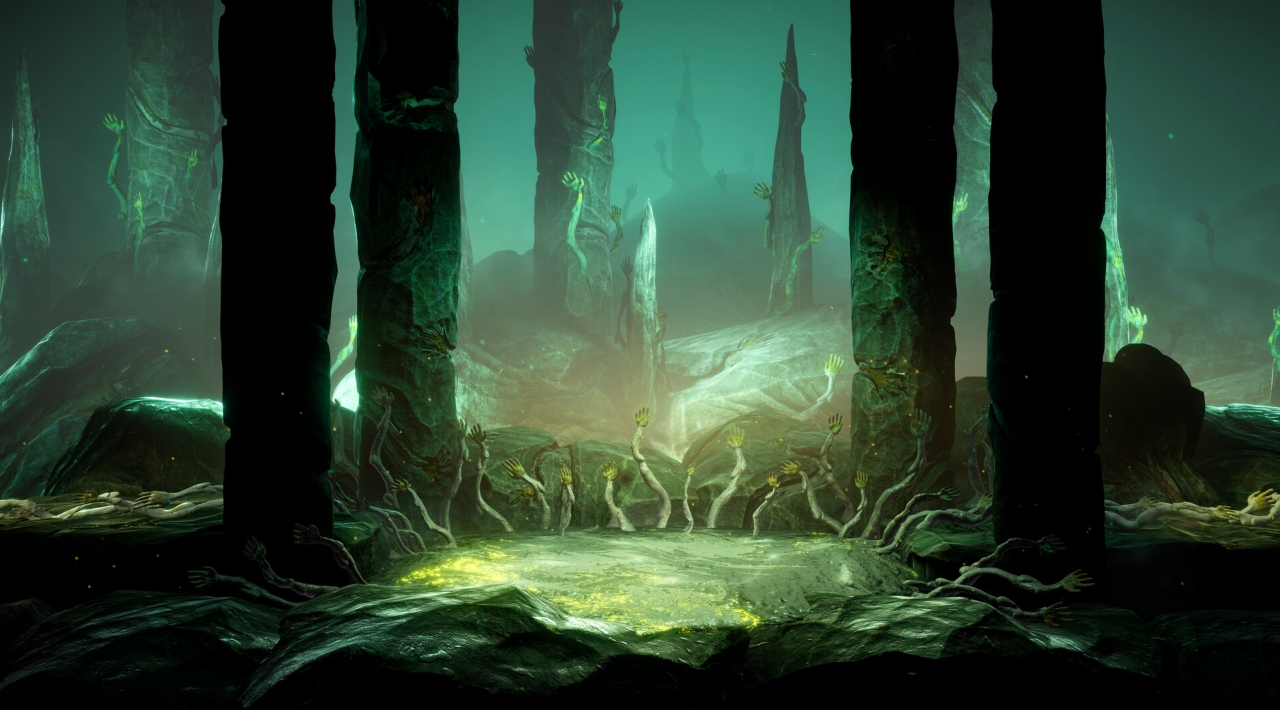
The setting moves away from ordinary medieval imagery and instead presents a civilization fascinated by art, making, and transformation. Locations are built around unusual visual ideas, including painted nails and enormous vases, while each area has its own cultural identity and inhabitants.
That visual language is part of the game’s worldbuilding rather than a surface theme. Enemies, environments, and characters all reinforce the idea of a society where forms can be created, copied, absorbed, and repurposed.
The Formless protagonist fits naturally into that structure. Their ability to steal shapes gives exploration and combat the same narrative vocabulary, making the player’s most distinctive mechanical action also central to the game’s fiction.
Storytelling is delivered through exploration, conversations, environmental details, and the discovery of different communities. Players looking for direct exposition may find the presentation intentionally opaque, while those who enjoy piecing together lore through optional interactions have more to investigate.
Content model and storefront reality
GRIME II is sold as a premium single-player game on PC. The current Steam listing presents the main game as the paid product and separately lists the original soundtrack as optional additional content.
There is no verified season-pass structure, free-to-play transition, or collection of gameplay DLC packs attached to the current storefront identity. The important purchase distinction is therefore the base game versus the optional soundtrack, not a fragmented table of mandatory expansions.
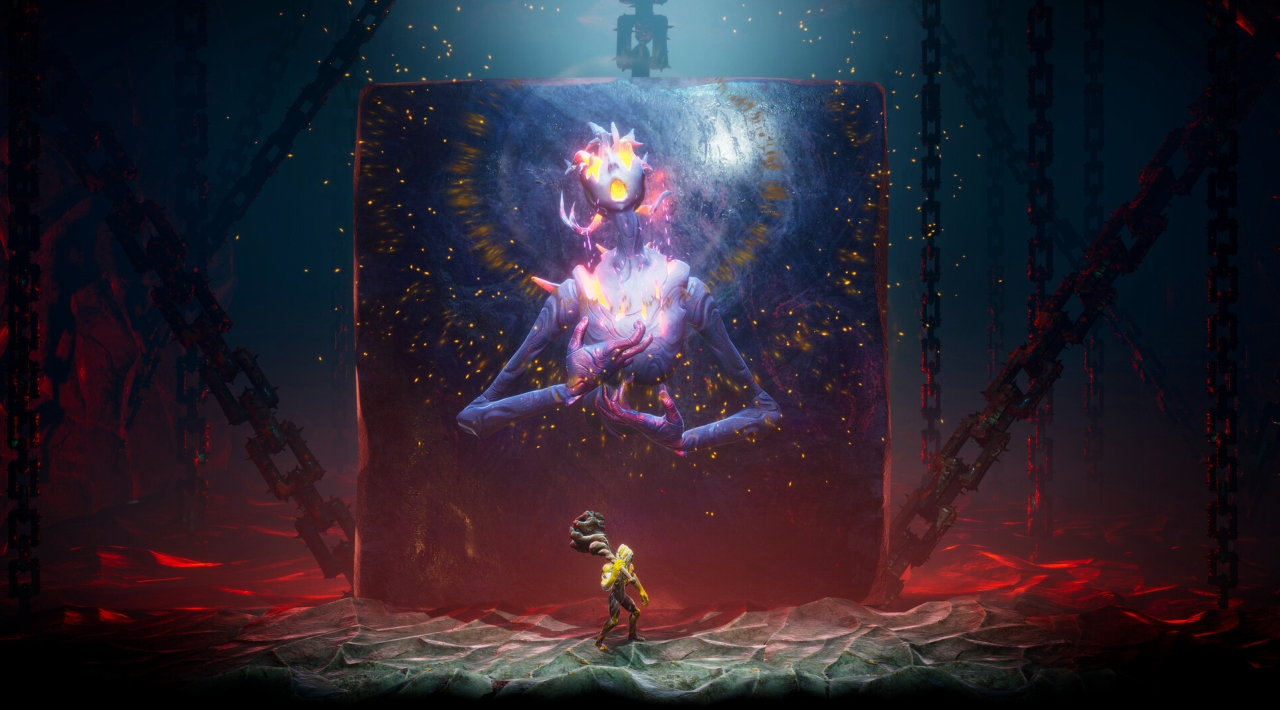
A demo is also listed on Steam, giving players a way to sample the combat, movement, and mold systems before committing to the full game. The main experience is built around campaign progression, exploration, boss encounters, optional discoveries, and mastery of its interconnected systems.
Who should play GRIME II?
GRIME II suits players who want challenging metroidvania combat, unusual art direction, nonlinear exploration, and a character system that supports more than one viable playstyle.
It is particularly well matched to players who enjoy defensive timing. Parrying, grasping, dodging, reading enemy animations, and choosing when to deploy a mold all matter during difficult encounters.
The game may be a poor fit for anyone seeking relaxed platforming, a conventional heroic fantasy story, online multiplayer, or a simple upgrade path with little equipment management. Its appeal depends on engaging with several systems at once.
Players who prefer focused world exploration with a darker combat emphasis may also enjoy hand-drawn metroidvanias such as Sundered: Eldritch Edition, although Sundered places more emphasis on shifting layouts and repeated attempts than GRIME II’s fixed-world progression.
PC features, controls, and localization
The PC version is distributed through Steam and includes Steam Cloud, achievements, Family Sharing, and controller support. The storefront identifies the game as a single-player title and does not list split-screen, online co-op, or competitive multiplayer.
No verified Cabinet Mode, multi-monitor support, mod workshop, dedicated server tools, or separate launcher requirement is identified in the current storefront information. Likewise, no anti-cheat system is presented as a defining PC feature; the game is structured as an offline-focused solo action adventure.
Keyboard and mouse details are not presented as a separate headline feature on the storefront, so controller support is the clearest confirmed input option for PC players who prefer gamepad play.
Interface and subtitle localization covers English, French, German, Spanish from Spain, Japanese, Korean, Simplified Chinese, Russian, Traditional Chinese, and Brazilian Portuguese. Full audio localization is not listed for these languages.
For a more movement-focused alternative with a brighter presentation, players can compare GRIME II with story-driven metroidvanias like Ori and the Will of the Wisps. Ori emphasizes fluid traversal and authored platforming, while GRIME II gives more attention to parries, enemy forms, and build decisions.
Similar PC games and genre overlap
GRIME II sits between several familiar PC categories. It has the map structure and ability-gated routes of a metroidvania, the deliberate defense and boss learning associated with soulslikes, and the equipment experimentation of an action RPG.
It is closer to a persistent exploration game than a roguelite. Defeat does not replace the world with a newly generated route; instead, progress depends on learning the existing map, improving the build, and becoming more capable against known threats.
Players interested in combat-heavy 2.5D action can also look at side-scrolling metroidvanias such as F.I.S.T.: Forged In Shadow Torch, though F.I.S.T. focuses more heavily on weapon switching, combo construction, and industrial science-fiction environments.
The closest experience will usually be another combat-first metroidvania rather than a traditional role-playing game. GRIME II’s identity comes from how its exploration, defensive mechanics, molds, weapons, and surreal setting reinforce one another.
GRIME II FAQ
The answers below cover the current PC name, gameplay structure, multiplayer reality, content model, and localization details most relevant to players deciding whether the game fits their library.
Is GRIME II the current PC storefront name?
Yes. The current Steam listing uses GRIME II. No verified rebrand, renamed definitive edition, or replacement PC title has been identified across the checked storefront and publisher information.
Is GRIME II a metroidvania or a soulslike?
It is best described as a 2.5D action metroidvania with soulslike combat elements. Ability-gated exploration and backtracking define the map, while parries, grasp attacks, enemy patterns, and demanding bosses shape the fighting.
Does GRIME II have multiplayer or co-op?
No. The current PC listing identifies GRIME II as a single-player game and does not list online multiplayer, local co-op, or split-screen modes.
What does the mold system do?
Molds are forms learned from defeated enemies. They can be used for special attacks, including throwing enemies, firing projectiles, stunning targets, or creating temporary summons that assist during combat.
How much build variety does the PC version have?
The storefront lists over 30 weapons, 60 armours, and 12 abilities. These options can be combined with molds and environmental combat to support different offensive and defensive playstyles.
What languages are supported?
Interface and subtitles are available in English, French, German, Spanish from Spain, Japanese, Korean, Simplified Chinese, Russian, Traditional Chinese, and Brazilian Portuguese. The storefront does not list full audio localization for these languages.
System Requirements
Minimum: | Recomended: |
| Processor: Intel Core i5-6600K / AMD Ryzen 3 1200 Graphics: Nvidia GeForce GT 1030 / AMD Radeon RX 550 Memory: 8 GB RAM Disk space: 20 GB available space Operating system: Windows 10 64-bit | Processor: Intel Core i5-8400 / AMD Ryzen 5 1600X Graphics: Nvidia GeForce GTX 1050 / AMD Radeon R9 720X Memory: 8 GB RAM Disk space: 20 GB available space Operating system: Windows 10 64-bit |
Screenshots
Trailer/Gameplay
Download
Grime II (2026), 9.69GB
ElAmigos release, game is already cracked after installation (crack by Codex/Rune).

Updated to version 1.2.17960 (01.05.2026).

1. Extract files.
2. Burn or mount the image.
3. Install the game.
4. ElAmigos release, game is already cracked after installation.
5. Play the game. If you like this game, BUY IT!
Grime II Download
🔒 Premium access required
To see and use the download links, you must be logged in and have an active PREMIUM account.
* Unlock downloads via Torrent and TeraBox.
Torrent Download
The best torrent download speeds are with qBittorrent!