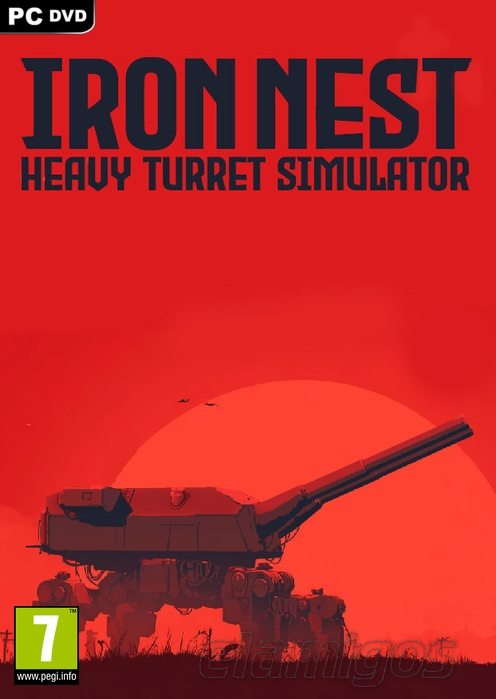
Iron Nest Heavy Turret Simulator
Edit date: 17-08-2026, 11:18
Reason: Updated to version 1.0.1622 (15.08.2026).
- Category:
- Release date:
- Game Genre:Simulation, First-Person, Dieselpunk, Indie, Alternate History
- Developer:Nick Nieuwoudt, Dominik Latos
- Release:ElAmigos
- Platform:PC
- Languages (subtitles):English, French, Italian, German, Spanish, Spanish (Mexico), Polish, Czech, Russian, Portuguese-Brazil, Turkish, Ukrainian, Japanese, Korean, Simplified Chinese, Traditional Chinese
- Crack:Codex/Rune
- Game size:0.94GB
Game Description
Iron Nest Heavy Turret Simulator on PC is a first-person dieselpunk artillery simulation built around manual fire control, physical machine operation, and tactical decision-making. The current Steam listing uses the official name IRON NEST: Heavy Turret Simulator; there is no verified rebrand, replacement edition, or renamed PC version. Developed and published by Nick Nieuwoudt and Dominik Latos, it puts one player inside a colossal war machine operating in an alternate-history Spain.
This is not a conventional tank game or an arcade shooter. You do not roam across a battlefield looking for targets. Instead, the battlefield reaches you through orders, reports, maps, telescopes, and aerial information, turning every firing mission into a deliberate chain of observation, calculation, loading, aiming, and judgment.
Inside the artillery operator loop
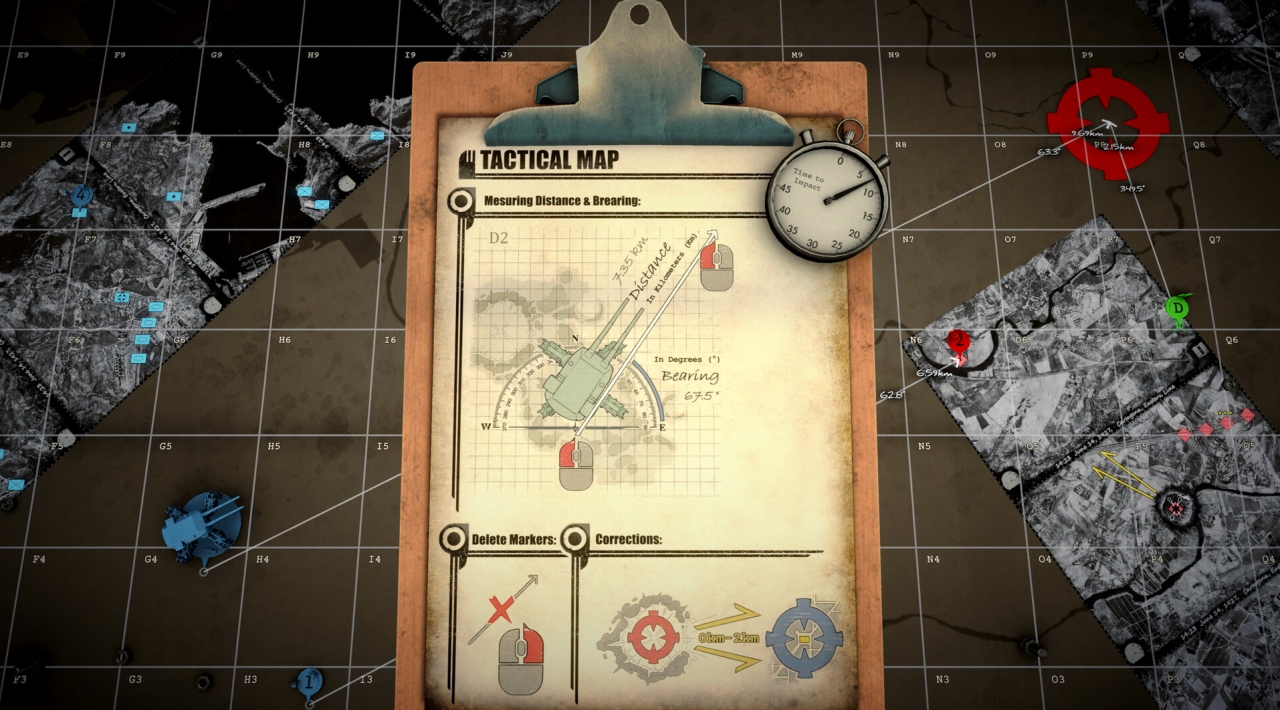
The central activity is a complete manual fire mission. You receive directives from High Command, study battlefield information, locate the target on the tactical map, and convert reconnaissance details into usable coordinates. The game expects you to work through the process rather than skip directly to a firing solution.
Once the target is identified, you use the map and available instruments to estimate range and bearing. The analog ballistic calculator then helps translate those measurements into elevation and propellant requirements. A small mistake can produce a near miss, wasted ammunition, or a result that changes the situation on the ground in an unintended way.
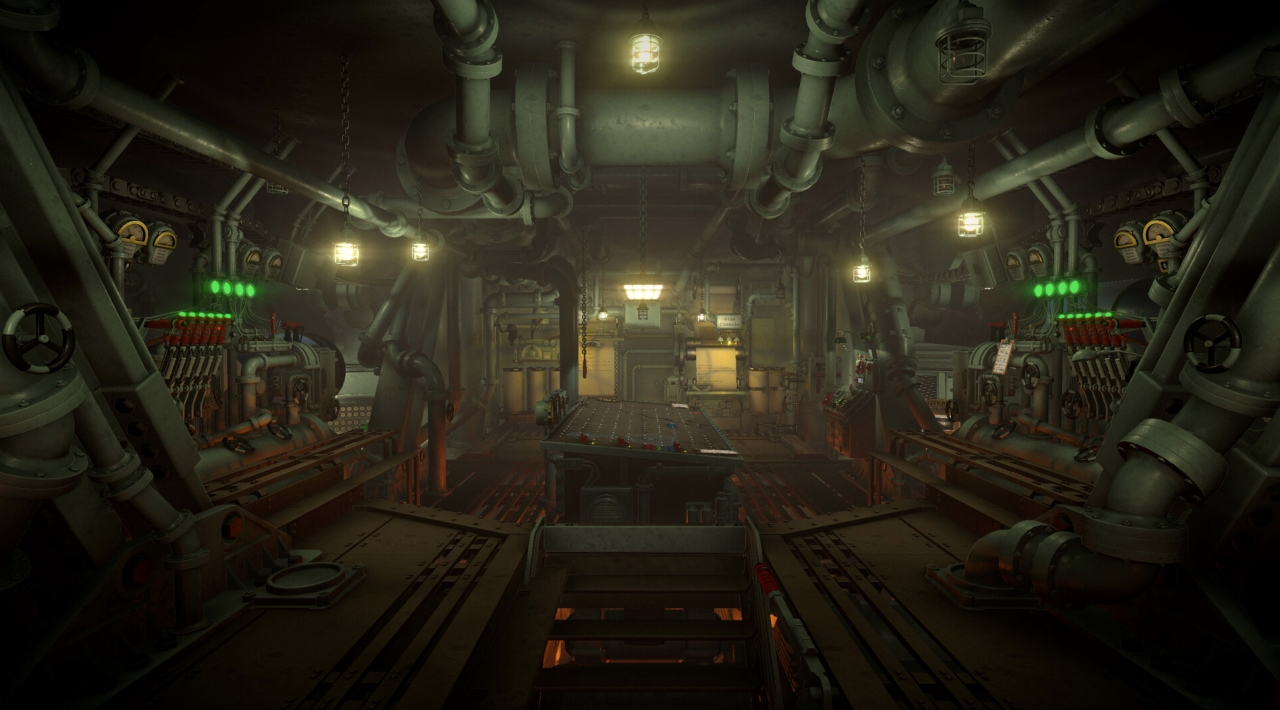
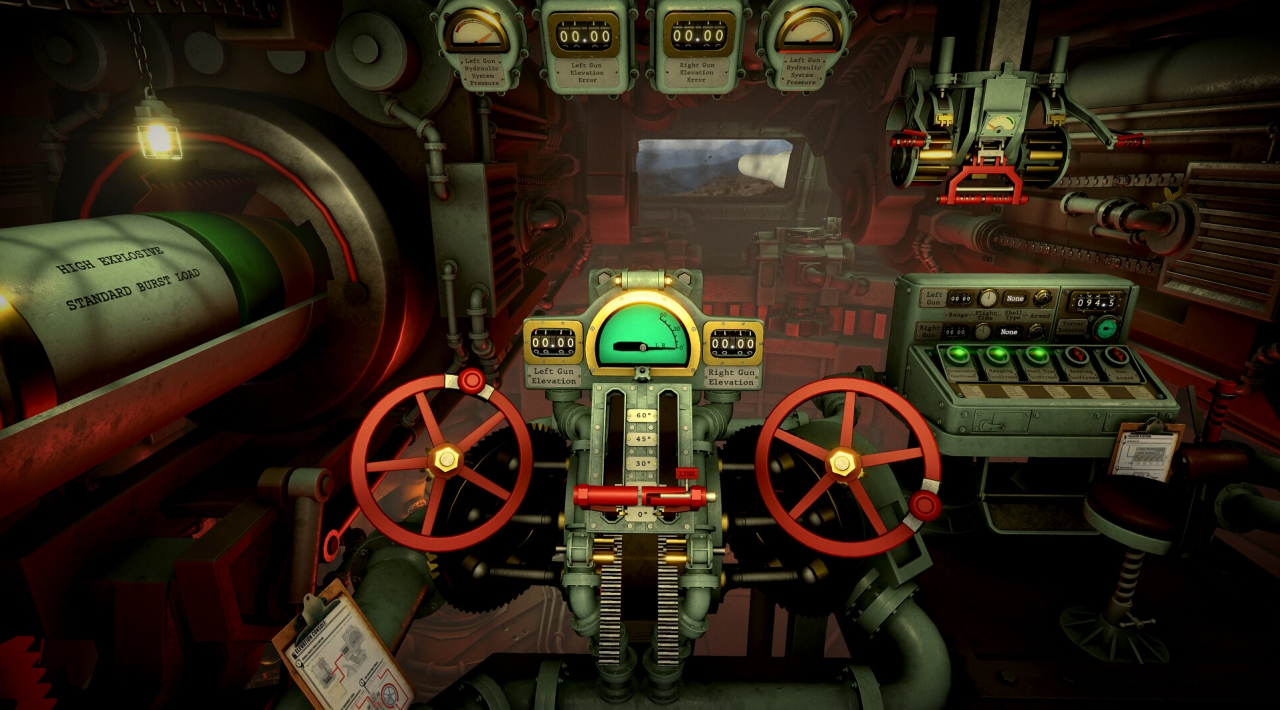
Firing is only the midpoint of the loop. You select ammunition, load the shell, prepare the correct powder charges, set the gun's bearing and elevation, arm the firing system, and operate the trigger. The turret's scale matters because large mechanical movements take time, so experienced players must plan the next task while the weapon traverses or elevates.
The first-person camera keeps attention on the operator's station rather than the wider battlefield. Dials, levers, loading equipment, scopes, paperwork, and map tools form the practical interface. Players who enjoy first-person puzzle games built around careful observation and physical problem-solving will recognize the appeal, although Iron Nest applies that mindset to artillery rather than laboratory tests.
Ballistics, ammunition, and battlefield consequences
Precision ballistics is the defining skill. The game does not reduce artillery to pointing at a marker and clicking fire. Elevation, range, charge selection, ammunition type, and target information all contribute to the result, creating a learning curve based on procedure and interpretation.
Shell selection is part of the tactical problem. The storefront lists 30 unlockable ammunition types and abilities, giving progression a practical purpose beyond cosmetic rewards. Different rounds are intended for different battlefield problems, so the correct question is not simply how much damage a shell can cause, but what the mission actually requires.
Armor-piercing ammunition is suited to hardened targets, while smoke can support movement or obscure an area. Other options introduce more severe consequences and force the player to consider the political and human weight of following orders. The game presents artillery as both a technical system and a source of responsibility.
Targets and objectives are supported by procedurally generated objectives, which prevents the entire experience from becoming a fixed sequence of memorized coordinates. The handcrafted story gives the campaign a defined dramatic direction, while procedural mission elements add variation to repeated fire-control work.
Results are not presented only through a victory screen. Newspaper reports and command communication help show how each operation affects the wider conflict. The framing places the player between official orders, battlefield necessity, and the consequences that remain after the shell has landed.
A dieselpunk war machine with a focused setting
Iron Nest is set in an alternate-history version of Spain during the late 1920s, when the monarchy still holds power and a republican uprising is spreading across the country. The setting combines interwar military technology with dieselpunk machinery, giving the game a distinctive identity without turning it into a traditional fantasy or science-fiction campaign.
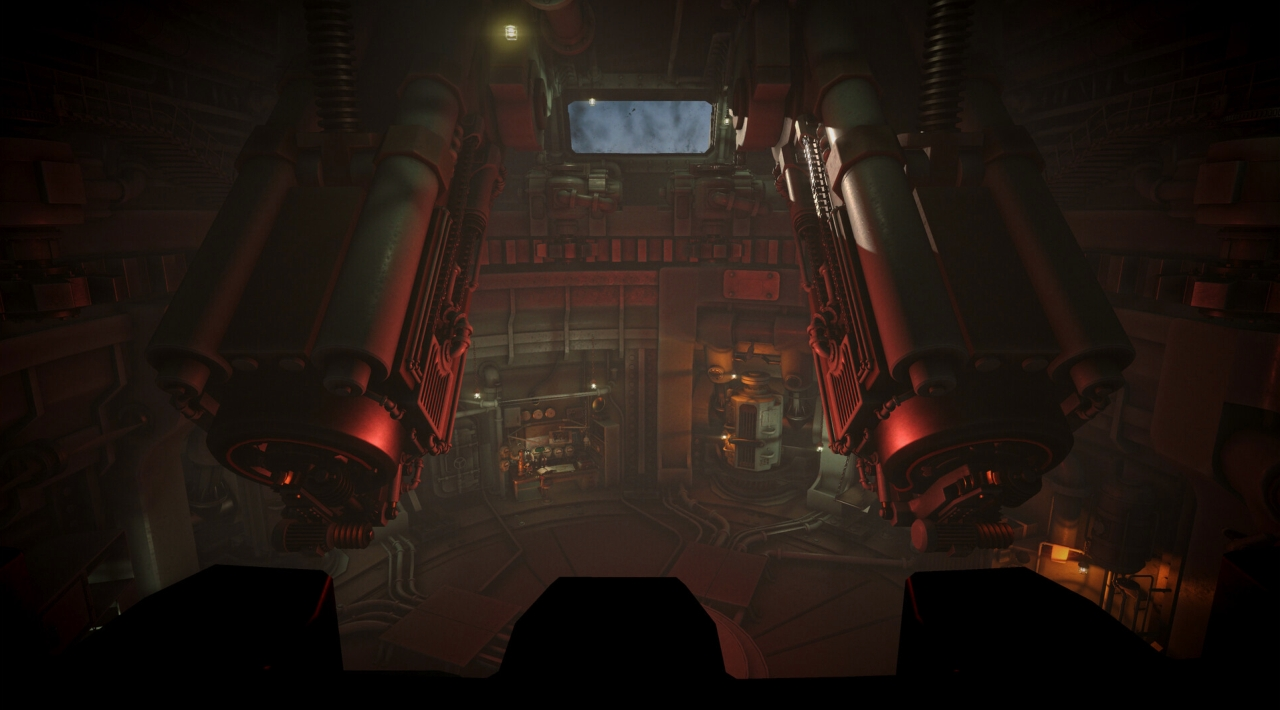
You operate the Iron Nest as a solitary specialist. The machine is enormous, slow to reposition, and dependent on the operator's ability to keep several processes moving at once. That scale creates tension through time and coordination rather than through constant enemy attacks or character movement.
The campaign covers 15 regions and uses a handcrafted narrative structure around the missions. Between major story developments, the player continues to receive objectives, improve operational knowledge, unlock new options, and work toward additional medals.
Progression includes unlockable abilities, new ammunition choices, and more than 100 medals tied to performance and accomplishments. These systems reward repeated mastery of the artillery workflow rather than traditional character leveling or loot collection.
Modes, replay value, and commercial model
The main experience is a single-player campaign. There is no verified co-op, versus mode, split-screen support, or shared crew system on the current PC storefront listing. The operator's isolation is part of the design: one player reads the orders, works the instruments, loads the weapon, and lives with the result.
Alongside the story content, the game includes two challenge modes and leaderboards. These modes provide a more repeatable structure for players who want to optimize their firing process, improve accuracy, or compare results after learning the core systems.
The current Steam page lists the base game as a paid release and also presents a separate demo. The storefront does not verify a season pass, a bundle of paid DLC packs, or an alternate definitive edition, so the safest description is a paid standalone game with additional challenge content and a demo option.
That structure makes Iron Nest a focused purchase rather than a content-heavy live-service package. Its value comes from the depth of the operator loop, the campaign framing, the ammunition variety, and the satisfaction of becoming faster and more accurate with the same machinery.
Who should play Iron Nest?
Iron Nest suits players who enjoy deliberate simulation gameplay, tactical calculation, mechanical interfaces, alternate-history war fiction, and games where understanding the process matters more than reflex speed. It is particularly appealing if the fantasy of operating a huge machine sounds more interesting than controlling a soldier from outside it.
The game also fits players who enjoy procedural objectives but want them inside a strongly authored setting. Each mission asks for attention to detail, yet the newspaper reports, regional campaign structure, and command decisions keep the experience from feeling like a standalone ballistics worksheet.
It is a poor fit for players expecting direct battlefield movement, fast shooting, squad command, online multiplayer, or a conventional progression loop filled with equipment drops. The pace is intentionally measured, and the most satisfying moments often come after several quiet preparation steps.
There is also a specific tolerance requirement: mistakes are part of the learning process. If you dislike rereading coordinates, checking a calculation, or correcting a shot after seeing where it landed, the manual workflow may feel restrictive rather than immersive.
PC features, controls, and localization
The PC version is presented as a first-person simulation with full controller support alongside mouse and keyboard play. A controller can make the physical operator stations feel natural, while mouse input may be preferable for map work, written reports, and precise interface interactions.
Steam also lists Steam Cloud, Steam Achievements, Family Sharing, leaderboards, and a separate demo. These features support a straightforward solo PC experience without requiring a multiplayer ecosystem or a persistent online service.
The game supports interface localization in English, French, German, Spanish from Spain, Latin American Spanish, Portuguese from Brazil, Polish, Czech, Russian, Turkish, Ukrainian, Japanese, Korean, Simplified Chinese, Traditional Chinese, and Italian. The storefront lists interface support rather than full voice localization, so players should not assume that every language includes dubbed audio.
There is no verified anti-cheat feature, dedicated-server toolset, mod workshop, or VR mode listed as a core PC feature. The confirmed strengths are the interactive machinery, controller support, cloud saves, achievement tracking, challenge modes, and leaderboard structure.
Comparable PC experiences
Iron Nest occupies an unusual space between simulation, puzzle design, and tactical warfare. Its closest relatives are not standard artillery games but first-person titles that make procedure, observation, and physical interaction the main source of progress.
Players who enjoy first-person simulation games built around inspection, tools, and high-pressure decisions may appreciate Iron Nest's emphasis on reading information correctly before committing to an action. Quarantine Zone: The Last Check is more focused on checkpoint management and survival, while Iron Nest turns the same inspect-then-act rhythm toward long-range fire control.
The comparison with Portal is also useful for understanding the interface philosophy, but not the genre. Portal teaches players to inspect a space, identify interacting systems, and test a solution. Iron Nest applies that same observation-first discipline to maps, instruments, ammunition, and artillery calculations instead of spatial portals.
There are few direct substitutes for a first-person heavy-artillery simulator with a dieselpunk setting, procedural objectives, and manual loading. That scarcity is the game's main catalog strength: it offers a specific operator fantasy rather than a broad military sandbox.
Iron Nest Heavy Turret Simulator FAQ
Is Iron Nest Heavy Turret Simulator still using the same name?
Yes. The current Steam storefront uses IRON NEST: Heavy Turret Simulator. The user-facing title may appear without the colon as Iron Nest Heavy Turret Simulator, but there is no verified rebrand or replacement PC edition.
What type of game is Iron Nest Heavy Turret Simulator?
It is a first-person dieselpunk heavy-artillery simulation with tactical, puzzle, physics, and immersive-simulation elements. The main activity is reading orders, plotting targets, solving firing data, loading ammunition, aiming the turret, and firing manually.
Does Iron Nest have multiplayer or co-op?
No multiplayer or co-op mode is listed for the current PC version. It is designed as a single-player experience in which one operator handles the full artillery workflow.
How does progression work?
Progression is built around a handcrafted campaign, 15 regions, challenge modes, medals, new abilities, and 30 unlockable ammunition types and abilities. The game rewards better understanding of the firing process rather than conventional character levels or loot tiers.
Does the PC version support controllers?
Yes. The storefront lists full controller support, and the PC version also supports the usual mouse-and-keyboard approach for map reading, calculations, and machine controls.
How many languages are supported?
The interface is localized into 16 listed languages, including English, French, German, Spanish, Portuguese-Brazil, Polish, Czech, Russian, Turkish, Ukrainian, Japanese, Korean, Simplified Chinese, Traditional Chinese, and Italian. The storefront does not list full audio for those languages.
Is there a demo or season pass?
A separate demo is listed on Steam. The current storefront information does not verify a season pass, paid DLC collection, or renamed definitive edition for the base game.
System Requirements
Minimum: | Recomended: |
| Processor: Intel Core i5-4460 / AMD FX-8350 Graphics: Intel UHD / AMD Vega 8 Memory: 4 GB RAM Disk space: 5 GB available space Operating system: 64-bit processor and operating system | Processor: Intel Core i5-8400 / AMD Ryzen 5 2600 Graphics: NVIDIA GTX 1060 6GB / AMD RX 580 8GB Memory: 8 GB RAM Disk space: 5 GB available space Operating system: 64-bit processor and operating system |
Screenshots
Trailer/Gameplay
Download
Iron Nest Heavy Turret Simulator (2026), 0.94GB
ElAmigos release, game is already cracked after installation (crack by Codex/Rune).

Updated to version 1.0.1622 (15.08.2026).

1. Extract files.
2. Burn or mount the image.
3. Install the game.
4. ElAmigos release, game is already cracked after installation.
5. Play the game. If you like this game, BUY IT!
Iron Nest Heavy Turret Simulator Download
🔒 Premium access required
To see and use the download links, you must be logged in and have an active PREMIUM account.
* Unlock downloads via Torrent and TeraBox.
Torrent Download
The best torrent download speeds are with qBittorrent!