Everybody's Gone to the Rapture
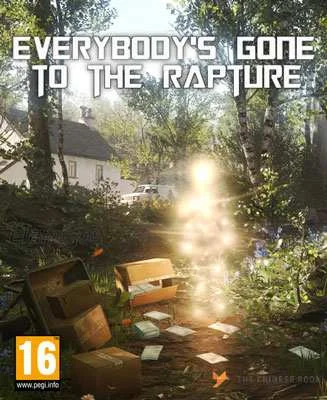
- Category:
- Release date:
- Game Genre:Adventure, FPP, Post Apocalypse, experimental/art, exploration games, 80s
- Developer:The Chinese Room Publisher: Sony Interactive Entertainment
- Release:ElAmigos
- Platform:PC
- Languages (subtitles):English, French, Italian, German, Spanish, Polish, Russian, Dutch, Danish, Portuguese, Portuguese-Brazil, Finnish, Norwegian, Swedish, Korean, Japanese, Chinese Traditional
- Dubbing/Audio:English, French, Italian, German, Spanish, Polish
- Crack:Codex
- Game size:5.58GB
Game Description
Everybody's Gone to the Rapture PC is a first-person narrative adventure and walking simulator set in an abandoned English village. The current Steam listing still uses the original title, with no verified rebrand or replacement edition identified on the active PC storefront. Developed by The Chinese Room and published on Steam by PlayStation Publishing LLC, it focuses on atmosphere, exploration, environmental detail, and reconstructing a vanished community's final story.
Exploration built around a disappearing community
The game places you in Yaughton Valley, a rural Shropshire setting emptied of its residents. There is no conventional combat system, inventory management, character build, or traditional quest log. Instead, progress comes from moving through roads, gardens, houses, farms, woodland paths, and scientific facilities while observing the environment for signs of what happened.
Its core loop is simple but deliberate: explore the valley, follow unusual signals of light, activate memories, listen to recordings, inspect written clues, and connect separate events into one larger explanation. The player character is intentionally undefined, making the environment and the people represented by the memories the real focus of the experience.
The perspective remains first-person throughout. Movement is intentionally slow, although the PC version includes a faster walking option. That pacing is central to the design rather than a side effect. The game expects you to notice ordinary details such as maps, telephones, radios, abandoned vehicles, personal notes, and domestic spaces instead of rushing between objectives.
How the light and memory systems work
The most distinctive mechanic is the network of glowing orbs that moves through the landscape. These signals guide you toward story events, but they do not function like a standard objective marker. They can lead you across open areas, into buildings, or toward optional discoveries that add context to the main mystery.
At certain points, the player interacts with an orb through a tuning mechanic. On keyboard and mouse, this involves holding the relevant input and moving the mouse until the signal locks onto the correct position. The resulting scene presents ghostly human silhouettes reenacting conversations and moments from the past. An accessibility option called Simplified event tuning reduces this interaction to a straightforward activation.
These scenes are not isolated cutscenes. They create a layered account of the people who lived in the valley and the relationships that shaped their choices. The major story threads are associated with Jeremy, Wendy, Frank, Lizzie, Stephen, and Kate, while telephones, radio broadcasts, documents, and environmental details fill in the gaps between their perspectives.
The structure is partly non-linear. You have freedom to investigate areas and optional clues, but the larger narrative still has a carefully arranged dramatic progression. That balance means players can uncover supporting details in different orders without turning the story into a branching-choice adventure.
A mystery told through place, sound, and absence
Yaughton Valley is more than a backdrop. Its village streets, farms, observatory, forest routes, and domestic interiors communicate information through layout and atmosphere. A map can reveal how locations relate to one another. A silent television or a ringing telephone can suggest what kind of life existed before the disappearance. Small visual details often matter more than explicit exposition.
Audio is equally important. The soundtrack by Jessica Curry gives each major character and emotional shift a distinct musical identity, while voice recordings preserve conversations that the player can no longer witness directly. The result is closer to investigating a set of overlapping memories than completing a conventional detective campaign.
Players who enjoy environmental storytelling with a stronger mystery focus may also appreciate first-person narrative adventures like What Remains of Edith Finch, although Everybody's Gone to the Rapture spends more time on open-area exploration and audio reconstruction than on short playable vignettes.
Content model and what is actually included
Everybody's Gone to the Rapture is a premium single-player game rather than a free-to-play release or an episodic service. The current Steam product is sold as one complete experience, and the storefront does not list a season pass, multiplayer expansion, or separate campaign DLC. Its content is the valley, the connected character stories, the optional environmental discoveries, and the achievement set.
There is no character progression system to grind and no repeatable endgame loop. Replay value comes from revisiting locations, finding missed radios and telephones, understanding character connections more clearly, and completing the game's 18 Steam Achievements. It is best approached as a contained narrative investigation rather than an open-ended sandbox.
The game also does not offer co-op, competitive multiplayer, split-screen, or online social systems. Steam lists it as single-player, with Steam Cloud, captions, Family Sharing, achievements, and Remote Play on TV support.
Who should play it on PC?
This is a strong fit for players who want slow-burn science fiction, detailed rural environments, voice-led storytelling, and mysteries solved through observation rather than combat. It suits people who enjoy taking notes, exploring optional paths, and allowing a story to reveal itself gradually.
It is a poor match for anyone expecting action, stealth, puzzles built around complex logic, frequent interaction, or fast traversal. The game offers very little mechanical friction, but it also offers very little mechanical variety. Its success depends on whether the characters, setting, sound design, and central mystery are enough to sustain a long period of walking and listening.
The deliberately measured movement is an important buying consideration. Holding the faster-walk input helps, but this remains a contemplative exploration game rather than a fast-moving adventure. Players looking for a more puzzle-driven first-person mystery can compare its atmosphere with story-rich exploration games such as Call of the Sea, which provides a more traditional puzzle structure and clearer objective progression.
PC features, controls, and localization
The PC edition supports keyboard and mouse controls as well as full controller support through Steam. Controller play is particularly natural for the slow walking and analog camera movement, while mouse input gives more precise control over the orb-tuning interaction. The accessibility menu includes simplified event tuning and subtitle options.
The PC release uses Steam DRM and requires the Steam client ecosystem. The Steam listing identifies a third-party EULA, but it does not identify a separate launcher or an anti-cheat system. Steam Cloud is available for save synchronization, and Remote Play on TV is supported.
PC patch information documents 21:9 ultrawide support and a configurable field-of-view command. Because the ultrawide feature was introduced as a beta-era PC option and older player reports describe interface limitations on some aspect ratios, it is more accurate to describe ultrawide compatibility as available rather than universally flawless across every modern display format.
Localization is unusually broad for a dialogue-heavy adventure. Steam lists interface and subtitle support for English, French, Italian, German, Spanish, Danish, Dutch, Finnish, Japanese, Korean, Norwegian, Polish, Portuguese, Russian, Swedish, and Traditional Chinese. Full audio is available in English, French, Italian, German, Spanish, Polish, Portuguese-Brazil, Japanese, Korean, and Russian, with the remaining listed languages providing interface and subtitle localization.
Everybody's Gone to the Rapture FAQ
The following answers address the practical questions most relevant to PC players considering the Steam edition.
Is Everybody's Gone to the Rapture rebranded on PC?
No verified rebrand was found in the current PC storefront information. Steam continues to list the game as Everybody's Gone to the Rapture.
Is the PC version single-player only?
Yes. The game is designed for one player and has no co-op, split-screen, competitive multiplayer, or online campaign mode.
Does the game have combat or conventional puzzles?
No combat system is present. Interaction centers on exploration, environmental observation, recordings, documents, memory scenes, and the orb-tuning mechanic rather than inventory puzzles or enemy encounters.
Can you play with a controller on PC?
Yes. Steam identifies full controller support, and the PC version was tested with common Xbox, PlayStation, and Steam controller configurations. Keyboard and mouse remain supported.
Does Everybody's Gone to the Rapture support ultrawide monitors?
Yes, 21:9 ultrawide support was added for the PC version. The feature has historical caveats around interface positioning and subtitle presentation on some resolutions, so expectations should be limited to documented ultrawide compatibility rather than guaranteed perfect scaling.
What kind of gameplay structure does it use?
It is a contained narrative exploration experience with optional clues and achievement hunting. There are no character builds, loot tiers, procedural maps, branching role-playing systems, or post-campaign activities. The main loop is learning how the residents of Yaughton Valley lived, what they experienced, and why the valley was left empty.
System Requirements
Minimum: | Recomended: |
| Processor: Intel Core i5-4570T 2.9 GHz/AMD FX-6100 3.3 GHz Graphics: 1 GB GeForce GTX 560 Ti/Radeon HD 6850 Memory: 4 GB RAM Disk space: 6 GB HDD Operating system: Windows 7 64-bit | Processor: Intel Core i7-4770S 3.1 GHz/AMD FX-8320 3.5 GHz Graphics: 2 GB RAM GeForce GTX 770/3 GB Radeon HD 7970 Memory: 8 GB RAM Disk space: 6 GB HDD Operating system: Windows 10 64-bit |
Screenshots


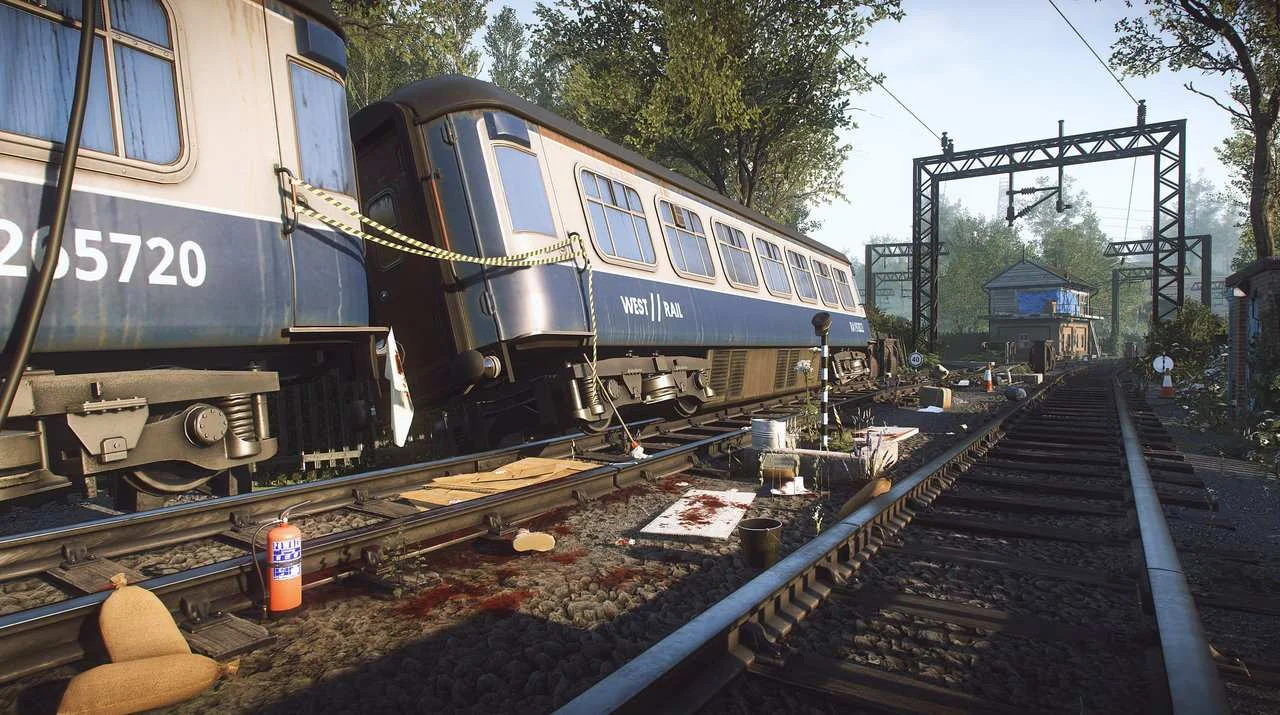
Trailer/Gameplay
Download
Everybody's Gone to the Rapture (2016), 5.58GB
ElAmigos release, game is already cracked after installation (crack by Codex).

+ patch/update 1.01H (24.06.2016) & crack 1.01H (by Codex), 413MB

1. Extract files.
2. Burn or mount the image.
3. Install the game.
4. ElAmigos release, game is already cracked after installation.
5. Play the game. If you like this game, BUY IT!
Everybody's Gone to the Rapture Download
 Download from TeraBox
Torrent Download
The best torrent download speeds are with qBittorrent!