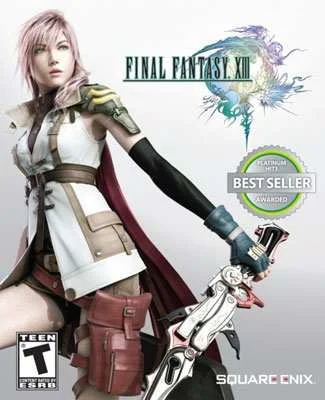
Final Fantasy XIII
- Category:
- Release date:
- Game Genre:RPG, TPP, fantasy, science fiction, jRPG
- Developer:
- Release:ElAmigos
- Platform:PC
- Languages (subtitles):English, French, Italian, German, Spanish, Korean, Japanese, Chinese (Traditional)
- Dubbing/Audio:English
- Crack:CPY, Codex/FTS, 3DM
- Game size:26.03GB
Game Description
Final Fantasy XIII PC is a cinematic science-fiction JRPG built around real-time ATB commands, party composition, and rapid tactical decisions rather than direct character control. Square Enix remains the developer and publisher, and the current PC storefront listings use the original name, FINAL FANTASY XIII; no active Steam or Microsoft Store rebrand has replaced it with a new edition name.
Set between the floating world of Cocoon and the wilderness of Pulse, the story follows Lightning, Snow, Vanille, Sazh, Hope, and Fang as they become entangled in the plans of fal'Cie and the demands placed on l'Cie. Its presentation is heavily character-driven, with a linear progression model that gradually expands into a broader mission-focused endgame.
Combat Built Around Paradigm Shifts
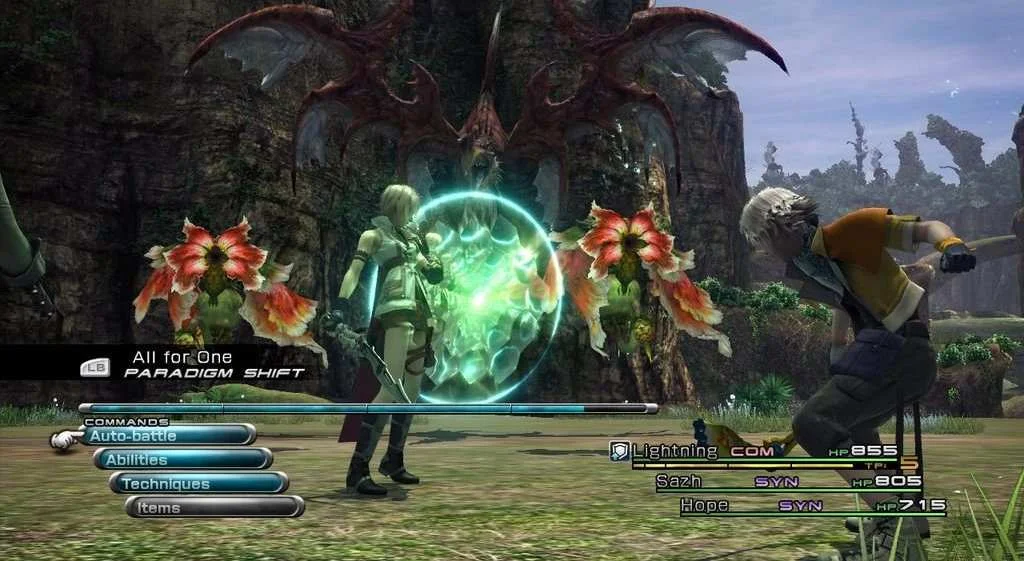
Final Fantasy XIII uses a hybrid battle system. Actions are selected through an ATB gauge, but the flow is continuous, so battles feel faster than traditional menu-based turn combat. The player usually controls the party leader while the other characters act according to their assigned roles and the current tactical setup.
The defining mechanic is the Paradigm system. Each paradigm assigns roles to the active party, allowing you to switch between formations during combat. A Commando stabilizes damage, a Ravager builds elemental pressure, a Sentinel absorbs attacks, a Saboteur applies debuffs, a Synergist strengthens allies, and a Medic restores health.
Winning consistently means reading the encounter and changing paradigms at the right moment. You may open with Ravagers to raise an enemy's stagger gauge, switch to Commandos to control chain stability, then use Saboteurs or Synergists to improve the party's position. Difficult fights punish passive play, even though individual commands can be automated through the Auto-battle option.
This structure makes Final Fantasy XIII less about choosing every action manually and more about preparing a reliable response to changing battle conditions. Bosses, elite monsters, and late-game missions are where the system shows its depth, especially when party roles, elemental weaknesses, and stagger timing must work together.
Characters, Progression, and Equipment
Character development is handled through the Crystarium, a role-based progression system that unlocks abilities and improves statistics along branching paths. The game controls when new roles and progression tiers become available, which keeps the campaign tightly paced but limits early experimentation.
Each character has preferred roles, weapon types, and narrative strengths. Lightning is a versatile damage dealer, Snow is closely associated with defensive play, Sazh supports the group with buffs and ranged attacks, while Fang and Hope become important parts of more specialized formations. The party is frequently divided by the story, so the available combinations change as the campaign advances.
Equipment upgrades add another layer without replacing the role system. Weapons and accessories can be improved with materials, and selecting the right passive effects matters more in demanding encounters than simply chasing higher numbers. The result is a progression loop based on role specialization, upgrade planning, and encounter knowledge rather than unrestricted character building.
A Linear Journey With a Wider Endgame
The early and middle portions of Final Fantasy XIII are deliberately directed. Areas connect in a mostly forward route, story scenes arrive frequently, and the game introduces its systems in stages. That structure supports the dramatic pacing, but players expecting towns, broad exploration, or constant freedom may find the campaign unusually restrictive for a Final Fantasy game.
Later, the Gran Pulse section changes the rhythm. The environment provides more room to move, stronger monsters, optional objectives, and a substantial set of Mark missions. These hunts encourage players to test optimized paradigms, improve equipment, and revisit the combat system with fewer narrative interruptions.
There is no traditional multiplayer layer or co-op campaign. The core loop is entirely single-player: advance through story chapters, learn enemy patterns, refine party roles, complete optional missions, and pursue stronger equipment for tougher encounters.
What the PC Version Includes
The PC edition is sold as a standalone paid game rather than a free-to-play product. The Steam catalog identifies the main game as single-player and includes Steam Achievements, Steam Cloud, Steam Trading Cards, Family Sharing, and Remote Play features for supported devices.
The listed Steam add-ons are soundtrack products rather than gameplay expansions. The PC game itself is therefore best understood as a complete narrative RPG with optional endgame missions, not as a base release divided between multiple season passes or character packs.
Players comparing it with other Square Enix PC RPGs should note the difference in structure. Open-world action JRPGs such as Final Fantasy XV Windows Edition prioritize free exploration and real-time control, while XIII focuses on authored routes, party automation, and formation management.
PC Controls, Audio, and Localization
Final Fantasy XIII is available on PC through Steam and also has a Windows listing through Microsoft's Xbox ecosystem. The Steam version supports keyboard controls and gamepads, with the store documentation recommending an XInput controller. DirectInput devices may require configuration through their driver or remapping software.
The game includes English voice acting and Japanese voice acting, with subtitle and interface support for English, French, Italian, German, and Spanish. The language selection is useful for players who want the original Japanese performances while keeping readable English menus or subtitles.
It is a single-player release with no competitive infrastructure, dedicated servers, or conventional anti-cheat system presented in its store feature set. Your choice of launcher mainly determines account integration, cloud-save behavior, achievements, and controller configuration rather than online gameplay access.
For PC players, the most important practical distinction is that this is an older console-origin port with a presentation designed around fixed cinematic scenes and a gamepad-friendly interface. It remains playable with keyboard and mouse, but an XInput controller generally fits the intended battle flow more naturally.
Who Should Play Final Fantasy XIII?
Final Fantasy XIII is a strong fit for players who want a focused, story-led JRPG with a distinctive combat engine. The best audience includes fans of party role management, cinematic science-fiction settings, dramatic character arcs, and battles that reward preparation more than reflexes.
It is less suitable for players who want immediate access to open exploration, extensive dialogue with townspeople, flexible job systems, or unrestricted party customization. The campaign's direction is intentional, and the game expects patience while it unlocks its more demanding mechanics.
Players who enjoy carefully structured encounters may also appreciate the tactical party systems in classic turn-based JRPGs such as Final Fantasy IV Complete Collection, although XIII replaces traditional command-by-command pacing with active-time battles and paradigm changes.
Final Fantasy XIII FAQ
Is Final Fantasy XIII rebranded on PC?
No current rebrand is shown on the checked Steam and Microsoft Store listings. The PC game continues to use the name FINAL FANTASY XIII, separate from Final Fantasy XIII-2 and Lightning Returns: Final Fantasy XIII.
Is Final Fantasy XIII a turn-based game?
It uses an active-time command system rather than conventional fully turn-based combat. The ATB gauge fills in real time, while Paradigm Shifts let you change the party's tactical roles during battle.
Does Final Fantasy XIII have co-op or multiplayer?
No. The game is designed as a single-player JRPG. Party members are controlled through the game's AI and role instructions, not by additional human players.
What makes the combat different from older Final Fantasy games?
The main difference is the combination of AI-controlled party members, role-based formations, stagger management, and rapid paradigm switching. You shape the party's behavior more often than you issue every individual command.
Does the PC version support controllers?
Yes. The Steam documentation supports gamepad play and recommends an XInput controller. Keyboard controls are also available, while DirectInput devices may need additional remapping.
What content is included?
The paid PC game contains the full single-player campaign, the Crystarium progression system, equipment upgrades, and optional Gran Pulse missions. The Steam catalog lists soundtrack products separately, but does not present a gameplay season pass or a set of story expansion packs for XIII.
System Requirements
Minimum: |
Processor: Core 2 Quad 2.66 GHz Graphics: 512 MB VRAM Memory: 2 GB RAM Disk space: 26 GB HDD Operating system: Windows XP(SP2)Vista/7/8 |
Screenshots



Trailer/Gameplay
Download
Final Fantasy XIII (2014), 26.03GB
ElAmigos release, game is already cracked after installation (crack by CPY or Codex/FTS or 3DM).

Updated till 11.12.2014 (Update 3).

1. Extract files.
2. Burn or mount the image.
3. Install the game.
4. ElAmigos release, game is already cracked after installation.
5. Play the game. If you like this game, BUY IT!
Final Fantasy XIII Download
🔒 Premium access required
To see and use the download links, you must be logged in and have an active PREMIUM account.
* Unlock downloads via Torrent and TeraBox.
Torrent Download
The best torrent download speeds are with qBittorrent!