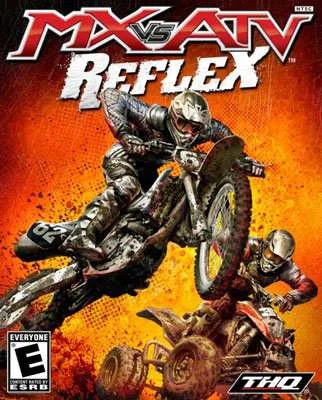
MX vs. ATV Reflex
- Category:
- Release date:
- Game Genre:Racing, vehicles, motorbike, multiplayer, quads
- Developer:Rainbow Studios/THQ Digital Phoenix Publisher: THQ Inc.
- Release:ElAmigos
- Platform:PC
- Languages (subtitles):English, French, Italian, German, Spanish
- Dubbing/Audio:English
- Crack:Prophet
- Game size:3.46GB
Game Description
MX vs. ATV Reflex is a PC off-road racing game built around motocross bikes, ATVs, UTVs, buggies, and sport trucks. The current Steam listing still uses the original title, with no verified rebrand or replacement edition found. Its defining ideas are independent rider control, real-time terrain deformation, freestyle tricks, and races where the best line can change as the track is torn apart.
Developed by Rainbow Studios and published on PC by THQ Nordic, Reflex sits between arcade racing and a more technical off-road simulation. It is not a licensed championship game focused on real-world series content. Instead, it emphasizes vehicle variety, large outdoor environments, stunt events, vehicle tuning, and aggressive racing where mistakes can send both rider and machine into the dirt.
How the riding works
The central control system separates the vehicle from the rider. One analog stick steers the bike or ATV while the other controls the rider's body position, letting you lean into corners, shift weight before a jump, correct a landing, or help the vehicle climb uneven ground.
This Rider Reflex system gives motocross machines a different rhythm from conventional racing games. Steering is only part of the job. You are constantly managing balance, traction, landing angle, and momentum, especially when a jump launches you over a rough or partially damaged section of track.
Reflex also uses a recovery input when a landing starts to go wrong. A quick directional correction can help the rider regain balance instead of immediately wiping out. The feature does not remove the game's difficulty, but it gives experienced players another way to save a race through fast reactions.
The handling changes significantly between vehicle classes. MX bikes and ATVs make the strongest use of rider positioning and terrain changes, while enclosed vehicles such as sport trucks and buggies feel heavier and less dependent on the rider-focused mechanics.
Deformable tracks and racing lines
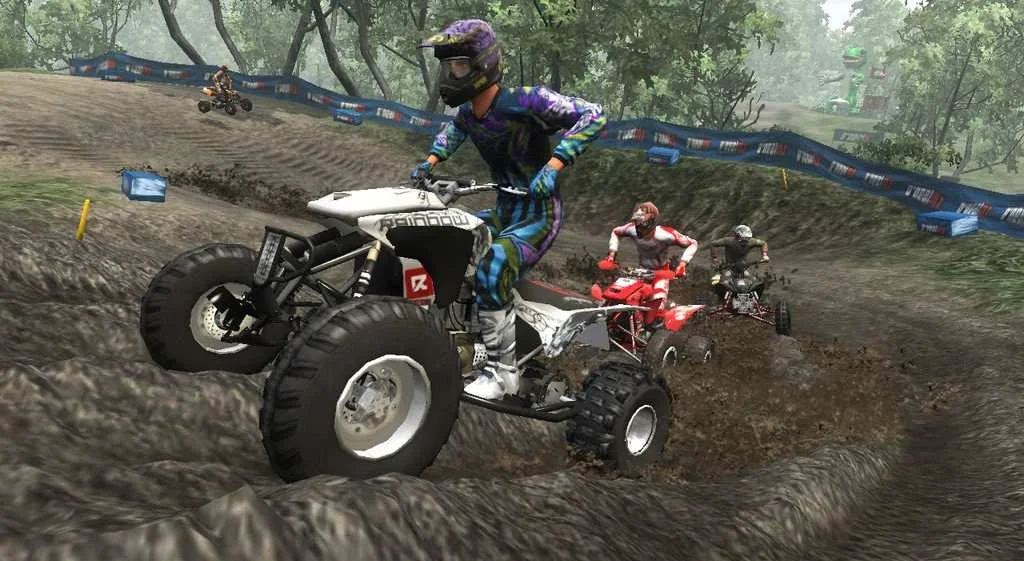
Real-time terrain deformation is the feature that gives Reflex its identity. Tires carve grooves into dirt, mud, snow, and other off-road surfaces, leaving behind a track that can become more difficult to read and less predictable as competition continues.
Those grooves are more than decoration. A rut can affect traction, alter a corner entry, or push a bike toward a different line. The practical result is that a circuit is not always identical from one lap to the next, especially when several riders repeatedly attack the same turn.
Different surfaces create different problems. Mud can deepen into awkward channels, waterlogged sections can disrupt a clean line, and rough outdoor terrain can combine elevation changes with obstacles. The system is most noticeable on lightweight vehicles, where a badly chosen rut can upset the bike or ATV more severely.
This is also where the game separates itself from straightforward stadium motocross. Reflex includes enclosed tracks, but it also sends players through broad outdoor environments containing forests, deserts, mountain routes, rivers, and swamp-like areas. The open layouts reward route awareness rather than simple memorization.
Events, tricks, and progression
The single-player structure combines conventional races with alternative competitions. Players can take part in circuit events, waypoint-style races, endurance challenges, time trials, elimination formats, freestyle competitions, and free-ride activities that place goals across open environments.
MotoX Freestyle gives the trick system its clearest purpose. While airborne, the trick modifier changes the role of the rider controls, allowing directional gestures to trigger stunts. Success depends on choosing a suitable jump, avoiding repetition, controlling the landing, and building a run that satisfies the event's scoring rules.
Freestyle is not simply a button-mashing bonus mode. The rider has to manage the transition between stunt input and normal body control, then return to a stable position before touching down. That makes timing more important than merely knowing which gesture produces a particular trick.
Outside freestyle events, the progression loop is based on completing competitions, unlocking more opportunities, and improving access to vehicles and customization options. The game is structured around repeated mastery of events rather than a narrative campaign with character-driven story missions.
Vehicle customization and tuning apply to MX bikes and ATVs, while the wider vehicle roster lets players choose between lighter, more responsive machines and larger vehicles that trade agility for stability and impact.
Which vehicles and modes fit which players?
Choose an MX bike if you want the strongest connection between body positioning, jump control, tricks, and changing ruts. Bikes are agile but unforgiving, and small errors in a landing or corner can quickly become a crash.
ATVs provide a broader stance and a different feel through corners and rough surfaces. They still use the rider-control system and can perform tricks, but their balance and weight distribution make them a useful middle ground for players who find bikes too delicate.
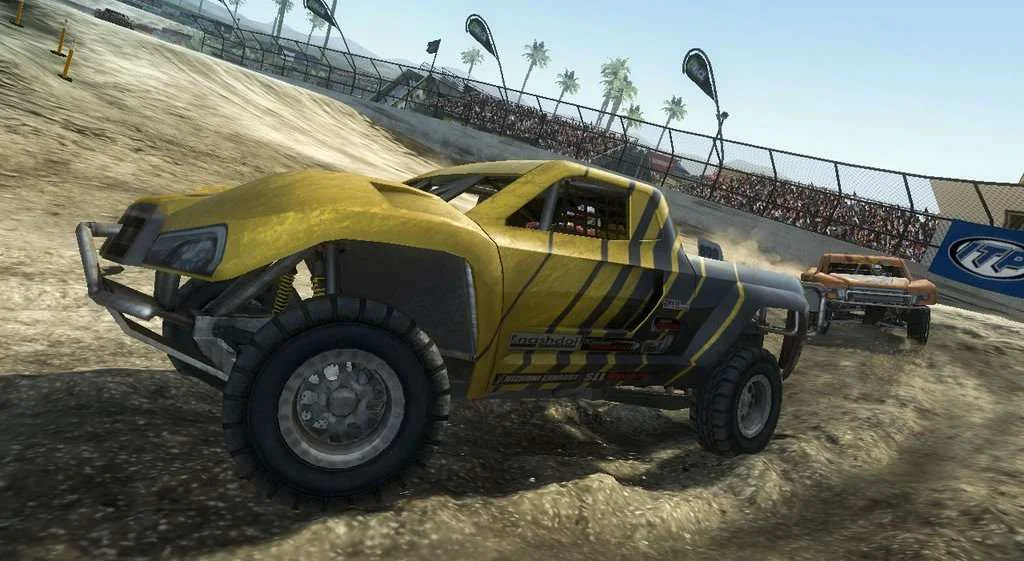
Sport buggies, UTVs, and sport trucks are better suited to players who prefer four-wheel stability, heavier impacts, and less emphasis on freestyle riding. They still benefit from the deformable environment, although the rider-focused systems are less central than they are on bikes and ATVs.
Reflex is a strong fit for players who enjoy learning a vehicle through repeated attempts, correcting mistakes at speed, and finding faster lines through damaged terrain. It is less suitable for anyone looking for a clean, predictable racing simulator or a forgiving arcade racer with minimal recovery management.
PC features and storefront status
The current PC edition is sold as a standalone paid game through Steam. The storefront lists single-player and multiplayer features, Steam Achievements, Steam Cloud, Family Sharing, and controller-related support through its feature tags.
Full controller support is the sensible way to play because the game depends on simultaneous steering and rider inputs. Keyboard controls are available through the PC version, but analog sticks make it easier to make small balance corrections and manage jumps.
The Steam listing identifies Rainbow Studios and THQ Nordic in the developer field and THQ Nordic as publisher. It also retains the original MX vs. ATV Reflex name rather than presenting the game as a remastered, definitive, classic, or renamed edition.
The storefront lists interface localization for English, French, German, Italian, and Spanish, with no full-audio language support indicated. No separate anti-cheat feature is advertised on the current store page, so competitive multiplayer expectations should be based on the features explicitly listed by the PC edition.
For players comparing it with more formal motocross products, licensed motocross racing such as MXGP 2020 offers a more championship-focused structure, while Reflex is centered on mixed vehicles, open environments, stunts, and track deformation.
Multiplayer and local racing
Reflex supports online multiplayer racing for up to twelve competitors according to the game's published multiplayer information. That scale makes the open environments and changing lines more chaotic than a solo race against computer-controlled opponents.
Local split-screen play is also available on PC, supporting couch competition for up to four players in the game's multiplayer modes. The local option is particularly useful for freestyle challenges and short races where the appeal comes from immediate, messy competition rather than long-term progression.
Multiplayer is not limited to standard races. The game also includes modes such as Snake and Tag, which use the open environments for pursuit, positioning, and route control rather than simply rewarding the first rider across a finish line.
Because Reflex is an older PC racing title, the most reliable multiplayer experience depends on finding compatible players and using the same available game features. The important distinction is that the PC version includes both online competition and local split-screen rather than treating multiplayer as an online-only feature.
Similar off-road games on PC
The closest modern family connection is later mixed-vehicle off-road racing in MX vs ATV Legends, although that page already references Reflex and is therefore not suitable for a reciprocal internal link under this article's linking rules. For that reason, it is mentioned only as context and not linked here.
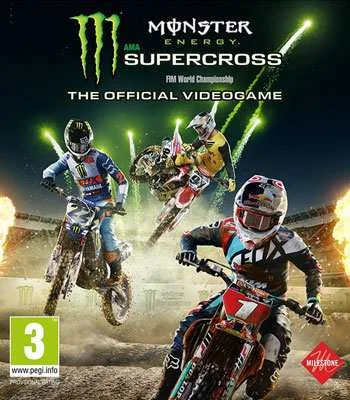
Players who want a more formal motocross environment can also compare Reflex with stadium-focused motocross racing like Monster Energy Supercross 3. The overlap is strongest in two-wheel handling, jumps, and track discipline, while Reflex offers a broader vehicle roster and more open off-road spaces.
These comparisons matter because Reflex is neither a pure simulation nor a simple arcade racer. Its appeal comes from the tension between accessible speed and demanding rider management, with terrain changes adding another layer to every lap.
MX vs. ATV Reflex FAQ
Is MX vs. ATV Reflex still sold under its original name on PC?
Yes. The current Steam storefront lists the game as MX vs. ATV Reflex. No verified rebrand, remastered name, or definitive-edition title was found for the current PC listing.
What is the main gameplay feature in Reflex?
The main feature is independent rider control. You steer the vehicle and control the rider's body separately, using weight shifts to corner, prepare jumps, recover from awkward landings, and perform tricks.
Does MX vs. ATV Reflex have deformable terrain?
Yes. Vehicles dig grooves into the track during races, and those changing ruts can influence traction and racing lines. The effect is most important on bikes and ATVs, where terrain changes are easier to feel.
Can you play MX vs. ATV Reflex with friends locally?
Yes. The PC version supports local split-screen multiplayer for up to four players, as well as online multiplayer for larger races.
Which vehicles are available?
The lineup includes MX bikes, ATVs, sport buggies, sport trucks, and UTVs. Bikes and ATVs make the most use of the Rider Reflex and trick systems, while the larger vehicles emphasize weight, stability, and impact.
Is MX vs. ATV Reflex a simulation or an arcade racer?
It is a hybrid. The controls reward technical balance, line choice, and vehicle control, but the game also includes exaggerated tricks, open-world event areas, stunt competitions, and chaotic physics that keep it closer to an arcade-leaning off-road racer than a strict simulation.
System Requirements
Minimum: |
Processor: Pentium IV 3 GHz Graphics: 256 MB VRAM Memory: 1 GB RAM Disk space: 4 GB HDD Operating system: Windows XP/Vista/7 |
Screenshots


Trailer/Gameplay
Download
MX vs. ATV Reflex (2010), 3.46GB
ElAmigos release, game is already cracked after installation (crack by Prophet).

1. Extract files.
2. Burn or mount the image.
3. Install the game.
4. ElAmigos release, game is already cracked after installation.
5. Play the game. If you like this game, BUY IT!
MX vs. ATV Reflex Download
 Download from TeraBox
Torrent Download
The best torrent download speeds are with qBittorrent!