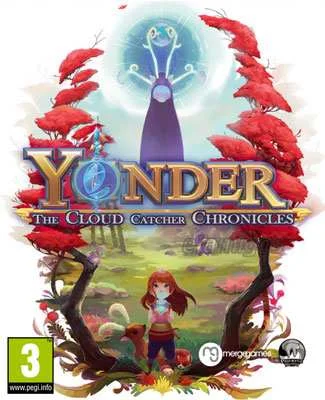
Yonder: The Cloud Catcher Chronicles
- Category:
- Release date:
- Game Genre:Adventure, TPP, fantasy, sandbox, farm, indie games, exploration games
- Developer:
- Release:ElAmigos
- Platform:PC
- Languages (subtitles):English, French, Italian, German, Spanish, Portuguese-Brazil, Russian, Korean, Japanese, Simplified Chinese
- Dubbing/Audio:English
- Crack:3DM, Ali213, Codex
- Game size:1.33GB
Game Description
Yonder: The Cloud Catcher Chronicles is a third-person PC adventure game built around peaceful exploration, gathering, crafting, farming, fishing, and trading rather than combat. The current PC storefront listing still uses the original title, with no verified Steam, Epic, or GOG rebrand replacing it. Developed and published by Prideful Sloth, it takes place across the island of Gemea, where players restore damaged regions, help local communities, and uncover the source of the Murk.
Yonder is best understood as a relaxed open-world adventure with life-simulation and sandbox elements. It has a clear quest-driven progression path, but its long-term appeal comes from wandering, collecting resources, improving crafting disciplines, managing farms, and completing optional requests at your own pace.
Exploration without combat
Gemea is divided into eight distinct environments, including tropical coastlines, grasslands, forests, desert areas, and snowy mountain regions. Each biome has its own plants, animals, materials, characters, and environmental details, giving exploration a practical purpose beyond sightseeing.
The main objective is to find Sprites, unusual creatures whose abilities can disperse the Murk covering parts of the island. Discovering these creatures often involves exploration, simple environmental puzzles, collecting specific items, or investigating hidden paths. Clearing Murk opens access to new areas, resources, and secrets.
There is no conventional combat system, enemy roster, or death loop. That makes Yonder a strong fit for players who want a fantasy adventure without pressure from hostile encounters, stamina management, or repeated battles. The central rhythm is simple: explore, gather, help someone, unlock a new possibility, and continue into the next region.
Movement takes place from a third-person perspective, with traversal focused on walking across the island and using unlocked travel points when returning to earlier locations. The game encourages curiosity, but it does not constantly force the player toward a strict objective marker.
Gathering, crafting, and trading
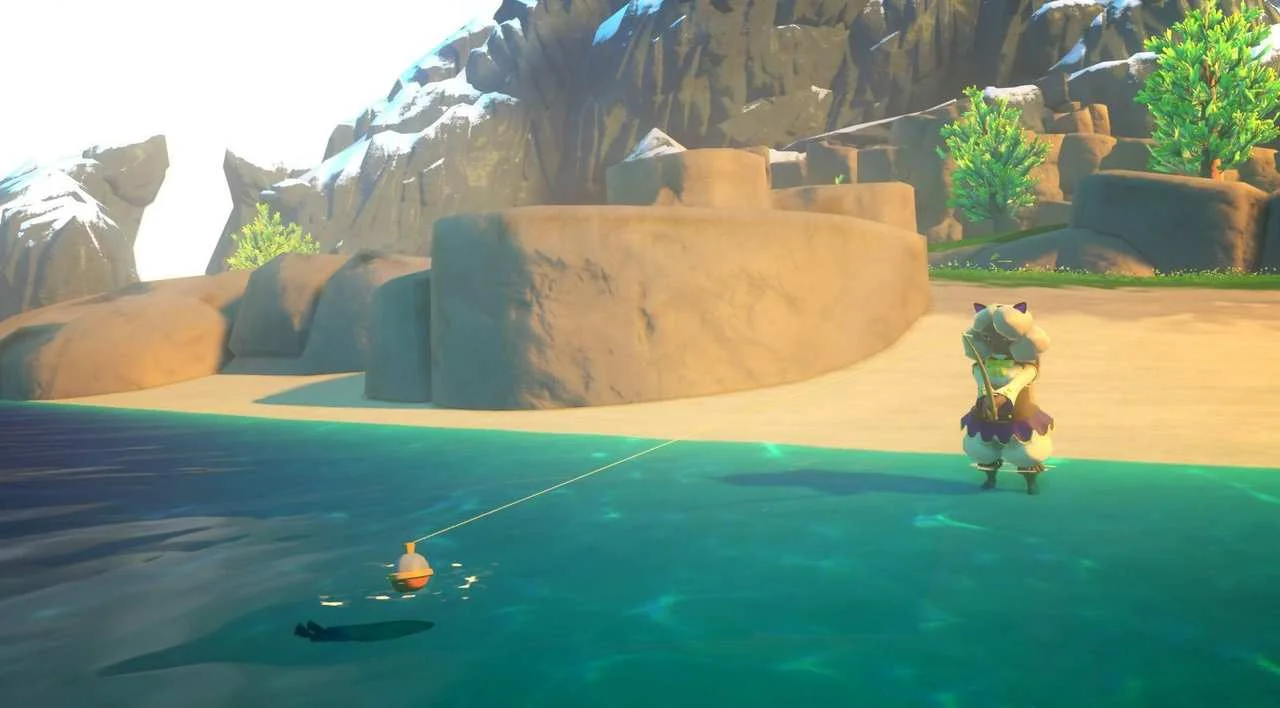
Resource gathering is one of Yonder's most consistent activities. Players can collect plants, wood, stone, ore, fish, food ingredients, and other materials from the landscape. These items support quests, production, farming, and the game's barter economy.
Instead of relying on a traditional currency-first economy, Yonder uses bartering with local traders. Items have practical trade value, so spare ingredients and crafted goods can be exchanged for equipment, materials, recipes, and useful services. This makes gathering relevant even when the player is not pursuing the main story.
Crafting is organized across several guild disciplines, including Wayfarer, Chef, Carpenter, Constructor, Tinker, Brewer, Tailor, and Master. Each discipline introduces different recipes and objectives, so progression is tied to learning what each guild can produce rather than simply upgrading one universal skill tree.
Recipes cover practical equipment, food, furniture, construction materials, machines, clothing, and trade goods. The system is broader than the farming label suggests, and players who enjoy collecting ingredients for multi-step production chains will find more depth here than in the basic planting loop.
Farms, animals, and everyday activities
Yonder allows you to establish multiple farms across Gemea. Farms can contain crop plots, trees, storage, animal pens, and production facilities. Their role is supportive rather than managerial: they provide resources and convenience, but the game does not turn into a demanding agricultural simulation.
Animals are recruited by learning what they like and feeding them their preferred food. Once befriended, they can be brought to a farm and used as part of the production system. Animal taming is gentle and collection-focused, matching the game's non-violent design.
Farming includes planting and harvesting crops, growing trees, housing animals, and using crafted machines to process materials. Cooking, fishing, and brewing add additional resource loops, while farmhands can help maintain the workload once your operations become more established.
The farming system is intentionally approachable. Players looking for detailed crop scheduling, complex relationships, or a highly optimized agricultural economy may find it lightweight. Those who want a calm side activity alongside exploration will find that it supports the wider adventure without dominating it.
Players who enjoy a broader crafting-and-community sandbox may also like colorful fantasy life-sim adventures such as Grow: Song of the Evertree, although Yonder places more emphasis on fixed-world exploration and restoring existing regions.
Quests and progression
The main story follows the effort to remove the Murk and restore Gemea. It introduces the island's locations, Sprites, guilds, farms, and residents, giving new players a guided route through the game's systems.
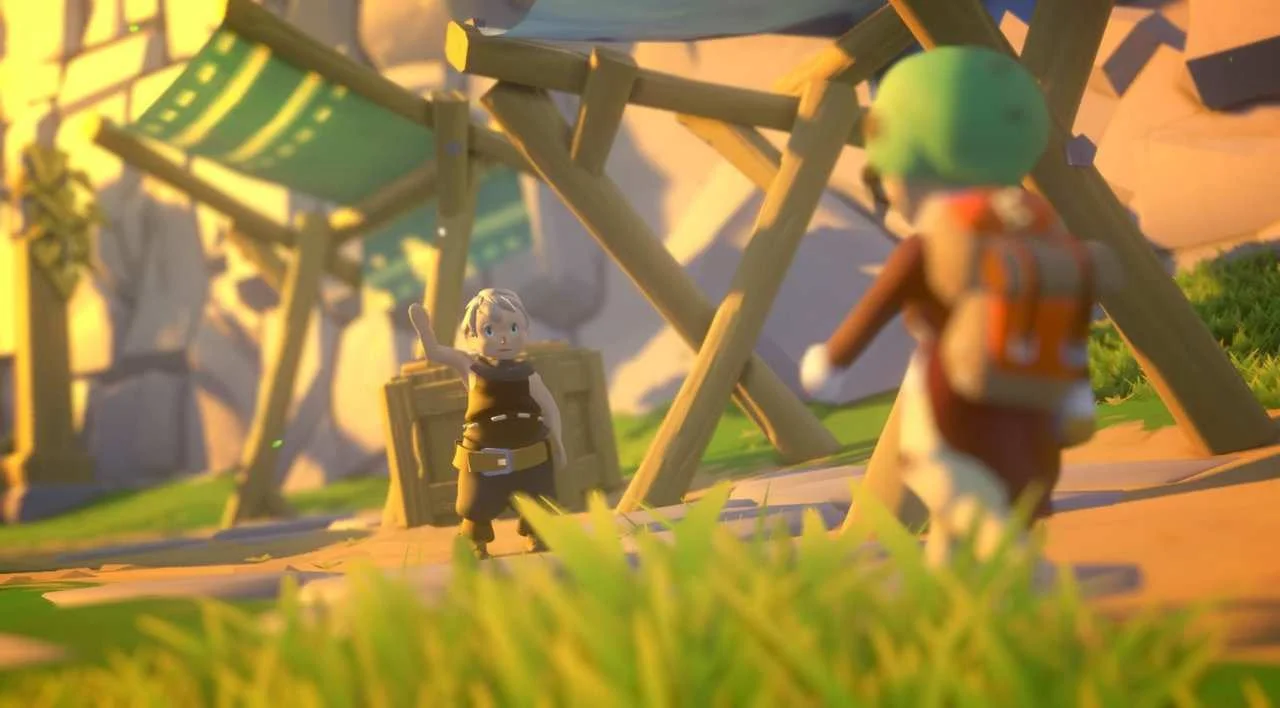
Side quests are distributed across towns and wilderness areas. Many involve gathering materials, crafting an item, locating a person, solving a small environmental problem, or contributing to a local project. Their rewards can include access to new farms, resources, recipes, and additional progression opportunities.
Yonder's progression is less about character statistics and more about unlocking systems through participation. The player becomes more capable by discovering new regions, meeting guild requirements, learning recipes, recruiting animals, finding Sprites, and building a more useful network of farms and storage.
This structure creates a mastery loop based on completion and collection. There is no combat build to optimize and no competitive endgame. The question is not whether your character can defeat a stronger enemy, but whether you have found enough materials, recipes, animals, Sprites, and local tasks to fully understand Gemea.
PC version and storefront details
On PC, Yonder is distributed through Steam under the original title. The Steam listing identifies Prideful Sloth as both developer and publisher and marks the game as single-player. It also includes Steam Achievements, Steam Trading Cards, Steam Cloud, Family Sharing, captions, and Remote Play on TV.
The game supports keyboard and mouse play as well as controller input. PC controller support includes configurable options and multiple controller input modes, making gamepad play practical for players who prefer a living-room setup.
Steam lists interface and subtitle support for English, French, Italian, German, Spanish, Brazilian Portuguese, Simplified Chinese, Japanese, Korean, and Russian. The storefront does not list full voice acting, so players should expect a text-focused presentation rather than a fully voiced adventure.
The PC version is a solo experience. There is no verified online co-op, split-screen mode, competitive multiplayer, or shared farm system. Remote Play on TV is a platform convenience, not a multiplayer feature.
For content, the base game is accompanied by a small free accessory pack focused on character customization. There is no large season-pass structure or extensive paid expansion catalog associated with the current Steam listing.
Players looking for a more character-focused crafting RPG can compare it with cozy village adventures built around gathering, crafting, and improving local relationships like Potion Permit. Yonder remains more open-ended and less combat-oriented, while Potion Permit gives its town activities a stronger job and progression identity.
Who should play Yonder?
Yonder is a good match for players who want non-violent exploration, colorful fantasy scenery, light farming, accessible crafting, and a forgiving progression system. It is also suitable for players who prefer games that can be paused and resumed without losing track of complicated schedules or urgent deadlines.
It works particularly well as a first introduction to open-world adventure mechanics because its systems are easy to understand and its failure penalties are minimal. Families and younger players may also appreciate the absence of conventional combat and the focus on helping characters, caring for animals, and restoring nature.
It is less suitable for players expecting deep farming simulation, complex NPC relationships, demanding puzzles, extensive combat, or a large multiplayer ecosystem. The story provides direction, but the long-term loop depends heavily on whether collecting, crafting, and completion are satisfying goals for you.
Yonder: The Cloud Catcher Chronicles FAQ
Is Yonder: The Cloud Catcher Chronicles still the current PC name?
Yes. The current Steam listing continues to use Yonder: The Cloud Catcher Chronicles. No verified PC storefront rebrand or replacement title was found.
Does Yonder have combat?
No. Yonder is designed as a non-combat adventure. Progress comes from exploration, quests, gathering, crafting, farming, fishing, trading, and finding Sprites rather than fighting enemies.
Is Yonder multiplayer or co-op?
No. The PC version is a single-player game without online co-op, local multiplayer, split-screen, or competitive modes.
How deep is the farming system?
Farming is a supporting system rather than the entire game. You can create farms, grow crops and trees, house animals, assign farmhands, and operate production equipment, but the main experience remains open-world exploration and crafting.
What is the main gameplay loop?
You explore Gemea, gather resources, complete quests, unlock crafting disciplines, barter with traders, establish farms, recruit animals, discover Sprites, and clear the Murk from new areas. Completion and collection replace combat-focused progression.
Does the PC version support controllers?
Yes. The PC version supports controller play alongside keyboard and mouse input, with configurable controller options available in the game's control settings.
Which players are most likely to enjoy Yonder?
Yonder is aimed at players who want a relaxed solo fantasy adventure with farming, crafting, fishing, exploration, and no combat. It is a better fit for completionists and cozy-game fans than for players seeking difficult combat or competitive multiplayer.
System Requirements
Minimum: | Recomended: |
| Processor: Intel Core i5-2400S 2.5 GHz/AMD FX-4320 4 GHz Graphics: 2 GB Geforce GTX 660/Radeon R9 270X Memory: 6 GB RAM Disk space: 2 GB HDD Operating system: Windows 7(SP1)/8.1/10 64-bit | Processor: Intel Core i7-3770 3.5 GHz/AMD FX-8350 4 GHz Graphics: 4 GB GeForce 970/Radeon R9 390 Memory: 8 GB RAM Disk space: 2 GB HDD Operating system: Windows 7(SP1)/8.1/10 64-bit |
Screenshots


Trailer/Gameplay
Download
Yonder: The Cloud Catcher Chronicles (2017), 1.33GB
ElAmigos release, game is already cracked after installation (crack by 3DM or Ali213 or Codex).

Updated till 01.06.2018 (Update 19).
 Change language in game options.

1. Extract files.
2. Burn or mount the image.
3. Install the game.
4. ElAmigos release, game is already cracked after installation.
5. Play the game. If you like this game, BUY IT!
Yonder: The Cloud Catcher Chronicles Download
🔒 Premium access required
To see and use the download links, you must be logged in and have an active PREMIUM account.
* Unlock downloads via Torrent and TeraBox.
DLC: Accessory Pack 1.
Torrent Download
The best torrent download speeds are with qBittorrent!