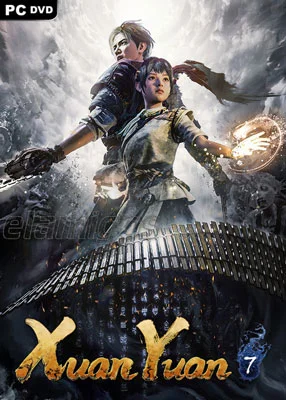
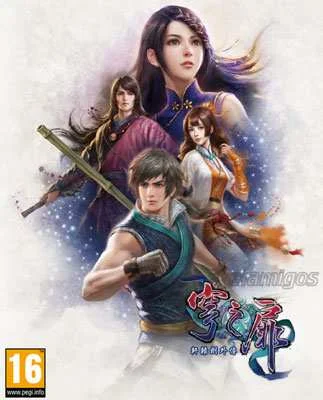
Xuan-Yuan Sword: The Gate of Firmament
- Category:
- Release date:
- Game Genre:RPG, fantasy, anime, jrpg
- Developer:DOMO Studio
- Release:ElAmigos
- Platform:PC
- Languages (subtitles):English
- Dubbing/Audio:Chinese
- Crack:syahmixp/SSE, FLT
- Game size:5.88GB
Game Description
Xuan-Yuan Sword: The Gate of Firmament is a third-person Chinese mythology RPG built around real-time encounters, party management, demon collection, and equipment refinement. The current Steam listing still uses this exact title; no verified rebrand, definitive replacement, or free-to-play transition was found across the storefront information checked.
Developed by DOMO Studio and SOFTSTAR ENTERTAINMENT, the game follows a mythic conflict involving the Jade Emperor, the sealed boundary between heaven and earth, the Huaxu kingdom, Emperor Zhuanxu, Fuxi, Nuwa, and the demon-worshipping Nine Li Tribe. It is a standalone entry in the long-running Xuan-Yuan Sword franchise, with its own cast and historical-fantasy setting.
Real-time combat with a party focus
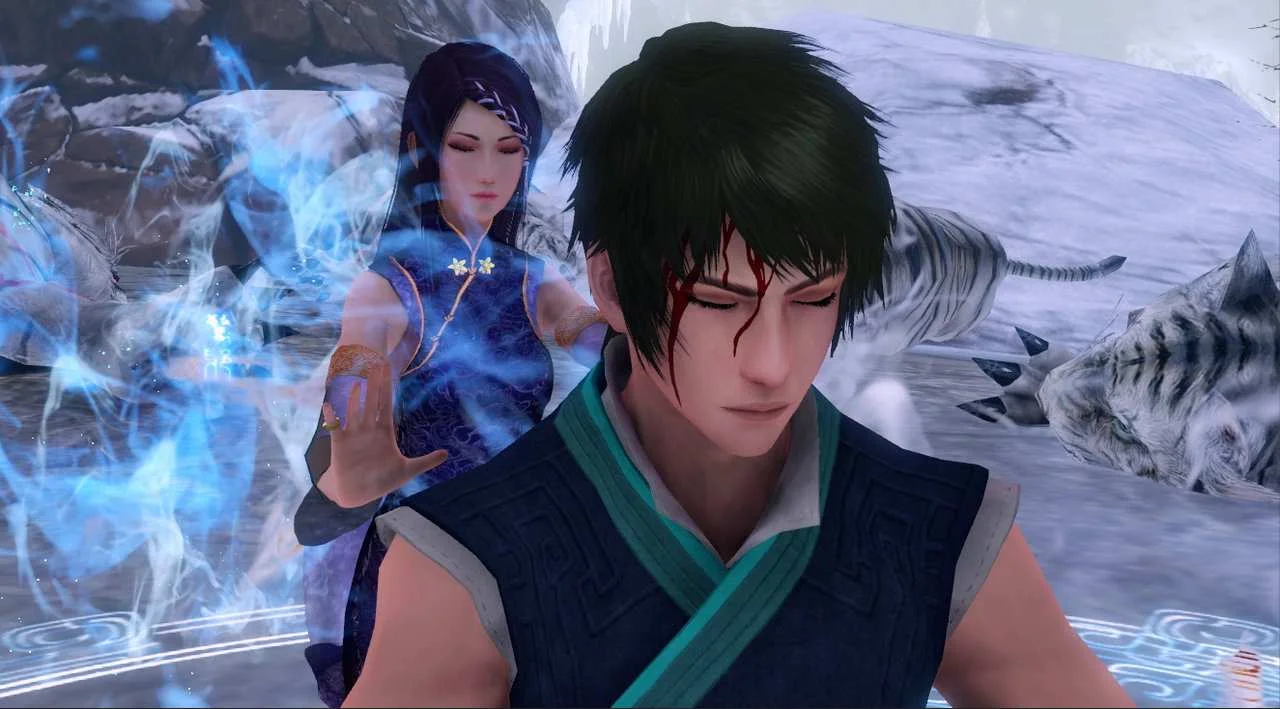
The core loop combines exploration across 3D environments with real-time, encounter-based combat. Battles are not traditional turn-based exchanges. Instead, enemies are confronted directly in the field, and success depends on choosing attacks, magic, support abilities, and party positioning while the encounter unfolds.
The perspective remains firmly third person, giving the game an action-RPG presentation without turning it into a purely reflex-driven brawler. The combat system is better understood as a hybrid: direct attacks happen in real time, but the player still needs to manage character roles, elemental abilities, buffs, healing, and the order in which party members contribute.
Playable characters bring different strengths to the group. Switching between them lets you respond to enemy resistances, keep pressure on vulnerable targets, or move from offense to support when a fight becomes dangerous. The system rewards players who pay attention to the whole party rather than relying on one character's basic attack.
Combat can become repetitive against weaker encounters, but the underlying structure becomes more interesting when enemies demand ability timing, formation changes, or deliberate use of captured guardians. Players looking for a purely cinematic action game may find the pacing dated, while fans of older party-based RPGs will recognize the emphasis on preparation and resource management.
Spirit Infusion, guardians, and miracles
The most distinctive systems are tied to the series' supernatural identity. The Urn of Spirit Infusion supports demon synthesis and equipment refinement, giving captured creatures and collected materials a purpose beyond ordinary combat rewards.
The Guardian System allows captured demons to fight alongside the human party. This adds another layer to team construction because guardians are not simply disposable summons. They become part of the player's approach to difficult encounters, especially when their abilities complement the active characters' attacks or defenses.
The Miracle System supplies additional attack buffs, creating another way to improve the party during combat. These systems work together: exploration provides encounters and materials, captured demons expand tactical options, and refinement improves the tools used throughout the story.
A separate Battle Formation system lets players arrange the party for a richer combat setup. Formation is not just cosmetic positioning. It is part of the game's broader attempt to combine action controls with RPG planning, and it gives experienced players a reason to adjust their approach instead of using the same lineup for every fight.
The setting also uses a mythological bestiary and a network of divine artifacts to connect combat progression with the narrative. The result is a game where character development, demon management, and the conflict between mortal and divine realms are closely related rather than isolated systems.
A story built from Chinese myth and history
The campaign centers on the consequences of opening the gates of heaven. The Jade Emperor's attempt to find his missing daughter allows mortals to seek divine power, but the opportunity is exploited, helping trigger wars, occult practices, and a broader collapse in the balance between the human and supernatural worlds.
The plot draws on figures and concepts including the Jade Emperor, Emperor Zhuanxu, the Queen of Huaxu, Fuxi, Nuwa, Chiyou, and the Bell of Donghuang. These names are part of the game's actual setting and are not merely decorative references; they shape the conflict that eventually leads to the sealing of the heavenly gates.
Players who are unfamiliar with Chinese mythology should expect a dense fantasy vocabulary and a story that assumes some patience. The narrative is more interested in competing beliefs, divine authority, and the consequences of historical events than in delivering a simple hero-versus-villain structure.
Localization is an important consideration. The PC version provides English subtitles and interface text, as well as Japanese, Simplified Chinese, and Traditional Chinese text options. Full audio is listed for Simplified Chinese and Traditional Chinese, while English and Japanese are available as interface and subtitle languages rather than full voice tracks.
Content model and storefront edition
This is a paid single-player RPG, not a live-service game. The Steam product listing presents the main game as the core purchase, with no season pass or large expansion program identified in the storefront data checked.
The only separately listed add-on is the Xuan-Yuan Sword: The Gate of Firmament Soundtrack Collection. That is a soundtrack product, not a gameplay expansion, so players buying the game should not expect a fragmented campaign or a table of character packs.
The Steam edition includes 45 Steam Achievements, Steam Trading Cards, Steam Cloud, and Family Sharing. These features make the PC version suited to achievement hunters and players who want cloud-backed progression, but they do not change the game's fundamentally offline, story-focused structure.
There is no verified multiplayer, online co-op, competitive mode, or split-screen support in the current storefront feature list. Treat The Gate of Firmament as a solo adventure with a controllable party, not as a multiplayer wuxia RPG.
Who should play it on PC?
The strongest audience is players who want a mythology-driven RPG with a Chinese setting, a large cast of supernatural entities, and systems that go beyond ordinary weapon upgrades. The demon-capture and refinement mechanics are the clearest reasons to choose it over a more conventional action RPG.
It is also a good fit for players who enjoy older PC RPG design: field encounters, character swapping, skill management, party formations, and a story that expects attention to names and factions. The game is less suitable for anyone seeking modern open-world freedom, highly polished action combat, or a concise onboarding process.
Players sensitive to uneven English localization should approach with realistic expectations. The English text makes the game accessible, but the presentation can still feel awkward in places, particularly when the plot introduces unfamiliar cultural references without much explanation.
For a newer Chinese mythology action RPG with a stronger emphasis on boss encounters and punishing melee combat, dark fantasy soulslike adventures such as Wuchang: Fallen Feathers provide a more modern alternative. The two games share mythic Chinese inspiration, but their combat priorities and progression structures are different.
PC features and control expectations
The PC version is distributed through Steam and supports Steam Cloud, achievements, trading cards, and Family Sharing. The official storefront notes that keyboard and mouse are required, so players should not assume native gamepad support or a console-style control layout.
That input detail matters because combat uses direct movement, attacks, skills, and party commands rather than menu-only selections. A keyboard-and-mouse setup is the officially documented expectation for the PC edition.
No anti-cheat system, mod-support framework, dedicated server tool, cabinet mode, or multiplayer ecosystem is identified in the storefront information. Those omissions are consistent with the game's design as a single-player campaign rather than an online platform.
For players comparing presentation and mythological themes with a more recent blockbuster, Chinese legend action RPGs like Black Myth: Wukong offer a useful contrast. The Gate of Firmament is more party-oriented and system-driven, while Black Myth: Wukong centers on one protagonist, boss-focused action, spells, and transformations.
Xuan-Yuan Sword: The Gate of Firmament FAQ
Is the game currently sold under another name?
No verified rebrand was found. The current Steam listing continues to use Xuan-Yuan Sword: The Gate of Firmament. It may also be discussed informally as The Gate of Firmament, but that shortened wording is not a separate edition.
Is The Gate of Firmament a single-player game?
Yes. The storefront lists single-player as the supported mode, with no co-op, split-screen, or competitive multiplayer feature identified.
Does it use real-time or turn-based combat?
It uses real-time, encounter-based combat. Players attack, cast abilities, manage party members, use formations, and bring captured guardians into battles as encounters unfold.
Can demons be captured and used in combat?
Yes. The Guardian System lets players capture demons and have them fight alongside the human party. The Urn of Spirit Infusion also supports demon synthesis and equipment refinement.
What languages are available on PC?
English, Japanese, Simplified Chinese, and Traditional Chinese are listed for interface and subtitles. Simplified Chinese and Traditional Chinese are also listed for full audio.
Does the PC version support controllers?
The official PC listing states that keyboard and mouse are required. Native controller support is therefore not confirmed by the storefront data.
What does the paid PC edition include?
The purchase provides the single-player RPG. The only separately listed add-on is the soundtrack collection, and no gameplay expansion or season-pass structure is identified in the current storefront listing.
System Requirements
Minimum: |
Processor: Intel Core Duo 3.0Ghz Graphics: Nvidia GForce 9800GT 512 MB VRAM Memory: 2 GB RAM Disk space: 6 GB HDD Operating system: Windows XP/7/8 |
Screenshots

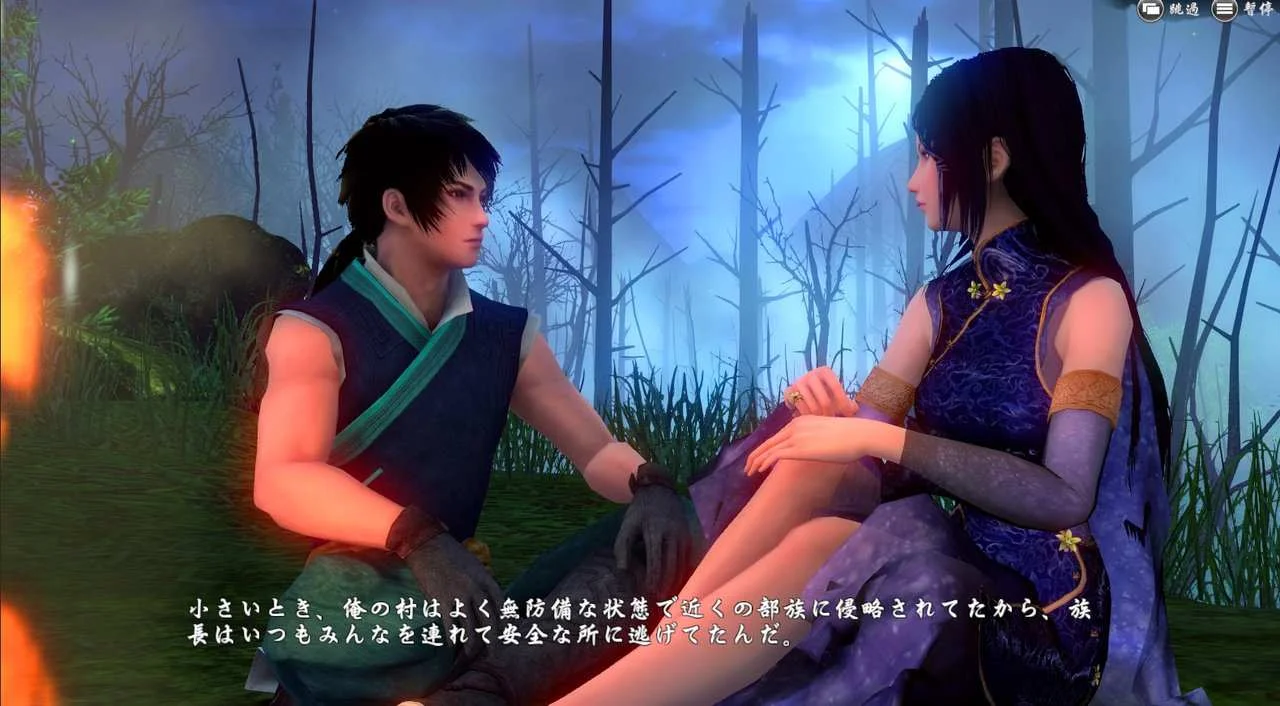
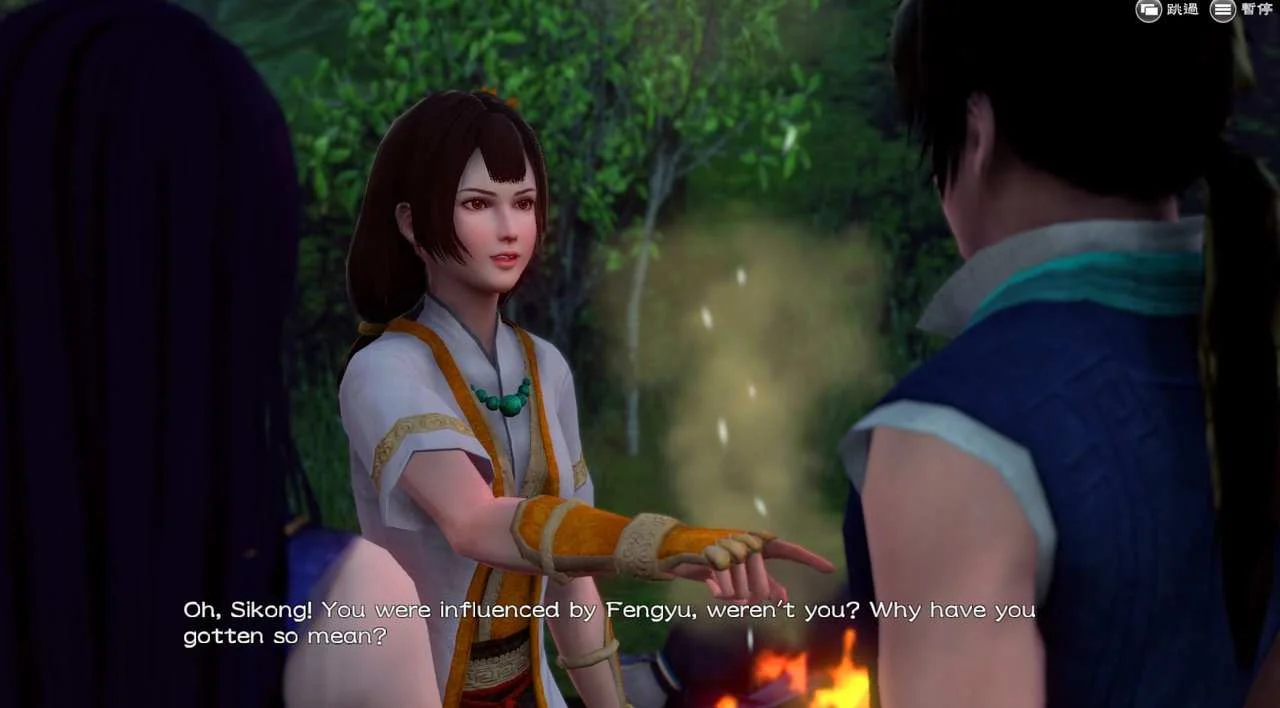
Trailer/Gameplay
Download
Xuan-Yuan Sword: The Gate of Firmament (2016), 5.88GB
ElAmigos release, game is already cracked after installation (crack by syahmixp/SSE or FLT).

+ patch/update 3 (26.03.2016) & crack 3 (by syahmixp/SSE or FLT), 87MB

1. Extract files.
2. Burn or mount the image.
3. Install the game.
4. ElAmigos release, game is already cracked after installation.
5. Play the game. If you like this game, BUY IT!
Xuan-Yuan Sword: The Gate of Firmament Download
🔒 Premium access required
To see and use the download links, you must be logged in and have an active PREMIUM account.
* Unlock downloads via Torrent and TeraBox.
Torrent Download
The best torrent download speeds are with qBittorrent!