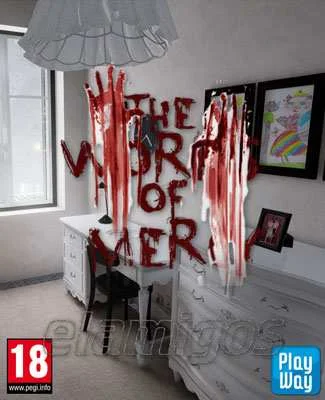
The Works of Mercy
- Category:
- Release date:
- Game Genre:Adventure, FPP, thriller, horror, Polish, crowdfunding, indie games
- Developer:Pentacle Publisher: PlayWay
- Release:ElAmigos
- Platform:PC
- Languages (subtitles):English, French, German, Spanish, Russian, Polish, Simplified Chinese
- Dubbing/Audio:English
- Crack:not necessary
- Game size:3.61GB
Game Description
The Works of Mercy PC is a first-person psychological thriller from Pentacle, built around a coercive murder plot, apartment exploration, and questions about guilt, family, and moral compromise. The current Steam listing still uses the original name, with no verified rebrand, definitive edition, or replacement storefront title identified.
A first-person thriller built around coercion
The game begins with the protagonist placed under pressure by a mysterious tormentor who claims to hold his family at risk. The central premise is direct: obey a series of lethal instructions, investigate what is happening, and decide how far you are willing to go to protect the people you love.
Most of the experience takes place from a first-person perspective, with the player moving through an apartment, examining surroundings, interacting with objects, and responding to situations as they develop. The setting is deliberately confined, making small environmental details and repeated visits more important than open-world exploration.
The core loop is closer to a playable psychological short story than a conventional survival-horror campaign. You explore, listen to conversations, follow changing objectives, make dialogue selections, and carry out tasks connected to the tormentor's demands. There is no character leveling, weapon progression, or conventional combat build to manage.
That structure gives the game a narrow but identifiable audience. Players looking for a compact narrative horror experiment will find a focused premise, while anyone expecting extensive puzzles, enemy encounters, or action-heavy survival systems should set expectations accordingly.
Choices, killings, and multiple endings
Dialogue choices are used to frame the protagonist's moral situation and shape how scenes are interpreted. The game asks questions about obedience, responsibility, sacrifice, and whether an apparently justified act can remain morally defensible once the pressure becomes extreme.
The choices do not turn the game into a large branching role-playing system. Instead, they support a short-form structure in which repeated playthroughs can reveal multiple endings and additional context. The main reason to replay is not character progression but discovering how the story's variations fit together.
The murders are central to the design and are presented as disturbing narrative events rather than as a traditional combat mechanic. The player is positioned as an unwilling or compromised participant, which gives the game its strongest thematic identity and separates it from haunted-house horror built mainly around evasion.
Players who prefer horror focused on psychological pressure, environmental clues, and narrative consequences may also appreciate story-driven psychological horror adventures such as Broken Pieces, although that game offers a broader exploration structure and more direct action.
The apartment as a psychological space
The apartment is more than a backdrop. It functions as the game's main stage, repeatedly changing in meaning as the protagonist's circumstances become more disturbing. Familiar rooms, doors, objects, and routes gain different significance as new instructions and revelations arrive.
Environmental observation matters because the game communicates much of its tension through what is visible in the surroundings and how the space is revisited. The design is not built around large maps or extensive item inventories; it relies on controlled movement through a restricted location.
The atmosphere also shifts toward a more surreal representation of the protagonist's mind. That transition supports the game's psychological-thriller identity, moving beyond a straightforward hostage scenario and into a story about guilt, trauma, and an increasingly unstable perception of reality.
There is no verified evidence of a substantial puzzle framework, procedural structure, or open-ended investigation system. The safest description is a linear narrative adventure with interaction, exploration, and choice-driven variation rather than a systems-heavy immersive sim.
Content model and current PC edition
Steam currently presents The Works of Mercy as a paid, standalone single-player game. The listing identifies Pentacle as both developer and publisher, and no separate season pass, expansion line, or alternate edition is identified in the current storefront information.
The game is designed as a compact experience rather than an endlessly repeatable horror platform. Its replay value comes from examining the story again, testing different responses, and finding alternate conclusions instead of unlocking new weapons, skills, or equipment tiers.
The Steam page describes mature content including violence and gore, nudity or sexual content, and broader adult themes. That content is not incidental to the plot: coercion, murder, and the consequences of forced actions form the basis of the experience.
The storefront does not present multiplayer, co-op, split-screen, or competitive modes. This is a strictly single-player narrative, and there is no reason to buy it for shared play or online progression.
PC features, controls, and localization
The PC version is distributed through Steam, so the Steam client is the relevant storefront and launch environment. The current feature list identifies single-player and Family Sharing, while no separate launcher, anti-cheat system, or dedicated online service is listed.
Steam's current listing does not identify official controller support. Players should therefore treat keyboard and mouse as the safest expected input method rather than assuming a verified plug-and-play gamepad experience.
English full audio is listed, with interface and subtitle support also available in French, German, Spanish from Spain, Polish, Russian, and Simplified Chinese. Localization is therefore broader than English-only text, but the storefront does not advertise additional dubbed audio languages.
There is no verified indication of Cabinet Mode, ultrawide-specific presentation, multi-monitor support, mod tools, Steam Workshop integration, or a dedicated photo mode. Those omissions matter for players comparing it with feature-rich PC horror releases.
The game also does not use a conventional save-focused progression loop. Developer commentary indicates that it was designed to be played as a short experience from beginning to end, so players should not approach it like a long campaign with frequent manual-save planning.
Who should play The Works of Mercy?
The Works of Mercy is best suited to players who enjoy compact first-person horror, morally uncomfortable premises, confined environments, and stories that use replaying to expose different outcomes.
It may appeal to fans of experimental narrative games that prioritize atmosphere and uncomfortable decisions over combat mastery. The premise is also a better fit for players interested in psychological thrillers than for those seeking monster combat, resource management, or a large investigative sandbox.
Players who want a more conventional first-person horror journey with stronger exploration and puzzle systems may prefer historical psychological horror adventures like Ad Infinitum, which expands its tension across a broader story framework.
The game is a weaker match for anyone who dislikes short campaigns, repeated story scenes, limited mechanical variety, or mature themes involving coerced violence. Its appeal depends heavily on whether the central premise and moral framing are more important to you than mechanical depth.
Similar PC horror experiences
The closest comparisons are other narrative horror games where atmosphere, interpretation, and environmental storytelling carry more weight than combat systems. The Works of Mercy is more contained than most survival-horror titles, with the apartment serving as both setting and psychological pressure chamber.
Players interested in cultural and psychological horror can compare it with compact story-led horror adventures such as Detention. The perspectives and settings differ, but both emphasize oppressive atmosphere, narrative discovery, and the emotional consequences of the protagonist's situation.
Unlike larger survival-horror games, The Works of Mercy does not provide a substantial arsenal, enemy roster, upgrade tree, or resource economy. Its distinctive feature is the decision to make the player participate in the story's violence rather than simply survive it.
That makes it a niche catalog choice: more interactive than a film, but less mechanically expansive than a traditional horror adventure. The strongest comparison point is its focus on a compact, unsettling scenario with replayable narrative variation.
The Works of Mercy FAQ
The following answers cover the most important storefront and gameplay questions for PC players evaluating the game.
Is The Works of Mercy still the official PC name?
Yes. The current Steam storefront continues to list the game as The Works of Mercy. No verified official rebrand, remaster, definitive edition, or replacement PC title was identified.
What kind of game is The Works of Mercy?
It is a first-person psychological thriller with horror, adventure, simulation, and mature narrative elements. Gameplay centers on apartment exploration, object interaction, dialogue decisions, following instructions, and uncovering multiple endings.
Does The Works of Mercy have multiplayer or co-op?
No. The current PC listing identifies the game as single-player. There is no verified co-op, split-screen, competitive multiplayer, or online story mode.
Does the game support controllers on PC?
Official controller support is not identified in the current Steam feature list. Keyboard and mouse should be treated as the expected PC control method unless the player confirms a preferred gamepad configuration independently.
What languages are supported?
Steam lists English full audio. Interface and subtitle support is also listed for French, German, Spanish from Spain, Polish, Russian, and Simplified Chinese.
Is The Works of Mercy a long horror campaign?
No. It is intentionally structured as a short narrative experience. The main reason to replay is to explore dialogue variations and reach different endings, not to build a character or unlock a large amount of additional content.
System Requirements
Minimum: | Recomended: |
| Processor: Intel Core i5-2500K 3.3 GHz Graphics: 2 GB GeForce GTX 660 Memory: 6 GB RAM Disk space: 4 GB HDD Operating system: Windows 7/8/10 64-bit | Processor: Intel Core i7-3770 3.4 GHz Graphics: 2 GB GeForce GTX 770 Memory: 16 GB RAM Disk space: 4 GB HDD Operating system: Windows 7/8/10 64-bit |
Screenshots


Trailer/Gameplay
Download
The Works of Mercy (2018), 3.61GB
ElAmigos release, unprotected game (serial or crack is not necessary).

Change language in game options.

1. Extract files.
2. Burn or mount the image.
3. Install the game.
4. Play the game. If you like this game, BUY IT!
The Works of Mercy Download
🔒 Premium access required
To see and use the download links, you must be logged in and have an active PREMIUM account.
* Unlock downloads via Torrent and TeraBox.
Torrent Download
The best torrent download speeds are with qBittorrent!