Divinity: Dragon Commander
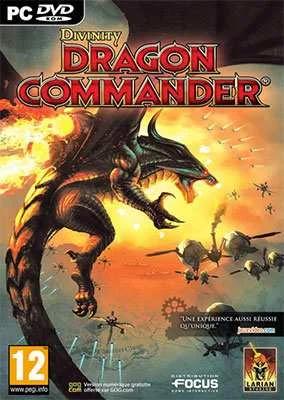
- Category:
- Release date:
- Game Genre:Strategy, fantasy, RTS, turn-based, arcade elements, multiplayer
- Developer:
- Release:ElAmigos
- Platform:PC
- Languages (subtitles):English, French, German, Polish
- Dubbing/Audio:English, French, German
- Crack:Reloaded
- Game size:11.66GB
Game Description
Divinity: Dragon Commander is a PC hybrid strategy game that combines turn-based empire management, political role-playing, real-time strategy battles, and direct third-person dragon combat. The current Steam listing still uses the original title, and no verified rebrand or replacement edition surfaced in the current storefront and official game materials.
Developed and published by Larian Studios, it is built around an unusual question: what happens when an emperor must govern a fantasy empire, manage rival factions, command armies, and personally enter battle as a jetpack-equipped dragon?
A campaign built around three connected layers
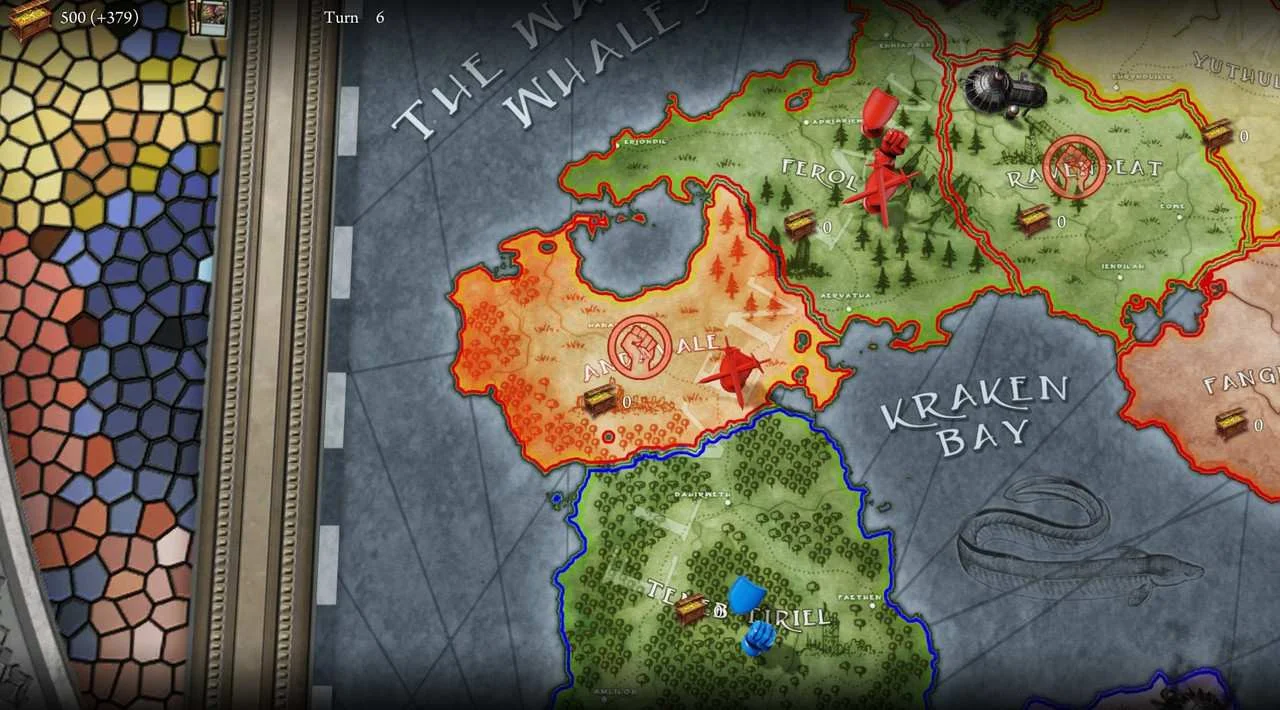
The strategic campaign takes place on a turn-based world map where you move armies and fleets, capture territories, develop infrastructure, and choose which regions to strengthen. It has a broad conquest structure rather than a sequence of isolated skirmishes, so positioning and long-term economic decisions matter before a battle even begins.
When opposing forces meet, you can usually let the game auto-resolve the conflict or fight through the real-time strategy layer yourself. The outcome depends on army composition, territory control, upgrades, and the bonuses you have accumulated during the campaign.
That structure gives Dragon Commander a distinct rhythm. One turn may involve moving forces across the map, approving a political measure, researching an upgrade, playing a card, and deciding which battle deserves your direct attention.
RTS battles with a controllable dragon
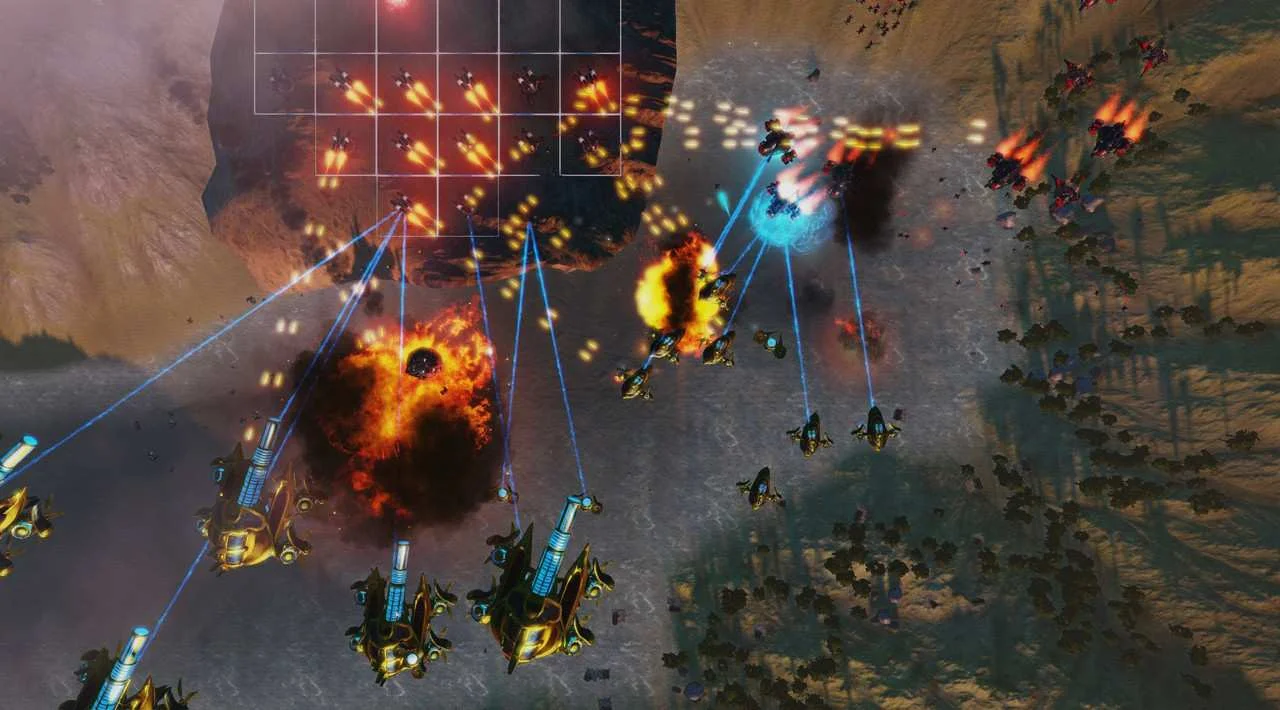
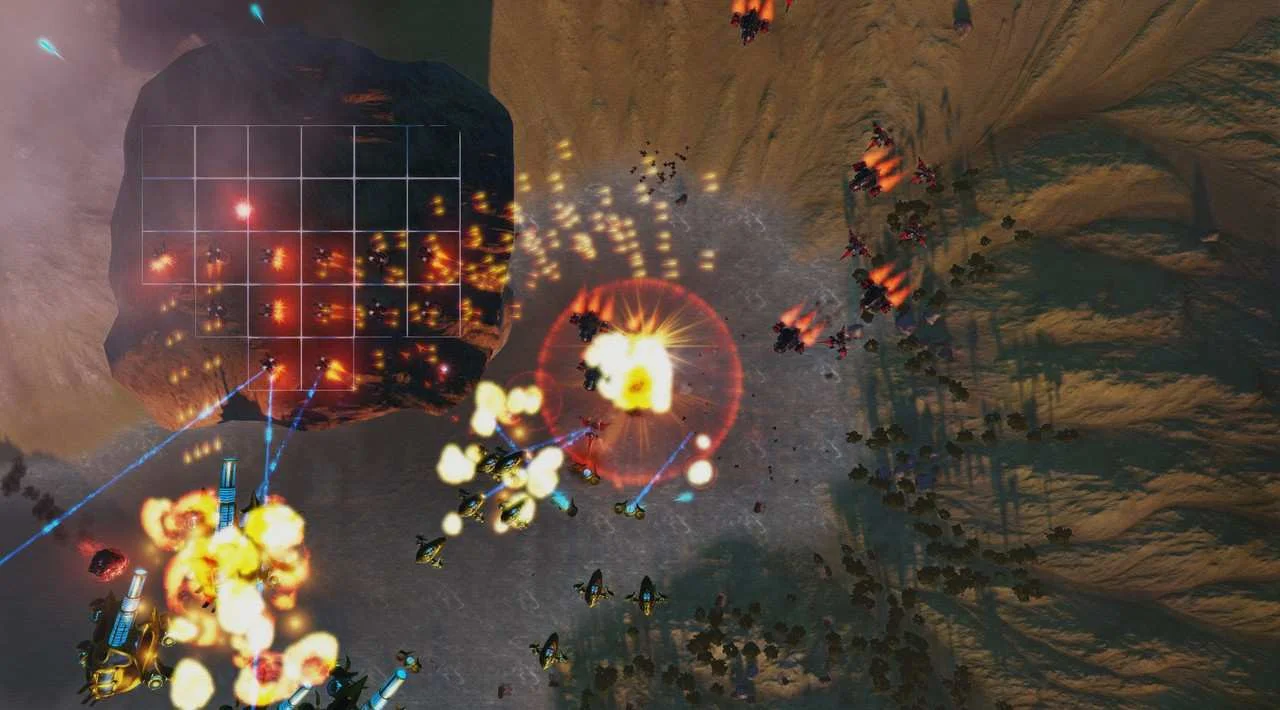
The real-time battles use a conventional command view for moving troops, capturing construction sites, gathering resources, and building military infrastructure. Land, sea, and air forces all play a role, with factories, barracks, unit production, and battlefield positioning shaping the contest.
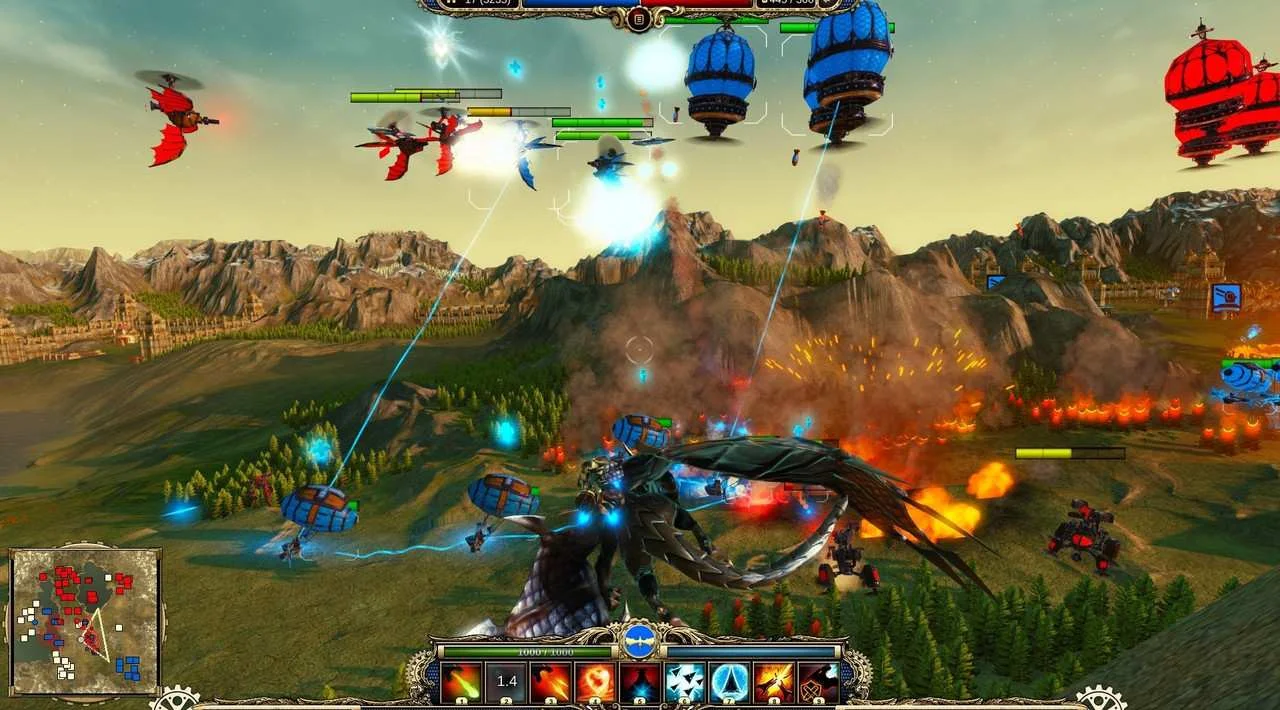
The defining feature is Dragon Mode. During an RTS battle, you can transform the commander into a flying dragon and take direct control from a third-person action perspective. The dragon can move independently, attack enemy formations, support friendly units, and use special abilities while the rest of the army continues operating on the battlefield.
Dragon combat is powerful but not completely free of constraints. The jetpack requires recharge time, attacks generate fatigue, and dodging uses the same general mobility resource as aerial movement. If you focus too heavily on flying, your army can lose momentum while you are busy hunting targets.
Before entering a manually controlled battle, you select a Dragon Skills loadout. These abilities can restore units, damage formations, disrupt enemies, or provide unusual tactical advantages. Choosing the right skills for the army and terrain is more important than simply taking the most destructive options.
Politics, cards, and governing an unstable empire
Between battles, Dragon Commander shifts into a political role-playing game. You interact with generals, advisers, ambassadors, and potential spouses aboard your command ship. These conversations lead to decisions that influence faction approval, available bonuses, and the tone of your rule.
The empire contains several fantasy cultures with competing interests, including dwarves, elves, lizards, imps, and undead. A policy that benefits one faction may frustrate another, so the political layer is not just dialogue decoration. It feeds back into the strategic campaign through faction relationships and gameplay bonuses.
Political cards add another layer of preparation. Decisions and campaign actions can award cards that improve your economy, reinforce an army, weaken an opponent, alter military conditions, or provide additional battlefield options. Playing them at the right moment can change the value of a seemingly even engagement.
Marriage is also part of the campaign structure. The available princesses have different personalities and political implications, making the relationship system another way to influence the balance between the empire’s factions.
Content structure and editions
Dragon Commander is a traditional paid PC game rather than a free-to-play or live-service title. The current Steam storefront presents the standard game alongside an Imperial Edition and a four-copy package, but there is no verified modern rebrand replacing the original product name.
The main attraction is the story-driven campaign, supported by custom campaign options, skirmish play, and multiplayer modes. The campaign is designed around conquest, political decisions, research, and repeatable battles rather than a linear action-game mission format.
Players who enjoy the fantasy RTS foundation of mythology-driven real-time strategy games such as Age of Mythology: Extended Edition may recognize the appeal of combining army control with supernatural battlefield abilities, although Dragon Commander places much more emphasis on political management and direct hero control.
Who should play Dragon Commander?
This is a strong fit for PC players who want genre experimentation instead of a pure RTS. The game rewards people who enjoy switching between strategic planning, tactical combat, political choices, and character interactions without expecting every layer to behave like a specialist simulation.
It is particularly suitable for players who like campaign maps where every battle is part of a wider war. The ability to choose between auto-resolving and personally fighting engagements also makes the game more flexible than an RTS that demands direct control of every encounter.
However, players seeking a highly competitive esports-style RTS may find the experience less focused. The battles are only one part of the design, and the game’s appeal depends heavily on whether you enjoy the political writing, card system, and eccentric fantasy presentation.
It is also not a conventional Divinity role-playing game. There is no party-based exploration structure comparable to Larian’s later RPGs. The role-playing comes through governance, relationships, faction choices, and the consequences of your decisions across the campaign.
PC features, multiplayer, and language support
The Steam version supports single-player, competitive multiplayer, and co-op campaign play. Official game information also identifies online and local LAN options, including custom campaigns played with or against another player and separate skirmish battles.
Multiplayer changes the strategic emphasis because human opponents can exploit political choices, campaign movement, and battlefield timing in ways the computer may not. The game is therefore more than a standard RTS match with a dragon hero added on top.
The Steam build includes Steam Cloud, achievements, trading cards, leaderboards, and Family Sharing. It uses the Steam ecosystem and requires acceptance of a third-party EULA. No verified dedicated-server tools, mod workshop integration, or anti-cheat system should be assumed from the current storefront information.
Language support is focused but useful for a catalog PC release. Steam lists English, German, and French with full audio, while Russian and Polish are listed for interface support. The game is primarily designed for keyboard-and-mouse strategy control, with the dragon layer adding direct action controls during battles.
For another PC strategy game that blends real-time army control with character progression, fantasy RTS-RPG hybrids like SpellForce 2 Anniversary Edition offer a useful comparison, though Dragon Commander’s campaign map and political systems are much more central to the overall experience.
Similar games and player fit
Dragon Commander has few exact substitutes because its combination of political simulation, turn-based conquest, RTS battles, and direct dragon piloting is unusually specific.
- Age of Mythology: Extended Edition is the closer match for mythological RTS battles and supernatural units.
- SpellForce 2 Anniversary Edition is a better comparison for the overlap between real-time army command and role-playing progression.
- Total War-style campaign structures are a useful reference for the relationship between a strategic map and manually fought battles, although Dragon Commander is smaller in scope and more character-driven.
The best reason to choose Dragon Commander is not that it outperforms specialist strategy games in every category. It is that few other PC games let you manage an empire, negotiate with fantasy factions, deploy political cards, and then fly into an RTS battle as a dragon.
Divinity: Dragon Commander FAQ
Is Divinity: Dragon Commander still the official name?
Yes. The current Steam listing and official game materials use Divinity: Dragon Commander. No verified rebrand or newer replacement title was found during the storefront check.
What type of game is Dragon Commander?
It is a hybrid of turn-based strategy, real-time strategy, political role-playing, and action combat. The campaign map handles conquest and preparation, while battles let you command armies or transform into a dragon.
Can you play as a dragon during RTS battles?
Yes. Dragon Mode changes the camera to a third-person action view and gives you direct control of the flying commander. You can attack, move, dodge, use dragon abilities, and continue issuing orders to your troops.
Does Dragon Commander support co-op?
Yes. The game supports multiplayer and co-op campaign play, including online and local LAN options according to the official game information. It is not a split-screen console-style co-op game.
Can battles be auto-resolved?
Yes. Campaign conflicts can be handled automatically or played manually as RTS battles. Auto-resolution considers the forces and conditions involved, while manual combat gives you the opportunity to influence the result with army commands and dragon abilities.
Do I need to play other Divinity games first?
No. Dragon Commander is set in the Divinity universe but presents its own campaign structure and playable systems. Prior series knowledge may add context, but it is not required to understand the empire-building, political decisions, or RTS mechanics.
System Requirements
Minimum: |
Processor: Core 2 Duo 2.6 GHz Graphics: 512 MB VRAM Memory: 4 GB RAM Disk space: 12 GB HDD Operating system: Windows XP(SP3)/Vista/7 |
Screenshots
Trailer/Gameplay
Download
Divinity: Dragon Commander Imperial Edition (2013), 11.66GB
ElAmigos release, game is already cracked after installation (crack by Reloaded).
Updated to version 1.0.124.

1. Extract files.
2. Burn or mount the image.
3. Install the game.
4. ElAmigos release, game is already cracked after installation.
5. Play the game. If you like this game, BUY IT!
Divinity: Dragon Commander Download
🔒 Premium access required
To see and use the download links, you must be logged in and have an active PREMIUM account.
* Unlock downloads via Torrent and TeraBox.
Torrent Download
The best torrent download speeds are with qBittorrent!