Die Young
Edit date: 6-01-2023, 01:02
Reason: Updated to version 1.2 (30.06.2020)

- Category:
- Release date:
- Game Genre:Action, FPP, survival, adventure elements, indie games, action adventure, exploration games
- Developer:
- Release:ElAmigos
- Platform:PC
- Languages (subtitles):English, French, Italian, German, Spanish, Polish, Turkish, Russian, Hungarian
- Dubbing/Audio:English
- Crack:Codex
- Game size:8.77GB
Game Description
Die Young on PC is a first-person open-world survival adventure built around parkour, climbing, stealth, crafting, and escape. The current Steam storefront still uses the original name, with no verified rebrand or replacement edition for the main game. Developed and published by IndieGala, it follows Daphne after she is kidnapped and abandoned on a hostile Mediterranean island.
Parkour, climbing, and survival under pressure
Die Young is not a conventional base-building survival game. Its central loop is to explore the island, follow story tasks, locate useful equipment, manage hydration, and use movement to avoid threats that Daphne cannot safely overpower.
The first-person perspective makes traversal the defining feature. Daphne can run, jump, climb, and vault across uneven terrain, using ledges, handholds, fences, rooftops, caves, and natural rock formations to reach areas that are inaccessible from ground level. Stamina matters during both running and climbing, so a poorly timed escape can leave her exposed or unable to reach the next handhold.
Fall damage and route planning make movement more deliberate than a simple sprint button. The safest path is not always the shortest one, and the island often rewards players who pause to identify climbable surfaces before committing to a jump.
Players who enjoy first-person survival games where mobility is as important as combat may find a useful point of comparison in parkour-focused survival horror such as Dying Light, although Die Young is more focused on escape, exploration, and resource management than on fighting large groups of enemies.
Hydration, crafting, and inventory decisions
The survival layer is deliberately narrow. Hydration is the main survival meter, while food is primarily used to restore health and hydration rather than support a complex hunger simulation. Water sources, canteens, drinks, berries, and other consumables determine how far Daphne can travel before returning to a safe location.
Inventory space is limited at the start, making every item choice meaningful. A backpack and utility belt expand carrying capacity, but the game still encourages players to decide whether they need healing items, crafting materials, tools, weapons, or survival supplies for the next section of the island.
The crafting system includes 28 recipes and blueprints divided across pharmacy, tools, and miscellaneous categories. Materials can be used to create healing items, weapons, upgrades, campfires, and other equipment. Recipes are found through exploration, documents, tools, and purchases from The Collector, so optional exploration can directly improve Daphne's options.
Combat exists, but it is usually a fallback rather than the safest answer. Daphne can use melee weapons, thrown objects, a crossbow, arrows, and fire-based weapons, yet several enemies are dangerous enough that stealth and evasion remain more reliable than direct confrontation.
Stealth and enemy encounters
Perception is one of Die Young's most useful systems. When activated, it can reveal nearby enemies, animals, threats, and useful targets through obstacles, helping players read an area before moving through it. The ability is especially valuable when militia members are positioned around narrow paths or when a route contains multiple hostile targets.
Enemy awareness is based on visibility and alert states. Remaining still, using cover, approaching from safer angles, and breaking line of sight can prevent a minor encounter from becoming a full pursuit. If enemies detect Daphne, escaping vertically or around obstacles is often more practical than trying to defeat several opponents.
Weapons have different attack behavior, stamina costs, blocking values, and durability. A charged attack can deal more damage but takes longer to perform, while blocking consumes stamina and becomes unreliable when Daphne is exhausted. The result is a combat system that supports improvisation but consistently encourages players to assess whether a fight is worth the risk.
Adventure Mode and Survival Mode
At the start of a new game, Die Young offers Adventure Mode and Survival Mode. Adventure Mode is intended as the more accessible way to experience the story, while Survival Mode increases the pressure created by stamina, hydration, damage, and equipment durability.
The starting choice affects more than preset difficulty. Adventure Mode provides the campfire recipe immediately and gives a more generous starting materials capacity. In Survival Mode, the campfire recipe must be discovered, which changes how quickly players gain access to manual saving.
After starting, players can customize several factors through the difficulty settings. Damage resistance, stamina, attack strength, hydration consumption, and weapon durability can be adjusted independently. Climb Aim Assist and Perception can also be enabled or disabled, giving experienced players more control over how demanding traversal and enemy awareness feel.
Campfires support manual saves, while shelters provide several important functions. Shelters act as save, storage, rest, and fast-travel points, making them essential landmarks during longer expeditions. Daphne must also respect the island's time-based routine: remaining outside after nightfall can trigger a fatal outcome rather than simply making the world darker.
Story, island exploration, and content model
The story begins with Daphne trapped in a well after being kidnapped for reasons she does not understand. Her escape route leads through rural settlements, ancient ruins, mines, caves, and hostile wilderness while she investigates the island community and the people responsible for her situation.
Die Young combines main tasks with optional objectives, documents, collectibles, equipment discoveries, and hidden routes. The open world is not designed as an endless sandbox. Its purpose is to connect story progression with exploration, traversal challenges, resource decisions, and environmental clues.
The main game is a premium single-player purchase on Steam. There is no verified season-pass structure, multiplayer package, or gameplay expansion model attached to the current main listing. The separate Die Young: Prologue is a free, more linear introduction featuring Nehir rather than Daphne, with three levels and alternate paths through its escape scenario.
The Prologue is useful for players who want to test the game's movement, stealth, and first-person survival systems before committing to the larger open-world experience. It should not be confused with a renamed edition of the full game.
Who should play Die Young?
Die Young is a good fit for players who want first-person exploration with parkour movement, light survival management, environmental discovery, and stealth-focused encounters. Its strongest moments come from reaching a location through a difficult climb, escaping enemies with limited stamina, or finding a safer route after an earlier attempt fails.
It is less suitable for players seeking a deep construction system, a large-scale combat sandbox, online co-op, or a traditional action game where defeating every enemy is the expected solution. The game repeatedly rewards avoidance, preparation, and movement over domination.
The tone also blends sunlit island scenery with violence, gore, sexual content, and unsettling story material. The bright setting is part of the contrast: beautiful outdoor spaces can still contain hostile animals, armed enemies, dangerous drops, and limited access to water.
PC features, controls, and localization
The current PC version is distributed through Steam and includes Steam Achievements, Steam Trading Cards, and Family Sharing. Steam lists the game as single-player only. There is no verified online co-op, competitive multiplayer, split-screen mode, dedicated server support, or anti-cheat system associated with the current storefront listing.
Die Young supports keyboard and mouse play as well as gamepad controls. Controller users can access the major movement, climbing, perception, interaction, and combat functions, while Climb Aim Assist can reduce aiming sensitivity near handholds during traversal.
The verified Steam localization package includes English full audio and subtitles, plus interface and subtitle support for Spanish, Russian, Hungarian, Italian, Polish, Turkish, French, and German. The language table distinguishes between interface, audio, and subtitle support, so players should not assume that every listed language includes voice acting.
Players looking for another first-person survival horror experience with a stronger procedural stealth structure can also compare it with single-player escape horror built around stealth and survival like Monstrum. Die Young is more open and traversal-driven, while Monstrum places greater emphasis on repeatable hunted-by-a-monster runs.
Die Young FAQ
Is Die Young still called Die Young on PC?
Yes. The current Steam listing for the main game still uses the name Die Young. No verified rebrand, definitive edition, or replacement storefront title has been identified for the full game.
Is Die Young open world?
Yes. Die Young presents a first-person open-world island divided into explorable areas connected by story tasks, optional routes, caves, ruins, shelters, water sources, and traversal challenges.
Does Die Young have multiplayer or co-op?
No. The PC version is a single-player experience. Steam features do not list online co-op, competitive multiplayer, or split-screen support.
Is Die Young a traditional survival crafting game?
Not exactly. It includes crafting, inventory management, hydration, equipment durability, and resource gathering, but it does not focus on building a permanent base or surviving an endless sandbox. Exploration and escape remain the main goals.
What is the difference between Adventure Mode and Survival Mode?
Adventure Mode offers a more forgiving starting setup and provides the campfire recipe immediately. Survival Mode applies harsher survival conditions and requires the campfire recipe to be found, while later difficulty settings allow several gameplay factors to be customized.
Is Die Young: Prologue the full game?
No. Die Young: Prologue is a separate free introduction with a more linear structure, a different protagonist named Nehir, and three levels. The full Die Young campaign follows Daphne across a much larger explorable island.
Does Die Young support controllers and multiple languages?
Yes. The PC version supports gamepad controls and includes English voice acting, with additional interface and subtitle languages listed on Steam. Full audio is not available in every supported language.
System Requirements
Minimum: | Recomended: |
| Processor: Intel Core i5-2400 3.1 GHz / AMD FX-8320 3.5 GHz Graphics: 2 GB GeForce GTX 670 / Radeon HD 7870 Memory: 8 GB RAM Disk space: 10 GB HDD Operating system: Windows 7/8/8.1/10 64-bit | Processor: Intel Core i7-3770 3.4 GHz / AMD FX-8350 4.0 GHz Graphics: 4 GB GeForce GTX 970 / Radeon R9 290X Memory: 16 GB RAM Disk space: 10 GB HDD Operating system: Windows 7/8/8.1/10 64-bit |
Screenshots


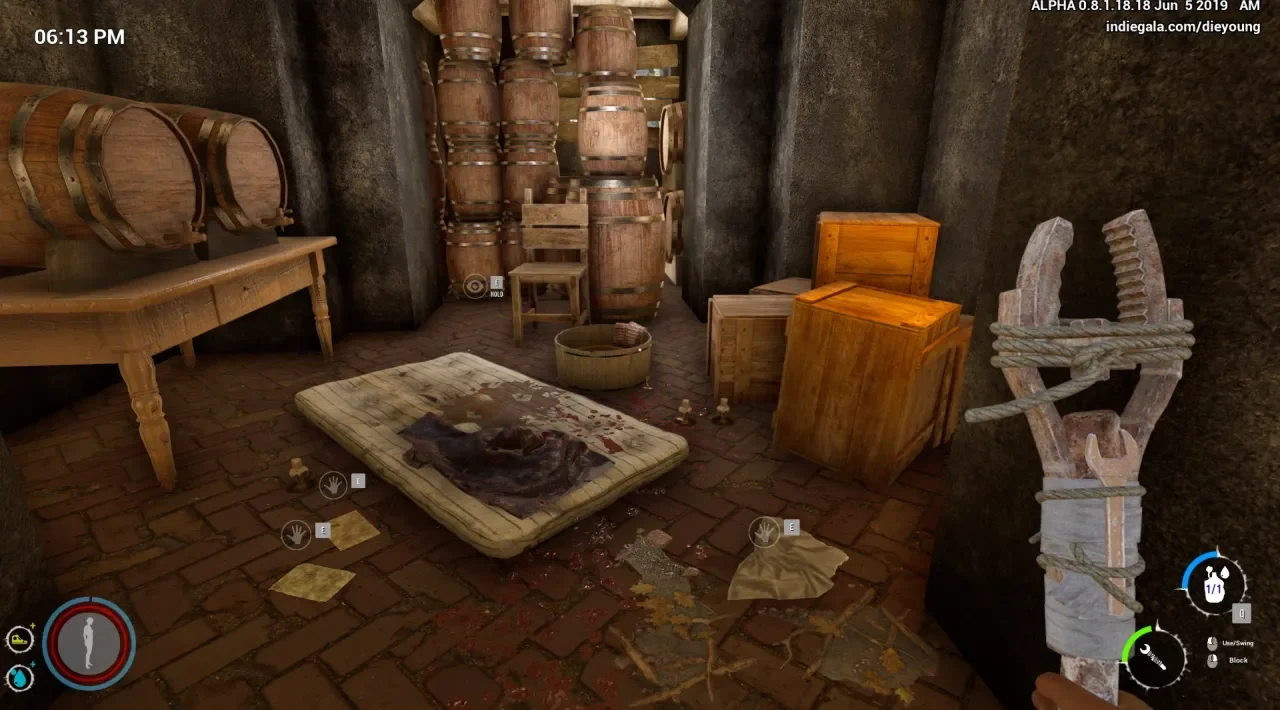
Trailer/Gameplay
Download
Die Young (2019), 8.77GB
ElAmigos release, game is already cracked after installation (crack by Codex).

Updated to version 1.2 (30.06.2020).
Change language in game options.

1. Extract files.
2. Burn or mount the image.
3. Install the game.
4. ElAmigos release, game is already cracked after installation.
5. Play the game. If you like this game, BUY IT!
Die Young Download
🔒 Premium access required
To see and use the download links, you must be logged in and have an active PREMIUM account.
* Unlock downloads via Torrent and TeraBox.
Torrent Download
The best torrent download speeds are with qBittorrent!