KillSquad
Edit date: 6-02-2023, 15:28
Reason: Updated to version 1.6.3.28 (14.11.2022)
- Category:
- Release date:
- Game Genre:Action, science fiction, Isometric view, RPG elements, multiplayer, co-op, shooters
- Developer:
- Release:ElAmigos
- Platform:PC
- Languages (subtitles):English, French, Italian, German, Spanish, Russian, Portuguese-Brazil, Simplified Chinese, Korean, Japanese
- Dubbing/Audio:English
- Crack:Codex
- Game size:8.28GB
Game Description
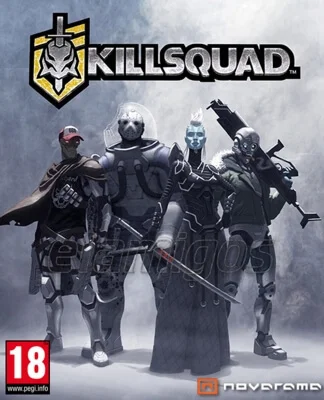
Killsquad on PC is a top-down co-op action RPG that combines twin-stick shooting, hack-and-slash combat, loot progression, and short mission-based runs. The current Steam listing still uses the name Killsquad, with no verified rebrand or replacement edition found across the checked storefront and publisher references. It is a paid game from Novarama built around fast contracts for solo players or squads of up to four.
This is not a traditional, story-heavy action RPG. Its strongest identity comes from compact missions, reactive combat, and the constant decision of how to improve a hero before the next contract. Players who enjoy sci-fi team games such as top-down co-op shooters like Helldivers will recognize the appeal of coordinating movement, objectives, and crowd control under pressure.
Fast Contracts, Clear Threats, and Top-Down Combat
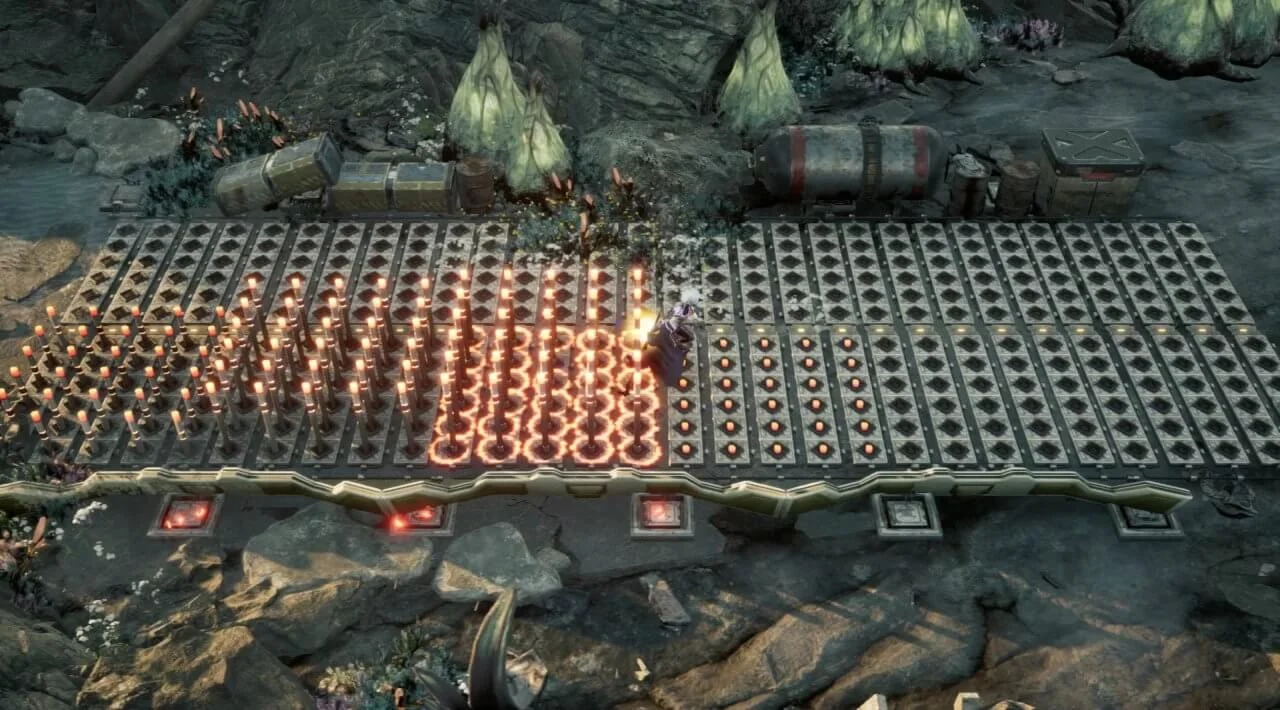
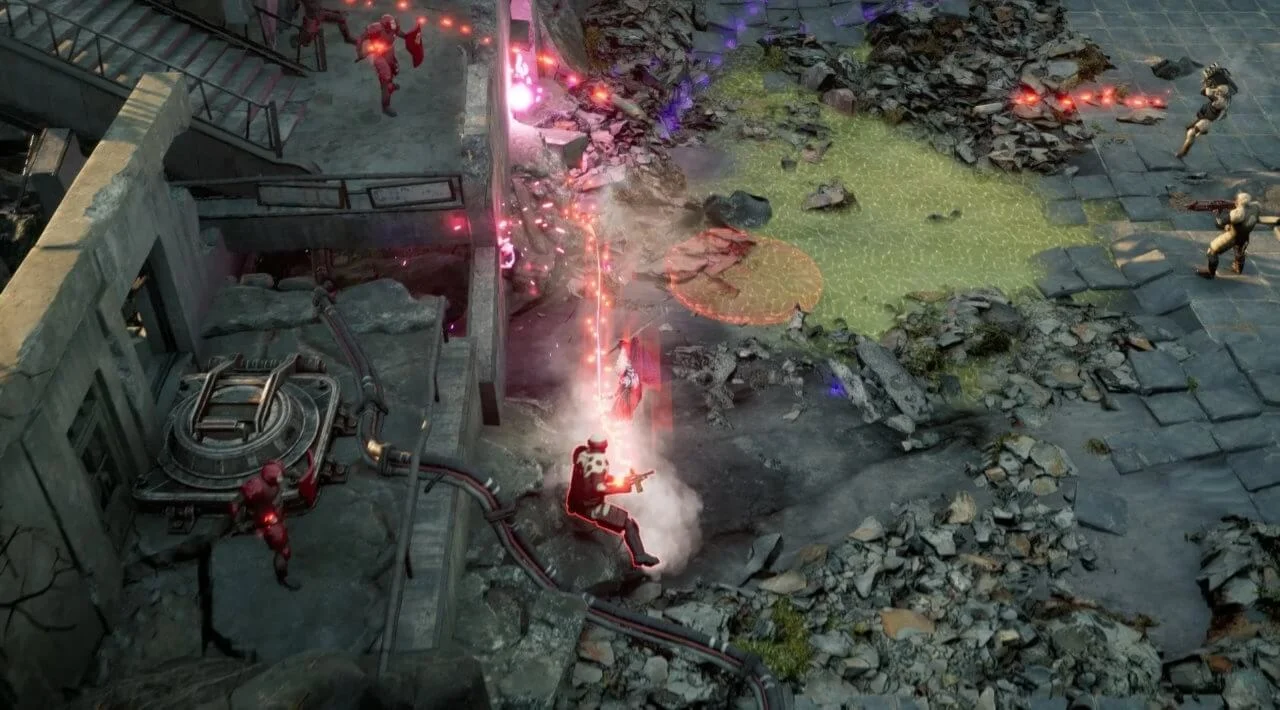
Killsquad uses a top-down perspective with direct keyboard-and-mouse or gamepad controls. Movement, aiming, attacks, dodges, and abilities are handled in real time, so survival depends on reading enemy patterns rather than simply stacking statistics. The combat sits between a twin-stick shooter and an action brawler, with ranged weapons, melee attacks, telegraphed hazards, and large enemy waves filling the screen.
The main activity is the contract. A typical mission sends the squad through a hostile planetary map, completing objectives before confronting a boss or extraction sequence. Contracts can involve extermination, escorting, defending an area, destroying targets, or surviving escalating enemy pressure. The store describes the core missions as short sessions, making the game suitable for players who want repeatable bursts rather than a single uninterrupted campaign.
Maps use procedural generation and environmental hazards to vary the route and combat space. Gas clouds, minefields, meteor activity, traps, and other threats can force players to reposition instead of standing still and trading damage. Chests, resources, credits, and mission rewards give players reasons to explore, although the basic loop remains focused on clearing enemies and completing the contract.
Team composition matters. A melee hero may draw attention and control enemy groups while a ranged character attacks from safer angles, and support abilities can keep a fragile squad alive during boss encounters. The game also allows players to join another squad mid-mission, which supports drop-in online cooperation instead of requiring every player to begin from the lobby.
Five Heroes With Different Combat Roles
Killsquad includes five playable heroes, each built around a distinct weapon profile, skill set, and combat role. Troy is a gunslinger focused on ranged damage, while Kosmo uses a heavy hammer and leans toward close-range disruption and durability. Cass is a fast melee fighter, Zero provides defensive and medical utility, and Ekaar specializes in gadgets and support tools.
These are not interchangeable skins. Each hero changes how the player approaches enemy formations, boss mechanics, and positioning. Troy and Zero can contribute from range, but they solve problems differently; Cass rewards aggressive movement, while Kosmo is more comfortable absorbing attention and creating space for teammates.
Every contract begins with mission-based leveling. Players gain experience during the run, unlock abilities, and choose upgrades as the contract progresses. This temporary progression gives each mission a compact buildcrafting arc: the squad starts relatively limited, then develops a more specialized toolkit before the final objective.
The system has a MOBA-like structure because skills and modifications are selected during the mission rather than being permanently unlocked in one uninterrupted character level curve. That reset is central to Killsquad's design. It encourages players to adapt their choices to the contract, enemy resistance, team composition, and difficulty instead of relying on one permanent setup for every situation.
Gear, Talismans, and Build Decisions
Between contracts, players work on weapons, gear, gadgets, power-ups, and talismans. Equipment affects a hero's combat effectiveness and can modify how skills perform. The result is a progression system that combines permanent collection with temporary in-mission decisions.
Talismans are the most unusual part of the loadout system. These artifacts provide passive effects, but they can begin with detrimental properties that must be improved through continued use. Players collect fragments, assemble a talisman, and then level it through contracts to remove drawbacks and reveal more of its potential.
The gear chase is therefore more than a simple damage upgrade. A weapon or support item can push a hero toward a particular playstyle, while skill modifications determine how that loadout performs during the current mission. The most effective builds come from combining equipment traits with the hero's abilities instead of treating every reward as a linear replacement.
Players also earn credits and other rewards from completed work. Those resources can be used to acquire additional equipment or cosmetics, giving successful contracts a purpose beyond the immediate score. The progression loop is deliberately compact, but it still asks players to compare options and decide whether to optimize for damage, survival, crowd control, or team utility.
Campaign Scale and Repeatable Content
The Campaign Map spans five planets and includes more than 30 contracts according to the current Steam description. That campaign structure gives the game a route through its content, but the missions are better understood as repeatable contract activities than as chapters in a heavily scripted narrative.
Bosses are a major part of the content model. The game lists more than 15 bosses, each with different mechanics and ways to defeat them. Successful teams need to recognize attack patterns, avoid area damage, manage adds, and preserve defensive abilities for the dangerous phases rather than relying only on raw gear strength.
There are also harder contract variants and challenge-oriented activities for players who want to keep refining builds after seeing the campaign path. The Infinite Colosseum and other coliseum-style content are particularly relevant to score-focused players, since they emphasize survival, leaderboard performance, and repeatable combat mastery.
The important expectation is that Killsquad is a mastery-and-loot loop, not a large open-world game. It is best suited to players who enjoy returning to familiar structures with different heroes, loadouts, difficulties, and squad combinations. Those seeking extensive exploration or a cinematic single-player campaign should approach it with more limited expectations.
PC Features, Online Play, and Languages
On PC, Killsquad supports keyboard and gamepad controls, with full controller support listed in the available Steam metadata. The control design suits both traditional mouse-and-keyboard play and a more console-like twin-stick setup. It is also listed with Steam Cloud, Steam Trading Cards, Family Sharing, and Steam Achievements.
The game offers single-player play and online co-op for up to four players. The storefront does not list local split-screen or couch co-op as a native feature, so PC players should treat multiplayer as online cooperation rather than local shared-screen play. Crossplay between PC and PlayStation was added through an official update, expanding the available matchmaking pool beyond Steam users.
Killsquad is also playable on Steam Deck. The developer's announcement notes that some configuration effort may be needed, while compatibility information indicates that the default controller setup is functional but that small text, controller selection, or the on-screen keyboard can require manual attention. It is a practical handheld option, but not one to describe as a completely frictionless Deck experience.
Steam lists ten supported interface languages: English, French, Italian, German, Spanish from Spain, Russian, Simplified Chinese, Brazilian Portuguese, Korean, and Japanese. English is the only language listed with full audio; the other supported languages provide interface and subtitle localization.
Who Should Play Killsquad?
Killsquad is a strong fit for players who want short co-op missions, readable character roles, fast combat, and a progression system that can be explored without committing to a huge campaign. It works particularly well for groups that enjoy experimenting with builds and coordinating around bosses.
Solo players can access the same contract structure, but the design clearly gives more weight to cooperation. Enemy pressure, support skills, and class differences become more meaningful when a team is communicating. Players who prefer social action games with repeatable objectives may get more value from it than players looking for a deep narrative or long-form exploration.
It is less suitable for anyone expecting a conventional Diablo-style adventure with extensive permanent skill trees, a large story campaign, or endless world variety. The missions are intentionally focused, and repetition becomes part of the experience. The appeal comes from improving execution, understanding heroes, and refining equipment rather than constantly discovering a new environment.
Similar PC Games and the Competitive Gap
The closest comparison points are not identical games. Killsquad borrows the top-down perspective and four-player structure associated with co-op shooters, but adds hero abilities, temporary leveling, equipment traits, and talisman progression. Players who enjoy four-player PvE teamwork against relentless alien hordes in Deep Rock Galactic may appreciate the emphasis on role coverage, though Killsquad is more combat-forward and mission-contained.
Compared with a traditional loot-driven action RPG, Killsquad offers shorter contracts and more immediate resets. Compared with a pure twin-stick shooter, it gives each hero a more defined identity and adds a deeper equipment layer. That hybrid position is its main differentiator, but it also explains why the game may feel narrower than larger live-service co-op titles.
Competitor coverage often focuses on the Diablo-meets-Destiny comparison, but the more useful player questions are practical: whether the game has local co-op, how many heroes it includes, how talisman drawbacks work, whether missions are suitable for short sessions, and whether the PC version supports controller and Steam Deck play. Those details matter more than broad genre labels when deciding whether Killsquad belongs in a regular co-op rotation.
Killsquad FAQ
Is Killsquad still called Killsquad on PC?
Yes. The current Steam storefront listing uses Killsquad. No verified renamed edition or replacement storefront title was found in the checked official references.
Is Killsquad free to play?
No. The PC version is sold as a paid base game. It is not presented as a free-to-play conversion, and the checked storefront information does not show a season-pass model as part of the core listing.
How many players can play Killsquad online?
Killsquad supports online co-op for up to four players. It also supports solo play and allows players to join another squad during an active mission. Native local split-screen is not listed on the PC storefront.
Does Killsquad support controllers and Steam Deck?
Yes. The PC version supports gamepads and is playable on Steam Deck. Deck users may need to adjust controller selection or display settings, and some in-game text can be difficult to read on the smaller screen.
How long are Killsquad missions?
The core contracts are designed as short sessions, generally described by the storefront as taking around 10 to 20 minutes. Their purpose is repeated completion, build experimentation, boss practice, and gear progression rather than one long uninterrupted adventure.
What languages does Killsquad support?
The PC version supports English, French, Italian, German, Spanish from Spain, Russian, Simplified Chinese, Brazilian Portuguese, Korean, and Japanese for interface and subtitles. English is the listed full-audio language.
System Requirements
Minimum: | Recomended: |
| Processor: Intel Core i3 / AMD Phenom II X3 Graphics: 2 GB GeForce GTX 660 / Radeon HD 7850 Memory: 6 GB RAM Disk space: 6 GB HDD Operating system: Windows 7/8/8.1/10 64-bit | Processor: Intel Core i7-3770K 3.5 GHz / AMD FX-8350 4.0 GHz Graphics: 4 GB GeForce GTX 970 / Radeon R9 290 Memory: 8 GB RAM Disk space: 6 GB HDD Operating system: Windows 10 64-bit |
Screenshots


Trailer/Gameplay
Download
KillSquad (2020), 8.28GB
ElAmigos release, game is already cracked after installation (crack by Codex).

Updated to version 1.6.3.28 (14.11.2022);

1. Extract files.
2. Burn or mount the image.
3. Install the game.
4. ElAmigos release, game is already cracked after installation.
5. Play the game. If you like this game, BUY IT!
KillSquad Download
🔒 Premium access required
To see and use the download links, you must be logged in and have an active PREMIUM account.
* Unlock downloads via Torrent and TeraBox.
DLC: SteelSeries.
Torrent Download
The best torrent download speeds are with qBittorrent!