Dragon Quest Builders 2
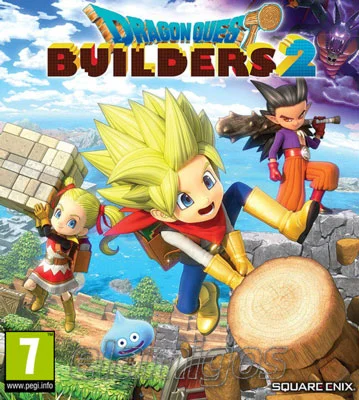
- Category:
- Release date:
- Game Genre:RPG, TPP, fantasy, sandbox, multiplayer, crafting, jRPG
- Developer:
- Release:ElAmigos
- Platform:PC
- Languages (subtitles):English, French, Italian, German, Spanish, Korean, Traditional Chinese, Simplified Chinese, Japanese
- Dubbing/Audio:N/A
- Crack:Codex
- Game size:3.10GB
Game Description
Dragon Quest Builders 2 is a PC block-building RPG that combines third-person exploration, real-time combat, farming, crafting, and settlement management. The Steam storefront still uses the original name, with no verified PC rebrand or replacement edition. Developed by Square Enix and KOEI TECMO GAMES, it works as a standalone adventure for newcomers while expanding the Dragon Quest Builders formula with larger islands, stronger character progression, and online creation tools.
The game is built around a clear fantasy: the world has been damaged by the Children of Hargon, a cult that rejects creation, and the player must restore civilization one settlement at a time. The result is more structured than a pure survival sandbox, but more flexible than a traditional linear RPG.
A Story-Driven Building RPG
The main campaign begins on the Isle of Awakening, where the Builder meets Malroth, a powerful companion with a mysterious past. From there, the story sends you to themed islands such as Furrowfield, each introducing new materials, recipes, residents, building challenges, and settlement problems.
Progress usually follows a practical loop: explore an island, gather resources, learn blueprints, complete requests, expand a settlement, and unlock more advanced construction options. Quests provide direction without removing the creative element. You are often asked to build a particular room or facility, but the final shape and decoration remain yours.
This structure makes Dragon Quest Builders 2 a strong choice for players who like purpose-driven sandbox games. You are not dropped into an empty world with no explanation; the campaign constantly gives you a reason to collect, craft, improve, and rebuild.
Gather, Craft, Farm, and Fight
Exploration takes place from a third-person perspective, with movement options that expand as the adventure develops. The Builder can run, swim, glide, climb, and use specialized tools to reach resources or hidden areas. Each island has its own environmental identity and material economy, so new locations change how you approach construction.
Crafting covers tools, weapons, armor, furniture, cooking stations, decorative objects, and functional rooms. Recipes are discovered through story progression, experimentation, and interaction with the people you help. The most useful constructions are not merely visual: properly designed rooms can satisfy residents, support production, and turn a damaged village into a functioning community.
Farming and food production add another layer to settlement development. Villagers can help cultivate crops, while the player designs fields and organizes the infrastructure around them. Harvesting becomes part of the wider town-building loop rather than a detached survival meter.
Combat is real-time and comparatively straightforward. The Builder attacks monsters with crafted equipment while Malroth contributes heavy offensive power in battle. Dragon Quest creatures give the encounters their familiar identity, but the central attraction is still the relationship between exploration, materials, construction, and community growth.
The Isle of Awakening and Creative Freedom
The Isle of Awakening serves as the game's long-term creative space. Unlike the more guided story islands, it gives you room to experiment with large structures, settlements, farms, paths, defenses, and decorative builds. It is where the systems introduced during the campaign become a personal building project.
One of the game's distinctive strengths is its room-recognition system. Doors, walls, furniture, lighting, and room layouts determine how the game identifies a space and how residents use it. This gives construction a practical logic: a bedroom, kitchen, workshop, bathroom, or restaurant is not just a visual label, but a functional part of the settlement.
The building tools support both guided blueprints and freeform construction. Blueprints are useful when a story objective demands a major structure, while unrestricted building lets you redesign the surrounding area in your own style. Players who enjoy optimizing layouts can focus on production and resident needs; players who prefer decoration can spend their time shaping castles, homes, gardens, and themed districts.
For a more open-ended building experience, creative sandbox games like Minecraft offer broader procedural freedom, while Dragon Quest Builders 2 is more quest-led and character-focused. That distinction matters: this is a guided adventure with a substantial creative mode attached to it, not an entirely self-directed survival simulator.
PC Content and Included Packs
The paid PC version is a complete game rather than a free-to-play service. Steam lists the base adventure together with additional building content, including the Hotto Stuff Pack, Aquarium Pack, and Modernist Pack.
The included content expands the available materials, recipes, outfits, hairstyles, decorations, and themed construction possibilities. The PC package also lists extras such as Designer’s Sunglasses, Historic Headwear, the Legendary Builder Outfit, and the Dragonlord’s Throne.
These additions are best understood as creative tools rather than separate campaign chapters. They broaden the visual vocabulary of the building system and give long-term players more options for decorating the Isle of Awakening.
The game also offers a Jumbo Demo on Steam. Its save data can transfer to the full version, making it a practical way to test the opening structure, controls, and first island before committing to the complete package.
Online Co-op and PC Features
Dragon Quest Builders 2 supports online co-op for up to four players. Multiplayer focuses on collaborative building in the sandbox area, allowing a group to work on shared projects rather than turning the story campaign into a fully cooperative adventure.
There is no split-screen mode listed for the PC version. Players looking for local couch co-op should treat this as an online multiplayer game instead. The cooperative design is most useful after the building systems have opened up and everyone has a clear idea of what they want to create.
Steam features include Steam Cloud, achievements, trading cards, Family Sharing, and Remote Play on Tablet. The storefront also lists controller support through the Steam ecosystem alongside keyboard-and-mouse play, giving PC users more than one way to handle construction, combat, and exploration.
The storefront identifies Square Enix as publisher and Square Enix with KOEI TECMO GAMES as developers. It also requires acceptance of a third-party EULA. Interface and subtitle support covers English, French, Italian, German, Spanish from Spain, Korean, Traditional Chinese, Japanese, and Simplified Chinese.
Who Should Play It?
Dragon Quest Builders 2 suits players who want creative building with a real campaign. The story provides a steady stream of objectives, while the settlement systems reward players who enjoy improving layouts, decorating rooms, and watching residents use the spaces they helped create.
It is also a good entry point for players who have not played the first Builders game. The Steam description presents the sequel as a standalone experience with new characters and its own storyline, so prior knowledge of Dragon Quest or the earlier Builders title is not required.
Players who prefer deep tactical combat, unrestricted survival systems, or a purely procedural world may find the structure too guided. The campaign often directs the next task, and the combat is primarily there to support exploration and resource gathering rather than serve as a demanding action system.
Those who enjoy a more combat-heavy two-dimensional crafting sandbox can compare it with action-focused crafting adventures such as Terraria. Terraria emphasizes exploration, bosses, gear progression, and procedural worlds, while Dragon Quest Builders 2 puts more weight on characters, quests, farming, and settlement design.
Similar PC Experiences
The closest comparison is Minecraft, but the two games have different priorities. Minecraft is an open-ended sandbox where players establish their own goals, whereas Dragon Quest Builders 2 uses a structured JRPG campaign to teach construction systems and motivate each new project.
Terraria overlaps through resource gathering, crafting, exploration, and combat, but its side-on action and boss progression create a much faster mechanical rhythm. Dragon Quest Builders 2 is calmer and more architectural, with villagers and room functions shaping the experience.
Players who want another crafting adventure built around exploration and multiplayer can also consider spacefaring sandbox RPGs such as Starbound. Starbound is more focused on planetary exploration and two-dimensional combat, while Dragon Quest Builders 2 delivers a warmer settlement-rebuilding loop with stronger narrative guidance.
Dragon Quest Builders 2 FAQ
Is Dragon Quest Builders 2 a standalone game?
Yes. The PC version is presented as a standalone experience with its own characters, setting, campaign, and building progression. You do not need to complete the first Dragon Quest Builders or play another Dragon Quest game before starting.
Does the PC version include DLC?
Yes. The Steam package includes the main game and the Hotto Stuff, Aquarium, and Modernist content packs, along with additional cosmetic and building-related items listed by Square Enix and Steam.
Does Dragon Quest Builders 2 have multiplayer?
Yes. The PC version supports online co-op for up to four players. Multiplayer is centered on collaborative construction in the sandbox area rather than full shared progression through the complete story campaign.
Can you play Dragon Quest Builders 2 offline?
The single-player campaign is the core offline experience. Online access is required for the cooperative features and other network-dependent Steam functions.
Is Dragon Quest Builders 2 more like Minecraft or a JRPG?
It combines both, but its structure is closer to a JRPG with building mechanics. The game uses quests, named characters, island-based progression, story objectives, combat, farming, and crafting to give direction to its sandbox systems.
Does the game support controllers on PC?
Steam lists controller support through its platform features, alongside keyboard-and-mouse input. A controller is a natural fit for exploration and combat, while mouse input can feel useful when placing blocks and managing detailed construction.
System Requirements
Minimum: | Recomended: |
| Processor: Intel Core i3-3225 3.3 GHz / AMD Ryzen 3 1300X 3.5 GHz Graphics: 2 GB GeForce GT 640 / Radeon HD 7750 Memory: 6 GB RAM Disk space: 12 GB HDD Operating system: Windows 7(SP1)/8.1/10 64-bit | Processor: Intel Core i7-3770 3.4 GHz / AMD Ryzen 3 1300X 3.5 GHz Graphics: 6 GB GeForce GTX 1060 / 8 GB Radeon RX Vega 56 Memory: 6 GB RAM Disk space: 12 GB HDD Operating system: Windows 10 64-bit |
Screenshots
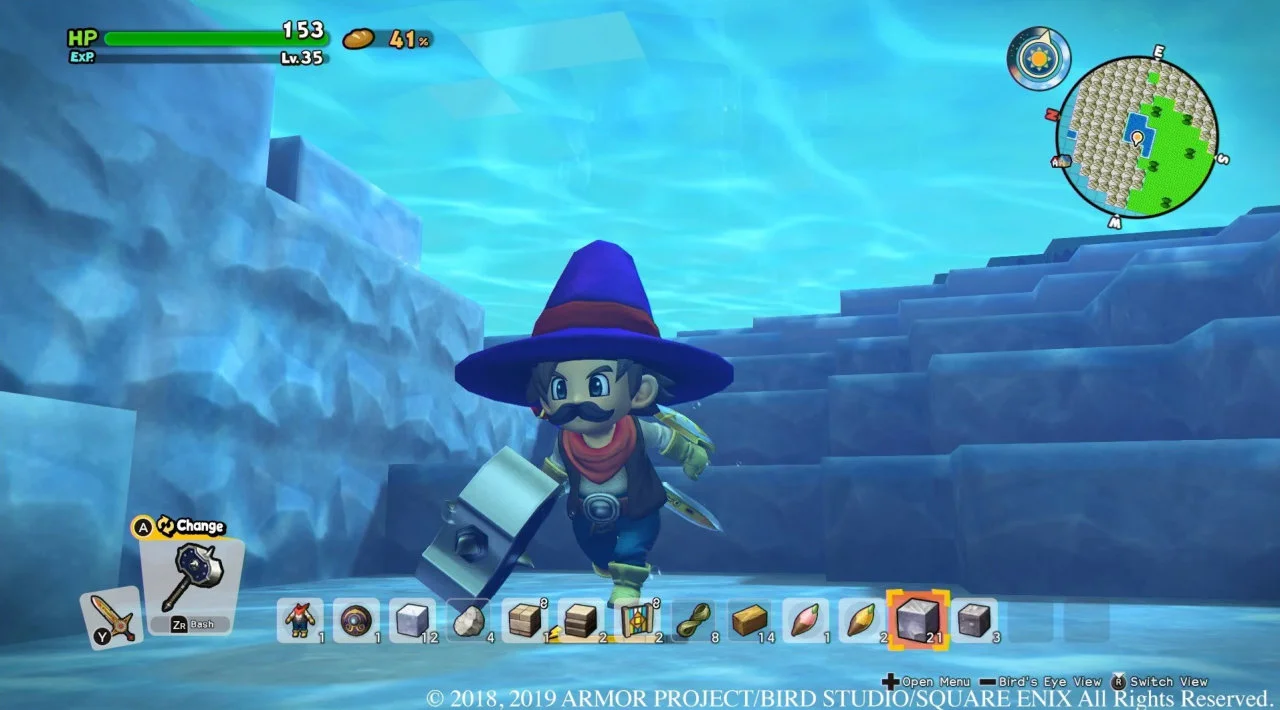


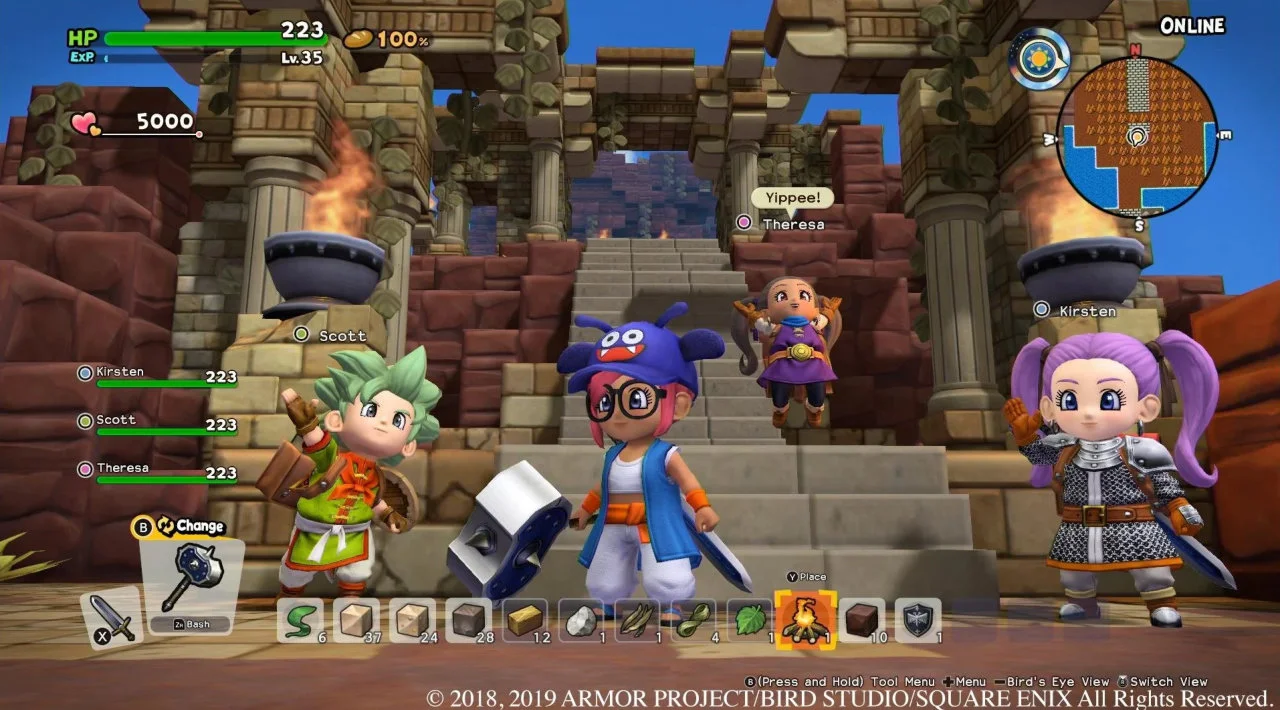
Trailer/Gameplay
Download
Dragon Quest Builders 2 (2019), 3.10GB
ElAmigos release, game is already cracked after installation (crack by Codex).

Updated to version 1.7.3 (02.06.2020).

1. Extract files.
2. Burn or mount the image.
3. Install the game.
4. ElAmigos release, game is already cracked after installation.
5. Play the game. If you like this game, BUY IT!
Dragon Quest Builders 2 Download
🔒 Premium access required
To see and use the download links, you must be logged in and have an active PREMIUM account.
* Unlock downloads via Torrent and TeraBox.
Torrent Download
The best torrent download speeds are with qBittorrent!