The Quiet Man
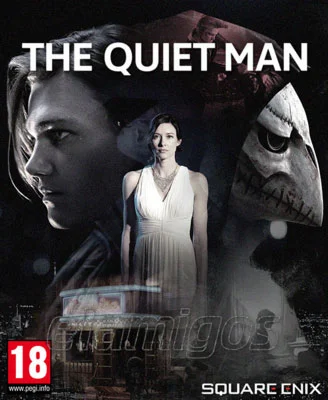
- Category:
- Release date:
- Game Genre:Action, TPP, beat 'em up, full motion video
- Developer:Human Head Studios Publisher: Square-Enix / Eidos
- Release:ElAmigos
- Platform:PC
- Languages (subtitles):English, French, Italian, German, Spanish, Polish, Czech, Russian, Hungarian, Danish, Dutch, Portuguese, Portuguese-Brazil, Finnish, Swedish, Norwegian, Turkish, Romanian, Arabic, Greek, Thai, Japanese, Korean, Chinese Simplified, Chinese Traditional, Vietnamese
- Dubbing/Audio:English
- Crack:Codex
- Game size:25.61GB
Game Description
The Quiet Man on PC is a third-person cinematic action game with 3D beat 'em up combat, live-action film sequences, and a deliberately soundless first playthrough. Steam still lists the original title as THE QUIET MAN™; Answered is a post-launch story update that adds a voiced and subtitled second playthrough, not a rebrand or replacement edition.
Developed by Human Head Studios with Square Enix and published by Square Enix, the game follows Dane, a deaf bodyguard searching New York for a kidnapped songstress and the masked man behind her disappearance. Its unusual presentation is the main reason to play, but it also creates a very specific audience: players must be comfortable with a short, linear experience that behaves partly like an interactive film and partly like a straightforward brawler.
A cinematic brawler built around silence
The Quiet Man alternates between live-action full-motion video, in-engine cinematic scenes, and short combat encounters. Instead of exploring a large map or solving elaborate puzzles, Dane moves through a tightly directed chain of locations while the story unfolds through visual clues, gestures, confrontations, and fragmented conversations.
The first run intentionally presents the world with very little distinct audio and no subtitles for most spoken scenes. That restriction reflects Dane's deafness, but it also means the player is often interpreting body language and editing rather than receiving conventional dialogue exposition. Subtitles may appear when dialogue is intended to be heard or understood, but they do not translate most conversations during the initial experience.
The structure is closer to a playable crime film than to a traditional action-adventure campaign. There is no open-world traversal, branching quest network, or collectible-driven progression loop. The core rhythm is simple: watch a scene, move through a compact area, fight a group of enemies, and continue toward the next narrative reveal.
Combat systems and Focus Mode
Dane's combat toolkit includes punch and kick combos, grapples, throws, evasive movement, and attacks that can use nearby environmental objects. Encounters are presented from a close third-person perspective, keeping the focus on positioning, incoming attacks, and the timing of defensive movement rather than on weapon management or ranged combat.
Stunned enemies can be subjected to a brutal beat down, while throws and environmental slams provide alternatives to repeating the same basic strikes. The system is easy to understand, but it is not built around character builds, loot, skill trees, or deep combo customization. Success depends mainly on recognizing attack openings and maintaining control when several opponents surround Dane.
Focus Mode is the combat feature most likely to confuse new players. It creates a more deliberate offensive window, allowing Dane to pressure an opponent with a concentrated sequence of blows. The mode is less a separate stance or progression system than a combat tool for turning a staggered enemy into a finishing opportunity.
The game also includes multiple difficulty options added through an update, giving players some control over the challenge. Even so, the encounters remain compact and repetitive compared with deeper modern brawlers. Players looking for more technical hand-to-hand combat may prefer precise martial-arts brawlers like SIFU, which makes defense, spacing, and mastery a much larger part of its design.
The Answered second playthrough
The most important content distinction is between the original soundless run and the unlocked Answered playthrough. After completing the game once, players can revisit the story with sound and voices enabled, along with subtitles that make the narrative easier to follow.
This is not a conventional New Game Plus mode with upgraded weapons, new maps, or a separate combat campaign. Its purpose is narrative clarification. The second run lets players understand conversations and scenes that were intentionally obscured during the first, so it functions as a companion version of the same linear journey.
That design creates a practical choice for PC players. The first playthrough is the more faithful version of the game's central concept, while the second is the more readable way to follow the plot. Players primarily interested in combat may find the replay value limited, but those curious about the experiment will want to experience both presentations.
Story, cast, and presentation
Dane's pursuit begins with the kidnapping of a songstress and expands into a noir-tinged story involving old relationships, violence, memory, and the identity of the masked figure. The narrative uses visual storytelling as a constant design constraint, asking players to infer meaning from expressions, gestures, framing, and the information revealed by the later voiced version.
The cast includes Dane, the kidnapped performer Lala, Dane's friend Taye, and figures connected to his past. The story moves between present-day events and memories, using live-action performers alongside computer-generated characters. This combination gives the game a distinctive identity, even when the transitions between film and combat feel uneven.
The production is deliberately compact and focused. There are no side activities, party members, alternate playable characters, or extensive exploration systems competing for attention. The value comes from seeing how the same scenes change when the audio perspective changes, rather than from building a long-term avatar or completing a large checklist.
PC storefront, controls, and localization
The current PC storefront lists The Quiet Man as a single-player Steam game with achievements, trading cards, and Family Sharing. It also lists Denuvo Anti-Tamper as third-party DRM and requires agreement to a third-party EULA. No separate PC launcher or multiplayer service is identified in the storefront information.
The Steam listing supports full controller support, and the game is also designed for standard PC input. A controller is a sensible choice for the brawler sections because the combat layout uses direct attack, dodge, grapple, and Focus inputs, but PC players should still expect a game built around fixed cinematic sequences rather than mouse-driven investigation.
Steam lists English interface, full audio, and subtitles. French, Italian, German, Spanish, Arabic, Chinese, Japanese, Korean, Portuguese, Russian, and several other languages are listed for interface and subtitles, while English is the only language shown with full audio. The localization is therefore broad for text but limited for voice acting.
The store does not present a conventional DLC lineup or season-pass structure. The current package is best understood as the base game with its Answered story update integrated into the available experience. There is no verified rebranded edition, definitive edition, or free-to-play transition to account for when searching for the PC version.
Who should play The Quiet Man?
The game is aimed at players who enjoy experimental narrative formats, short cinematic adventures, live-action game sequences, and unusual accessibility or perspective concepts. It is especially relevant to anyone searching for a game where sound design is part of the narrative premise rather than a background production element.
It is a poor fit for players expecting a full-length action game, complex exploration, responsive arcade combat, co-op, or a story that explains itself immediately. The first run intentionally withholds information, and the combat provides only modest mechanical depth. The second run improves clarity, but it does not transform the overall structure.
The strongest reason to play is curiosity about the experiment itself. The weakest reason is expecting a hidden fighting-game system beneath the cinematic presentation. The Quiet Man is defined by its contrast between soundless storytelling and physical combat, not by breadth of content.
Comparable PC games
Players interested in a more substantial crime drama with third-person combat and investigative structure can look toward detective beat 'em ups such as Lost Judgment. The two games share urban crime themes and close-quarters action, but Lost Judgment offers far more exploration, side content, and combat variety.
For a traditional side-scrolling comparison, arcade brawlers with co-op action like Shing! provide a clearer combat loop and more replay-oriented structure. The Quiet Man is more linear and cinematic, with its live-action presentation and audio perspective doing most of the differentiation.
These comparisons also clarify what The Quiet Man is not. It is not a sprawling detective sandbox, a conventional martial-arts mastery game, or a multiplayer beat 'em up. Its niche is the combination of film presentation, third-person melee encounters, and a two-pass narrative concept.
The Quiet Man FAQ
Is The Quiet Man rebranded on PC?
No. Steam continues to list the game as THE QUIET MAN™. Answered refers to the post-launch update that unlocks sound and voices for a subsequent playthrough; it is not a new storefront name or separate replacement edition.
Does the game have sound and subtitles?
The initial playthrough is intentionally almost soundless and omits subtitles from most spoken scenes. Completing that run unlocks the Answered version, which adds voices, sound, and subtitles to clarify the story on replay.
Is The Quiet Man multiplayer or co-op?
No. The PC version is a single-player experience. There is no verified co-op, split-screen, competitive multiplayer, or online matchmaking mode.
What type of combat does The Quiet Man use?
It uses third-person melee combat with punches, kicks, grapples, throws, dodges, environmental attacks, and Focus Mode. Encounters are short and story-directed rather than part of a large character-progression system.
What languages are supported on PC?
Steam lists English full audio and subtitles, with interface and subtitle support in a broad selection of additional languages. Non-English voice acting is not listed, so players should expect English dialogue audio when using the Answered presentation.
Is there DLC or a season pass?
The current storefront listing presents the game as a single paid package and does not identify a gameplay DLC lineup or season pass. The main additional experience is the built-in Answered second playthrough.
System Requirements
Minimum: | Recomended: |
| Processor: Intel Core i5 2.4 GHz Graphics: 2 GB GeForce GTX 750 Ti / Radeon R7 370 Memory: 8 GB RAM Disk space: 40 GB HDD Operating system: Windows 7(SP1)/8.1/10 64-bit | Processor: Intel Core i5 2.7 GHz Graphics: 6 GB GeForce GTX 1060 / 8 GB Radeon RX 480 Memory: 16 GB RAM Disk space: 40 GB HDD Operating system: Windows 7(SP1)/8.1/10 64-bit |
Screenshots


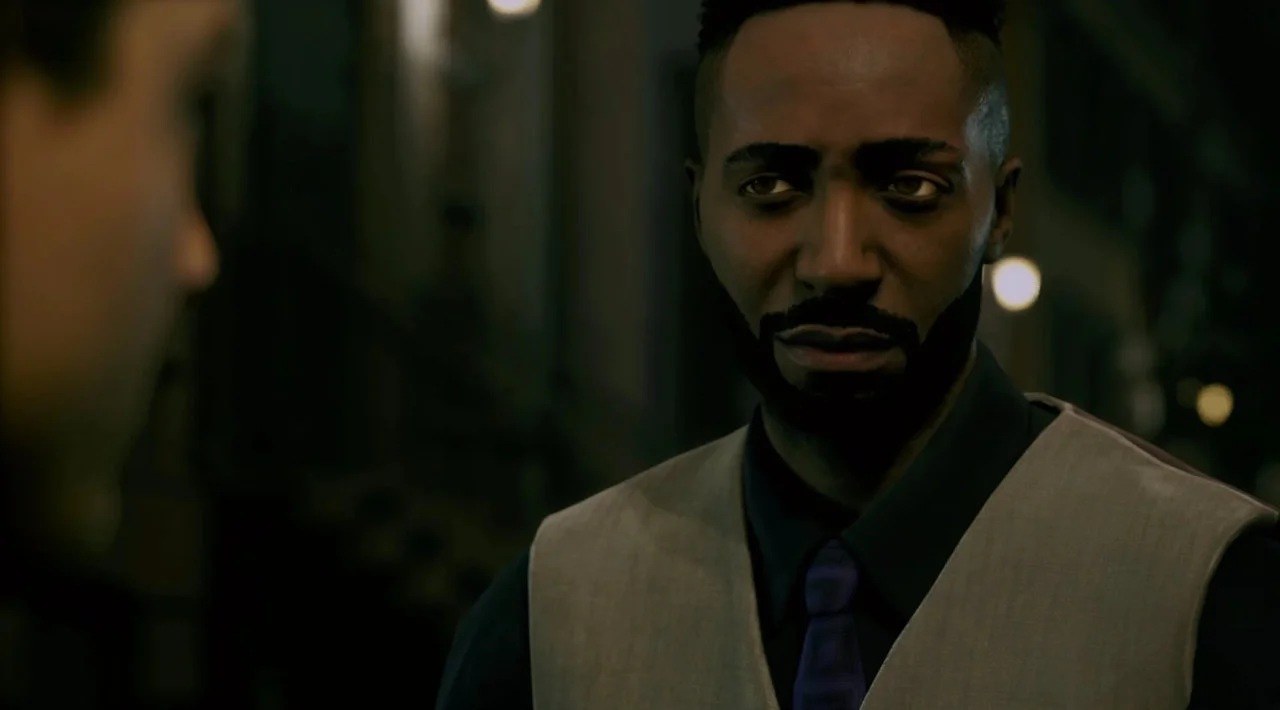

Trailer/Gameplay
Download
The Quiet Man (2018), 25.61GB
ElAmigos release, game is already cracked after installation (crack by Codex).

Updated to the latest version (25.04.2019).

1. Extract files.
2. Burn or mount the image.
3. Install the game.
4. ElAmigos release, game is already cracked after installation.
5. Play the game. If you like this game, BUY IT!
The Quiet Man Download
🔒 Premium access required
To see and use the download links, you must be logged in and have an active PREMIUM account.
* Unlock downloads via Torrent and TeraBox.
Torrent Download
The best torrent download speeds are with qBittorrent!