The Dungeon of Naheulbeuk The Amulet of Chaos
Edit date: 27-01-2024, 13:25
Reason: Updated to version 47857 (07.08.2023)
- Category:
- Release date:
- Game Genre:RPG, fantasy, turn-based, Isometric view, tactical, humorous, indie games, classic RPG
- Developer:
- Release:ElAmigos
- Platform:PC
- Languages (subtitles):English, French, German, Spanish, Russian, Simplified Chinese
- Dubbing/Audio:English, French, German
- Crack:Codex/Rune
- Game size:8.40GB
Game Description
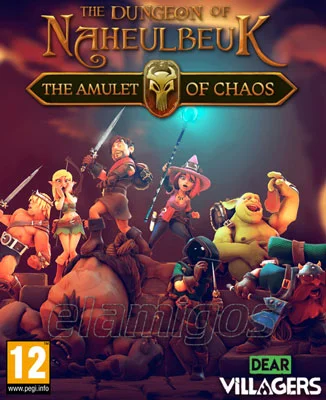
The Dungeon of Naheulbeuk: The Amulet of Chaos is a PC turn-based tactical RPG set in a deliberately absurd fantasy dungeon. Steam and GOG currently use the same English title; the French storefront name, Le Donjon de Naheulbeuk : L'Amulette du Désordre, is a localized title rather than a modern rebrand or replacement edition. Artefacts Studio developed the game, while Dear Villagers published it.
Party-based tactics in a comic dungeon
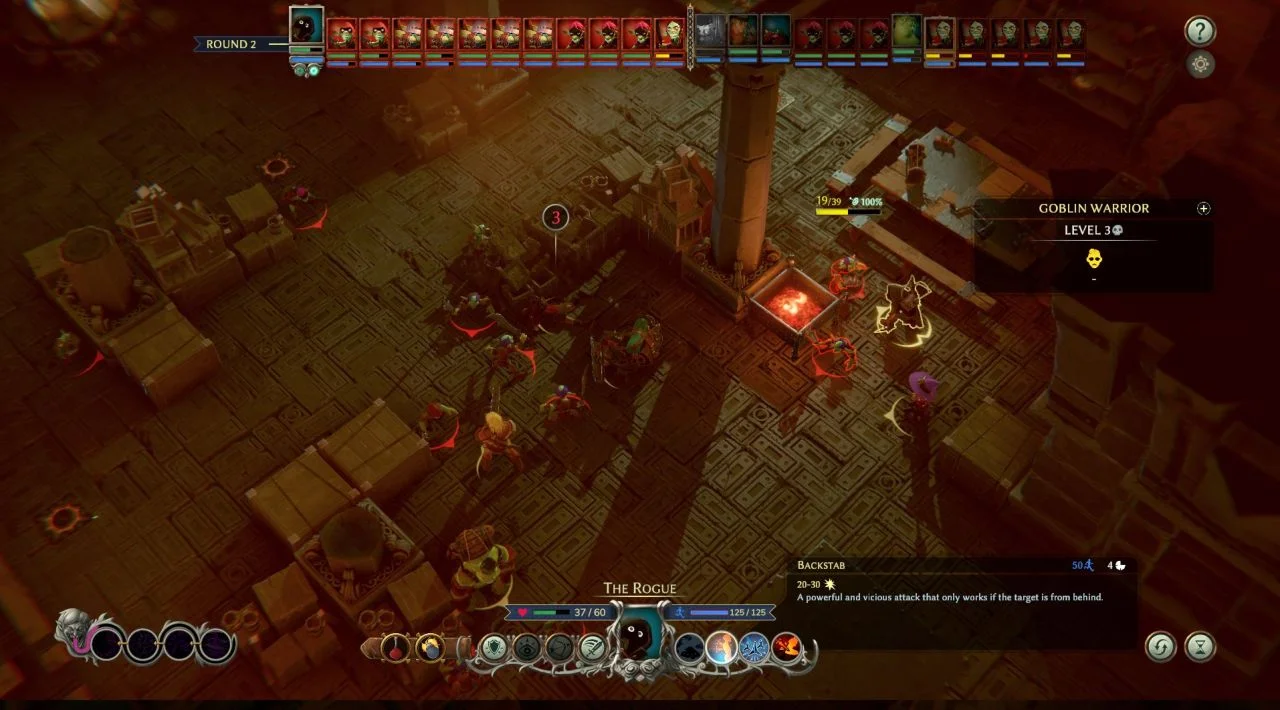
The campaign follows a party of unlikely adventurers searching for treasure while dealing with the chaos surrounding a cursed amulet. Exploration uses a third-person, bird's-eye perspective, taking the group through dungeon corridors, unusual themed areas, traps, puzzles, shops, conversations, and side quests.
Combat is fully turn-based and built around positioning, target selection, range, status effects, and cooperation between characters. The battlefield contains destructible and interactive objects, including beer kegs, that can create unexpected advantages or complications. Enemies are not simply damage targets; the safest plan often depends on controlling space, protecting fragile allies, and combining the party's different combat roles.
The core group includes the Ranger, Elf, Dwarf, Magician, Ogre, Thief, and Barbarian. Later, the game lets you choose one additional companion from the Priestess, Paladin, and Minstrel. That choice changes the party's available abilities and gives the campaign a small but meaningful composition decision.
Skill trees, support actions, and difficulty
Every hero has a distinct skill tree for improving abilities and equipment. The characters are not interchangeable versions of the same class: the Ranger and Elf provide ranged pressure, the Dwarf and Ogre can anchor fights, the Magician supplies area effects, and the Thief brings mobility and utility. The best results come from building a party whose skills cover one another's weaknesses.
Support mechanics give the combat system its strongest tactical identity. Characters can assist teammates, exploit openings, and use complementary abilities rather than acting as isolated units. This makes turn order and positioning important even when a direct attack would seem stronger, particularly during encounters with mixed enemy groups or durable bosses.
The adaptive difficulty system ranges from an accessible story-focused setting to Nightmare Mode. Lower settings reduce the pressure of combat for players primarily interested in the characters, dialogue, and dungeon adventure. The higher settings expect careful resource use and punish tactical errors, making them better suited to players who want to study enemy behavior and optimize each encounter.
With a bestiary of more than 100 enemies, the campaign introduces new combinations of threats as it progresses. Boss battles are designed around more than simply increasing enemy health, asking players to manage positioning, abilities, hazards, and the party's limited opportunities to recover.
Dungeon exploration beyond the battles
The dungeon is a connected adventure space rather than a sequence of disconnected arenas. You can search for hidden objects, open treasure routes, solve environmental puzzles, and revisit areas as new quests become available. The setting moves from caves and dangerous chambers to the goblin ice-skating park, tavern spaces, and the luxury quarters of the villain Zangdar.
Dialogue is central to the game's tone. The story draws on the French Naheulbeuk audio comedy created by John Lang and treats classic heroic-fantasy and tabletop-RPG conventions as material for parody. Expect bickering party members, absurd encounters, deliberately exaggerated archetypes, and quests that frequently undercut conventional fantasy logic.
The campaign is more structured than an open-world CRPG. Its main storyline leads the party through the dungeon, while side quests and optional exploration provide additional reasons to investigate rooms and return to familiar hubs. Players looking for a tightly authored tactical adventure will find a clearer route than in a sandbox RPG, while those expecting extensive branching choices should keep that more linear structure in mind.
Base game, editions, and DLC structure
The standard purchase contains the main single-player campaign. Current storefront listings also present Deluxe and Ultimate-style packages. The Deluxe package adds the soundtrack and digital goodies, while the Ultimate package includes those extras plus the three gameplay expansions: Ruins of Limis, Splat Jaypak's Arenas, and Back to the Futon.
Ruins of Limis and Back to the Futon extend the story and are designed to follow the campaign's party continuity. Players who want the narrative sequence should treat them as connected additions rather than unrelated challenge packs. Splat Jaypak's Arenas is the separate combat-focused expansion, offering arena-style encounters for players who want more battles outside the main story structure.
This is a conventional paid game with optional paid expansions, not a free-to-play service. The base campaign and DLC are listed separately on Steam, while GOG's Ultimate Edition groups the three gameplay expansions with the soundtrack and digital bonus materials.
Who should play it?
This PC RPG is a strong fit for players who enjoy single-player party tactics, class-based progression, fantasy parody, and combat that rewards planning over reflexes. It is especially appealing if you like controlling a large squad of contrasting roles instead of developing one custom protagonist.
It is less suitable for players searching for online co-op, real-time combat, a fully open-ended campaign, or a serious high-fantasy narrative. The humor is intentionally broad, and the game expects you to accept its parody-driven dialogue alongside its more methodical tactical battles.
Players who want a more systemic turn-based CRPG with environmental interactions and broader role-playing freedom may prefer deep party tactics and reactive fantasy systems like Divinity: Original Sin 2. Naheulbeuk is more linear and more focused on a fixed ensemble of authored characters.
PC features, storefronts, and localization
The Steam version supports full controller support, Steam Cloud, Steam Achievements, Steam Trading Cards, and Family Sharing. It is also marked as playable on Steam Deck, although the storefront notes that some in-game text may appear small. Keyboard and mouse controls remain available for players who prefer direct menu navigation and cursor-based selection.
GOG offers a DRM-free edition with an optional offline installer. You do not need GOG Galaxy or an online connection to install and play that version. Steam players receive the usual platform features associated with the Steam release, including cloud synchronization and achievements.
English, French, and German include full audio and subtitles. Simplified Chinese, Spanish from Spain, and Russian are supported for interface text and subtitles. The game is officially listed as single-player, with no online multiplayer or local co-op campaign.
For another party-focused comparison, classic dungeon-crawling RPGs such as Icewind Dale: Enhanced Edition share the emphasis on assembling a complementary adventuring group, although Icewind Dale uses a different combat model and a more traditional fantasy tone.
Similar PC games and player fit
The closest comparisons depend on what attracts you to Naheulbeuk. choice-heavy turn-based party adventures such as Baldur's Gate 3 offer deeper reactivity and multiplayer, while Naheulbeuk keeps the focus on a predefined comic ensemble and dungeon progression.
Divinity: Original Sin 2 is the better choice for players who want expansive character experimentation and systemic environments. Icewind Dale: Enhanced Edition suits players who prefer classic party construction and encounter-driven exploration. Naheulbeuk sits between those approaches: it provides individual skill trees and tactical interactions, but its campaign remains authored, compact, and deliberately comedic.
The Dungeon of Naheulbeuk FAQ
Is The Dungeon of Naheulbeuk: The Amulet of Chaos rebranded?
No current PC rebrand replaces the English storefront title. The French name, Le Donjon de Naheulbeuk : L'Amulette du Désordre, is a localized title used alongside the English name.
Is the PC version multiplayer or co-op?
No. The official PC listing describes the game as single-player, and there is no online co-op or local split-screen campaign.
How many characters can join the party?
The main party is built around seven core heroes. Later, you choose one of three additional companions, creating an eight-character roster for the campaign while preserving the individual roles of the party members.
Does every character have a skill tree?
Yes. Each hero has a separate skill tree used to improve abilities and equipment. This reinforces the party's class identities and lets you specialize characters toward different tactical functions.
What is included in the Ultimate Edition?
The Ultimate Edition includes the base game, the three gameplay expansions, the soundtrack, and the digital Goodies Pack. The expansions are Ruins of Limis, Splat Jaypak's Arenas, and Back to the Futon.
What languages are available on PC?
English, French, and German support full audio and subtitles. Simplified Chinese, Spanish from Spain, and Russian support interface text and subtitles.
Is a controller supported?
Yes. Steam lists full controller support, and the game is also marked playable on Steam Deck. GOG users can play with the input options provided by the installed PC version without requiring GOG Galaxy.
System Requirements
Minimum: | Recomended: |
| Processor: Intel Core i5-2300 2.8 GHz / AMD FX-4350 4.2 GHz Graphics: 768 MB GeForce GTX 460 / 1 GB Radeon HD 6870 Memory: 4 GB RAM Disk space: 8 GB HDD Operating system: Windows 7 | Processor: Intel Core i5-7600 3.5 GHz / AMD Ryzen 3 2300X 3.5 GHz Graphics: 8 GB GeForce GTX 1080 / 4 GB Radeon RX 580 Memory: 4 GB RAM Disk space: 8 GB HDD Operating system: Windows 10 |
Screenshots

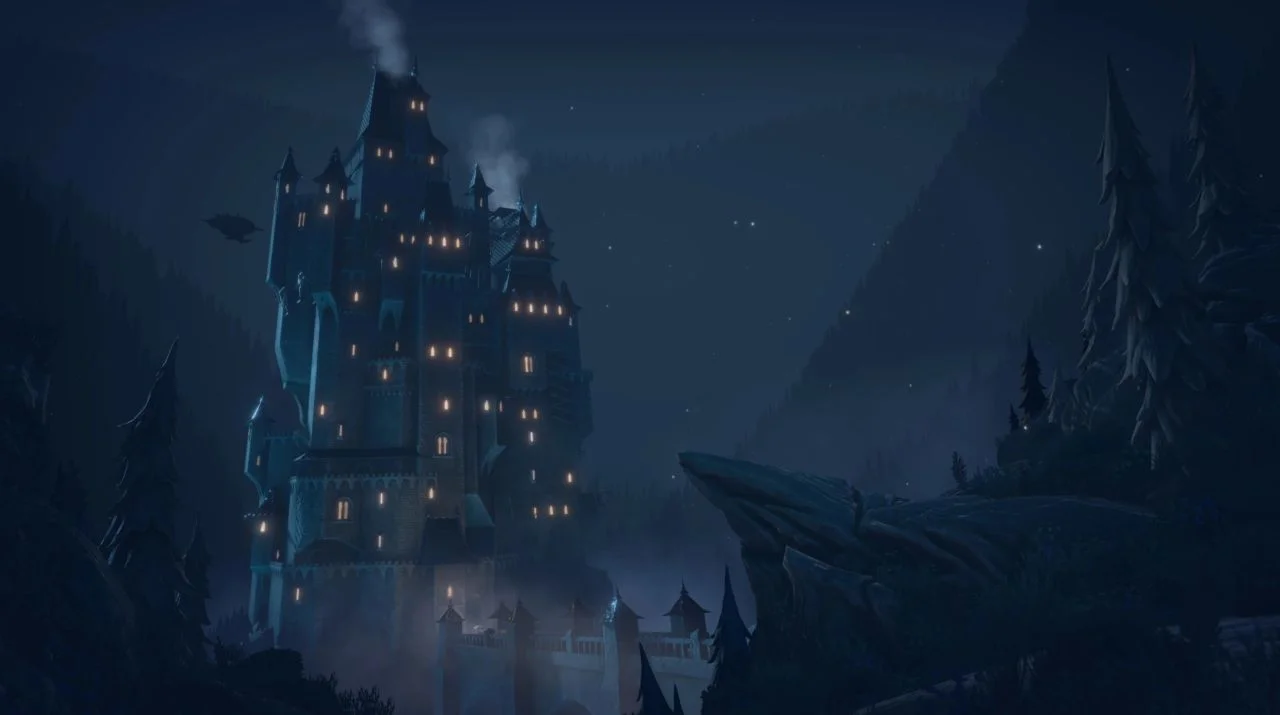
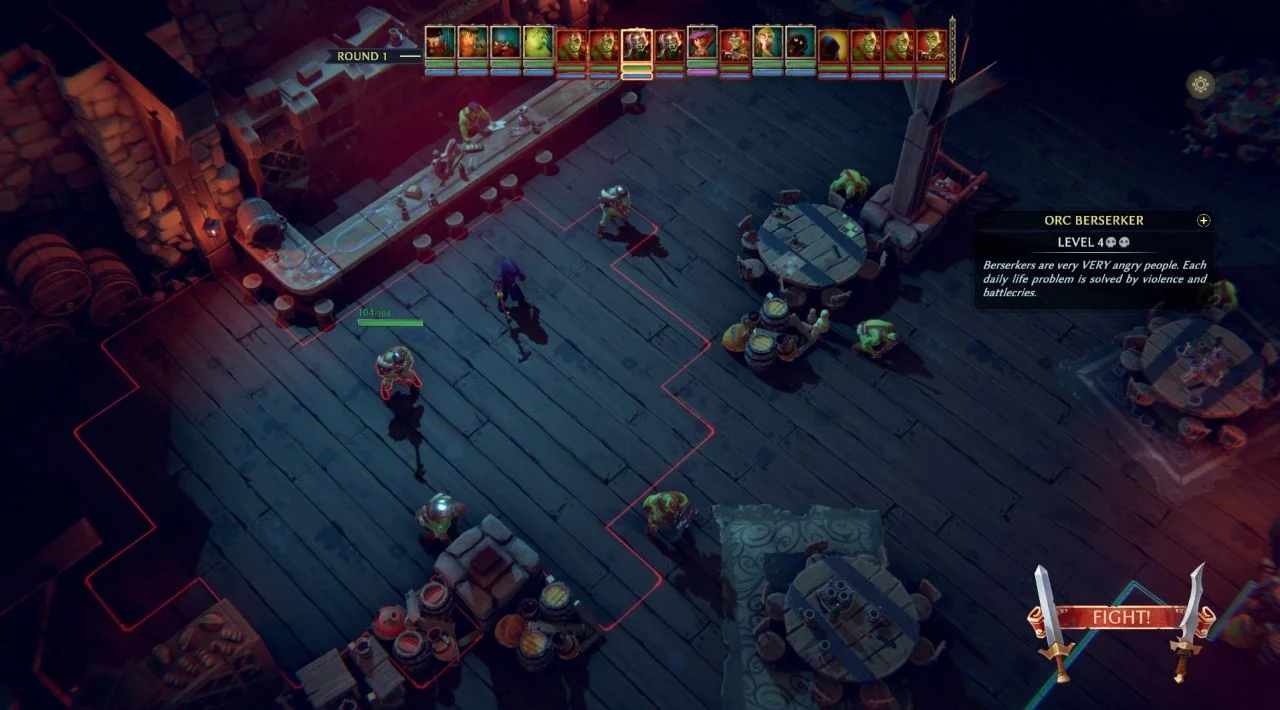
Trailer/Gameplay
Download
The Dungeon of Naheulbeuk: The Amulet of Chaos (2020), 8.40GB
ElAmigos release, game is already cracked after installation (crack by Codex/Rune).

Updated to version 47857 (07.08.2023).
Change language in game options.

1. Extract files.
2. Burn or mount the image.
3. Install the game.
4. ElAmigos release, game is already cracked after installation.
5. Play the game. If you like this game, BUY IT!
The Dungeon of Naheulbeuk: The Amulet of Chaos Download
🔒 Premium access required
To see and use the download links, you must be logged in and have an active PREMIUM account.
* Unlock downloads via Torrent and TeraBox.
DLC: Back To The Futon, Splat Jaypaks Arenas, Ruins of Limis, Soundtrack, Artbook.
Torrent Download
The best torrent download speeds are with qBittorrent!