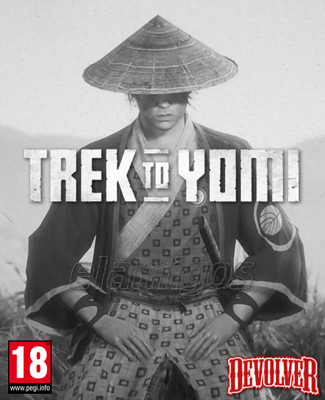
Trek to Yomi
Edit date: 13-02-2023, 17:33
Reason: Updated till 02.02.2023
- Category:
- Release date:
- Game Genre:Action, Polish, indie games, 2.5 D, side-scroll, experimental/art, Japan, Samurai, action adventure, Xbox Game Pass
- Developer:Leonard Menchiari / Flying Wild Hog, Publisher: Devolver Digital
- Release:ElAmigos
- Platform:PC
- Languages (subtitles):English, French, Italian, German, Spanish, Russian, Polish, Portuguese-Brazil, Japanese, Korean, Traditional Chinese, Simplified Chinese
- Dubbing/Audio:Japanese
- Crack:Codex, FLT
- Game size:7.74GB
Game Description
Trek to Yomi on PC is a cinematic 2.5D side-scrolling action-adventure from Leonard Menchiari and Flying Wild Hog, published by Devolver Digital. Steam, Epic Games Store, and GOG continue to use Trek to Yomi as the official PC title. No verified rebrand, definitive edition, or replacement storefront name currently supersedes it.
A linear samurai journey in 2.5D
The game follows Hiroki, a young swordsman sworn to protect his village and honor his master. Its campaign is structured as a focused, chapter-based journey rather than an open-world samurai sandbox. You move through villages, forests, caves, battlefields, and supernatural realms while the camera shifts between fixed cinematic angles and side-on combat spaces.
The perspective is deliberately narrow. Hiroki explores along a mostly horizontal route, with occasional depth changes, branching paths, hidden rooms, and environmental detours. This gives the game the visual language of classic samurai cinema while keeping progression readable and tightly authored.
Between encounters, exploration is used to break up the fighting. Players can search side paths for health upgrades, stamina upgrades, ammunition, and collectible lore items. These discoveries reward attention without turning the campaign into a large checklist-driven open world.
Measured swordplay, parries, and ranged tools
Combat centers on Hiroki's katana. Basic strikes can be chained into heavier attacks, while directional inputs help determine how Hiroki responds to enemies approaching from different positions. The most reliable approach is defensive: block incoming blows, identify attack patterns, then answer with a parry, counterattack, or carefully timed dodge.
Every fight takes place on a constrained combat plane, so positioning matters as much as attack selection. Enemies can pressure Hiroki from both sides, use shields or spears, and force him to manage spacing rather than simply hold the attack button. Stamina limits reckless defense and makes repeated evasive actions costly.
Hiroki also gains access to ranged weapons and throwable tools. Arrows, kunai, and other limited resources can interrupt dangerous opponents or thin a group before the duel becomes crowded. Ammunition is deliberately finite, so the strongest tools are best reserved for priority targets and difficult encounters.
The combat system is straightforward to learn but becomes more demanding when enemy combinations, narrow arenas, and supernatural threats appear together. Players looking for a deep character-build system will not find skill trees, loot rarity, or equipment crafting here. The progression is instead built around learning enemy behavior, improving timing, and finding permanent health or stamina increases.
Difficulty modes and the supernatural turn
Shrines act as checkpoints throughout the campaign and restore Hiroki's health and stamina. They also provide a clear rhythm between exploration and combat: reach a shrine, prepare for the next encounter, then use what you have learned to survive the following sequence.
The PC version includes several difficulty settings aimed at different kinds of players. Kabuki lowers the pressure for players who primarily want the story and presentation, while Bushido and Ronin demand more deliberate combat. Completing the campaign unlocks Kensei, a high-risk mode built around one-hit kills for both Hiroki and his enemies.
The story begins with grounded feudal-Japan conflict before expanding into mythic territory. Alongside bandits, soldiers, and samurai, Hiroki faces supernatural beings drawn from Japanese folklore. The shift from historical drama to a journey beyond life and death is central to the game's structure rather than a late cosmetic surprise.
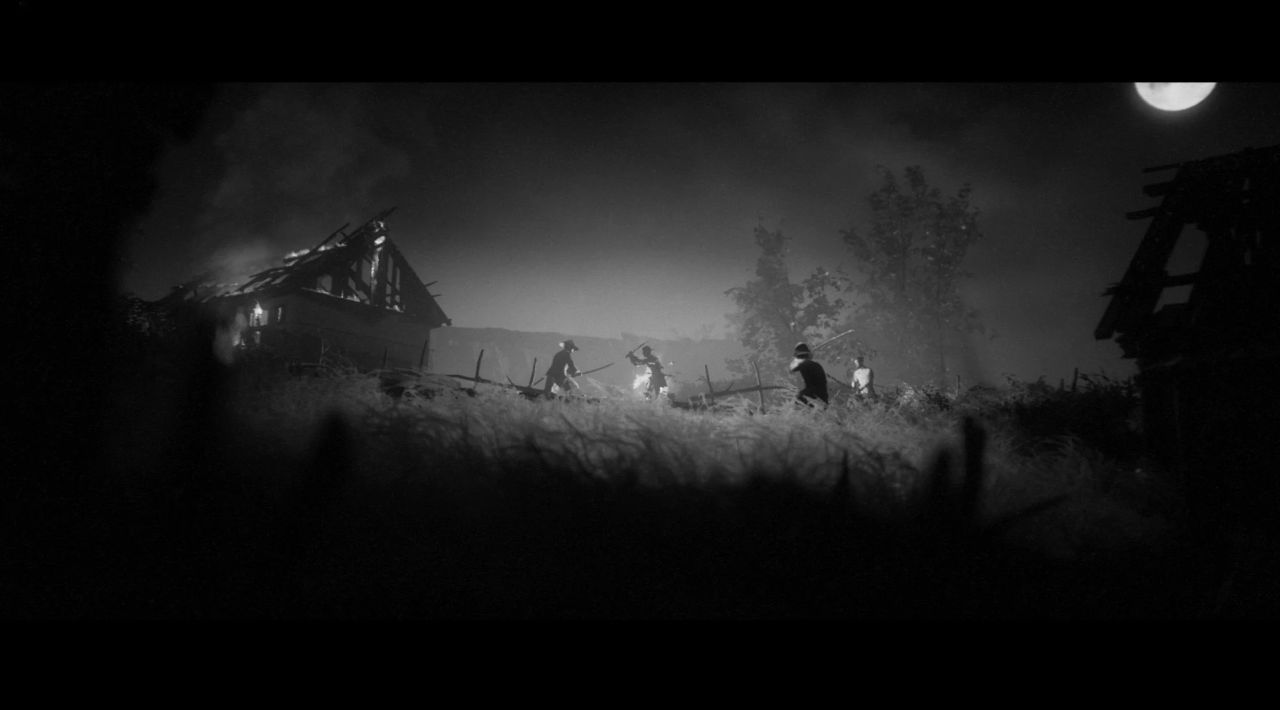
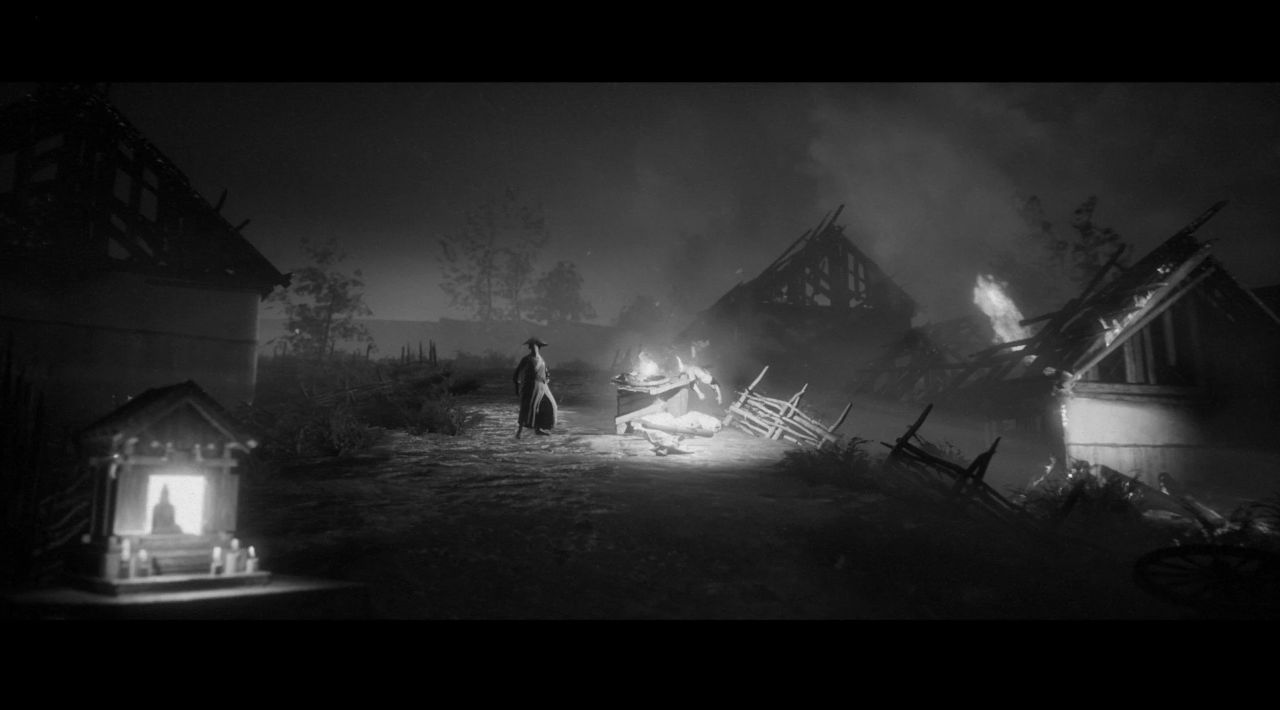
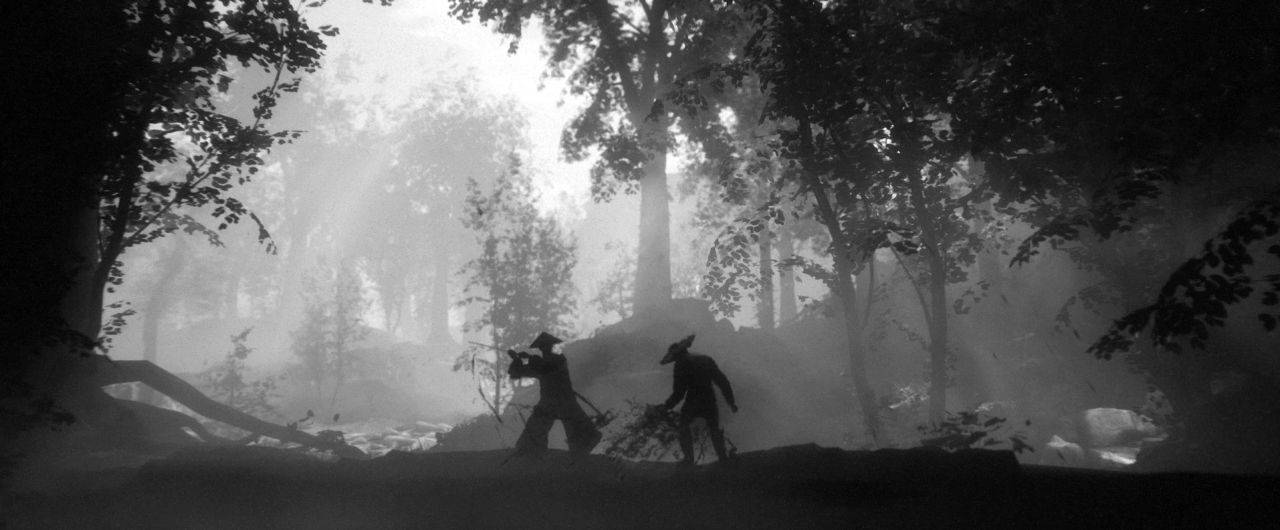
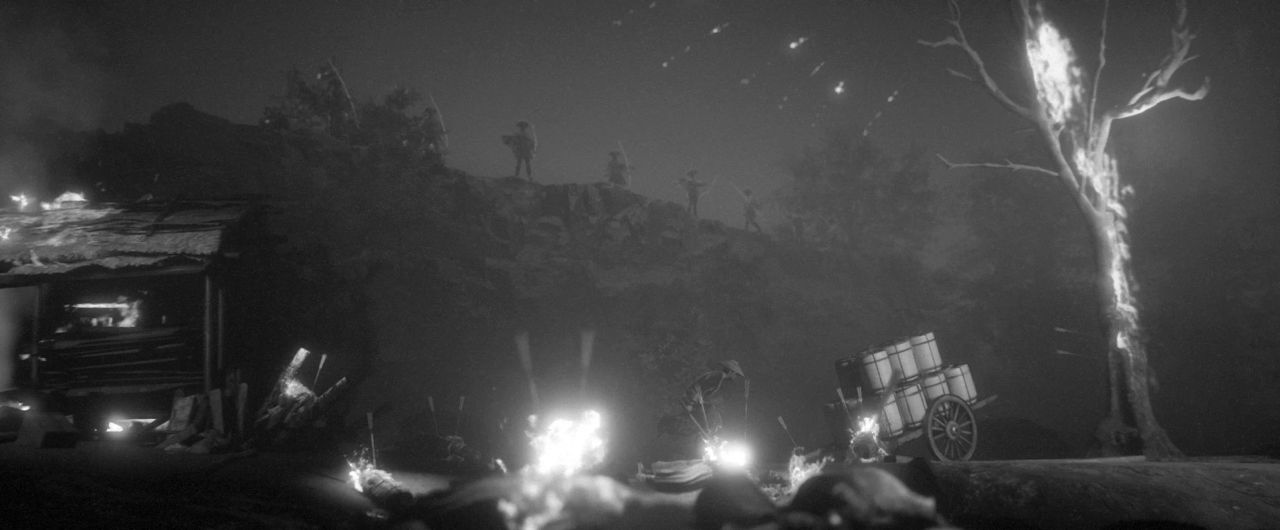
Its presentation is intentionally monochrome, with film-like framing, strong silhouettes, atmospheric sound design, and Japanese voice audio. The visual style is not simply a filter placed over a conventional action game; camera placement, lighting, composition, and the changing scale of encounters all support the samurai-film concept.
Campaign content and progression
Trek to Yomi is a single-player campaign with no online multiplayer, local co-op, or competitive mode. Its core loop is completing authored chapters, surviving staged combat sequences, searching optional paths, and revisiting the game on a higher difficulty.
Exploration collectibles provide additional context about the world and its mythology, while upgrades improve Hiroki's survivability and resource capacity. These rewards are useful but do not transform the game into an RPG. There are no classes, branching equipment sets, procedural levels, or open-ended character builds.
The standard PC purchase is the complete base adventure. Current PC storefront information does not present a season pass or a large catalog of paid gameplay expansions for Trek to Yomi. Players should therefore approach it as a self-contained cinematic action game rather than a service built around ongoing content drops.
Who should play Trek to Yomi?
This is a strong fit for players who value samurai atmosphere, compact story-driven campaigns, deliberate melee encounters, and highly controlled visual presentation. It is especially suited to people who prefer learning a small set of combat rules and applying them carefully instead of managing a large inventory or build system.
It also works for players who want a cinematic PC game with a clear beginning, middle, and end. The campaign does not ask you to maintain a settlement, clear a world map, or grind for stronger equipment. Progress comes from moving forward, finding secrets, and becoming more consistent with the sword.
Players seeking expansive exploration, deep combo systems, extensive customization, or cooperative play should set their expectations carefully. The game's strengths are its setting, framing, soundtrack, and focused journey; its scope is intentionally narrower than that of a large action RPG.
For another atmospheric 2.5D adventure built around authored spaces and environmental tension, story-driven puzzle-platformers such as Black The Fall offer a useful comparison, although Black The Fall emphasizes stealth and environmental manipulation instead of sword combat.
PC features, input, and storefront differences
The PC version is available through Steam, Epic Games Store, and GOG under the same official title. Steam lists full controller support, Steam Cloud, achievements, Steam Trading Cards, and Family Sharing. Epic presents the game as a Windows single-player release, while GOG provides a DRM-free edition.
On GOG, Galaxy is optional rather than mandatory. Players can use the offline installer and play without an internet connection; Galaxy is mainly relevant for optional platform features such as synchronization. The Steam and Epic editions remain tied to their respective storefront ecosystems.
Localization is broad. The PC listings identify English, French, German, Italian, Japanese, Korean, Polish, Brazilian Portuguese, Russian, Spanish, Simplified Chinese, and Traditional Chinese support across interface, subtitles, or audio depending on the language. Japanese voice audio is a particularly important part of the game's presentation.
There is no verified PC-specific anti-cheat requirement or separate publisher launcher identified in the current storefront information. The practical choice for PC players is therefore mainly between storefront features, controller preferences, cloud support, and GOG's DRM-free distribution.
Its side-scrolling action structure also separates it from conventional third-person samurai games. Players interested in unusual 2.5D combat-platforming can compare it with combat-focused side-scrollers such as Steel Rats, though Steel Rats uses vehicle physics and ranged attacks instead of Hiroki's grounded sword duels.
Similar PC games and the intended experience
Trek to Yomi sits between a cinematic platform adventure and a compact melee action game. Its closest comparisons are not necessarily large samurai RPGs, but focused games that combine authored traversal, atmospheric storytelling, and timing-based encounters.
Fans of samurai cinema may recognize the influence of classic Japanese film composition, but the game is not a stealth sandbox and does not offer the systemic freedom of a large historical open world. Its stages are designed around set-piece movement, direct confrontations, secrets, and carefully placed checkpoints.
The most accurate way to approach it is as a linear action-adventure with a strong visual identity. Expect a controlled campaign, repeated combat lessons, optional collectibles, several difficulty routes, and a sharp contrast between ordinary human enemies and mythic threats.
Trek to Yomi FAQ
Is Trek to Yomi still the current PC title?
Yes. Steam, Epic Games Store, and GOG use Trek to Yomi as the current PC storefront name. No verified renamed edition or definitive replacement has been identified.
Is Trek to Yomi multiplayer or co-op?
No. It is a single-player action-adventure with no listed online multiplayer, split-screen mode, or local co-op. The campaign is designed around one player controlling Hiroki.
What type of combat does Trek to Yomi use?
Combat is side-scrolling melee action built around katana strikes, blocks, parries, dodges, directional attacks, and limited ranged tools. Positioning and stamina management are more important than building a character through equipment or skill trees.
Does Trek to Yomi have different difficulty modes?
Yes. The game includes Kabuki, Bushido, and Ronin difficulty settings, with Kensei becoming available after completing the campaign. Kensei uses a one-hit-kill rule for both Hiroki and his enemies.
Is Trek to Yomi DRM-free on PC?
The GOG edition is DRM-free and does not require Galaxy to play. Steam and Epic editions use their respective storefront platforms and services.
Does the PC version support controllers?
Yes. Steam lists full controller support, making a gamepad a supported option for the swordplay and directional combat. Keyboard and mouse input is also available on PC.
What is the gameplay structure?
It is a linear, chapter-based campaign with authored combat encounters, cinematic traversal, shrine checkpoints, hidden paths, collectibles, permanent health and stamina upgrades, and replay value from higher difficulty settings. It is not an open-world game or a loot-driven RPG.
System Requirements
Minimum: | Recomended: |
| Processor: Intel Core i5-8250U 1.6 GHz / AMD Phenom II X4 965 3.4 GHz Graphics: 2 GB GeForce MX150 / Radeon R7 260X Memory: 8 GB RAM Disk space: 11 GB HDD Operating system: Windows 7 64-bit | Processor: Intel Core i7-4770S 3.1 GHz / AMD FX-9590 4.7 GHz Graphics: 4 GB GeForce GTX 970 / 8 GB Radeon R9 390X Memory: 8 GB RAM Disk space: 11 GB HDD Operating system: Windows 10 64-bit |
Screenshots
Trailer/Gameplay
Download
Trek to Yomi (2022), 7.74GB
ElAmigos release, game is already cracked after installation (crack by Codex or FLT).

Updated till 02.02.2023.

1. Extract files.
2. Burn or mount the image.
3. Install the game.
4. ElAmigos release, game is already cracked after installation.
5. Play the game. If you like this game, BUY IT!
Trek to Yomi Download
🔒 Premium access required
To see and use the download links, you must be logged in and have an active PREMIUM account.
* Unlock downloads via Torrent and TeraBox.
Torrent Download
The best torrent download speeds are with qBittorrent!