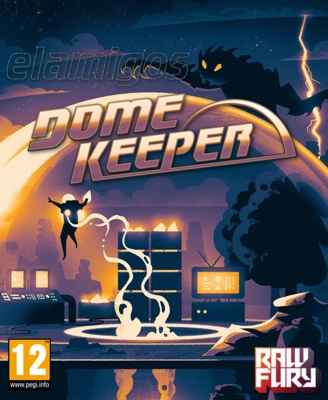
Dome Keeper
Edit date: 11-05-2026, 18:16
Reason: Updated to version 5.0.3 (07.05.2026).
- Category:
- Release date:
- Game Genre:Aliens, Roguelike, Survival, Resource Management, Base Building, Singleplayer, Sci-fi, Action, Pixel Graphics, Tactical, Real-Time, Replay Value, Time Management, Mining, Action RPG, Arcade, Space, Perma Death, Management, Tower Defense
- Developer:Bippinbits
- Release:ElAmigos
- Platform:PC
- Languages (subtitles):English, French, Italian, German, Spanish, Spanish (Mexico), Polish, Czech, Russian, Hungarian, Dutch, Danish, Portuguese, Portuguese-Brazil, Ukrainian, Finnish, Norwegian, Swedish, Turkish, Chinese Simplified, Japanese, Korean
- Crack:Codex/Rune
- Game size:0.84GB
Game Description
Dome Keeper is a PC roguelike action-mining and tower-defense game built around a strict exchange: leave your dome to dig for resources, then return before the next alien wave arrives. Steam currently lists the game under the name Dome Keeper. Its earlier game-jam identity, Dome Romantik, remains a useful legacy search term, but there is no current storefront rebrand replacing Dome Keeper.
Developed by German studio bippinbits and published by Raw Fury, it combines procedural exploration, resource management, real-time defense, and run-based progression without turning the experience into a conventional campaign.
Mining, timing, and dome defense
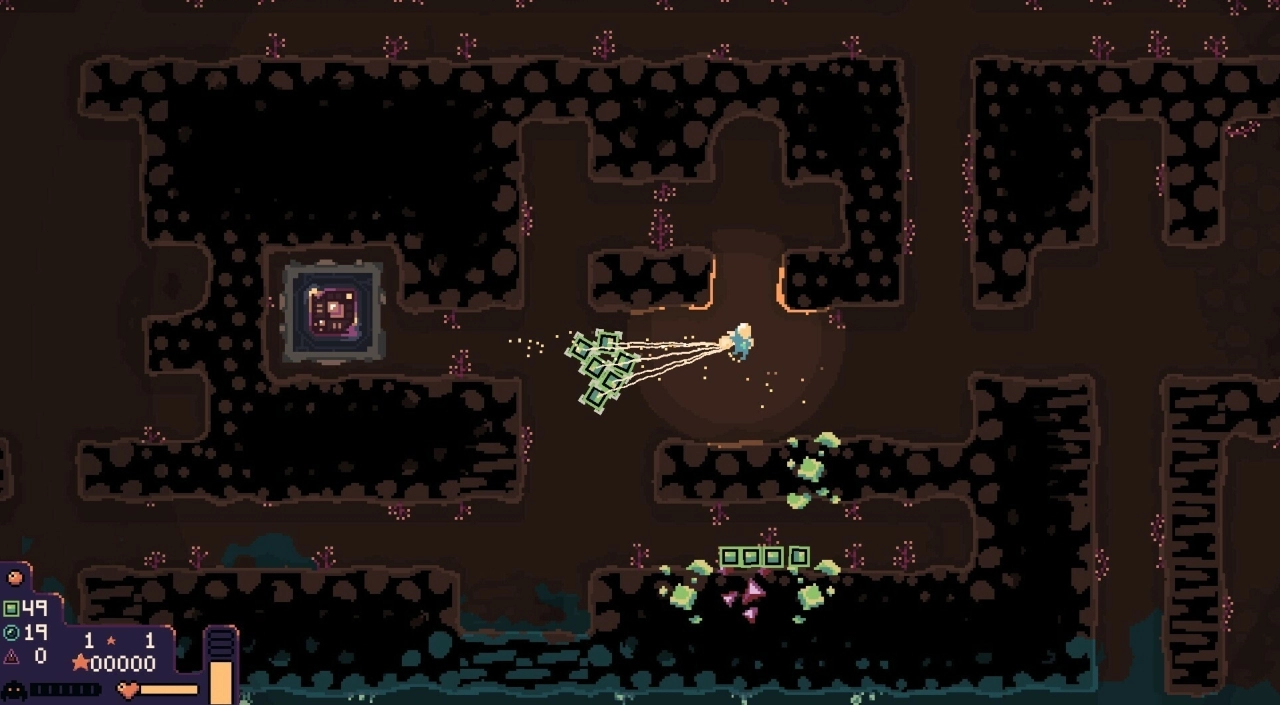
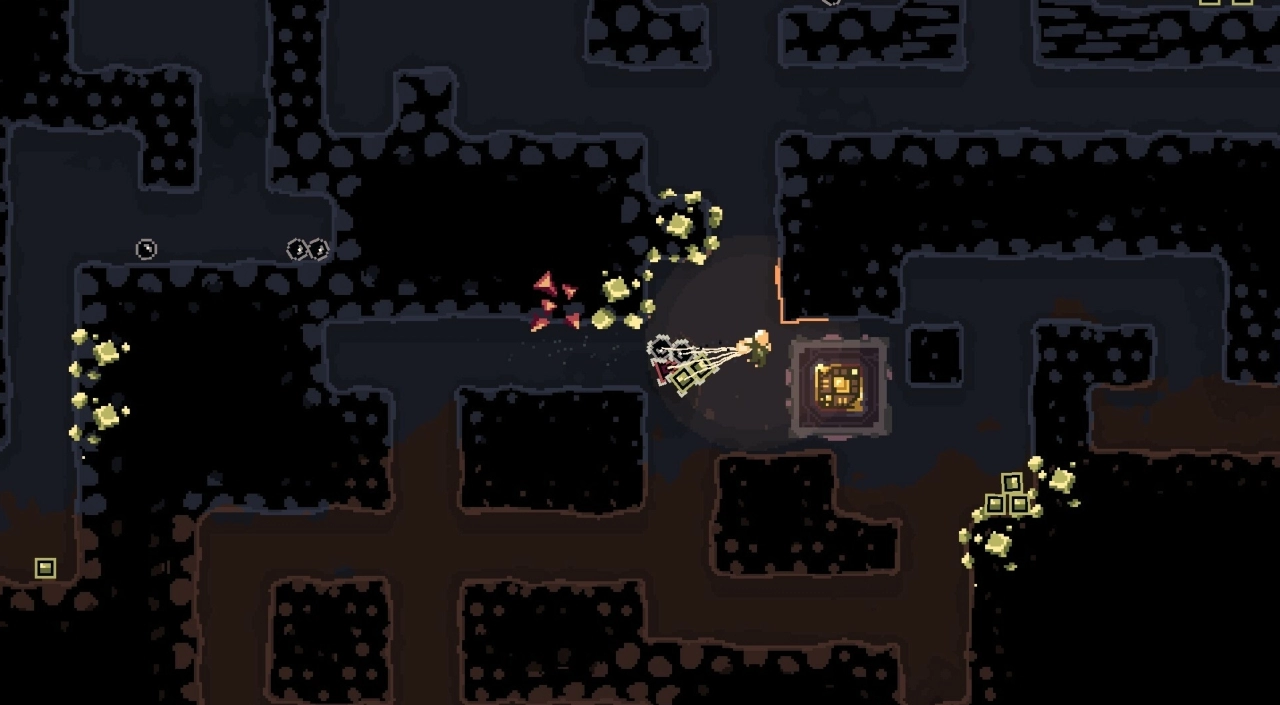
Each run alternates between two jobs. Beneath the dome, the keeper drills through a procedurally generated map to find resources, caves, relics, gadgets, and upgrade opportunities. Above ground, the same character operates the dome's weapon systems while alien creatures attack from the air and ground.
The tension comes from the clock rather than a traditional stamina system. Every trip underground is a judgment call: push farther for better rewards, or turn back early enough to repair the dome and prepare for the next assault. Carrying resources also affects movement, so a successful mining route depends on tunnel planning, transport efficiency, and knowing when to abandon a promising vein.
Resources are brought back to the dome and spent on improvements for the keeper, defensive weapon, shield, mobility, mining equipment, and support systems. The central loop is easy to understand, but the upgrade choices create the game's real strategy because investing heavily in mining can leave the dome exposed, while overbuilding defenses may slow long-term progress.
Combat is presented in a compact 2D side-view arena. The dome sits at the center while enemies approach across lanes and from different elevations. Their movement patterns and attack methods require active targeting, not passive tower placement, making real-time weapon control an important part of every wave.
Build choices that change each run
Dome Keeper supports multiple approaches through a combination of keeper types, dome variants, primary gadgets, secondary gadgets, run modifiers, and difficulty settings. The original roster includes two keeper types, while later paid content adds The Infiltrator and The Beastmaster with their own movement and mining identities.
The Infiltrator uses a rope and agile jumps to move quickly through the mine. The Beastmaster travels with tentacles and catgoblin minions, creating a very different relationship between exploration, combat, and resource collection. These are not simple cosmetic alternatives; they alter how a player reaches deposits, handles danger, and spends time between waves.
Primary gadgets determine the broad shape of a run, while secondary gadgets and supplements add more specialized tools. Some choices improve extraction and transport. Others reshape defense, automate part of the mine, create new attack patterns, or change how the keeper survives in open tunnels. The result is a loadout-driven progression system where an early gadget discovery can redirect an entire run.
Players also have to decide how much to prioritize the immediate survival problem versus the longer-term run objective. A stronger laser may stabilize the next attack, but a mobility or transport upgrade can produce more resources across several future cycles. This makes the tech tree feel practical rather than decorative.
Modes and the mastery loop
The main experience is a repeatable run structure rather than a linear story. Players dig, upgrade, defend, and eventually pursue the run's objective while adapting to an unpredictable map. A failed attempt still teaches route planning, enemy behavior, upgrade priorities, and the value of different gadgets.
Prestige provides a more demanding score-oriented challenge, with adjustable conditions and a stronger emphasis on efficient resource use. It is suited to players who already understand the basic loop and want to optimize wave survival instead of simply learning the systems.
Guild Assignments add focused challenge scenarios with specific objectives. These assignments are useful when standard runs begin to feel familiar because they encourage unusual loadouts and force players to rethink their usual opening priorities.
The free multiplayer update expands the structure beyond solo play. Cooperative play lets up to four players defend a dome together, while versus modes turn mining and survival into a contest over who lasts longer or delivers more resources. That distinction matters: co-op emphasizes shared planning, whereas versus play makes the mine and upgrade economy part of the competition.
Content model and paid additions
The base game is a paid PC release with the core mining, defense, procedural map, upgrade, and run systems included. It is not presented as a free-to-play game, and its main progression loop does not depend on a rotating service model.
Current paid add-ons include Dome Keeper: The Lost Keepers, the Engineer Gear Pack, the Assessor Gear Pack, and the Dome Keeper Soundtrack. The two gear packs focus on additional cosmetic equipment for their associated keeper themes, while The Lost Keepers adds two playable keepers, new cosmetic content, pets, skins, and assignments.
Multiplayer is supplied through the free multiplayer update rather than being locked exclusively behind the paid keeper DLC. Players buying only the base game can therefore access the central cooperative and versus framework, while The Lost Keepers is aimed at those who want additional playstyles and collectible content.
Who should play Dome Keeper?
Dome Keeper is a strong fit for players who enjoy short tactical runs, escalating defenses, procedural maps, and games where movement efficiency matters as much as combat power. It rewards people who like learning systems through repetition and making visible improvements to their decision-making.
It is especially appealing if you enjoy balancing extraction against base protection. The game does not let mining become a relaxing side activity for long; every tunnel exists under pressure, and a greedy expedition can directly damage the run's survival chances.
Players looking for a large narrative campaign, a sprawling persistent base, or a purely passive tower-defense experience should set expectations accordingly. Dome Keeper is compact, replay-focused, and built around the rhythm of mastery rather than extensive world exploration.
For a different kind of run-based PC action with modular builds and space combat, build-crafting roguelites such as Nova Drift share Dome Keeper's emphasis on experimentation, escalating threats, and adapting a setup during each attempt.
PC features and platform details
The PC version is available through Steam for Windows, macOS, Linux, and SteamOS. Steam lists controller support, Steam Cloud, leaderboards, achievements, Workshop support, and Remote Play Together among its platform features.
That ecosystem suits the game's compact sessions and local-style multiplayer. Players can use online multiplayer, LAN play, or shared and split-screen options depending on the selected mode. Steam also lists cross-platform multiplayer support, making the current multiplayer implementation broader than the original solo-only structure.
Steam lists 29 supported interface languages, including English, French, German, Spanish, Italian, Japanese, Korean, Portuguese, Polish, Russian, Chinese, and several additional European languages. The storefront marks these as interface support rather than full voice localization, and the game is primarily text-driven.
The game's technical identity is deliberately restrained: 2D pixel art, a side-view arena, readable upgrade screens, and a compact mine make it easy to understand what needs attention during a hectic wave. The practical PC differentiators are the controller-ready interface, Workshop integration, cloud saves, leaderboard structure, and expanded multiplayer ecosystem rather than graphical spectacle.
Related PC games
The closest comparison is not a direct clone but another game that mixes action, resource collection, and defensive construction. Sci-fi base-defense games like The Riftbreaker also ask players to gather resources, improve equipment, and survive hostile alien attacks, although The Riftbreaker uses a larger isometric environment and a more expansive base-building structure.
Dome Keeper is more compressed. Its maps are procedural, its defense arena is immediately readable, and its most important strategic question is how far you can mine before the next wave. That narrow focus is the reason each upgrade and route decision carries so much weight.
Dome Keeper FAQ
Is Dome Keeper still called Dome Romantik?
No. The current PC storefront name is Dome Keeper. Dome Romantik was the earlier game-jam name and may still appear in older discussions or search results.
Does Dome Keeper have multiplayer?
Yes. The current game supports cooperative and versus multiplayer, including up to four-player co-op, online play, LAN play, shared or split-screen play, and Steam Remote Play Together.
Is multiplayer included with the base game?
The multiplayer framework arrived as a free update to the base game. The Lost Keepers is separate paid content that adds two keepers, cosmetic rewards, pets, skins, and assignments rather than serving as the multiplayer unlock.
What is the actual objective in a normal run?
A normal run revolves around mining resources and relics, converting them into upgrades and gadgets, surviving increasingly difficult waves, and completing the selected run objective. It is a repeatable mastery loop, not a fixed campaign measured by story chapters.
Does Dome Keeper support controllers on PC?
Yes. Steam lists controller support, and the game is designed around direct movement, mining, and weapon operation with either keyboard and mouse or a gamepad.
Does Dome Keeper support mods?
Steam lists Steam Workshop support for Dome Keeper. This gives the PC version a community-content layer in addition to its built-in keepers, domes, gadgets, modes, and run modifiers.
System Requirements
Minimum: |
Processor: 2.5Ghz or better Graphics: Support for OpenGL 3.3 Memory: 512 MB RAM Disk space: 500 MB available space Operating system: Windows 7 or newer |
Screenshots


Trailer/Gameplay
Download
Dome Keeper Deluxe Edition (2022), 0.84GB
ElAmigos release, game is already cracked after installation (crack by Codex/Rune).

Updated to version 5.0.3 (07.05.2026).

1. Extract files.
2. Burn or mount the image.
3. Install the game.
4. ElAmigos release, game is already cracked after installation.
5. Play the game. If you like this game, BUY IT!
Dome Keeper Deluxe Edition Download
🔒 Premium access required
To see and use the download links, you must be logged in and have an active PREMIUM account.
* Unlock downloads via Torrent and TeraBox.
DLC: The Lost Keepers, Assessor Gear Pack, Engineer Gear Pack, Soundtrack.
Torrent Download
The best torrent download speeds are with qBittorrent!