Going Medieval
Edit date: 15-08-2026, 15:10
Reason: Updated to version 1.1.19 (14.08.2026).
- Category:
- Release date:
- Game Genre:Strategy, Economic, RTS, the middle ages, indie games, alternative history, city builder, Find Your Next Game
- Developer:
- Release:ElAmigos
- Platform:PC
- Languages (subtitles):English, French, German, Spanish, Polish, Russian, Portuguese-Brazil, Turkish, Korean, Japanese, Chinese Simplified
- Crack:Codex/Rune
- Game size:0.42GB
Game Description
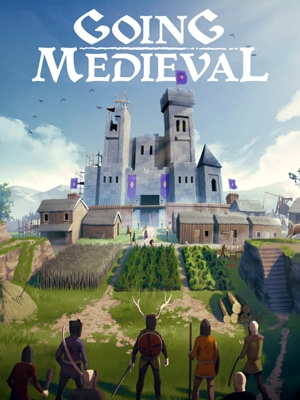
Going Medieval is a 3D medieval colony simulation and survival strategy game from Foxy Voxel and publisher Mythwright. The current PC storefronts still use the original name, with no verified rebrand or replacement edition. The modern 1.0 version combines multi-level castle construction, settler management, research, crafting, farming, and real-time defense in a single-player sandbox shaped by procedural maps and emergent crises.
You begin with a small group of survivors in a wilderness reclaimed after a devastating plague. The immediate priorities are practical: secure food, gather wood and clay, establish shelter, assign work, and protect the settlement from hostile wildlife and raiders. From there, the game expands into a long-form management loop where every construction decision affects production, storage, movement, defense, and morale.
Build upward, dig downward
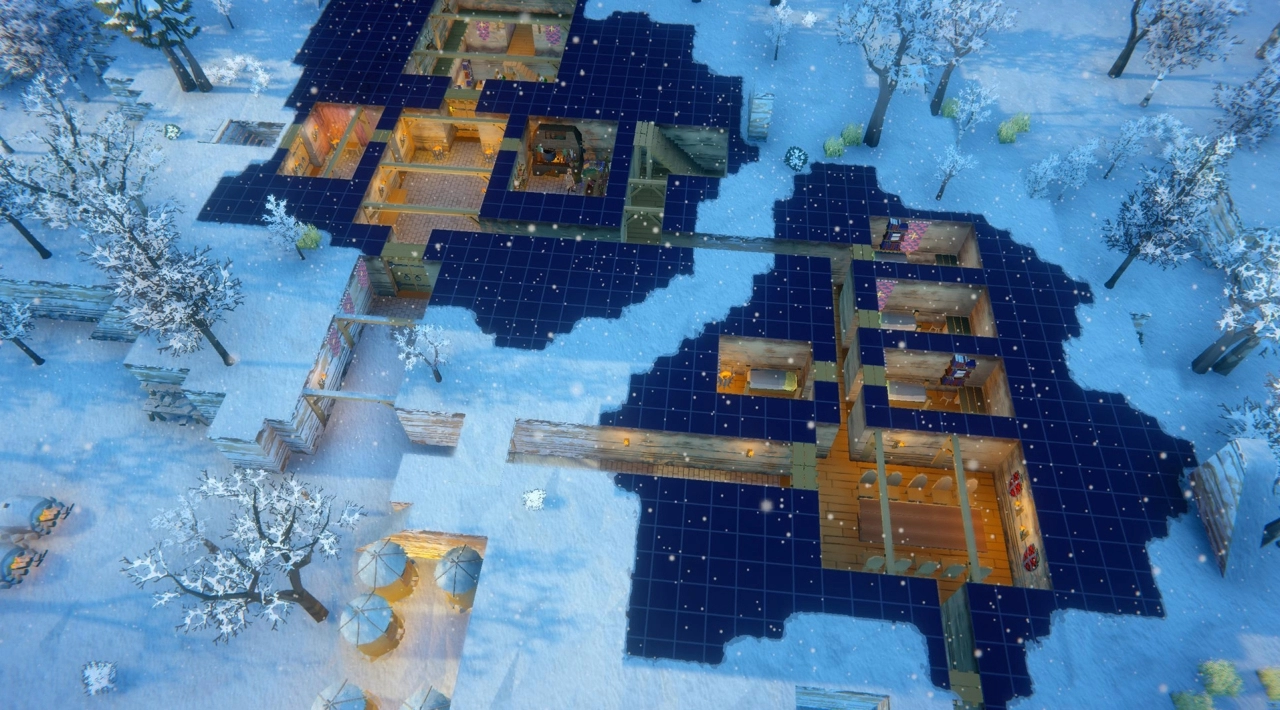
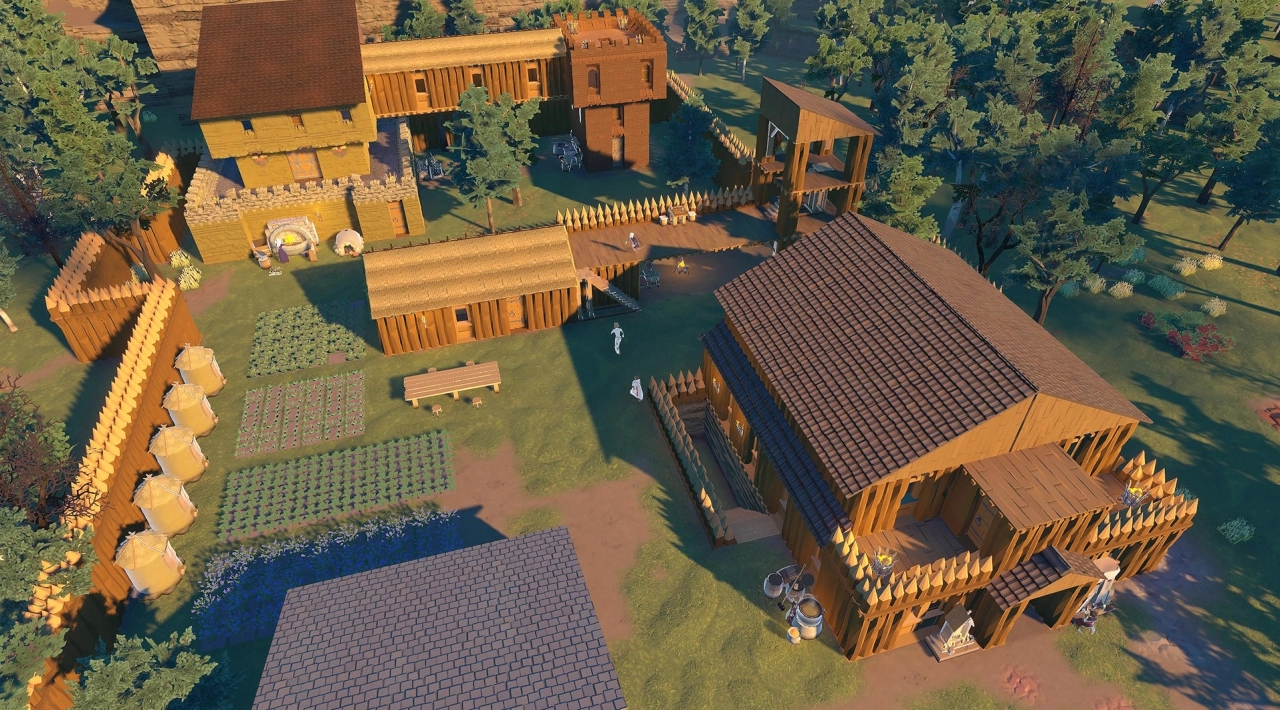
The defining feature is 3D colony building. Unlike a flat settlement simulator, Going Medieval lets you construct multi-storey structures, excavate underground spaces, create cellars, and reshape terrain for both practical and defensive purposes. A hillside can become a fortified stronghold, while an underground complex can serve as storage, workshops, bedrooms, or protected research space.
Construction uses materials such as wood, clay, and stone, with rooms that can be furnished and decorated according to the needs of the colony. Vertical design is not just cosmetic. Floors, stairs, walls, entrances, and underground routes influence how settlers move and how enemies approach your defenses, making layout planning a central part of the strategy rather than a late-game decoration exercise.
Players who enjoy settlement design with a stronger medieval identity may also appreciate historical city builders with tactical warfare like Manor Lords, although Going Medieval focuses more closely on individual settlers, production chains, and fortress engineering.
Settlers, skills, and daily survival
Each colonist is a distinct character with skills, personality traits, needs, backstory elements, and religious preferences. Assigning jobs is therefore more involved than filling generic workforce slots. A settler with strong Animal Handling may be valuable for livestock, while another with better combat potential may be reserved for guard duty, hunting, or raids.
Settlers need food, clothing, shelter, rest, leisure, and suitable living conditions. Their mood and productivity are affected by the settlement around them, so a prosperous colony still requires careful scheduling and room planning. Work priorities, equipment, skills, and personal traits interact constantly, creating the kind of management problems where one missing specialist can disrupt an entire production chain.
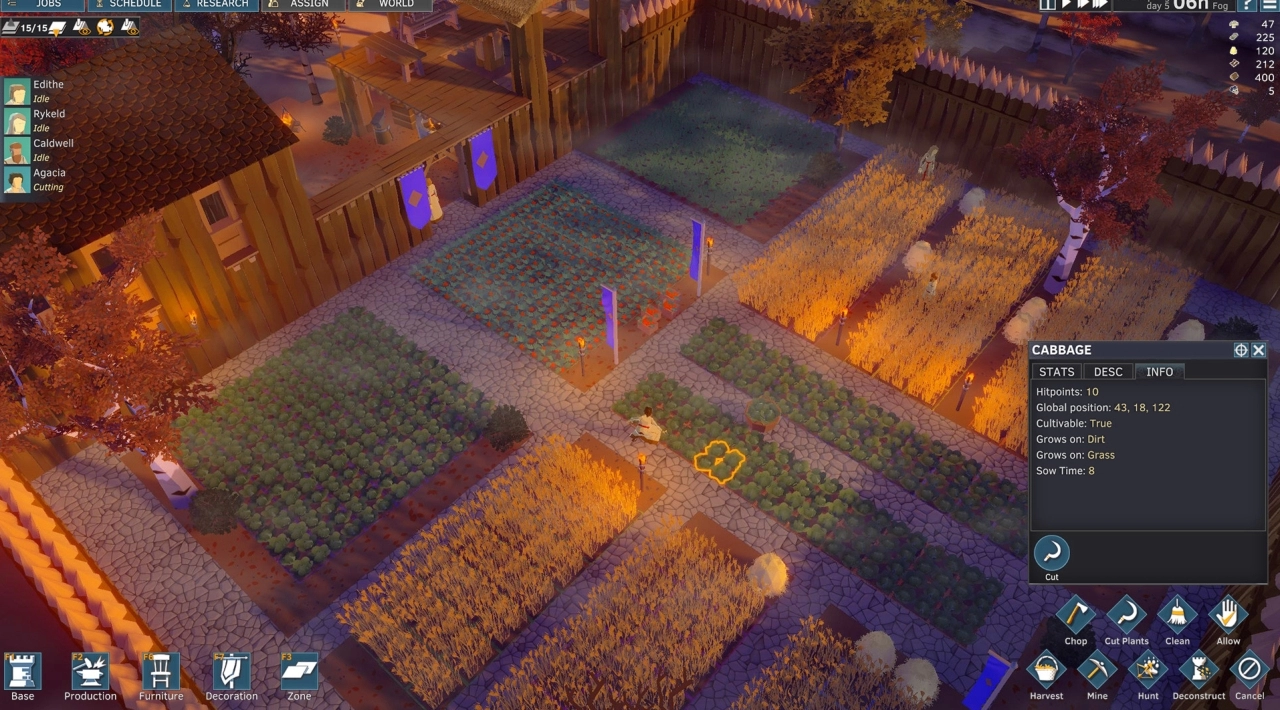
Seasonal changes, temperature, weather, crop cycles, food preservation, and illness add pressure to the colony. Farming must be planned around the year, while storage and building materials need to be protected from environmental risks. The result is a survival simulation where long-term preparation matters more than simply expanding as quickly as possible.
Research, crafting, and medieval technology
Progression is built around a research tree that unlocks new structures, production methods, equipment, and settlement capabilities. Knowledge is represented through crafted books and stored research resources, giving libraries and research rooms a functional role in the colony. Research priorities can push the settlement toward better farming, brewing, construction, medicine, warfare, or other forms of specialization.
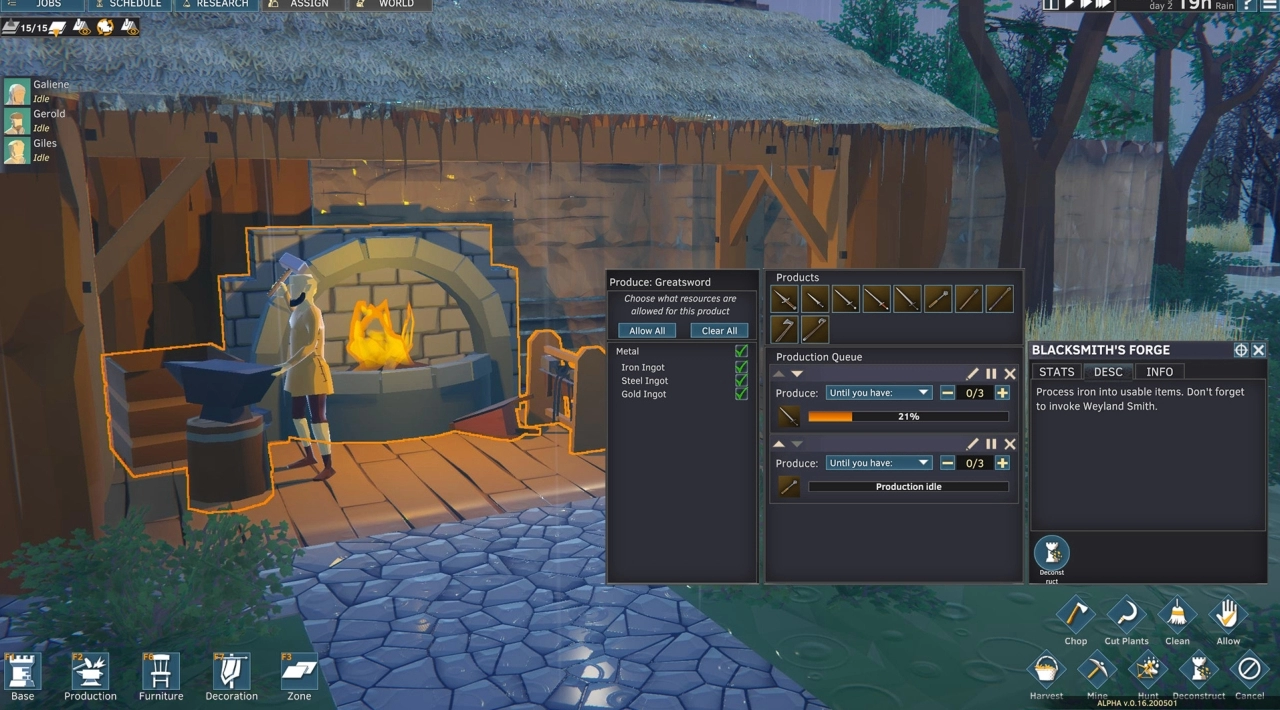
The crafting economy connects gathering to survival. Settlers process raw materials into tools, weapons, armor, clothing, meals, medicine, and household goods. Unlocking a new workstation is only the beginning; you still need the labor, materials, storage, and logistics to keep it operating. This makes production planning one of the strongest reasons to expand carefully instead of building every available structure immediately.
The 1.0 version also adds a more explicit endgame through grand objectives and global progress connected to different settlement directions, including religious, military, and intellectual development. These objectives give established colonies a destination beyond indefinite expansion while preserving the sandbox structure of individual scenarios.
Raids, defenses, and battlefield control
Combat is a real-time management layer connected directly to the settlement. Raiders and wildlife can threaten production, storage, settlers, and strategic buildings, so defensive planning begins long before an attack arrives. Walls, gates, traps, elevated positions, defensive structures, weapons, armor, and siege equipment all have a place in the fortification system.
You can command settlers during battles, assign them to defensive positions, and tailor equipment to their skills. Ranged attackers, melee fighters, and specialized roles can be combined with terrain manipulation to create chokepoints or protected firing positions. The best defenses are usually designed into the settlement itself, rather than added as an emergency response after the first serious raid.
Going Medieval is not a traditional army-scale real-time strategy game. The focus remains on a compact community whose members build, craft, research, defend, and recover together. Combat matters because it interrupts the colony economy and tests the logic of your fortress, not because the game turns into a separate battlefield campaign.
Scenarios, maps, and replay value
The game uses procedurally generated multi-level maps with terrain, water, seasons, weather, resources, and events that can vary between settlements. Map selection and scenario settings let you adjust the overall pace and pressure, while custom scenarios can support a more relaxed construction-focused experience or a harsher survival challenge.
Default starting approaches include a balanced new-player setup, a peaceful construction mode, a more demanding lone start, and a combat-focused scenario. These options make the game easier to approach according to your preferred style. Players who want creative building can reduce or remove combat pressure, while experienced colony managers can increase event intensity and test more restrictive starts.
Because the settlement is shaped by its terrain, settlers, research choices, and defensive layout, replay value comes from experimenting with different colony identities. One playthrough may prioritize a heavily fortified castle, while another may emphasize religion, scholarship, farming, trade, or underground construction.
PC features, storefronts, and content model
Going Medieval is a single-player PC game available through Steam, Epic Games Store, and GOG. Steam lists achievements, cloud saves, trading cards, Family Sharing, and Steam Workshop support. Workshop access is especially relevant for players who want to extend the sandbox with community-made content and modifications.
The storefronts do not advertise online multiplayer, local co-op, split-screen, or competitive modes, so this should be treated as a solo colony-management game. It is primarily designed around mouse-and-keyboard control, and the PC storefront listings do not present dedicated controller support as a headline feature.
GOG lists the game as DRM-free and confirms that GOG Galaxy is optional. Steam and Epic use their respective launcher ecosystems. English is the audio language, while interface and subtitle support covers English, Simplified Chinese, French, German, Japanese, Brazilian Portuguese, Russian, Spanish from Spain, Korean, Polish, and Turkish.
The commercial model is straightforward: the base game is a paid purchase, with optional add-ons including the soundtrack and a cosmetic Supporter Pack. The Supporter Pack adds decorative medieval chess-piece statues rather than new survival systems or campaign content, so the core building, research, combat, and sandbox experience is contained in the base game.
Who should play Going Medieval?
Going Medieval is a strong fit for players who enjoy colony simulators, medieval city builders, survival management, procedural sandboxes, and fortress design. It particularly suits players who want more physical depth than a flat settlement map can provide, including multi-floor construction, underground rooms, terrain manipulation, and defenses integrated into the architecture.
It is less suitable for players seeking a narrative RPG, direct character control, multiplayer settlement building, or large-scale army campaigns. The game asks you to think in systems: food reserves, work assignments, room functions, research priorities, settler morale, and defensive routes. If that sounds better than following a fixed story, the open-ended structure is the main attraction.
Similar colony strategy games on PC
For a broader emergent colony story generator with colonist relationships, procedural events, and a more science-fiction setting, deep settlement management in RimWorld is the closest structural comparison, though Going Medieval puts more emphasis on vertical fortress construction and medieval technology.
Players who prefer resource chains, environmental planning, and vertical settlement design can also compare it with survival-focused city builders with layered construction like Timberborn. Timberborn is built around beaver societies and water engineering, while Going Medieval centers on human settlers, raids, religion, crafting, and castle defense.
Going Medieval FAQ
Is Going Medieval still the official name?
Yes. Steam, Epic Games Store, GOG, Foxy Voxel, and Mythwright currently use Going Medieval. No verified renamed edition or storefront rebrand has replaced the original title.
Is Going Medieval a single-player game?
Yes. The current storefront listings identify it as single-player. They do not advertise online multiplayer, local co-op, split-screen, or competitive modes.
What is the main gameplay loop?
You gather resources, assign settlers to jobs, build and furnish a settlement, research technology, craft equipment, grow or preserve food, manage morale and needs, and defend the colony from raids and wildlife. The longer-term loop is shaped by settlement design, scenario settings, and grand objectives.
Can you build underground in Going Medieval?
Yes. The game supports underground construction, cellars, multi-storey buildings, and terrain manipulation. Digging can create storage, workshops, defensive routes, and protected living or research areas.
Does Going Medieval support mods?
Yes. The Steam version lists Steam Workshop support, and the game is designed as a moddable sandbox. Community content can extend the experience beyond the base settlement systems.
What languages does the PC version support?
English is supported for audio and text. Text and interface localization is also available in Simplified Chinese, French, German, Japanese, Brazilian Portuguese, Russian, Spanish from Spain, Korean, Polish, and Turkish.
System Requirements
Minimum: | Recommended: |
| Processor: AMD or Intel, 3.3 GHz (AMD FX 8300, Intel i5 3000) Graphics: AMD/NVIDIA dedicated GPU, 2GB dedicated VRAM (Radeon RX 560, Geforce GTX 1050) Memory: 8 GB RAM Disk space: 1 GB available space Operating system: Windows 7 64-bit | Processor: AMD or Intel, 4 GHz (AMD Ryzen 5 3600, Intel i5 8600) Graphics: AMD/NVIDIA dedicated GPU, 4GB dedicated VRAM (Radeon RX 580, Geforce GTX 1080) Memory: 16 GB RAM Disk space: 2 GB available space Operating system: Windows 10 64-bit |
Screenshots
Trailer/Gameplay
Download
Going Medieval (2026), 0.42GB
ElAmigos release, game is already cracked after installation (crack by Codex/Rune).

Updated to version 1.1.19 (14.08.2026).

1. Extract files.
2. Burn or mount the image.
3. Install the game.
4. ElAmigos release, game is already cracked after installation.
5. Play the game. If you like this game, BUY IT!
Going Medieval Download
🔒 Premium access required
To see and use the download links, you must be logged in and have an active PREMIUM account.
* Unlock downloads via Torrent and TeraBox.
Torrent Download
The best torrent download speeds are with qBittorrent!