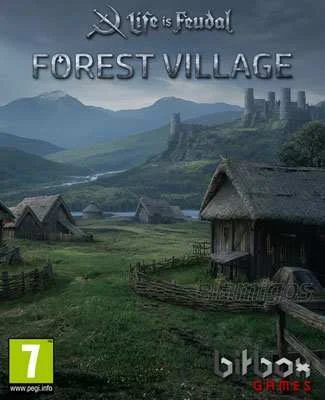
Life is Feudal: Forest Village
- Category:
- Release date:
- Game Genre:Strategy, Economic, the middle ages, sandbox, indie games, city builder
- Developer:Mindillusion Publisher: Bitbox
- Release:ElAmigos
- Platform:PC
- Languages (subtitles):English, French, Italian, German, Spanish, Polish, Portuguese-Brazil, Russian, Chinese Simplified
- Dubbing/Audio:English
- Crack:not necessary
- Game size:0.31GB
Game Description
Life is Feudal: Forest Village is a PC medieval city builder with survival and resource-management systems, developed by Mindillusion and published by Bitbox Ltd. The Steam storefront still uses this exact title; there is no verified current rebrand, renamed edition, or free-to-play transition to account for. It is a single-player settlement simulator built around keeping a community fed, warm, healthy, and productive while the surrounding ecosystem changes.
The game is best understood as a survival-focused colony sim rather than a traditional campaign strategy game. You begin with a small group of refugees on an unknown island, then turn raw land and natural resources into a functioning village. Its strongest appeal comes from the pressure created by interlocking needs: food production affects health, weather affects heating and farming, and settlement layout affects how efficiently villagers can work.
Build a village that can survive
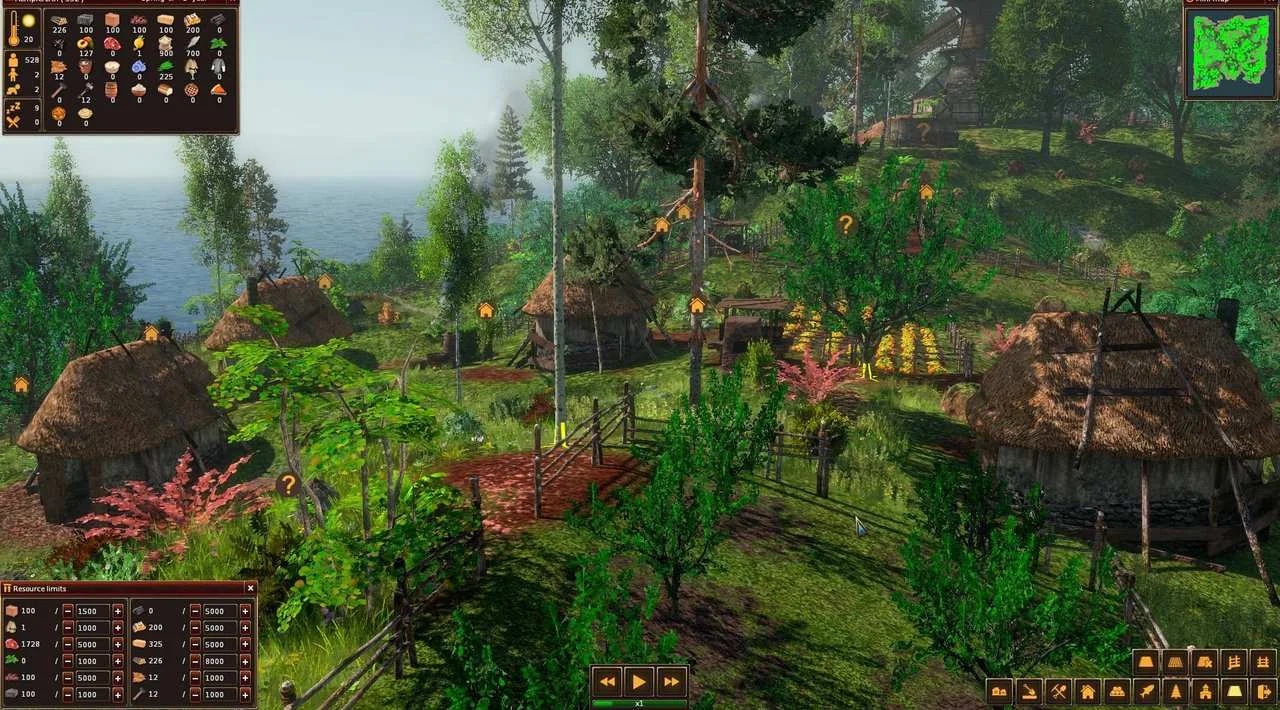
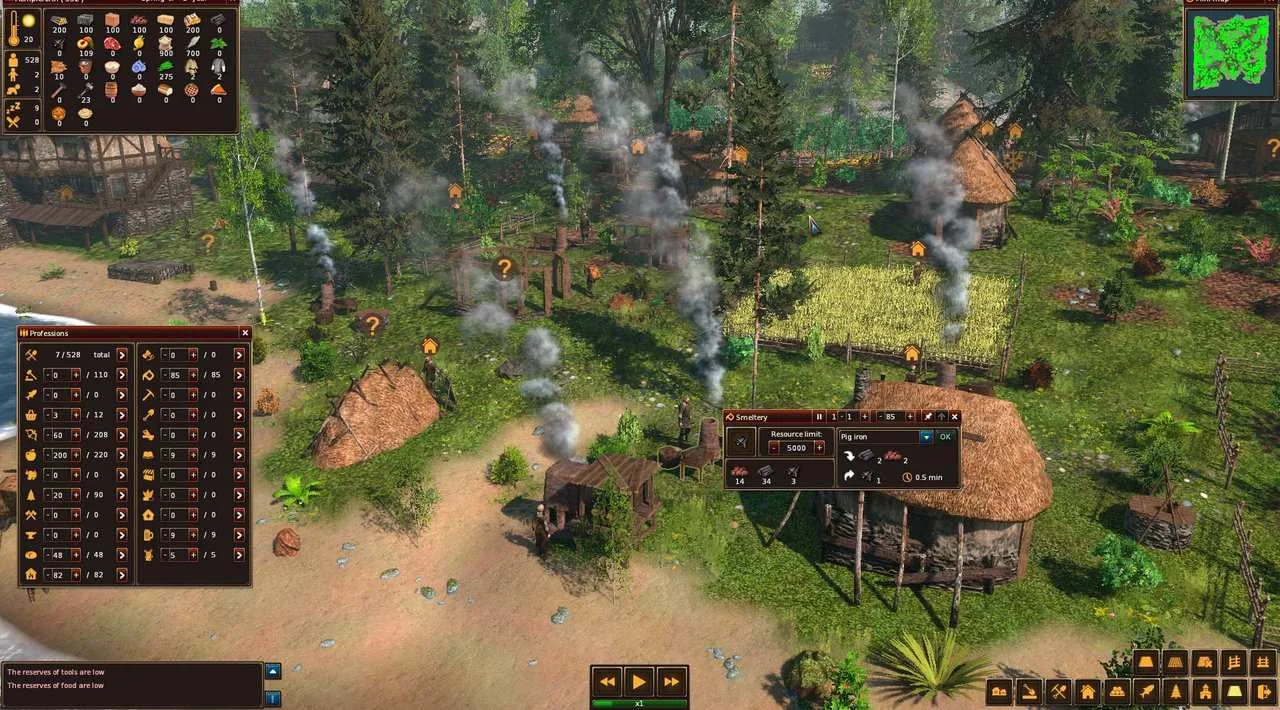
The main loop starts with choosing a settlement area, gathering basic materials, placing homes and workplaces, and assigning villagers to essential roles. You will clear land, collect wood and stone, establish food sources, construct storage and production buildings, and gradually expand the settlement’s capacity. Every new building adds opportunity, but it also increases the demand for labor, fuel, tools, clothing, and transport.
Bird's-eye management is the default way to play. From above, you issue orders, inspect production, adjust priorities, and monitor the movement of workers across the settlement. Roads are not merely decorative: paved routes improve villager movement, which can shorten work cycles and make distant resource sites more practical.
Construction also includes terraforming. You can reshape parts of the land to make room for larger buildings, improve access, or create a more efficient village layout. This gives Forest Village more physical planning than a simple menu-driven town builder, although terrain work still has to support the settlement’s wider production and survival needs.
First-person control and villager micromanagement
One of the game’s clearest differentiators is the ability to possess a villager and switch into a first-person view. This is not a separate action game campaign. Instead, it lets you take direct control of an inhabitant to perform everyday tasks, explore the settlement, or speed up selected work while the wider village continues to operate.
The perspective change creates a useful contrast. The strategic view is better for planning chains and coordinating many workers, while first-person control makes the village feel more tangible and gives individual tasks greater presence. Players looking for a medieval settlement game with a direct ground-level option may also appreciate the different balance between personal survival and town management found in first-person medieval village builders such as Medieval Dynasty, although Forest Village remains much more focused on overseeing an entire community.
Food, health, seasons, and the ecosystem
Food is more complicated than simply filling a storage building. The game tracks different food categories, and villagers can suffer from avitaminosis when their rations lack variety. Meat, fish, bread, vegetables, and fruit all contribute to a healthier supply, so a settlement that produces large amounts of only one food type can still become vulnerable to disease.
Advanced farming adds another layer of planning. Crops and fruit trees have different requirements for moisture, labor, and growing time. Pastures and hens also need protection from forest predators, which means food production depends on more than placing fields and waiting for harvests.
Weather and seasons reshape the priorities of the settlement. Summer conditions can force farmers to water crops, while heavy rain may require drainage trenches. Winter raises the demand for firewood, charcoal, and warm clothing. Cold conditions also make disease more dangerous, especially when food quality and household heating are inadequate.
The dynamic ecosystem is an important feature that many similar city builders treat more lightly. Villagers moving through nearby forests can push wildlife farther away, while excessive farming and woodcutting can reduce local flora and fauna. That can lower the supply of meat, hides, mushrooms, berries, and medicinal herbs, making short-term expansion a potential long-term resource problem.
Morale, growth, and natural disasters
Population growth depends on keeping people satisfied and providing suitable housing. Morale affects productivity, while overcrowded accommodation, unmet needs, and witnessing a villager’s death can reduce the community’s condition. Families grow when housing and living conditions allow it, so population management is tied directly to the quality and availability of homes.
Natural disasters give the survival layer an occasional sharp edge. Lightning can strike tall buildings on hilltops, tornadoes can cut through developed areas, and earthquakes can damage houses or topple trees. These events are not a conventional enemy faction or combat system. They are disruptions that test whether the settlement has enough reserves, sensible spacing, and recovery capacity.
Players who enjoy the unforgiving supply balance of classic survival settlement games may find a familiar foundation in resource-driven colony management games like Banished. Forest Village distinguishes itself through first-person possession, terrain editing, food variety, and its attempt to model the ecological consequences of settlement growth.
Content model and long-term structure
Forest Village is a paid standalone game on Steam. The current storefront identifies it as single-player and lists Steam Workshop, Steam Cloud, and Family Sharing support. It is not presented as a live-service title, competitive multiplayer game, or free base game with a required online ecosystem.
There is no conventional story campaign to complete. The long-term structure is a series of settlement runs in which you develop a village, survive seasonal pressure, expand production, improve transportation, and recover from disasters. That makes the game a fit for players who enjoy open-ended building and restartable management challenges rather than scripted objectives or a fixed narrative arc.
Steam also lists 29 achievements and Workshop support. Community content includes mods, maps, and scenarios, while the developers describe access to systems such as AI, animations, task management, resource management, navigation, sounds, and Lua-based scripting. Workshop content can therefore extend the game’s replay value beyond the default settlement setup.
Who should play it?
Forest Village suits players who want a medieval colony sim with visible survival consequences and a slower management rhythm. It is particularly appealing if you like planning food variety, balancing worker assignments, watching a settlement evolve organically, and solving logistical problems before winter or disease exposes them.
It is less suitable for players expecting real-time combat, diplomacy between rival kingdoms, a character-driven campaign, or cooperative village construction. The first-person mode adds immersion and direct control, but it does not turn the game into a full medieval role-playing experience. The core challenge remains keeping the settlement functioning.
PC features and storefront details
The PC release is distributed through Steam and includes Steam Workshop, Steam Cloud, and Family Sharing. The official storefront lists interface localization in English, French, Italian, German, Polish, Brazilian Portuguese, Russian, Simplified Chinese, and Spanish. It does not list full audio localization for those languages.
The storefront confirms single-player support, but does not advertise co-op, split-screen, or an online multiplayer mode. Community tags may mention multiplayer or co-op, yet the official feature list is the more reliable reference for the playable modes currently presented to customers. Controller support is also not promoted as a named storefront feature, so keyboard-and-mouse planning should be treated as the safest expectation.
For another medieval settlement option with stronger structural freedom and a different emphasis on town design, compare gridless medieval city building in Foundation. It shares the pleasure of shaping a growing settlement, but Forest Village places more pressure on household survival, food composition, weather preparation, and ecological depletion.
Life is Feudal: Forest Village FAQ
Is Life is Feudal: Forest Village still the official name?
Yes. The current Steam listing continues to use Life is Feudal: Forest Village. No verified storefront rebrand or replacement edition was found during the naming check.
Is Forest Village single-player or multiplayer?
It is officially listed as a single-player game. The storefront does not list co-op, split-screen, or an online multiplayer mode.
Can you play in first person?
Yes. You can possess a villager and use a first-person view to perform tasks or explore, then return to the bird's-eye view for strategic management.
How does survival work in Forest Village?
Survival depends on maintaining varied food supplies, heating homes, producing clothing, managing seasonal farming, preventing disease, and protecting the settlement from disasters. A village can fail even when it has food if its rations lack nutritional variety or its winter reserves are too low.
Does the game support mods?
Yes. Steam Workshop support provides community-made mods, maps, and scenarios. The game is designed to expose multiple systems for Lua-based modification.
Does Forest Village have a campaign?
No traditional story campaign is advertised. The main experience is an open-ended settlement loop focused on expansion, production, population growth, seasonal survival, and recovery from disasters.
System Requirements
Minimum: | Recomended: |
| Processor: Intel Core 2 Duo 2.4 GHz/AMD 64 2.6 GHz Graphics: 1 GB GeForce GTX 460 Ti/Radeon HD 5750 Memory: 2 GB RAM Disk space: 400 MB HDD Operating system: Windows 7(SP1) | Processor: Intel i5 2.4 GHz/AMD Phenom II X4 2.5 Graphics: 2 GB GeForce GTX 760/Radeon HD 6970 Memory: 4 GB RAM Disk space: 400 MB HDD Operating system: Windows 7(SP1)/10 |
Screenshots


Trailer/Gameplay
Download
Life is Feudal: Forest Village (2017), 0.31GB
ElAmigos release, unprotected game (serial or crack is not necessary).

Updated to version 1.1.6719 (12.09.2018).

1. Extract files.
2. Burn or mount the image.
3. Install the game.
4. Play the game. If you like this game, BUY IT!
Life is Feudal: Forest Village Download
🔒 Premium access required
To see and use the download links, you must be logged in and have an active PREMIUM account.
* Unlock downloads via Torrent and TeraBox.
Torrent Download
The best torrent download speeds are with qBittorrent!