Foundation
Edit date: 30-07-2026, 13:05
Reason: + update 1.11.0.7 - 1.11.0.19 (28.07.2026)
- Category:
- Release date:
- Game Genre:Strategy, economic, the middle ages, crowdfunding, indie games, city builder, singleplayer
- Developer:Polymorph Games
- Release:ElAmigos
- Platform:PC
- Languages (subtitles):English, French, Italian, German, Spanish, Portuguese-Brazil, Polish, Russian, Czech, Ukrainian, Turkish, Swedish, Japanese, Simplified Chinese, Korean, Vietnamese, Thai
- Crack:Codex/Rune, FLT
- Game size:2.07GB
Game Description
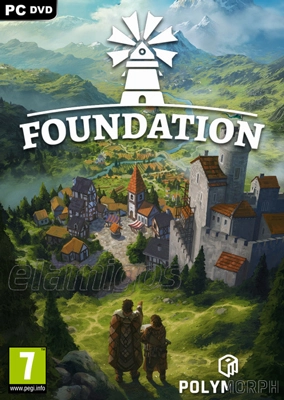
Foundation PC is a gridless medieval city-building simulation from Polymorph Games, built around organic settlement growth, modular construction, resource management, and long-term economic planning. The current Steam and GOG storefronts still use the original name, Foundation; no verified rebrand, renamed edition, or replacement definitive edition is presented. It is a paid single-player game with optional add-ons rather than a multiplayer city-building platform.
Build a medieval settlement without a grid
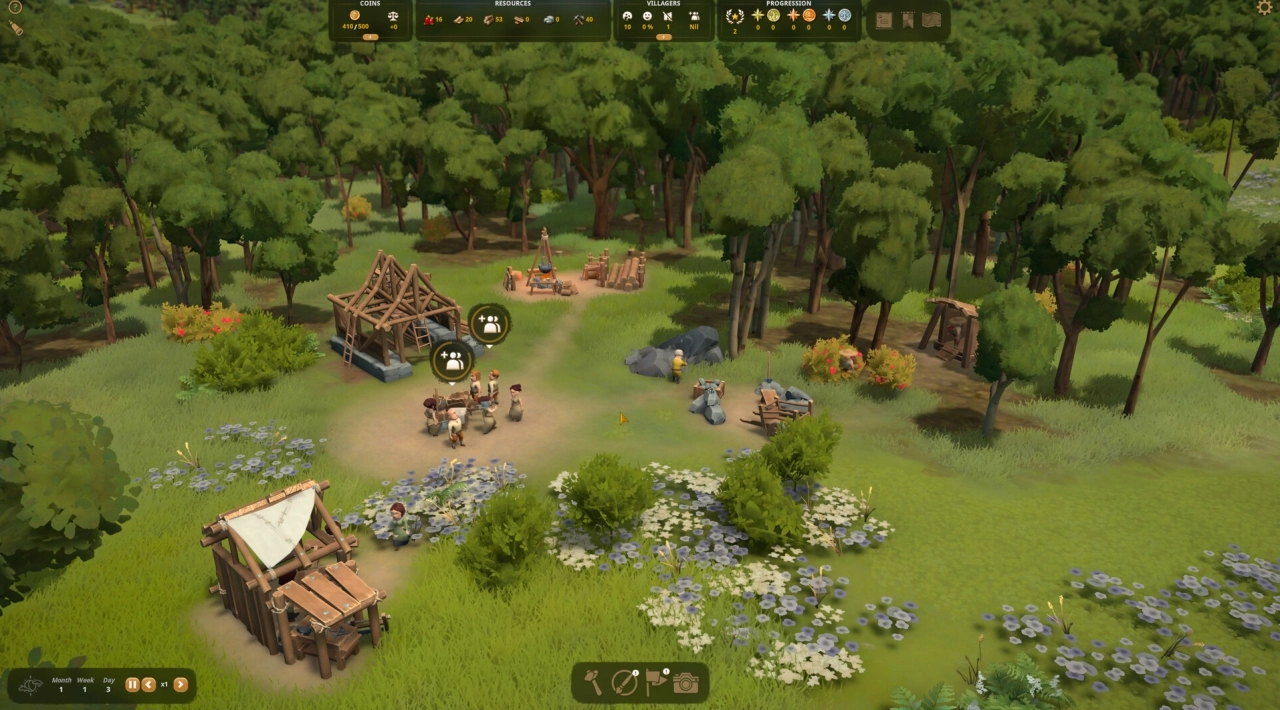
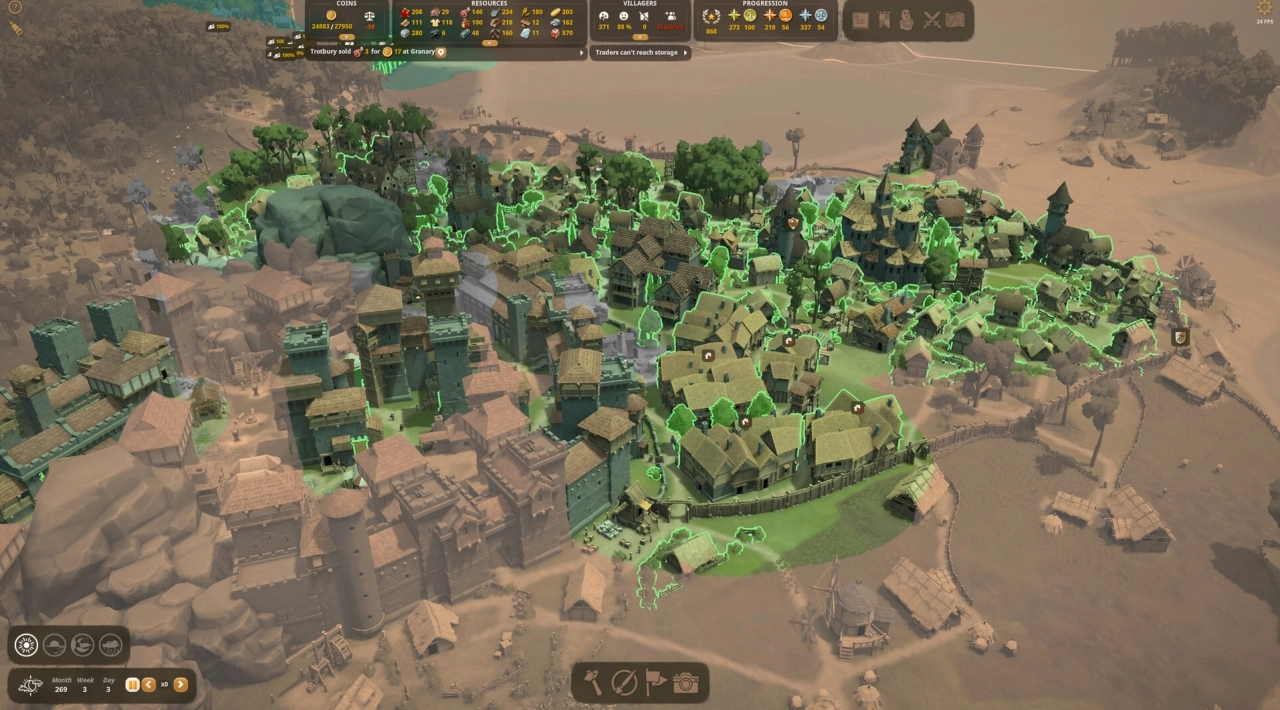
Foundation’s defining feature is gridless construction. Instead of fitting every road and building into rigid square cells, you shape the settlement around terrain, existing paths, resource zones, and the movement patterns of your villagers. The result is a town that develops in irregular clusters rather than looking like a repeated spreadsheet of identical blocks.
The main view is an overhead city-management perspective. You place production buildings, define zones, expand your territory, and follow villagers as they travel between homes, workplaces, markets, storage buildings, and points of interest. Foundation is not about directly controlling a hero or commanding individual units in battle; the player manages the systems that make the settlement function.
Early progress begins with a small community and a limited economic base. You assign jobs, gather basic materials, provide housing, establish food production, and improve the flow of goods. As the population grows, production chains become more important: raw materials must reach the correct workplaces, finished goods need storage or markets, and the settlement must generate enough wealth to support expansion.
Organic roads, housing, and village logistics
Foundation uses a Painting tool to guide development instead of forcing every structure into a precise placement pattern. Players can indicate where villagers should build homes, where forests may be harvested, where roads should form, and where patrols or other town functions should operate. The tool gives you influence over the town’s shape while allowing the simulation to create natural-looking growth.
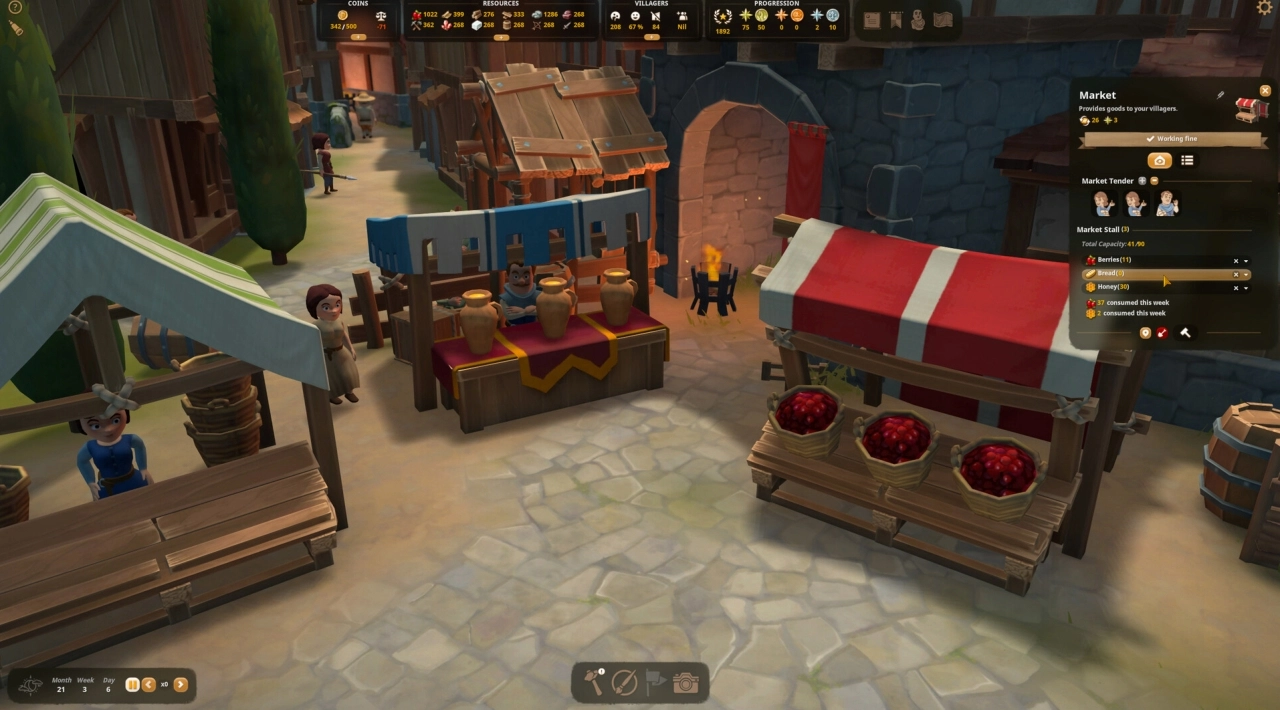
Housing is tied to the condition of the settlement rather than being only a decorative system. Villagers need access to services, goods, and suitable surroundings, while more advanced residential tiers require a stronger civic foundation. Paved roads, market access, decorations, and public buildings all become part of the process of turning a rough village into a prosperous medieval town.
This emphasis on movement and proximity gives Foundation a different rhythm from highly rigid city builders. A production building is not useful simply because it exists. Its workers must reach it, resources must be delivered, and the resulting goods must move through the town efficiently. Players who enjoy settlement logistics with more freedom in town layout may also appreciate medieval survival city building like Farthest Frontier, although Foundation is generally more focused on organic urban design than harsh survival pressure.
Estates, progression, and competing priorities
Foundation’s progression is organized through a Progression Tree with a Common Path and three estate paths: Labour, Kingdom, and Clergy. The Common Path unlocks broadly useful town infrastructure, while the estate paths push the settlement toward different social and political identities.
- Labour supports civic development, taxation, markets, manor construction, and improved roads.
- Kingdom develops military infrastructure, weapons production, castles, and related defensive systems.
- Clergy expands churches, monasteries, religious buildings, and monastery-based industries.
The game does not require every settlement to follow the same development plan. You can specialize around one estate or combine the three, using Prosperity, Splendour, and Influence to unlock technologies and benefits. This creates a strategic layer beyond simple population growth: the buildings you choose and the way you decorate the town can influence which progression options become available.
Quests, mandates, edicts, and privileges add direction without turning the game into a linear campaign. Some objectives reward economic development, estate relationships, trade, or military activity. They give a settlement short-term priorities while leaving the larger shape of the town in your hands.
Trade, taxation, monuments, and military development
Once the settlement has a functioning economy, trade routes let you import scarce resources and export surplus production. Different neighboring settlements are associated with Labour, Clergy, or Kingdom allegiances, linking trade decisions to the wider progression system. Import limits, storage capacity, gold reserves, and route upgrades all matter, so trade works as an economic network rather than a simple sell button.
Taxation provides another way to fund development, but it must be balanced against villager happiness and estate relationships. A strong treasury can accelerate construction and unlock progression, while excessive demands can weaken the social foundations that support a larger town.
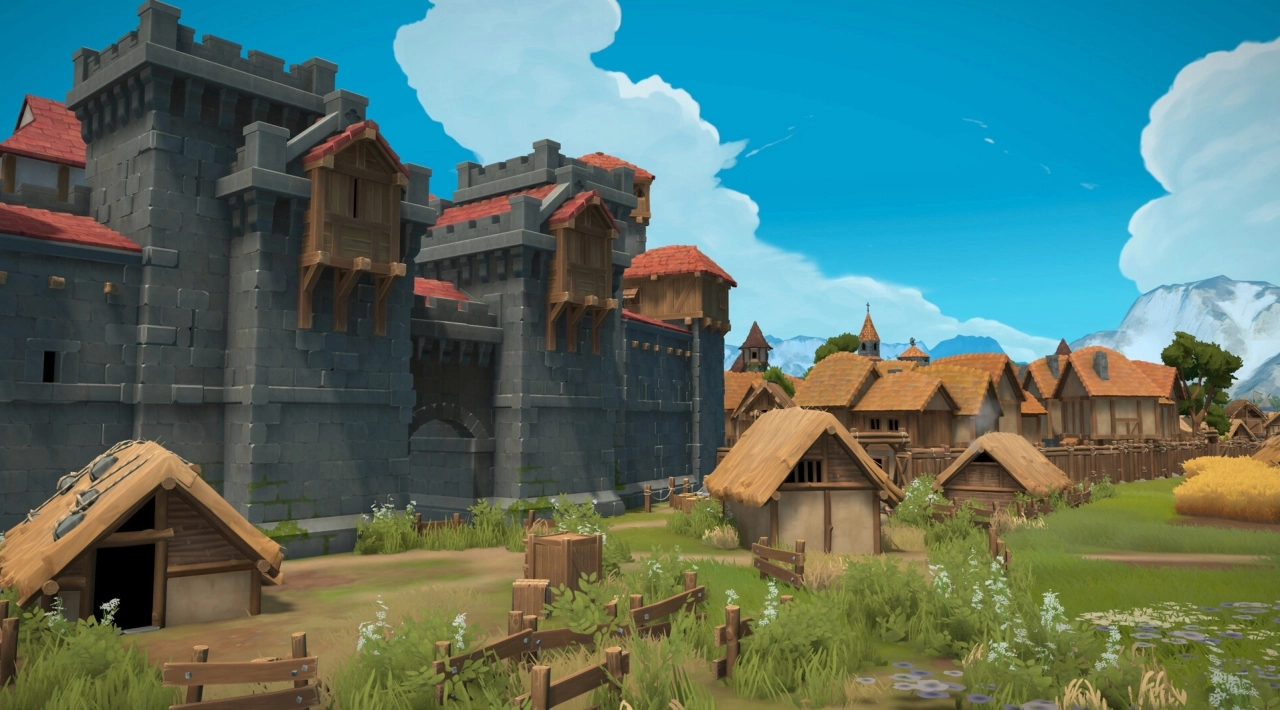
Monument construction is one of Foundation’s most distinctive systems. The free-building tool lets you assemble major structures from modular parts, including churches, monasteries, manor houses, castles, and other civic or religious landmarks. You can alter layouts, add decorative elements, and create a visual centerpiece that reflects the priorities of your settlement rather than selecting a single fixed building model.
The Kingdom path also supports a military system with Companies, fortifications, watchtowers, guards, walls, and castle construction. Military development is integrated into the wider economy: weapons, defensive buildings, and related services require planning, labor, and resources. Foundation is not a conventional real-time war game, so players seeking constant battlefield control should look elsewhere, but the military layer gives ambitious settlements another route to progression.
Maps, aspirations, and content model
Each new game begins with a generated map, a selected ruleset, and an Aspiration. These choices help define the character of the settlement and encourage different play styles. You can pursue a more structured objective, adjust the challenge, or use Creative Mode to focus on design and construction without the same constraints.
The base game includes the complete city-building sandbox, progression paths, production chains, trade, estates, monument construction, quests, and single-player management loop. Current storefront listings also present a demo and optional extras rather than a subscription model or competitive service structure.
The paid add-on lineup includes Foundation: Harvest Festival, Foundation Guivre Garden, and the Foundation Original Soundtrack. The Supporter Edition bundles the base game with the soundtrack and Guivre Garden content. The add-ons are supplementary; the core settlement-building experience is contained in the standard game.
PC features and storefront differences
Foundation is developed and published by Polymorph Games and runs on Windows PC. Its proprietary Hurricane engine supports the game’s large number of moving villagers and its highly customizable construction systems. The game is single-player only, with Steam achievements, Steam Cloud, Family Sharing, and a Steam demo listed on the current Steam page.
The PC version has full modding integration. Community content can extend the game with new buildings, characters, quests, maps, and other custom material through the supported mod ecosystem. This is a major reason to choose the PC edition if you want to keep experimenting after completing the main progression paths.
The storefronts differ most clearly in DRM. The GOG edition is advertised as DRM-free and does not require GOG Galaxy or an online connection to play. The Steam version uses Steam’s ecosystem for features such as achievements, cloud saves, and community integration. The current storefront feature lists do not advertise native controller support, so Foundation is best approached as a keyboard-and-mouse management game. No multiplayer anti-cheat system is advertised because the game is single-player.
Interface and subtitle support cover English, French, German, Italian, Spanish, Russian, Brazilian Portuguese, Simplified Chinese, Japanese, Korean, Polish, Swedish, Turkish, Vietnamese, Czech, Thai, and Ukrainian on the current Steam listing. Full spoken audio is not presented as a feature; Foundation is primarily a text-and-interface-driven simulation.
Who should play Foundation?
Foundation suits players who want a relaxed city builder with meaningful economic systems, visual freedom, and a strong sense of settlement identity. It is particularly effective for players who enjoy watching a village evolve organically, then refining its roads, neighborhoods, monuments, and production network over multiple sessions.
The game is less suitable if you want direct character control, competitive multiplayer, constant combat, or a tightly scripted campaign. Its challenge comes from balancing labor, supply chains, territory, estate progression, and town design. For players who prefer settlement runs with more pressure, procedural objectives, and changing conditions, procedural city-building roguelikes such as Against the Storm provide a sharper alternative rather than a direct replacement.
Similar medieval strategy games on PC
Medieval city builders with real-time strategy elements like Manor Lords share Foundation’s interest in open layouts, terrain-aware development, and the relationship between settlement planning and regional power. Manor Lords adds a stronger battlefield focus, while Foundation concentrates more heavily on civic construction, modular monuments, and estate-driven progression.
Farthest Frontier is the closer comparison for players who want survival logistics, while Against the Storm is better for compact, replayable settlement expeditions. Foundation occupies a calmer middle ground: it has economic depth and long-term planning, but its main reward is the gradual creation of a town that feels individually shaped.
Foundation FAQ
Is Foundation still called Foundation on PC?
Yes. The current Steam and GOG storefronts use Foundation. No verified rebrand, renamed edition, or definitive replacement title has been identified.
Is Foundation multiplayer or co-op?
No. Foundation is a single-player city-building game. Steam features such as Family Sharing and Steam Cloud do not add cooperative or split-screen play.
What is included in the standard Foundation edition?
The standard edition contains the core medieval city-building sandbox, including gridless construction, production chains, trade, estates, progression, quests, monuments, military development, and Creative Mode. The soundtrack and Guivre Garden are sold as additional content or included with the Supporter Edition.
Does Foundation support mods?
Yes. Foundation has full modding integration, allowing community content to expand buildings, quests, characters, maps, and other parts of the settlement simulation.
Does Foundation have native controller support?
The current Steam feature list does not advertise native controller support. The game is best suited to keyboard and mouse, especially when managing production chains, zoning tools, progression, and detailed building layouts.
Can Foundation be played offline?
The GOG edition is advertised as DRM-free and playable without GOG Galaxy or an online connection. Steam-specific features require the Steam platform, but the game itself remains a single-player experience.
System Requirements
Minimum: | Recomended: |
| Processor: Intel Core i5-4460 Graphics: GTX 960 / R9 290 - 3GB Video Memory Memory: 8 GB RAM Disk space: 4GB Operating system: Windows 10 | Processor: Intel Core i7-6700K Graphics: RTX 2060 Memory: 16 GB RAM Disk space: 4GB Operating system: Windows 10 |
Screenshots
Trailer/Gameplay
Download
Foundation (2025), 2.07GB
ElAmigos release, game is already cracked after installation (crack by Codex/Rune or FLT).

Updated to version 1.11.0.7 (26.11.2025).

1. Extract files.
2. Burn or mount the image.
3. Install the game.
4. ElAmigos release, game is already cracked after installation.
5. Play the game. If you like this game, BUY IT!
Foundation Download
🔒 Premium access required
To see and use the download links, you must be logged in and have an active PREMIUM account.
* Unlock downloads via Torrent and TeraBox.
+ update 1.11.0.7 - 1.11.0.19 (28.07.2026) & crack (by Codex/Rune), 83MB
🔒 Premium access required
To see and use the download links, you must be logged in and have an active PREMIUM account.
* Unlock downloads via Torrent and TeraBox.
DLC: Guivre Garden, Soundtrack.
Torrent Download
The best torrent download speeds are with qBittorrent!