Stonehearth
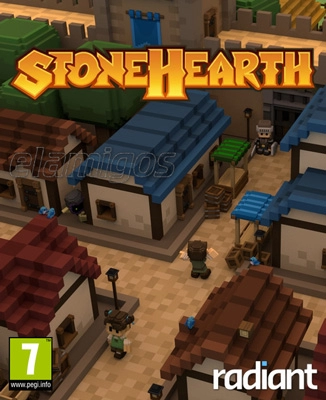
- Category:
- Release date:
- Game Genre:Strategy, fantasy, Economic, RTS, sandbox, indie games, co-op, city builder
- Developer:Radiant Entertainment
- Release:ElAmigos
- Platform:PC
- Languages (subtitles):English
- Crack:MrGoldberg
- Game size:0.73GB
Game Description
Stonehearth is a PC fantasy colony sim that combines voxel city building, resource management, crafting, exploration, and real-time settlement defense. The current Steam storefront still uses the original name, with no verified rebrand or alternate edition replacing it. You guide a small group of Hearthlings through procedurally generated terrain, turning a vulnerable camp into a functioning town while responding to hunger, hostile encounters, morale, and the practical demands of construction.
Build a living settlement from the ground up
Stonehearth begins with a small settlement and a large amount of unfinished work. Your Hearthlings need food, shelter, storage, tools, and protection before the town can expand safely. The central loop is straightforward: gather raw materials, assign jobs, craft equipment, place buildings, improve the settlement, and prepare for the next threat.
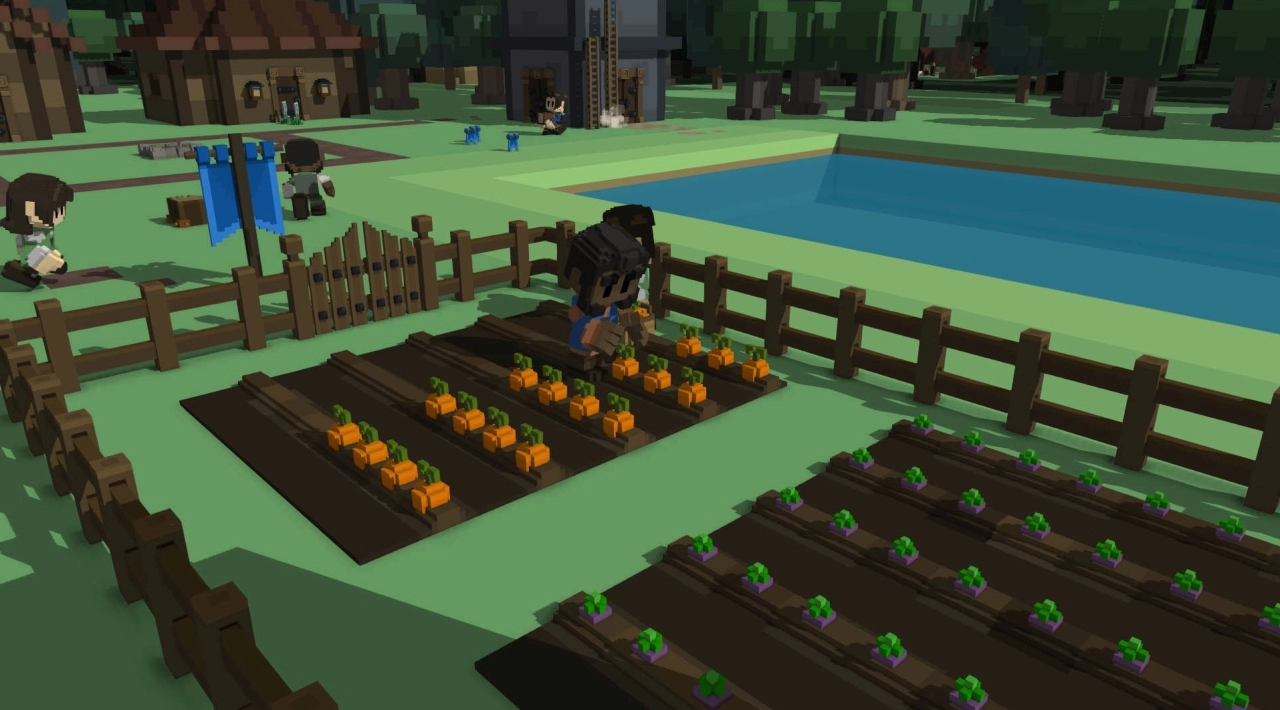
The game uses an angled 3D management view that lets you inspect the landscape, issue orders, designate work areas, and watch citizens carry out their routines. Building is not limited to selecting finished structures from a rigid menu. You can use templates for speed or design custom buildings, giving the town a more personal shape as it grows.
Terrain and map conditions matter because Stonehearth places the settlement in a world built around exploration and survival. Mountains provide stone and ore, farms need suitable space and care, and the distance between resource areas affects how efficiently Hearthlings can work. The best settlement is not simply the largest one; it is the town whose layout supports its economy.
Jobs, crafting, and Hearthling progression
Every Hearthling has a job that defines what they contribute to the settlement. Workers can be promoted into roles such as Carpenter, Mason, Farmer, or combat-focused jobs, with each specialization opening different crafting and production options. A new job often requires a specific tool, so progression flows through the entire economy rather than through a detached character menu.
Job levels provide a long-term development loop. Hearthlings gain experience through their assigned work, unlock additional capabilities, and can move into more advanced roles when the necessary conditions are met. This makes staffing an important strategic decision: promoting one citizen may improve farming or construction, but it also removes that worker from another task.
Crafting chains connect the professions together. A Carpenter can create the equipment needed by a Farmer, while a Mason depends on tools and materials produced elsewhere. This interlocking production system gives even ordinary objects a strategic purpose, because a missing tool can delay an entire branch of the settlement.
Food production is another system with more depth than its simple presentation suggests. You can establish farms and accept basic yields, or optimize them through crop selection, soil quality, nearby water, irrigation, fertilization, traps, and fences. Players who enjoy tuning production details will find more to manage than the friendly art style initially suggests.
Combat, threats, and town defense
Stonehearth is not a peaceful builder with occasional decoration. Hostile creatures and dynamic AI encounters can disrupt the settlement, raid stockpiles, injure citizens, and force you to maintain a capable defense force. Combat therefore works as a pressure system on the economy: weapons, armor, healing, and trained fighters all compete with construction and expansion for your available resources.
The combat roster includes distinct roles such as Footman, Archer, Knight, and Cleric. Each role fills a different tactical function, from frontline defense and ranged support to durable protection and healing. You can organize fighters into up to four combat parties, patrol important areas, defend a location, or send a group toward a specific enemy or destination.
Some defensive behavior is automated, but direct orders remain important when a threat appears outside the normal patrol area. The result is a hybrid system: the town can protect itself during routine attacks, while larger encounters and expeditions reward deliberate party composition and positioning.
Modding is part of the game’s identity
One of Stonehearth’s strongest differentiators is its unusually open approach to customization. The game was designed to be moddable across many layers, including items, creatures, jobs, scripted adventures, AI behavior, interfaces, and visual content. Steam Workshop integration makes sharing community-created content part of the PC experience rather than an entirely separate process.
The official modding documentation exposes systems built around JSON data and Lua scripting, giving technically minded players a route into the same broad structures used by the game itself. Modding can be as small as adding an item or recipe, or as ambitious as introducing new professions, factions, encounters, and progression rules.
Community expansions are especially relevant because they can change the practical character of a playthrough. The ACE project, for example, is known for expanding jobs, farming, combat specializations, resources, animals, recipes, and quality-of-life systems. Players should treat community content as optional additions with their own compatibility considerations, not as an official replacement edition of Stonehearth.
Who Stonehearth suits best
Stonehearth is a strong fit for players who want a colony sim with direct building control, visible citizen routines, class-based workers, and a fantasy setting. It is also appealing to players who enjoy sandbox progression more than a tightly scripted campaign. Much of the satisfaction comes from seeing a settlement evolve through your decisions, from the first farm and workshop to a defended town with specialized citizens.
The game is less suitable for anyone seeking a polished, highly streamlined management interface or a purely decorative city builder. Its systems can overlap, work queues can become difficult to read, and combat requires attention when several problems occur at once. The combination of construction, logistics, citizen management, and defense creates personality, but it also demands patience.
Players who prefer organic medieval town layouts may also enjoy grid-free historical city builders such as Foundation, although Stonehearth places much more emphasis on individual workers, crafting professions, and active defense.
PC storefront features and multiplayer reality
The current PC storefront lists Steam Workshop, online co-op, Remote Play Together, Family Sharing, and Steam Trading Cards. It also lists online and shared-screen competitive categories, but Stonehearth’s practical multiplayer identity is cooperative settlement management rather than a conventional player-versus-player strategy game.
In co-op, players work in the same world and share responsibility for the settlement. That can make construction, resource gathering, exploration, and defense more manageable, but the simulation also has to synchronize a large amount of ongoing activity. Larger towns and busy multiplayer sessions can therefore be more demanding to coordinate than the feature list suggests.
The storefront lists English interface support and does not advertise full audio or subtitle localization in additional languages. It also does not present a verified controller-support label, so PC players should approach Stonehearth primarily as a keyboard-and-mouse management game. The available storefront ecosystem is Steam-based, with Workshop content and Steam networking features forming the main platform layer.
For another colony-management option with a more survival-focused structure, planetary settlement games like Surviving Mars Relaunched provide a useful contrast: both games ask you to stabilize a vulnerable population, but Stonehearth is more personal, character-driven, and fantasy-oriented.
Similar games on PC
Stonehearth sits between several PC strategy traditions. It shares the settlement specialization and emergent citizen problems of colony simulators, the spatial creativity of city builders, and the equipment progression of lightweight role-playing systems.
- Foundation is the closer match for organic medieval town planning, but it is more focused on city layout and economic development.
- Surviving Mars Relaunched offers colony logistics and population management under harsher environmental conditions, with less emphasis on fantasy combat parties.
- Timberborn overlaps in settlement growth and resource planning, but it centers on water engineering, vertical construction, and beaver factions rather than Hearthling jobs and armed defense.
The most distinctive reason to choose Stonehearth is the combination of custom building, job-based citizens, real-time threats, and deep mod support. Few colony builders make those four elements equally central.
Stonehearth FAQ
Is Stonehearth still listed under its original name?
Yes. The current Steam storefront continues to list the game as Stonehearth. No verified current rebrand, definitive edition name, or replacement storefront title was identified.
What kind of game is Stonehearth?
It is a fantasy colony simulation and city-building sandbox with crafting, resource management, exploration, job progression, and real-time combat. The game is played from an angled 3D management perspective.
Does Stonehearth have multiplayer?
Yes. The Steam listing includes online co-op, shared-screen co-op, and Remote Play Together. The practical multiplayer format is collaborative settlement management rather than a standard competitive strategy mode.
Can you design your own buildings?
Yes. Stonehearth includes building templates for convenience and tools for custom building design. Players can shape structures and settlement layouts instead of relying only on predefined buildings.
Does Stonehearth support mods?
Yes. Steam Workshop support and official modding documentation cover custom items, jobs, creatures, scripted adventures, AI behavior, and other game systems. Community expansions can substantially change the available professions and mechanics.
Is Stonehearth a campaign game or a sandbox?
Its core structure is sandbox-oriented. You begin with a small group of settlers, develop the settlement, respond to threats, explore the generated world, and pursue your own building and progression goals rather than following a fixed campaign path.
System Requirements
Minimum: | Recommended: |
| Processor: Intel or AMD Dual-Core, 1.7 GHz+ Graphics: nVidia GeForce GT 430 512MB, Radeon HD 7570M, Intel HD 4000 Memory: 4 GB RAM Disk space: 2 GB available space Operating system: Windows 7/8/8.1/10 (32-bit or 64-bit) with Windows 7 SP1 Updates | Processor: Intel or AMD Quad-Core, 2.8 GHz+ Graphics: nVidia GeForce 780 or better, AMD Radeon RX 580 or better Memory: 16 GB RAM Disk space: 5 GB available space Operating system: Windows 10 |
Screenshots
Trailer/Gameplay
Download
Stonehearth (2018), 0.73GB
ElAmigos release, game is already cracked after installation (crack by MrGoldberg).

Updated till 18.01.2019.

1. Extract files.
2. Burn or mount the image.
3. Install the game.
4. ElAmigos release, game is already cracked after installation.
5. Play the game. If you like this game, BUY IT!
Stonehearth Download
🔒 Premium access required
To see and use the download links, you must be logged in and have an active PREMIUM account.
* Unlock downloads via Torrent and TeraBox.
Torrent Download
The best torrent download speeds are with qBittorrent!