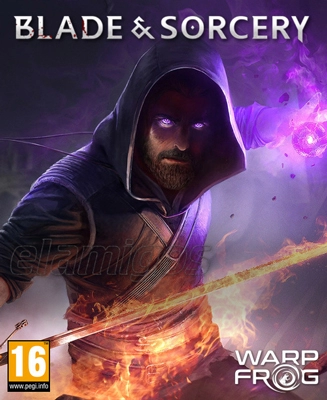
Blade and Sorcery VR
Edit date: 15-07-2025, 00:27
Reason: Updated to version 1.0.7.682 (14.04.2025).
- Category:
- Release date:
- Game Genre:Action, FPP, fantasy, indie games, Meta Quest / Oculus, SteamVR, virtual reality
- Developer:WarpFrog
- Release:ElAmigos
- Platform:PC
- Languages (subtitles):English, French, Italian, German, Spanish, Portuguese-Brazil, Japanese, Simplified Chinese, Traditional Chinese, Thai
- Crack:Codex/Rune, FLT
- Game size:11.08GB
Game Description
Blade and Sorcery VR refers to the PCVR edition officially presented as Blade & Sorcery by developer and publisher WarpFrog. The current Steam listing uses “Blade and Sorcery,” while the studio uses “Blade & Sorcery.” It is separate from Blade & Sorcery: Nomad, the standalone Quest version. On PC, this is a first-person medieval fantasy sandbox built around physical weapon handling, ranged attacks, spellcasting, and unrestricted player experimentation.
The game is designed for SteamVR and Oculus PCVR rather than flat-screen play. Its appeal comes from how weapons, bodies, armor, and objects respond to motion and impact instead of relying only on conventional attack animations.
Physics-driven combat in first-person VR
Combat is deliberately hands-on. You reach for weapons, grip them with motion controllers, change your stance, and decide how to attack rather than selecting abilities from a traditional menu. Physics-driven melee makes blade angle, momentum, distance, and collision placement important during every encounter.
Weapon collisions use fine hitboxes, while objects have weight and physical behavior. Blades can penetrate soft materials, bodies react with full-body physics, and incoming magic can be deflected. This gives swordplay a more simulation-focused character than the damage-number combat found in many fantasy RPGs.
The arsenal supports several combat identities. Players can fight as a heavily armed warrior, rely on ranged weapons as a ranger, or combine hand gestures and weapons as a sorcerer. Blades, blunt weapons, bows, staffs, throwing weapons, telekinesis, and elemental spells all contribute to the sandbox.
Movement and interaction are equally important. The official game description highlights grabbing, climbing, kicking, lifting objects with telekinesis, choking, using ziplines, and casting magic. These actions are not cosmetic extras; they are part of the improvisational combat loop that defines the PCVR experience.
Crystal Hunt, Sandbox, and the Byeth setting
Crystal Hunt is the main progression mode for players who want more structure than an open arena. You move through dungeons, uncover lore connected to Byeth and the ancient Dalgarians, earn resources, purchase equipment, and unlock abilities through a skill-based progression system.
Crystal Hunt contains 78 unlockable skills. Its build system allows players to develop different approaches to combat instead of forcing one fixed class. A character can specialize in physical weapons, ranged attacks, spell combinations, or a hybrid loadout that uses several systems together.
The mode is better understood as a progression framework than as a conventional story-heavy RPG. It provides dungeons, lore, equipment advancement, and skill unlocks, but the main attraction remains the act of physically fighting through encounters and experimenting with different builds.
Sandbox Mode removes most of those restrictions. It gives access to the complete equipment pool and lets players enable skills freely, making it the natural choice for testing weapons, staging battles, experimenting with magic, or creating personal challenge scenarios.
The current PC game also benefits from free content updates connected to the Byeth setting. The Sentara content adds locations, equipment, survival improvements, water physics, and related environmental interactions, while the Khar-Tib content expands the world with a desert region, themed weapons, armor, waves, and additional arena maps.
Weapons, armor, magic, and systemic experimentation
The base game lists 76 weapons and 90 individual armor pieces across ten complete armor sets. The scale matters because equipment is not simply a collection of cosmetic skins. Weapon weight, reach, armor interaction, and imbue behavior affect how an encounter can be approached.
Crystal Hunt introduces tiered gear, but higher tiers are not presented as simple damage upgrades. Equipment can offer longer imbue duration, greater reach, additional offensive features, or improved effectiveness against particular armor types. Blunt weapons work better against armor, while blades are more effective for slicing exposed targets.
Magic is integrated directly into the physical combat model. Spells can be cast through controller gestures, attached to weapons, and combined with movement or environmental manipulation. The result is a combat system where a player can create a plan, abandon it when an enemy closes distance, and use the room itself as part of the solution.
The game’s sandbox design is also the foundation for its extensive modding ecosystem. The built-in in-game mod manager supports mods published through mod.io, while PC players can also use manually installed PCVR mods from compatible sources. PCVR and Nomad mods are separate, so content made for the Quest edition should not be treated as interchangeable with the PC version.
For players who enjoy physics-heavy VR interaction beyond medieval fantasy, physics sandbox action games such as Bonelab VR offer a useful comparison, although Blade & Sorcery places much more emphasis on swordplay, magic, armor, and arena combat.
Content model and current PC edition
Blade & Sorcery is sold as a paid base game on Steam. The PC package includes Crystal Hunt, Sandbox Mode, its dungeon and arena content, the core weapon and armor pool, and the official Byeth updates integrated into the current game.
There is no storefront model built around a large lineup of separately sold licensed table packs or character expansions. The game’s content growth has instead focused on substantial updates, new regions, new equipment, survival features, and systems that expand the existing sandbox.
The PC edition is not the same product as Blade & Sorcery: Nomad. Nomad is the standalone Quest-focused sister title, while the Steam version is the PCVR build. Their mod ecosystems are separated, and the PC version is the appropriate choice for players specifically looking for the broader PCVR mod scene.
Who should play Blade & Sorcery on PC?
This is a strong fit for players who want physical sword fighting, experimental magic, first-person immersion, and freedom to create their own encounters. It particularly suits people who enjoy learning a system through practice rather than following a tightly scripted combat sequence.
It is also a good choice for VR users who want a long-term sandbox. Crystal Hunt supplies progression, while Sandbox Mode and mods provide reasons to return after the structured objectives have been completed.
The game is less suitable for players seeking official co-op, a traditional party-based RPG, or a heavily directed cinematic campaign. Its combat is built around one player’s body, hands, and decisions, and the experience expects you to generate much of the variety through builds, modes, equipment, and mods.
The mature content warning should be taken seriously. The game contains frequent violence and gore, including physically reactive bodies and dismemberment-focused combat.
PCVR support, input, and multiplayer reality
The Steam edition is VR only and lists tracked controller support. It is intended for standing or room-scale play through SteamVR or Oculus PCVR, so a conventional mouse-and-keyboard setup is not the primary way to experience its combat.
Steam lists interface and subtitle support for English, French, Italian, German, Spanish from Spain, Japanese, Brazilian Portuguese, Simplified Chinese, Thai, and Traditional Chinese. Full audio is not listed for these languages, making the localization model primarily text and interface based.
The official Steam feature list identifies the game as single-player. Despite community interest and user-made experiments, there is no official multiplayer or co-op mode to treat as part of the standard PC package. Mods may create unofficial multiplayer-like experiences, but they are not equivalent to developer-supported online play.
For a contrasting VR action experience based around firearms and teleport movement, first-person VR shooters such as DOOM VFR VR show how different the pacing becomes when aiming replaces Blade & Sorcery’s close-range physical manipulation.
Blade & Sorcery FAQ
Is Blade and Sorcery VR the same game as Blade & Sorcery?
Yes, “Blade and Sorcery VR” is commonly used as a search and catalog label for the PCVR game. The current official naming is Blade & Sorcery, with Steam displaying a version of the title without the ampersand. “VR” describes the platform rather than a separate PC edition.
Is Blade & Sorcery on PC the same as Blade & Sorcery: Nomad?
No. Blade & Sorcery: Nomad is the standalone Quest sister title. The Steam version is the PCVR edition, and PCVR and Nomad mods are not interchangeable.
What is Crystal Hunt in Blade & Sorcery?
Crystal Hunt is the game’s structured progression mode. It combines dungeon exploration, Byeth lore, equipment purchases, and 78 skills to unlock. It offers more progression than Sandbox Mode without turning the game into a conventional dialogue-heavy RPG.
Does Blade & Sorcery have Sandbox Mode?
Yes. Sandbox Mode provides unrestricted access to the game’s equipment and skills, making it useful for free-form combat, testing builds, creating custom scenarios, and experimenting with magic.
Does Blade & Sorcery have official multiplayer or co-op?
No. The official PC feature list identifies the game as single-player. Any multiplayer functionality encountered through community projects or mods is unofficial and should not be confused with a built-in co-op mode.
Does the PC version support mods?
Yes. PCVR supports an in-game mod manager for compatible mod.io content, and compatible manually installed PCVR mods are also available through the wider modding ecosystem. Always match a mod to the correct PCVR game version.
What languages does the PC version support?
The Steam listing provides interface and subtitle support in ten languages: English, French, Italian, German, Spanish from Spain, Japanese, Brazilian Portuguese, Simplified Chinese, Thai, and Traditional Chinese. Full audio is not listed for these languages.
System Requirements
Minimum: | Recommended: |
| Processor: Quad Core 3GHz Graphics: NVIDIA GTX 1070 Memory: 8 GB RAM Disk space: Operating system: Windows 10 VR Support: SteamVR or Oculus PCVR. Standing or Room Scale Additional Notes: Minimum 72Hz VR support | Processor: 8-16 Core 4GHz Graphics: NVIDIA RTX 2070 Memory: 16 GB RAM Disk space: Operating system: Windows 10 VR Support: SteamVR or Oculus PCVR. Standing or Room Scale Additional Notes: Recommended VR 90Hz support |
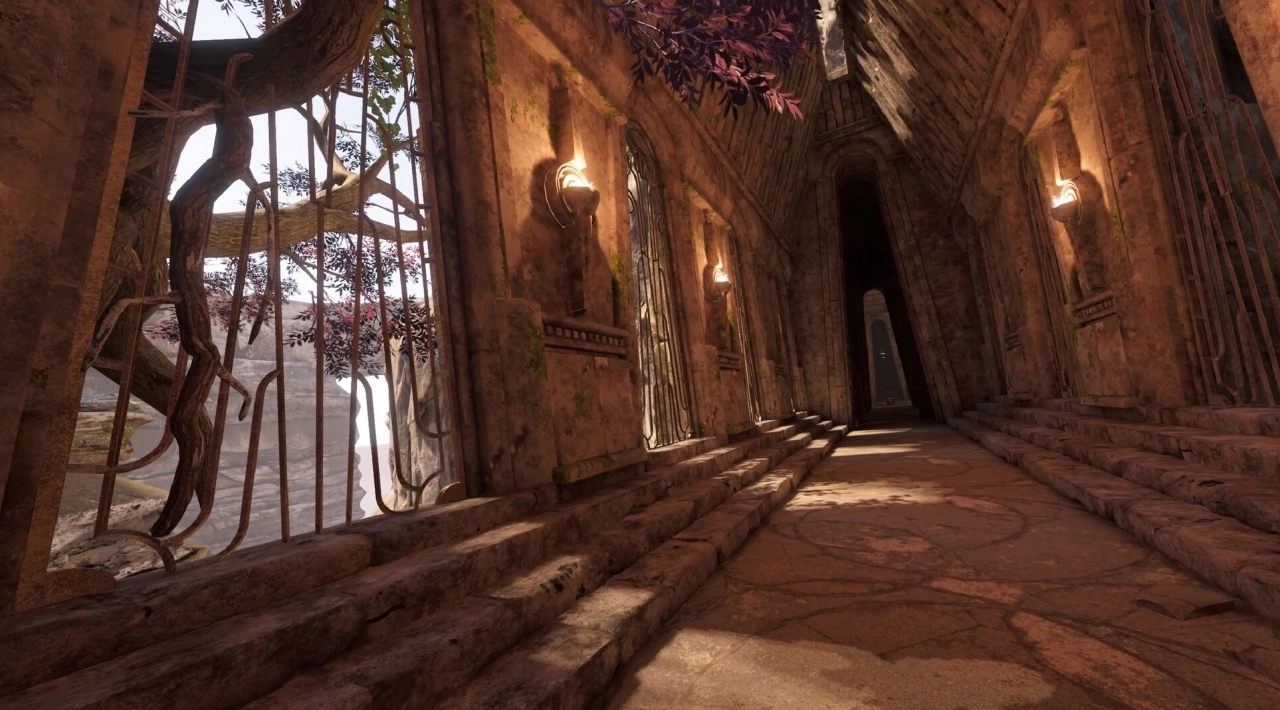
Screenshots
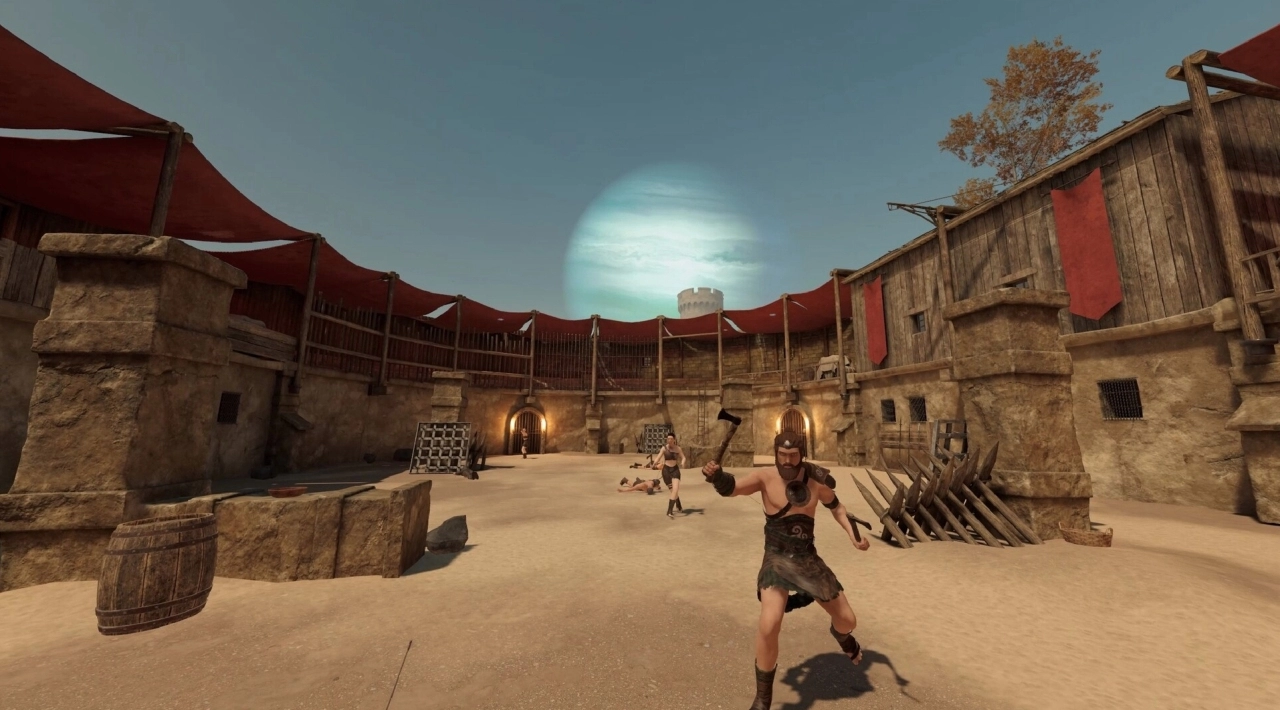


Trailer/Gameplay
Download
Blade and Sorcery VR (2024), 11.08GB
ElAmigos release, game is already cracked after installation (crack by Codex/Rune or FLT).

Updated to version 1.0.7.682 (14.04.2025).

1. Extract files.
2. Burn or mount the image.
3. Install the game.
4. ElAmigos release, game is already cracked after installation.
5. Play the game. If you like this game, BUY IT!
Blade and Sorcery VR Download
🔒 Premium access required
To see and use the download links, you must be logged in and have an active PREMIUM account.
* Unlock downloads via Torrent and TeraBox.
Torrent Download
The best torrent download speeds are with qBittorrent!