Cosmoteer Starship Architect and Commander
- Category:
- Release date:
- Game Genre:Simulation, science fiction, tactics, 2D, elements of strategy, indie games, space ships, multiplayer, singleplayer, internet, LAN
- Developer:Walternate Realities
- Platform:PC
- Languages (subtitles):English, French, German, Portuguese - Brazil, Russian, Simplified Chinese, Spanish - Latin America, Spanish - Spain, Japanese
- Game size:1.25GB
Game Description
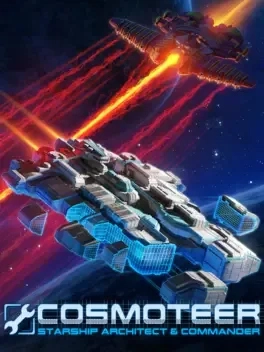
Cosmoteer: Starship Architect & Commander is a PC starship-building strategy simulation from Walternate Realities. The current Steam name remains unchanged. Cosmoteer Classic is the separate free legacy version associated with the original download, not a rebrand of the paid Steam edition. The main game combines modular ship construction, crew logistics, real-time tactical combat, exploration, salvage, faction contracts, online co-op, PvP, and extensive player-made content.
It is best understood as a systems-driven space sandbox rather than a conventional story campaign. Your ship is both the vehicle and the strategic puzzle: every weapon, engine, corridor, reactor, shield, storage bay, and crew station affects how effectively the vessel operates under pressure.
Build a ship that can actually function
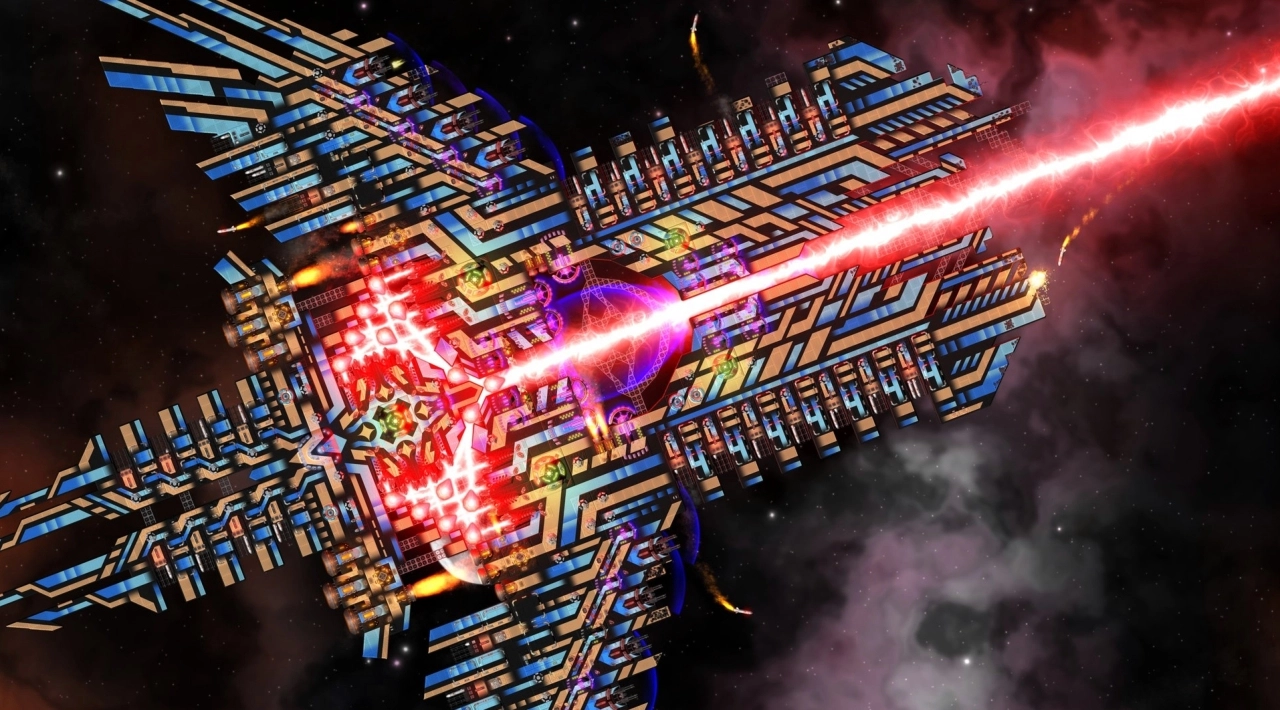
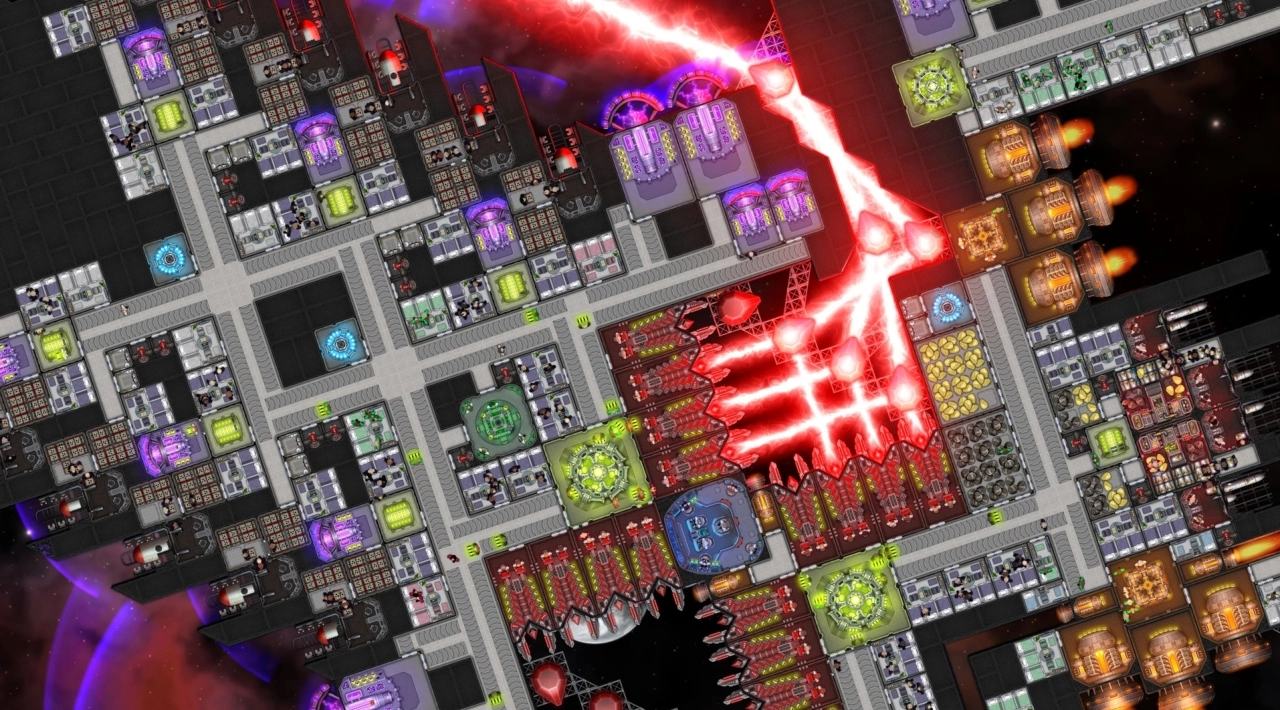
The central appeal is the grid-based ship designer. You draw the hull shape, define the floor plan, and place individual modules wherever they fit. Weapons need firing space, engines need usable exhaust clearance, crew quarters need to connect to the rest of the ship, and critical systems must be supplied efficiently through corridors and access routes.
A visually impressive ship can still be a poor warship. Long walking routes slow ammunition delivery, exposed reactors create catastrophic vulnerabilities, and badly positioned engines can make a large vessel difficult to maneuver. The design process rewards practical layouts as much as style, with internal logistics becoming just as important as armor and firepower.
You can build compact gunboats, broadside cruisers, carrier-style vessels, mining ships, support craft, or multi-ship fleets. Creative Mode removes resource limits for unrestricted construction and testing, making it useful for experimenting with unusual hulls before taking them into a more demanding game mode.
Crew management changes how battles unfold
Crew members are individually simulated rather than treated as a single abstract statistic. They pilot ships, operate weapons, carry ammunition, repair damaged modules, move resources, and keep the vessel functioning during combat. A ship with excellent hardware can underperform if its crew spends too much time walking between quarters, factories, storage, and weapons.
The crew operates autonomously, but you can shape its behavior with roles and job priorities. This lets you decide which tasks matter most when the ship is damaged or understaffed. Prioritizing weapons may improve immediate offense, while assigning more workers to repairs or resource handling can keep a crippled ship alive long enough to escape.
This produces a distinctive feedback loop. A battle does not simply test weapon statistics; it exposes weaknesses in your architecture. When a crew cannot reach a damaged shield generator, or ammunition takes too long to reach a cannon, the correct solution may be a complete redesign rather than a stronger weapon.
Physics-driven tactical combat
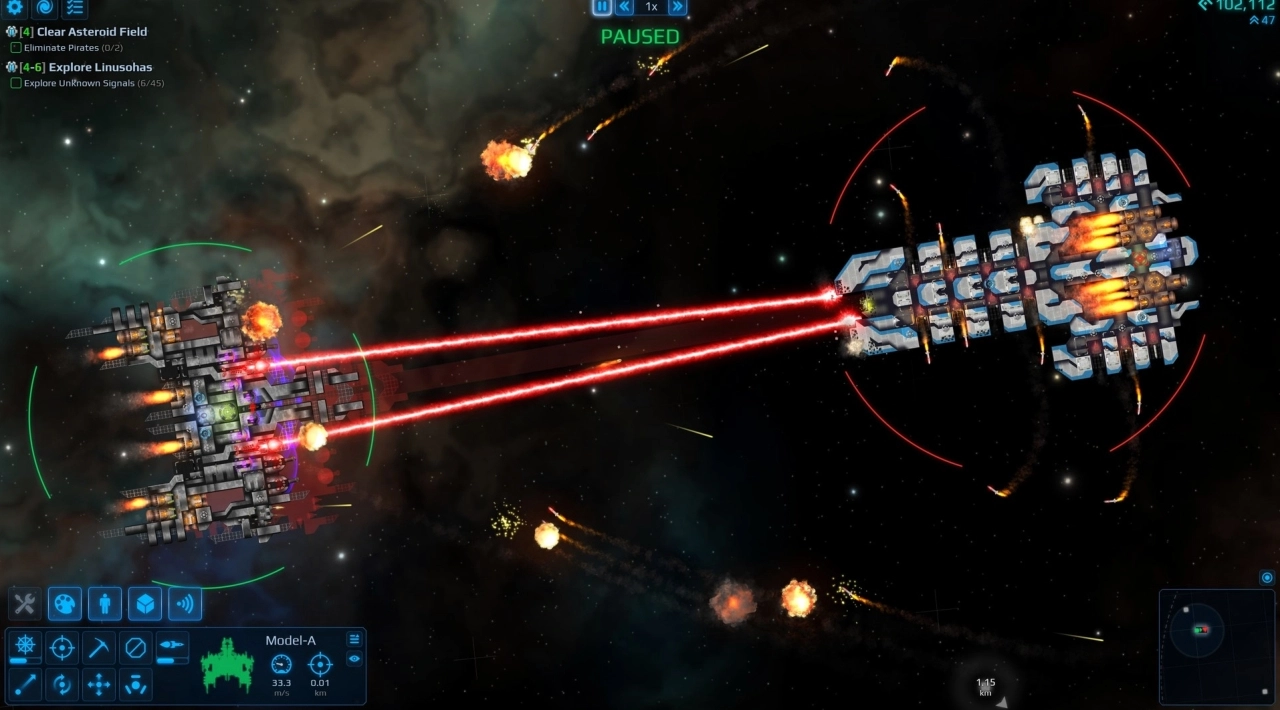
Combat takes place from a top-down 2D perspective in real time, with pause and speed controls that let you issue commands without relying on reflexes. You can command one ship or coordinate a fleet, select targets, reposition vessels, and choose which enemy systems to attack first.
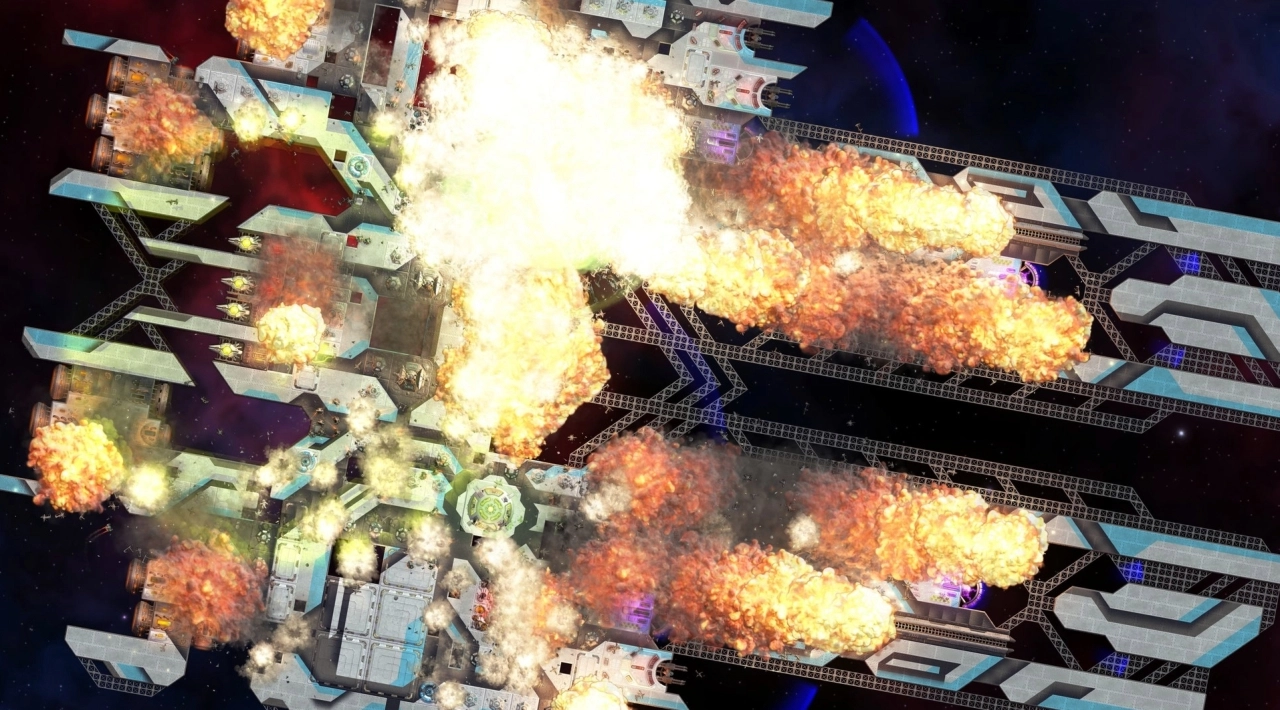
Individual modules can be targeted and destroyed. You may disable weapons, strip away shields, break engines, damage crew infrastructure, or attack a reactor for a decisive finish. Large ships can split into multiple pieces when their structural connections fail, turning a battle into a sequence of tactical decisions rather than a simple exchange of health bars.
The physics-driven damage model gives ship orientation and approach angles real importance. A ship built around forward-facing weapons behaves differently from a broadside platform, while mobile fleets can surround larger targets or concentrate fire on an exposed section. The best combat design depends on what you want the ship to do and how well its internal systems support that role.
Career progression, contracts, and resource flow
The primary progression loop sends you through a procedurally generated galaxy where you accept faction contracts, fight hostile AI ships, mine asteroids, trade resources, salvage wreckage, and upgrade your fleet. Missions can include bounties, rescues, deliveries, exploration, and other contract objectives, giving the campaign structure more variety than a pure skirmish mode.
Destroyed ships leave behind salvage that can be collected and used for repairs, construction, factories, and munitions. Mining and trading provide additional ways to obtain materials or money, while faction relationships and fame help shape your place in the galaxy. The result is a steady risk-and-reward cycle: push toward tougher regions for better opportunities, or return to safer stations before damage and shortages become overwhelming.
Blueprints and construction resources expand what your ship can do over time. You are not only improving numerical strength; you are unlocking new ways to solve the same tactical problems through shields, weapon combinations, factories, storage capacity, mining equipment, and crew specialization.
Modes, multiplayer, and player-created content
The paid PC game supports single-player, online co-op, LAN co-op, online PvP, LAN PvP, Creative Mode, and multiple multiplayer battle formats. In co-op, players can share control of one ship or operate separate vessels within the same game, which naturally divides responsibilities between ship design, piloting, combat commands, and logistics.
PvP focuses on testing ship construction and tactical command against other players. Arena-style rules can emphasize scoring and respawns, while elimination-style battles reward fleet composition and careful target selection. These modes give the construction system a competitive purpose beyond the campaign.
Steam Workshop support and the game's modding framework are major parts of its PC ecosystem. Players can share ship designs and create new weapons, modules, balance changes, and other enhancements. This is particularly valuable for a construction-focused game because the community effectively expands the library of hull concepts and combat experiments available to new players.
Commercial model and current PC status
Cosmoteer is presented on Steam as a paid Early Access game developed and published by Walternate Realities. The base purchase covers the main construction, career, Creative Mode, multiplayer, and Workshop experience described by the current storefront listing.
No separate paid DLC packs or season pass are listed as part of the current Steam product presentation. Cosmoteer Classic remains available as a free version with an older feature set, while the paid Steam edition contains the expanded career, multiplayer, resource, and content direction associated with the modern game.
The storefront identifies Steam Cloud, Family Sharing, Steam Workshop, LAN play, and online play. It also lists interface localization for English, French, German, Brazilian Portuguese, Russian, Simplified Chinese, Latin American Spanish, European Spanish, and Japanese. Full audio is not listed, so players should expect a text-and-interface localization model rather than dubbed voice coverage.
Who should play Cosmoteer?
Cosmoteer is a strong fit for players who enjoy ship construction, logistics simulations, tactical space combat, sandbox progression, and games where a poor layout can be more damaging than a weak statistic. It especially suits people who like designing a machine, observing its failure points, and rebuilding it around lessons learned in the field.
The game is less suitable if you want a heavily scripted narrative, character-focused role-playing, or action combat built around direct piloting skill. Its most rewarding decisions happen before and between engagements, when you are planning layouts, assigning crew priorities, choosing contracts, and deciding how much risk your current ship can absorb.
Players who want a more tightly focused tactical experience can also compare its planning mindset with turn-based science-fiction tactics like Into the Breach, although Cosmoteer is broader, real-time, and centered on designing the combat platform itself.
Similar PC games and genre context
Cosmoteer shares some DNA with FTL: Faster Than Light through crew-driven ship emergencies, with Starsector through fleet command and space combat, and with Space Engineers through construction freedom. The differences matter: Cosmoteer uses a clear 2D modular layout, while those games place more emphasis on roguelike event runs, open-ended fleet operations, or three-dimensional engineering.
It is also distinct from a conventional 4X game. You are not primarily expanding a planetary empire or managing dozens of colonies. Your attention stays close to the ship, its crew, its resources, and the tactical consequences of every module placement.
That narrow focus is the game's defining advantage. Cosmoteer turns the starship into a living production line and battlefield, then asks whether your design can keep operating after the first armor breach, reactor hit, or ammunition shortage.
Cosmoteer FAQ
Is Cosmoteer still called Starship Architect & Commander?
Yes. The current Steam product name remains Cosmoteer: Starship Architect & Commander. Cosmoteer Classic is the separate free legacy version and is not the current name of the paid Steam edition.
Is Cosmoteer free to play on PC?
The modern Steam edition is a paid game. A separate free version called Cosmoteer Classic exists, but it does not represent the full feature set of the paid PC edition.
Does Cosmoteer have a campaign?
Its main progression mode is a career-style sandbox built around contracts, factions, missions, mining, trading, salvage, exploration, ship upgrades, and procedural galaxy generation. It is not structured like a linear, cinematic campaign.
Can you play Cosmoteer co-op?
Yes. The PC version supports online and LAN co-op. Players can share control of one ship or operate separate ships, allowing one person to focus on construction and crew management while another handles navigation or combat.
Does Cosmoteer support PvP?
Yes. Steam lists online and LAN PvP, with multiplayer formats built around fleet battles, elimination rules, arena scoring, and other configurable match structures.
Does Cosmoteer support mods?
Yes. The game includes a modding framework and Steam Workshop support for player-created weapons, modules, ship designs, balance changes, and other enhancements.
What languages are available in Cosmoteer?
The current PC storefront lists interface support for English, French, German, Brazilian Portuguese, Russian, Simplified Chinese, Latin American Spanish, European Spanish, and Japanese. Full audio is not listed.
System Requirements
Minimum: | Recommended: |
| Processor: Dual-core Intel 2.0 GHz (or AMD equivalent) Graphics: 1GB DirectX 10 Graphics Card or better Memory: 4 GB RAM Disk space: 2 GB available space Operating system: 32-bit or 64-bit Microsoft Windows 10, 11, or newer | Processor: Quad-core Intel 2.5 GHz (or AMD equivalent) or better Graphics: 2GB DirectX 11 Graphics Card or better Memory: 8 GB RAM Disk space: 2 GB available space Operating system: 32-bit or 64-bit Microsoft Windows 10, 11, or newer |
Screenshots
Trailer/Gameplay
Download
Cosmoteer Starship Architect and Commander (2022), 1.25GB

Version: 17260476
After unpacking: 1,41GB

1. Extract files.
2. Play the game. If you like this game, BUY IT!
Cosmoteer Starship Architect and Commander Download
🔒 Premium access required
To see and use the download links, you must be logged in and have an active PREMIUM account.
* Unlock downloads via Torrent and TeraBox.
Torrent Download
The best torrent download speeds are with qBittorrent!